Mounting concern in the EU about Indian black operations targeting dissidents
December 11, 2024 1 Comment
 BLACK OPERATIONS, WHICH AIM to liquidate targeted individuals, are once again the subject of various reports. The primary focus tends to be on Russian intelligence agencies targeting alleged traitors worldwide. Michael Weiss, US publisher of The Insider, spoke in a recent interview of “more than 60 mysterious deaths of Putin’s enemies in Russia and Europe since the Ukraine war began”.
Somewhat-less-black operations, in which individuals —usually living abroad— are not killed, but intimidated, persecuted, threatened, or roughed up, appear to be increasingly utilized as a tool by certain states that have little tolerance for domestic political opposition. Ken McCallum, Director General of Britain’s Security Service (MI5), stated on 8 October 2024 that, “since January 2022, with police partners, we have responded to twenty Iran-backed plots presenting potentially lethal threats to British citizens and UK residents”.
Back in September 2023, The Guardian reported having spoken to 15 Iranian activists living in the United Kingdom, France, Germany, Spain, Switzerland and Sweden, who were being persecuted and intimidated, or had been threatened in various ways by the Iranian regime’s henchmen and its intelligence services. There are numerous similar examples of journalists and dissidents who have been a thorn in the side of the Turkish government for several years now. In addition to threats and violence, there are reports of abductions by Turkey’s National Intelligence Organization (MIT). In recent years, China too has increasingly relied on intimidation directly in the West, and has also engaged Western investigators and helpers for this purpose.
One concerning development is the fact that these states are apparently increasingly resorting to the help of members of Outlaw Motorcycle Gangs (OMCG), members of drug cartels, and other criminals. Regardless of whether it is for purposes of sabotage, threats, or assassinations,  shady figures —typically apolitical— are undertaking missions on behalf of the intelligence agencies of authoritarian states on European soil.
The Case of India
Another country that has been in the spotlight for some time is India, which has historically maintained a low profile in the West, in terms of black operations. Western intelligence agencies could have predicted that there would be an escalation —i.e. Indian black operations on Western soil— which could lead to the liquidation of alleged or actual terrorists. If one observes the reports of Indian intelligence agencies and analysts on the activities of its mortal enemy, Pakistan, and its intelligence agency, the Inter-Services Intelligence (ISI), it quickly becomes apparent that India is less and less willing to tolerate what it regards as terrorism sponsored by Pakistan. This applies particularly to individuals and organizations operating from abroad. Read more of this post
 A HIGHLY ANTICIPATED REVIEW of the European Union’s intelligence readiness to face conventional and hybrid threats has called for the establishment of a dedicated Europe-wide intelligence agency. Such an agency must rely on EU member states “trust[ing] each other” in order to confront increasingly aggressive espionage, sabotage, and other types of threats by outside actors like Russia, the report said.
 THE CRIMINAL CORRUPTION SCANDAL known as Qatargate, which has rocked the European Parliament in recent weeks, involves covert influence operations by Moroccan spies, in addition to Qatari intelligence operatives, according to news reports.
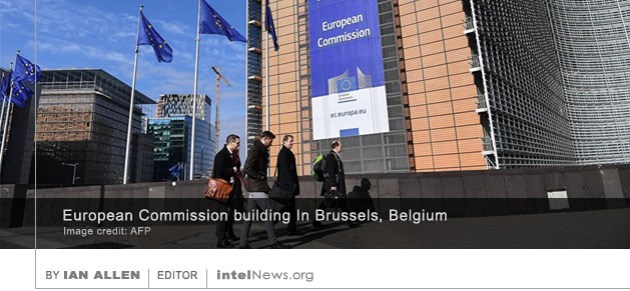 THE POLITICAL FALLOUT OF the Russian invasion of Ukraine is prompting the European Union (EU) to radically upgrade the security of its facilities, according to a series of internal memoranda. On July 14, the EUObserver, an EU-focused news agency based in Brussels,
 THE FIRST CLAIMS OF an alleged secret collaboration between the signals intelligence agencies of the United States and Denmark surfaced in November of 2020. By January of this year, it was clear that the Danish government would, sooner or later, need to deal with the fallout of its controversial spy deal with Washington, under which Denmark enabled the US to spy on some of its closest European allies. Still, the
  A JOINT INVESTIGATION BY Maltese and British reporters has found alleged loopholes that allow wealthy individuals from the Middle East, Asia and elsewhere to acquire European Union passports with minimum effort, in exchange for cash. The investigation concerns the so-called “cash for passports” scheme, which was launched by the government of Malta in 2014.
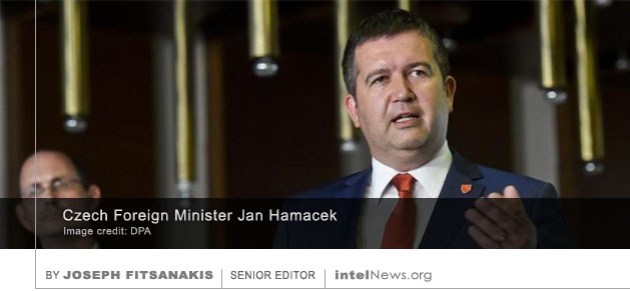 CZECH GOVERNMENT OFFICIALS SAID they would welcome the expulsion of Russian diplomats from European Union and North Atlantic Treaty Organization countries, in support of Prague’s ongoing diplomatic spat with Moscow. The Czech Republic expelled 18 Russian diplomats last weekend, in order to protest against an explosion at a remote munition depot in the east of the country, which the government claims was part of a Russian intelligence operation.
 • State-level espionage on EU a ‘very high threat’ says report. The most successful attempts of espionage at a top EU institution are state sponsored, according to an
 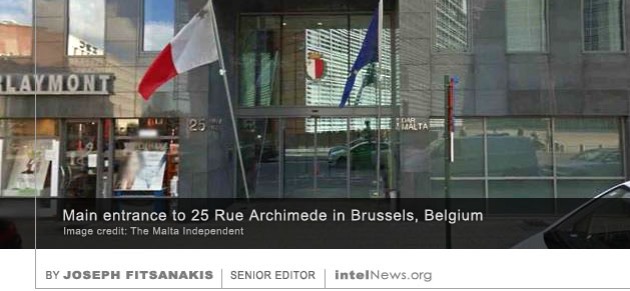 The Maltese government has strongly denied allegations, made by a leading French newspaper, that the island nation’s embassy in Brussels is being used by China to spy on European Union institutions. The allegations concern a nine-story building located at 25 Rue Archimede, in one of downtown Brussels’ most desirable areas. The building houses the Embassy of Malta in Belgium, as well as Malta’s Permanent Representation to the European Union. It is conveniently located across the street from Le Berlaymont —the headquarters of the European Commission, which is the European Union’s executive branch. It is also around the corner from the headquarters of the European Council, which operates as the collective presidency of the European Union.
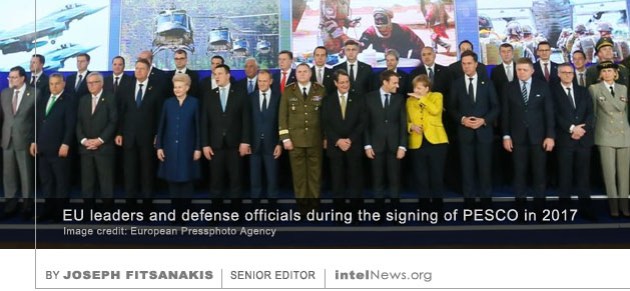 Twenty-five members of the European Union have agreed to establish a joint intelligence training academy, a move interpreted by some as a concrete effort to deepen inter-European security cooperation following Brexit. The announcement came just hours after leading EU heads of state
 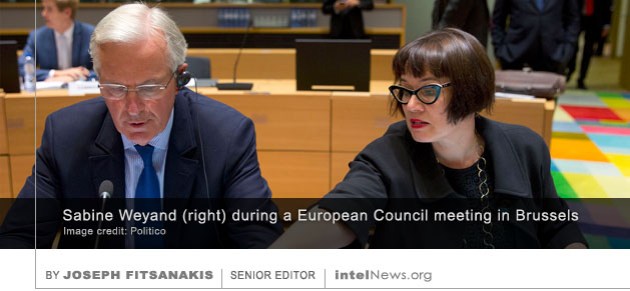 Relations between the European Union and the United Kingdom hit a new low on Thursday, as the European Council refused to comment on claims that British spy agencies have spied on Brexit negotiators in Brussels. Consultations between the two sides have progressed at an alarmingly slow pace ever since June 23, 2016, when voters in the island nation elected to leave the EU during a nationwide referendum. In March of 2017, London officially invoked Article 50 of the EU Treaty, which requires that Britain’s withdrawal from the multinational body be completed within two calendar years. But there are many who think that a mutual agreement will not be reached between the two sides.
 Belgium will investigate whether Spanish intelligence spied on Carles Puigdemont, the separatist Catalan leader who escaped to Brussels after launching an unsuccessful independence bid last year. Puigdemont, 56, served as president of the Spanish region of Catalonia from January 2016 until October 2017. He was forcibly removed from office by the Spanish government, after he led the government of Catalonia in a unilateral declaration of independence from Spain. As soon as the Catalan Parliament declared that the region was independent, Madrid dissolved it, imposed direct rule on the country’s easternmost province, and declared fresh elections.






 intelNews.org
European Union exploring spy satellites to replace its reliance on US network
March 17, 2025 by Joseph Fitsanakis 4 Comments
Speaking to The Financial Times, Kubilius confirmed that the European Union is considering the construction of a low Earth orbit (LEO) satellite system. Such a system would complement the European Union’s existing Copernicus Earth observation program, which is managed by the European Commission in partnership with the individual European Union member states. The costs and benefits of Copernicus are shared by member states and by several agencies, including the European Space Agency, the European Environment Agency, and the European Maritime Safety Agency.
Unlike Copernicus, a new LEO satellite system would primarily satisfy military priorities and would generate imagery updates every 30 minutes, thus providing near-real-time intelligence on targets. In contrast, Copernicus satellites are able to generate new imagery every 24 hours. Moreover, a new LEO satellite system would integrate into IRIS², an internet network of multi-orbit satellites intended to provide on-demand location-tracking, security surveillance and secure communications links to European Union member states. IRIS² is scheduled to become operational in 2027.
In his comments to The Financial Times, Kubilius acknowledged that the idea for a new European Union LEO satellite system was sparked by “changes in the geopolitical situation” relating to the United States. Subsequently, the European Union is exploring ways to “reduce its reliance on United States military assets”, he said. The commissioner admitted that such a project would be costly—perhaps in excess of $540 billion—as well as time-consuming. But there was much desire to proceed, he said.
In the meantime, the European Union is considering “commercial alternatives” until an independent European Union-run satellite network becomes fully operational, according to the The Financial Times.
► Author: Joseph Fitsanakis | Date: 17 March 2025 | Permalink
Filed under Expert news and commentary on intelligence, espionage, spies and spying Tagged with Andrius Kubilius, European Commission, European Space Agency, European Union, military intelligence, News, satellite reconnaissance