News you may have missed #497

  • Interview with Finnish ex-counterespionage officer. Finland’s Helsingin Sanomat has published a very interesting interview with Hannu Moilanen, who recently retired as a senior officer with SUPO, the Finnish Security Intelligence Service. Among other things, Moilanen says SUPO considered the CIA “the bad boys” of the Western bloc during the Cold War, because the Americans would not always disclose to SUPO the identities of CIA officers stationed in Finland, as they were supposed to.
  • European Union sent intelligence officers to Libya. But the EU’s Joint Situation Centre denies they were spies. “They were technical specialists who went to help with satellite phones and that type of thing”, said JSC Director Ilkka Salmi.
  • Talks aimed at mending rift between CIA and ISI. The CIA has agreed to reveal more about its operatives and their activities in Pakistan, and pledged expanded cooperation on drone strikes, US and Pakistani officials said. Meanwhile, however, the drone strikes on Pakistani soil appear to be continuing.

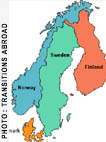
Scandinavians launch probes into US spying activities

Scandinavia

Scandinavia

By JOSEPH FITSANAKIS | intelNews.org |
Norway, Sweden and Denmark have launched official investigations into media reports that accuse US embassies in Scandinavian countries of operating illegal intelligence gathering networks. The issue first emerged last Wednesday, when a report by Norway’s TV2 channel alleged that the US embassy in Oslo maintained a network of around 20 local former police and intelligence officers, who were conducting “illegal systematic surveillance of Norwegian citizens”. According to TV2, the surveillance network was tasked with collecting visual and physical intelligence on individuals “thought to pose a threat to American interests”. The US Department of State responded to the allegations by arguing that the US embassy had “fully informed” the Norwegian authorities of the surveillance activities. But Norwegian investigations expressed fears that the intelligence collection, which dates back to 2000, may constitute a violation of Norwegian diplomatic legislation, and have launched an investigation into the affair. Read more of this post
Analysis: Forged Irish passports have long history

Passports

Passports

By IAN ALLEN | intelNews.org |
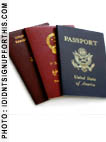
At least six of the nearly 30 Mossad assassins who killed Hamas military official Mahmoud al-Mabhouh last January in Dubai, used forged Irish passports to enter and leave the United Arab Emirates. This upset the Irish government, but did not surprise intelligence observers familiar with the long history of forged Irish passports in the international espionage and smuggling worlds. The Mossad and the CIA are among several intelligence agencies known to routinely rely on cloned Irish passports to enable their agents to move around the world undetected. In 1986, several Iran-Contra affair insiders, including US National Security Council member Oliver North, covertly traveled to Iran using forged Irish passports. The Provisional Irish Republican Army is also known to possess significant quantities of false Irish passports, which it uses to enable its senior members to network with supporters abroad. Read more of this post

News you may have missed #0177

  • TV footage shows Afghan insurgents with US ammo. Television footage broadcast Tuesday in Kabul showed Afghan insurgents handling what appears to be US ammunition, in a remote area of eastern Afghanistan that American forces left last month following a deadly firefight that killed eight US troops.
  • US formally accuses Iran of weapons sales to Hezbollah. The US has accused Iran of illicit arms deliveries to Lebanese Hezbollah during a session of the UN Security Council, endorsing charges by Israel following its seizure of a German ship in the Mediterranean last week.
  • Finnish union spokesman was Stasi informant, says paper. Riitta Juntunen, spokeswoman at the Central Organization of Finnish Trade Unions (SAK), worked for the Stasi, the former East German ministry of state security, Swedish-language daily Hufvudstadsbladet reported on Monday.

Bookmark and Share

News you may have missed #0152

  • Madoff befriends Israeli-handled spy in prison. According to legal papers filed last Tuesday, Bernard Madoff, imprisoned for masterminding one of history’s largest financial frauds, is sharing a cell with Jonathan Pollard, an American convicted of selling military secrets to Israel over two decades ago.
  • Polish undercover agent has cover blown. An undercover agent of Poland’s controversial Anti-Corruption Agency (CBA), known simply as Tomek K. (a.k.a. Tomasz Malecki or Tom Piotrowski) has had his cover blown after seducing Polish television star Weronika Marczuk-Pazura during an anti-corruption investigation. Whoever said undercover work was boring?
  • Finnish former prime minister says KGB tried to recruit him. In his political memoirs published last week, Paavo Lipponen, who was Finland’s prime minister from 1995 to 2003, reveals the Soviet KGB tried unsuccessfully to recruit him in 1966 and again in the early 1970s.

Bookmark and Share

News you may have missed #0086

Bookmark and Share

News you may have missed #0061

  • Finland police identify body of WWII Soviet spy. Police believe a body found near Kouvola, Finland, to be the World War II remnants of a Soviet spy. The man apparently parachuted to his death. The body will be offered to the Russian Embassy for repatriation –an offer that is expected to be refused.
  • Hacker conferences attract spies, thieves. Interesting account of Defcon conference anecdotes by CNET correspondent Elinor Mills, who has been attending Defcon since 1995.
  • Interesting interview with lawyer behind CIA lawsuit. McClatchy news agency has published a rare interview with Brian Leighton, the lawyer representing retired Drug Enforcement Agency (DEA) officer Richard A. Horn, who in 1994 claimed that CIA agents illegally wiretapped his conversations while he was stationed in Burma.

Bookmark and Share

Fears raised of Iranian-style surveillance in the US

NSN Logo

NSN Logo

By JOSEPH FITSANAKIS | intelNews.org |
Nokia Siemens Networks has denied allegations, published in The Wall Street Journal and reported by intelNews, that it helped the Iranian government acquire what experts describe as “one of the world’s most sophisticated mechanisms” for spying on Iranian telecommunications users. But critics remain unconvinced and are raising concerns about the use of similar intrusive capabilities by Internet service providers (ISPs) in the US. The Open Internet Coalition, a consortium of online business and consumer groups, has sent letters [.pdf] to US Congress members urging them to consider regulating the use of deep packet inspection technology. In addition to blocking or monitoring target communications, deep packet inspection enables ISPs and monitoring agencies to trace and alter the content of messages exchanged between users. Read more of this post

Western companies help Tehran spy on protestors

NSN Logo

NSN Logo

By JOSEPH FITSANAKIS | intelNews.org |
Numerous celebratory articles have appeared recently in several blogs that praise Western Internet firms for “help[ing] out the pro-democracy movement inside [Iran]”. These articles overlook Tehran’s extremely powerful Internet and telephone spying capabilities, which experts describe as “one of the world’s most sophisticated mechanisms”. Moreover, as intelNews reported last April, the Iranian government acquired these mechanisms with the help of some of Europe’s leading telecommunications hardware and software manufacturers, who were all too happy to supply Tehran with advanced means to spy on its own people. Read more of this post

Western companies sold phone spy equipment to Iran

By JOSEPH FITSANAKIS | intelNews.org |
For about a year now, political dissidents in Iran have suspected that the Iranian government’s ability to spy on private communications has intensified, covering for the first time cell phone and instant messaging exchanges. Last Monday it emerged that two European telecommunications hardware manufacturers are actually behind the Iranian government’s increased surveillance capabilities. The Wall Street Journal reports that Nokia Siemens Networks (NSN) sold Iran Telecom –Iran’s government-owned telecommunications provider– a sophisticated surveillance system, in the summer of 2008. NSN is an engineering partnership between Finland’s Nokia Corporation and German hardware manufacturer Siemens AG, Europe’s largest engineering firm. Read more of this post

Finnish UN official details recruitment attempts by Israeli spies

Raitasaari

Raitasaari

By JOSEPH FITSANAKIS | intelNews.org |
Finnish newspaper Helsingin Sanomat has published a relatively detailed account of attempts by Israeli intelligence agents to recruit United Nations (UN) personnel stationed in the Middle East and the Balkans. The source of the details is Reijo Raitasaari, a 30-year veteran of the UN and other international organizations, who was stationed for several years in the Middle East. Raitasaari admitted that he was targeted at least three times by Israeli intelligence recruiters during his career and that the Israelis often used “[s]ex and money […] as bait in such attempts”. He said that sending attractive Israeli women to parties of UN personnel was standard practice by Israeli intelligence agencies attempting to recruit UN workers. When offers for sex were accepted by married male UN workers, the Israeli spies would resort blackmail as a method to secure their cooperation. Raitasaari also detailed his relationship with Raimo Majuri, the Finnish military officer who spied on behalf of Israel and later immigrated to Israel, where he changed his name to Ram Laor. It appears that Suojelupoliisi, Finland’s security police (otherwise known as SUPO), took the Helsingin Sanomat revelations seriously. Earlier today, the agency announced plans to launch a training workshop designed for Finnish international agency personnel stationed around the world, “to help them deal with possible attempts of recruitment by foreign intelligence services”.

Finish security police declassify early Cold War archive

Suojelupoliisi, Finland’s security police (otherwise known as SUPO), declassified today segments of its Cold War counterintelligence archives. The declassified archives include the entirety of its 1949 document collection, as well as archive indexes for the decade 1949-1959. It is the first time that SUPO has made internal documents available to the public. The 1949 archive is important because it marks the beginning of SUPO’s intense monitoring of Soviet intelligence operations in Finland, and of activities of the Communist Party of Finland, forerunner of today’s Communist Party of Finland (Unity). Read more of this post