Sophisticated spy malware found on Russian government computers

FSB - IAAccording to the predominant media narrative, the United States is constantly defending itself against cyber-attacks from countries like China and Russia. But, as intelNews has argued for years, this narrative is misleading. Recent intelligence disclosures clearly show that the US cyber-security posture is as offensive as that of its major adversaries. Additionally, China and Russia have to defend their computer networks as much as America does. Last weekend’s report from Moscow helps restore some of the balance that is missing from media reporting on cyber-security. According to the Russian Federal Security Service (FSB), a meticulously coded and sophisticated virus has been found on the computer networks of at least 20 major Russian agencies and organizations. The targets appear to have been carefully selected by the malware’s authors. They include government bodies, weapons laboratories and defense contractors located throughout Russia.

The FSB said that once installed, the virus gave its handler control of the infected computer system. It permitted an outside hacker to turn on a computer’s microphone or camera, and capture screenshots. It also stealthily installed keylogging software, thus allowing an outside party to monitor keyboard strokes on an infected system. Based on its functions, the malicious software seems to be designed to conduct deep surveillance on infected computers and their physical surroundings. The FSB would not attribute the malware to a specific hacking group or nation. But it said it believed that the malware attack was “coordinated”, “planned and planned professionally”. It also said that the coding of the virus “required considerable expertise”. In a brief statement released Saturday, the FSB said that aspects of the coding of the virus, as well as other identifying information, resembled those detected in preceding hacking attacks on computer servers in Russia and other countries. The statement did not elaborate, however.

The news about hacked Russian computers comes less than two weeks after it was claimed that Russian government-backed hackers stole electronic data belonging to the Democratic National Convention (DNC) in the United States. The Democratic Party’s presidential candidate, Hillary Clinton, publicly accused the Russian government of orchestrating the hacking of the DNC computer systems in an attempt to damage her campaign.

Author: Ian Allen | Date: 01 August 2016 | Permalink

Video footage shows alleged CIA spy tackled outside US Moscow embassy

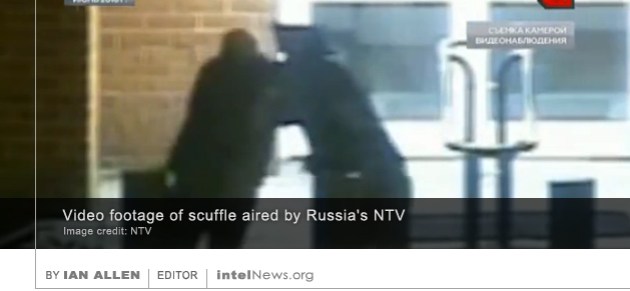
US embassy scuffleA Russian television station has aired footage allegedly showing a Russian guard stationed outside the United States embassy in Moscow trying to stop an American diplomat from entering the embassy. The Kremlin claims that the alleged US diplomat was in fact a Central Intelligence Agency officer who was returning to the embassy in disguise following a spy operation. As intelNews reported on July 1, the incident took place in the early hours of Monday, June 6. The American diplomat was making his way to the front entrance of the US embassy complex, which is located in the Presnensky District in downtown Moscow.

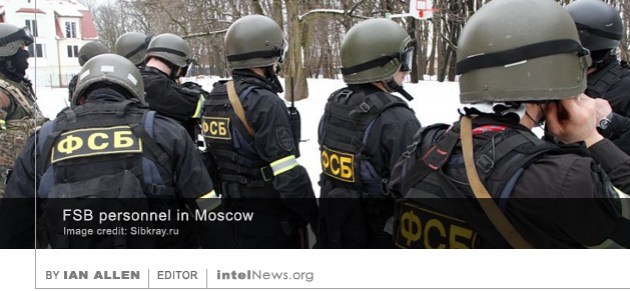
According to American sources, the diplomat was approached by an employee of the Russian Federal Security Service, the FSB, which regularly stations security personnel around the sizeable US embassy complex. The FSB claims that the guards are there to protect US diplomats, though it is common knowledge that the Russian agency, which is responsible for counterespionage, is primarily there to monitor activities in and around the US embassy. American sources claim that the diplomat presented the Russian guard with proof of identification when asked to do so. But he was then physically attacked and struck repeatedly by the FSB officer, which left him with several injuries, including a broken shoulder. The diplomat managed to enter the embassy grounds and had to be flown out of the country for urgent medical treatment. He has not returned to Russia.

On Thursday, Russian television channel NTV aired video footage purporting to show the altercation between the US diplomat and the FSB guard. The video aired on NTV shows a man exiting a taxi in a hurry and heading to what appears to be the US embassy’s front-perimeter entrance. However, as the man makes heads for the entrance, a uniformed individual jumps out of a guard station located nearby and tackles the man, throwing him on the ground. A scuffle ensues, during which the alleged diplomat is seen desperately trying to reach the entrance of the US embassy, which is American soil. He eventually manages to enter the embassy grounds, despite the effort of the uniformed guard to prevent him from entering. The same NTV report identified the American diplomat as Daniel Van Dyken and showed the photograph of a man said to be him. The report states that Van Dyken serves as third secretary of the US embassy’s Political Department.

Last week, Russian Foreign Ministry spokeswoman Maria Zakharova alleged that the diplomat in question was an intelligence officer. “It is well known”, said Zakharova, “that this very diplomat was in fact an agent of the CIA and was returning [to the US embassy], in disguise, after conducting an intelligence operation the previous night”. She also said that the Russian government employee involved in the altercation was a “police officer” who was attacked by the alleged spy when he asked to be shown proof of identification. Instead of supplying identification documents, the American diplomat “struck the guard in the face with his elbow before disappearing into the embassy”, said Zakharova. The US State Department and the CIA have refused to comment on Zakharova’s allegations.

Author: Ian Allen | Date: 08 July 2016 | Permalink
Diplomat involved in fight with US embassy guard is CIA spy, says Russia

FSB - IAThe Russian government says that an American diplomat, who was allegedly beaten up by a Russian security guard outside the United States embassy compound in Moscow, is an undercover spy. The man, who has not been named, was stationed in the Russian capital by the State Department as an accredited diplomat with immunity from prosecution in Russia. However, The Washington Post reported earlier this week that the American diplomat was severely beaten by a Russian government employee while attempting to enter the US embassy compound.

The alleged incident is reported to have taken place in the early hours of Monday, June 6. The American diplomat was making his way to the front entrance of the US embassy complex, which is located in the Presnensky District in downtown Moscow. According to American sources, the diplomat was approached by an employee of the Russian Federal Security Service, the FSB, which regularly stations security personnel around the sizeable US embassy complex. The FSB claims that the guards are there to protect US diplomats, though it is common knowledge that the Russian agency, which is responsible for counterespionage, is primarily there to monitor activities in and around the US embassy. American sources claim that the diplomat presented the Russian guard with proof of identification when asked to do so. But he was then physically attacked and struck repeatedly by the FSB officer, which left him with several injuries, including a broken shoulder. According to The Washington Post, the diplomat managed to enter the embassy grounds and had to be flown out of the country for urgent medical treatment. He has not returned to Russia.

The US government believes the attack was intentional. But what caused it? One theory entertained by The Washington Post is that the diplomat was in fact an officer of the Central Intelligence Agency working in Moscow under official cover, pretending to be a State Department employee. According to this theory, the FSB was chasing the American diplomat through the streets of Moscow after a spy operation that went awry. The Russians then tried unsuccessfully to prevent him from entering the US embassy, which constitutes American soil.

On Thursday, Russian Foreign Ministry spokeswoman Maria Zakharova alleged that the diplomat in question was an intelligence officer. “It is well known”, said Zakharova, “that this very diplomat was in fact an agent of the CIA and was returning [to the US embassy], in disguise, after conducting an intelligence operation the previous night”. She also said that the Russian government employee involved in the altercation was a “police officer” who was attacked by the alleged spy when he asked to be shown proof of identification. Instead of supplying identification documents, the American diplomat “struck the guard in the face with his elbow before disappearing into the embassy”, said Zakharova. The US State Department and the CIA refused to comment on Zakharova’s allegations.

Author: Ian Allen | Date: 01 July 2016 | Permalink

Russia claims arrest of alleged CIA-trained spy

Lubyanka SquareThe Russian government says it has arrested a senior Ukrainian intelligence officer, who was allegedly trained by the United States Central Intelligence Agency and tasked with infiltrating the Russian secret services. In a statement published on Thursday, Russia’s Federal Security Service, known as FSB, said the alleged infiltrator is a “senior level employee” of the SBU, the Security Service of Ukraine. The SBU is Ukraine’s primary counterterrorism and counterintelligence agency, with much of its output focused on the Russian Federation.
The FSB statement identified the Ukrainian man as Lieutenant Colonel Yuriy Ivanchenko, but did not release further information about his background and identity, nor did it specify the details of his activities in Russia. According to the Russians, Ivanchenko allegedly entered the country in recent weeks, ostensibly in order to visit family members who live in Russia. But his real goal, according to the FSB, was to make contact with Russian intelligence and infiltrate the country’s security structure. Moscow says that Ivanchenko had planned to pose as a willing spy, namely an employee of Ukrainian intelligence who was offering to provide information to Russia. He was not a genuine spy, however, but rather a ‘dangle’ —namely someone posing as a genuine spy, but who is in fact attempting to deceive a rival intelligence agency by knowingly giving it misleading or inaccurate information.

Moreover, the Russians claim that Ivanchenko was being jointly run by the SBU and the CIA, and that the American intelligence agency had trained him to pose as a ‘dangle’ in order to collect information about FSB activities in Ukraine. The goal of the CIA, said Moscow, was to “lure an FSB employee and capture him with incriminating information”. However, the FSB statement said that Ivanchenko’s SBU connection and CIA affiliation were known to Russia prior to his arrival in the country, as he had previously tried to offer his services to Moscow. He was therefore arrested and will be deported in the coming days with a persona non grata (unwelcome person) designation. The CIA and SBU have not commented on Russia’s allegations.

Author: Joseph Fitsanakis | Date: 01 April 2016 | Permalink

ISIS members attempting to target Russians in Thailand, FSB warns

ThailandRussian intelligence officials have warned authorities in Thailand that the Islamic State is planning to strike at Russian targets in the Southeast Asian country. Thai authorities received the warning in a memorandum dated November 27, 2015, which came from the Russian Federal Security Service (FSB). The document, marked ‘urgent’, warned of a series of coordinated attacks against Russian-related businesses and facilities in several cities across Thailand. Several Thai news sites, as well as CNN in the United States, said they had seen the memo. It was allegedly forwarded last week from the Royal Thai Police Special Branch division to police units across the country. It warned that the FSB had identified at least 10 Syrian citizens, all members of the Islamic State of Iraq and Syria (ISIS), who had entered Thailand between October 15 and October 31.
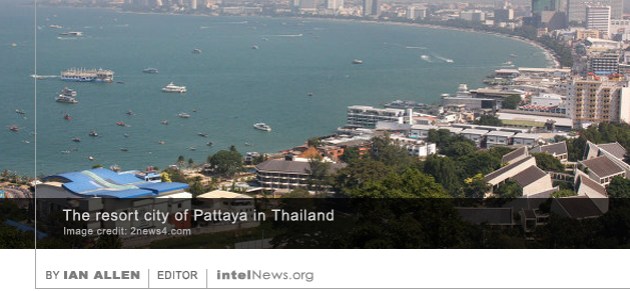
According to the FSB memorandum, the ISIS operatives had entered Thailand in three separate groups, arriving to the country from different international destinations. The largest of the groups, consisting of 4 members, is believed to have traveled to the coastal city of Pattaya (pictured), in eastern Thailand. Two more operatives went to Phuket Island in the Andaman Sea, while two other Syrians traveled to capital Bangkok. The two remaining members of the group went “to an unknown location”, said the FSB memorandum. After receiving the FSB memorandum, the Royal Thai Police issued a warning that ISIS may be trying to harm “Russians and Russia’s alliance with Thailand”. They also called for heightened security around tourist spots frequented by Russian tourists.

Phuket and Pattaya are busy resort destinations for Russian tourists, nearly 2 million of whom visit Thailand each year, many of them in December. The Russian Federation maintains consulates in both cities, in addition to the Russian embassy in Bangkok. When asked by reporters on Friday about the FSB memo, Royal Thai Police officials said they had not been able to locate the alleged ISIS members, but added that security had been increased across the country. General Thawip Netniyom, who heads the country’s National Security Council, said no “unusual movement” had been detected, and insisted that “everything is safe” in the country.

Author: Ian Allen | Date: 07 December 2015 | Permalink

Russian spy service accused of role in Norwegian journalist’s firing

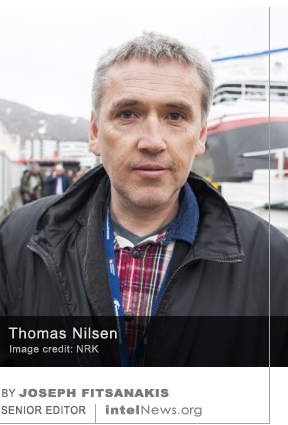
Thomas NilsenNorway’s state broadcaster has alleged that the Russian intelligence service pressured a Norwegian newspaper to fire one of its journalists who covered fossil fuel exploration in the Arctic Ocean. Last week, journalist Thomas Nilsen was fired by The Barents Observer, a Norwegian government-run newspaper that covers developments in the Arctic. Headquartered in the northern Norwegian town of Kirkenes, The Barents Observer publishes daily news in English and Russian from the four countries that border the region, namely Norway, Sweden, Finland and Russia. It is owned by the Norwegian Barents Secretariat (NBS), a government-owned agency that aims to encourage collaboration between Norway and Russia, two countries that share fishing, fossil fuel and mining interests in the Barents Sea.
Since the end of the Cold War, the NBS has funded collaborative projects between Norway’s state-owned oil company Statoil, and its Russian equivalent, Rosneft, which aim to promote offshore oil exploration in the Barents region. The move reflects a recognition by the Norwegian government that close relations with Russia are vital for Norwegian interests. But Nilsen is one of many Norwegian investigative journalists who have challenged Oslo’s collaboration with Moscow in Arctic oil exploration. Last year, Mikhail Noskov, Russia’s consul in Kirkenes, spoke publicly against Nilsen’s reporting, which he described as “damaging to the bilateral relations between Norway and Russia”. He also reportedly contacted the offices of The Barents Observer to complain about Nilsen’s articles.

Last week, when Nilsen was fired, staff at the newspaper protested that his removal from the paper had been ordered by the government in Oslo and described it as a clear case of government censorship. But on Saturday, Norway’s state-owned NRK broadcaster said that Nielsen had been fired following pressure from the Russian Federal Security Service, known as FSB. Citing an unnamed Norwegian government source, NRK reporter Tormod Strand alleged that the FSB had threatened that cooperation between Russia and Norway in the Arctic would be negatively affected if Nilsen was not removed from his post. The NRK contacted the embassy of the Russian Federation in Oslo, where a spokesman denied that Moscow had intervened in any way in Nilsen’s firing. An official from the Norwegian government told the station that he had seen no evidence showing that Tormod’s allegations were factual.

Russia and Estonia conduct Cold-War-style spy swap

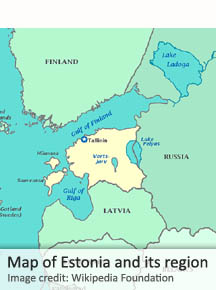
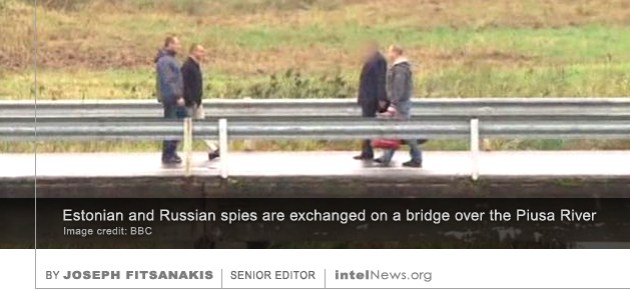
Estonia Russia spy-swapThe Russian and Estonian intelligence services have exchanged two men accused by each country of spying for the other, in a rare public example of what is commonly referred to as a ‘spy-swap’. The exchange took place on Saturday on a bridge over the Piusa River, which forms part of the Russian-Estonian border, separating Estonia’s Polva County from Russia’s Pskov Oblast.
Russia’s Federal Security Service (FSB) said that it had handed to the Estonian government a man going by the name of Eston Kohver. Last year, Estonian officials accused Moscow of abducting Kohver, an employee of the Internal Security Service of Estonia, known as KaPo, from the vicinity of Luhamaa, a border-crossing facility in southeastern Estonia. But the Russian government said that Kohver had been captured by the FSB on Russian soil and was found to be carrying a firearm, cash and spy equipment “relating to the gathering of intelligence”.

Kohver was exchanged for Aleksei Dressen, a former Estonian KaPo officer who was arrested in February 2012 along with his wife, Viktoria Dressen, for allegedly spying for Russia. The Dressens were caught carrying classified Estonian government documents as Viktoria was attempting to board a flight to Moscow. Aleksei Dressen was sentenced to 16 years in prison, while Viktoria Dressen to six, for divulging state secrets. Russian media have since reported that Dressen had been secretly working for Russian counterintelligence since the early 1990s.

Soon after the spy- swap, KaPo Director Arnold Sinisalu told a press conference that the exchange had been agreed with the FSB following “long-term negotiations”, during which it became clear that “both sides were willing to find a suitable solution”. Kohver, sitting alongside Sinisalu, told reporters that it felt “good to be back in my homeland”.

Author: Joseph Fitsanakis | Date: 28 September 2015 | Permalink

Dual US-Russian citizen pleads guilty to spying for Russia

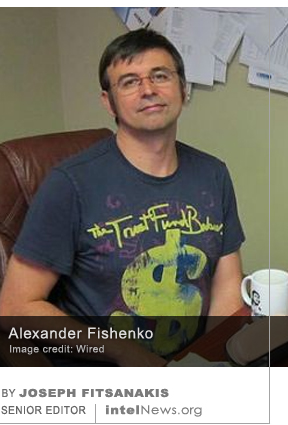
Alexander FishenkoA resident of Texas, who is accused by United States authorities of setting up a front company in order to illegally acquire American technology on behalf of Russia’s intelligence services, has pleaded guilty to espionage charges. Alexander Fishenko, 49, was one of 11 people arrested in October 2012 by the Federal Bureau of Investigation. The arrests came during several raids in locations around Houston, Texas, which included the headquarters of Arc Electronics, Inc. The FBI accused the export firm of having shipped over $50 million-worth of military-grade micro-electronics since 2008. The supplies were received in Moscow, Russia, by a mysterious procurement company called Apex System LLC. Counter-intelligence investigators in the US claim that both firms are part of an elaborate scheme set up by Russian military intelligence, aimed at stealing dual-use electronics hardware created by American firms.
According to the indictment, Arc Electronics told its US suppliers that the microelectronics technologies were intended for use in various types of streetlights. But in reality, said the FBI, the company gave the hi-tech supplies to the Russian Ministry of Defense for use in airborne surveillance systems, as well as in remote weapons guidance systems, among other military applications. Federal prosecutors said that, for over four years, Arc Electronics engaged in a prolonged “surreptitious and systematic” scheme to circumvent US government export controls, thus seriously damaging US national security. Following the early-morning raids, the FBI unsealed indictments against 11 Arc Electronics employees, most of whom were charged with “acting as unregistered agents of the Russian Federation in the United States” —legal jargon for espionage.

Fishenko, who is originally from Kazakhstan, was scheduled to face trial on September 21 in New York. But on Wednesday he chose to plead guilty to the charges leveled against him. He is the fifth member of the 11 Apex System employees arrested back in 2012 to plead guilty to espionage. A government spokesman said the Fishenko’s plea did not result from an agreement to cooperate with the FBI. He now faces up to 15 years in prison. His lawyer, Richard Levitt, declined comment when he was contacted on Wednesday. The Russian government has denied that it had any involvement with Fishenko’s operations.

Author: Joseph Fitsanakis | Date: 08 September 2015 | Permalink

Ex-KGB spy killed in London ‘warned Italy about Russian terror plot’

Alexander LitvinenkoBy JOSEPH FITSANAKIS | intelNews.org
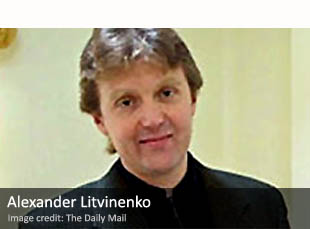
A witness has told a British inquiry investigating the murder of ex-KGB officer Alexander Litvinenko that the former spy may have been killed because he warned Italian authorities about an impending Russian terror plot. Litvinenko was an employee of the Soviet KGB and one of its successor organizations, the FSB, until 2000, when he defected with his family to the United Kingdom. He soon became known as a vocal critic of the administration of Russian President Vladimir Putin. In 2006, Litvinenko came down with radioactive poisoning soon after meeting former KGB/FSB colleague Andrey Lugovoy at a London restaurant. Many suspect that the Russian government is behind Litvinenko’s murder.

Speaking in a London court on Monday, Italian newspaper editor and politician Paolo Guzzanti said he believed Litvinenko was murdered by the Kremlin because he was helping Italian authorities assess a series of Soviet and Russian intelligence operations in the country. Guzzanti was speaking as the former president of the so-called Mitrokhin Commission, a parliamentary board set up in 2002 to investigate past intelligence operations by the Soviet KGB in Italy. Most of the work of the Commission stemmed from the revelations in the Mitrokhin Archive, named after Vassili Mitrokhin, who for three decades was the archivist in the KGB’s First Chief Directorate. Mitrokhin defected to the Britain in 1992, taking with him a treasure trove of documents about Soviet intelligence activities that took place abroad during the Cold War.

Guzzanti told the inquiry that Litvinenko had cooperated with the Mitrokhin Committee and had even shared information with one of its consultants, Mario Scaramella, about ongoing attempts by the FSB to organize terrorist strikes in Italy. According to Guzzanti, Litvinenko informed Scaramella that Russian intelligence operatives were helping transport weapons from Ukraine to Italy in order to assassinate Guzzanti and thus sabotage the work of the Mitrokhin Committee. Based on Litvinenko’s information, Scaramella accused Alexander Talik, a Ukrainian former officer of the KGB who lived in Naples, Italy, of helping Russian intelligence operatives smuggle guns into the country. Talik and a number of his accomplices were promptly arrested by Italian authorities after they found several weapons and grenades in their possession. According to Guzzanti, Litvinenko’s role in stopping the alleged assassination attempt against him and other members of the Mitrokhin Committee was what led to the Kremlin’s decision to murder the former KGB spy.

At the end of Monday’s proceedings, the inquiry directors announced the would adjourn until the next provisional hearing, which has been scheduled for July 27.

Estonian intel officer comes out as Russian spy in TV interview

Uno PuuseppBy JOSEPH FITSANAKIS | intelNews.org
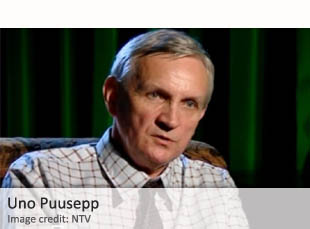
Estonian authorities have charged a retired officer in the country’s internal intelligence service with espionage, after he revealed in a television interview that he spied for Russia for nearly 20 years. Uno Puusepp retired from the Internal Security Service of Estonia, known as KaPo, in 2011. He first joined the Soviet KGB as a wiretapping expert in the 1970s, when Estonia was part of the USSR. Following the dissolution of the USSR, when Estonia became an independent nation, he was hired by KaPo and worked there until his retirement, three years ago, at which time he moved permanently to Russian capital Moscow. Last Sunday, however, Puusepp was the main speaker in a documentary entitled Our Man in Tallinn, aired on Russian television channel NTV. In the documentary, Puusepp revealed that he was a double spy for the Russian Federal Security Service (FSB), which is KGB’s successor, from 1996 until his retirement. He told the network that he was one of several former KGB operatives who had gone on to work for independent Estonia’s intelligence agencies, but that he had quickly decided that his true allegiance was to Russia. He eventually supplied Moscow with information on the activities of Western intelligence agencies in Estonia, including those of the American CIA, Britain’s MI6 and Germany’s BND. One commentator said in the documentary that “for 15 years, practically everything that landed on the desk of the Estonian security service’s director also landed on the desk of the FSB” thanks to Puusepp. The retired double spy said that one of his successes was letting the FSB know about a planned CIA operation that involved setting up a signals intelligence station in a disused bunker in the northern Estonian town of Aegviidu. The station was aimed at collecting communications from Russian diplomats and intelligence officers, but the Russian side terminated those networks once it got word of the CIA’s plans. Puusepp’s FSB recruiter and handler, Nikolai Yermakov, also spoke in the documentary, saying that the Estonian double spy was not motivated by financial profit, but rather by grievances against what he called “the Estonian establishment”. It is unclear why the Russian authorities permitted Puusepp to speak publicly at this particular time.

UK report warns about sexual entrapment by foreign spies

UK Ministry of DefenceBy IAN ALLEN | intelNews.org
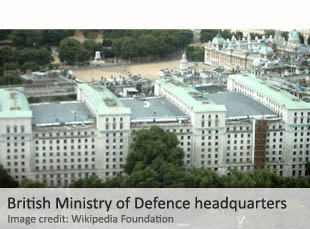
A leaked report issued by military authorities in the United Kingdom cautions British officials to be aware of attempts by Chinese and Russian intelligence services to compromise them using sexual entrapment. The London-based Sunday Times newspaper said it had acquired a copy of the document, entitled Manual of Security, authored by the United Kingdom’s Ministry of Defence for use by senior officials. The manual warns that foreign intelligence services are known to employ sexual entrapment or romantic attachment as a means of compromising their targets. The document singles out the Russian Federal Security Service (FSB) and the Chinese Ministry of State Security as two adversary agencies that are known to employ sexual entrapment on a regular basis. British officials are warned in the document that the FSB could gain classified information by exploiting “knowledge of marital infidelity or sexual activity the target may wish to hide”. The Times spoke to an unidentified “senior military official”, who told the paper he was recently approached by “a very attractive blonde woman in her early 30s” in a hotel in the Russian city of Saint Petersburg. The woman began telling him of her fascination with vintage British sports cars, which happened to be the British official’s favorite hobby. He eventually terminated the encounter after he became suspicious of the woman’s motives. But he remains puzzled as to how the woman knew details of his personal hobbies. In 2009, the British Foreign Office had to recall its deputy consul-general in the Russian city of Ekaterinberg, after he appeared in an explicit video on YouTube having a sexual encounter with two Russian prostitutes. Many speculated at the time that the video had been posted online by the FSB in an attempt to embarrass the diplomat and have him removed from Russia. Later that year, London’s former deputy mayor, Ian Clement, admitted he was lured by a female Chinese secret agent, who drugged him and ransacked his Beijing hotel room after having sex with him. Clement said he fell for what he called “the oldest trick in the book” while in Beijing to “build contacts with potential investors” for the 2012 Summer Olympics in London. Sir Christopher Meyer, a career diplomat with the Foreign Office, who served in several countries during his career, including the Soviet Union, has written about the case of Sir Geoffrey Harrison, Britain’s ambassador to Moscow from 1965 to 1968. The ambassador, said Sir Christopher, “had to leave [the Soviet capital] in a hurry, having fallen for the charms of his Russian maid –trained and targeted, of course, by the KGB”. Read more of this post

Estonian intelligence officer ‘abducted’ by Russian spies

EstoniaBy JOSEPH FITSANAKIS | intelNews.org
The Estonian Ministry of Foreign Affairs has summoned the Russian ambassador in Tallinn to complain about the alleged abduction of an Estonian intelligence officer by Russian forces, which it says occurred on Estonian soil. A statement from the Ministry said the Estonian intelligence officer, named Eston Kohver, has worked since 1991 for the Internal Security Service of Estonia, known as KaPo. Speaking to reporters on Friday, KaPo Director Arnold Sinisalu said Kohver had been kidnapped by a team of “unidentified individuals from Russia”. The Estonian side claims that the abduction occurred in the vicinity of Luhamaa, a border-crossing facility in southeastern Estonia, which connects the small Baltic country with its Russian neighbor. Sinisalu said KaPo investigators had detected “signs of a scuffle” at the scene of the abduction, as well as vehicle tracks “leading from Russian to Estonian soil”. Subsequent reports in Estonian media alleged that the Russian abductors had managed to jam radio communications in the area prior to snatching Kohver. They also employed smoke grenades during the operation, which would explain a number of “explosions” heard in the vicinity, according to Estonian police spokesman Harrys Puusepp. But Russian sources dismissed the Estonian government’s claims, saying that Kohver had been detained while on Russian soil. Russian media reported that the Estonian counterintelligence officer had been captured by Russia’s Federal Security Service, known as FSB, while undertaking an “espionage operation” inside Russia. Reports in the Russian press said Kohver was caught in Russia’s Pskov region, carrying a loaded firearm, €5,000 ($6,500) in cash, “covert video recording equipment”, an “eavesdropping device”, as well as “other items relating to the gathering of intelligence”. A statement from the FSB said the Estonian operative had been captured while taking part in “an undercover operation” on behalf of KaPo. Read more of this post

Former KGB officer says Snowden was ‘tricked into going to Russia’

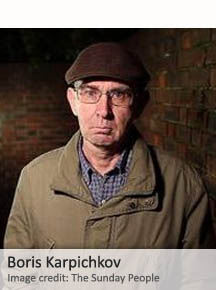
Boris KarpichkovBy JOSEPH FITSANAKIS | intelNews.org
A former major in the Soviet KGB has told the British press that a team of Russian intelligence operatives posing as diplomats “tricked” American intelligence defector Edward Snowden into going to Moscow. Many believe that Snowden, a former computer expert for the United States Central Intelligence Agency and the National Security Agency, was recruited by Russian intelligence before defecting to Moscow in June 2013. But former Soviet and Russian intelligence operative Boris Karpichkov has said in an interview that Snowden never intended to defect to Russia, but was lured there by a team of Russians spies. Karpichkov was a major in the Soviet KGB and its domestic-security successor, the FSB, where he worked for 15 years. In the mid-1990s, however, he gradually fell out with his employer and was imprisoned for several months before managing to leave his homeland using one of several false passports that had been supplied to him by Russian intelligence. In 1998 he entered Britain, where he lives with his family today, having been granted political asylum. He told British tabloid newspaper Sunday People that Snowden had first attracted the attention of Russian intelligence in 2007, while he was posted by the CIA to Geneva, Switzerland. During his time there, Snowden posed as a diplomat while maintaining the security of the CIA’s computer facilities located on Swiss soil. According to Karpichkov, the SVR, the post-Soviet successor of the KGB’s foreign-intelligence department, first opened a file on Snowden at that time, and kept updating it for six years, having identified the American computer technician as a “potential defector”. The former KGB operative told the British newspaper that the SVR moved quickly after it emerged that Snowden had abandoned Hawaii, where he had been posted by the NSA, and was hiding in a Hong Kong hotel. He was eventually accosted by a group of SVR spies posing as Russian diplomats. The group managed to persuade him, says Karpichkov, that the Russian government would be able to offer him protection in Moscow while he made up his mind over which country to apply to for political asylum. Read more of this post

Coroner’s report sees Russian state behind ex-KGB spy’s death

Alexander LitvinenkoBy JOSEPH FITSANAKIS | intelNews.org
A previously classified report by the British government official who certified the 2006 death of former KGB officer Alexander Litvinenko states that the Russian state was directly implicated in the murder. Litvinenko was an employee of the Soviet KGB and one of its successor organizations, the FSB, until 2000, when he defected with his family to the UK. He soon became known as a vocal critic of the administration of Russian President Vladimir Putin. In 2006, Litvinenko came down with radioactive poisoning soon after meeting former KGB/FSB colleague Andrey Lugovoy at a London restaurant. Many suspect that the Russian government is behind Litvinenko’s murder. In February of last year, Litvinenko’s family accused the British government of trying to block a probe into the murder case, after British Foreign Secretary William Hague limited the scope of a public inquest in to the matter on national security grounds. Supporters of Litvinenko have argued that White Hall has played down the Litvinenko murder case in order to preserve its trade ties with Russia’s government-owned energy companies. Members of the murdered spy’s family are now pushing for a full public inquiry into the incident, and are currently making the case before a specially appointed panel of judges at the High Court. In the course of this appeal, a previously classified document has emerged, which contains the report of Sir Robert Owen, the coroner who first examined the available evidence immediately after Litvinenko’s death. According to the document, which has been seen by the BBC, the coroner concluded that, based on “documents held by the UK government”, the “culpability of the Russian state in the death of Alexander Litvinenko” could be established “prima facie”. Read more of this post

Further evidence shows Litvinenko worked for MI6 when killed

Alexander LitvinenkoBy JOSEPH FITSANAKIS | intelNews.org
In 2012, a court in the United Kingdom was told that former KGB officer Alexander Litvinenko, who died of poisoning in 2006, had been working for British and Spanish intelligence when he was killed. Now British newspaper The Independent says it has proof that the late Russian spy provided “expert analysis” on Russian politics for British intelligence, shortly before his death. Litvinenko was an employee of the Soviet KGB and one of its successor organizations, the FSB, until 2000, when he defected with his family to the UK. He soon became known as a vocal critic of the administration of Russian President Vladimir Putin. In 2006, Litvinenko came down with radioactive poisoning soon after meeting a former KGB/FSB colleague, Andrey Lugovoy, at a London restaurant. Many suspect that the Russian government is behind Litvinenko’s murder. But the dead spy’s family has argued for years that his killers did not only kill an intelligence defector, but also an officer of British intelligence. On Thursday, The Independent said it had seen a diplomatic memo that was given to Litvnenko for analysis by British external intelligence agency MI6. The document, known in the British Foreign Office lingo as a “diptel” (diplomatic telegram), was dispatched to several British embassies around the world in 2000. It includes a descriptive analysis of a confidential meeting in London between British intelligence officials and Sergei Ivanov. Currently a political powerhouse in Putin’s administration, Ivanon was at the time an unknown quantity in Western circles. He had entered politics after having spent nearly two decades working for Soviet and Russian external intelligence. The diptel seen by The Independent outlines the exchange of views between Ivanov and the British officials during the meeting, and evaluates his stance on a broad range of issues, ranging from the rise of Islamic militancy, to China, the Middle East, and the role of the North Atlantic Treaty Organization. Read more of this post