News you may have missed #855
October 22, 2013
 By IAN ALLEN | intelNews.org
►►Russian spy agency seeks to expand internet surveillance. Under an order drafted by Russia’s Communications Ministry, communications service providers would have to install equipment that would record and save all internet traffic for at least 12 hours and grant the security services exclusive access to the data. The draft order, made public on Monday, has been drafted with the help of the Federal Security Service (FSB), the successor to the Soviet-era KGB spy agency. It would take effect in July if it receives final government approval.
►►World War I spy Mata Hari’s birthplace gutted by fire. A fire in the Netherlands has gutted the birthplace of exotic dancer and World War I spy Mata Hari, Dutch media said on Sunday. Mata Hari was born as Margaretha Geertruida Zelle on August 7, 1876, the daughter of a local shopkeeper. She was arrested and executed by firing squad in October 1917, aged 41, after being accused of being a German spy during the First World War. The fire consumed the hair salon that now occupies the place of Mata Hari’s birth, the only remainder untouched by the flames was a small statuette of her dancing, erected outside the shop.
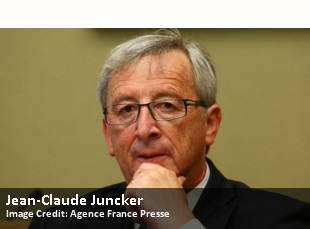
►►Luxembourg PM survives spy scandal in elections. Luxembourg’s Christian Democrat party of long-serving Prime Minister Jean-Claude Juncker easily remained the biggest party and the first choice to form a new coalition government following yesterday’s elections. Luxembourg was shocked into snap elections this summer after Juncker failed to contain a spying scandal centering on allegations of eavesdropping and wiretapping on politicians, and the keeping of files on ordinary citizens and leading figures dating back to the Cold War.

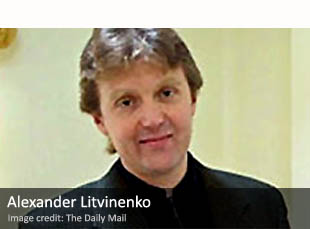








Further evidence shows Litvinenko worked for MI6 when killed
November 29, 2013 by Joseph Fitsanakis 1 Comment
In 2012, a court in the United Kingdom was told that former KGB officer Alexander Litvinenko, who died of poisoning in 2006, had been working for British and Spanish intelligence when he was killed. Now British newspaper The Independent says it has proof that the late Russian spy provided “expert analysis” on Russian politics for British intelligence, shortly before his death. Litvinenko was an employee of the Soviet KGB and one of its successor organizations, the FSB, until 2000, when he defected with his family to the UK. He soon became known as a vocal critic of the administration of Russian President Vladimir Putin. In 2006, Litvinenko came down with radioactive poisoning soon after meeting a former KGB/FSB colleague, Andrey Lugovoy, at a London restaurant. Many suspect that the Russian government is behind Litvinenko’s murder. But the dead spy’s family has argued for years that his killers did not only kill an intelligence defector, but also an officer of British intelligence. On Thursday, The Independent said it had seen a diplomatic memo that was given to Litvnenko for analysis by British external intelligence agency MI6. The document, known in the British Foreign Office lingo as a “diptel” (diplomatic telegram), was dispatched to several British embassies around the world in 2000. It includes a descriptive analysis of a confidential meeting in London between British intelligence officials and Sergei Ivanov. Currently a political powerhouse in Putin’s administration, Ivanon was at the time an unknown quantity in Western circles. He had entered politics after having spent nearly two decades working for Soviet and Russian external intelligence. The diptel seen by The Independent outlines the exchange of views between Ivanov and the British officials during the meeting, and evaluates his stance on a broad range of issues, ranging from the rise of Islamic militancy, to China, the Middle East, and the role of the North Atlantic Treaty Organization. Read more of this post
Filed under Expert news and commentary on intelligence, espionage, spies and spying Tagged with Alexander Litvinenko, assassinations, FSB, KGB, MI6, News, Russia, Sergei Ivanov, suspicious deaths, UK, Yuri Felshtinsky