Chechen shot dead in broad daylight in Berlin, Russian spy services suspected
August 28, 2019 Leave a comment
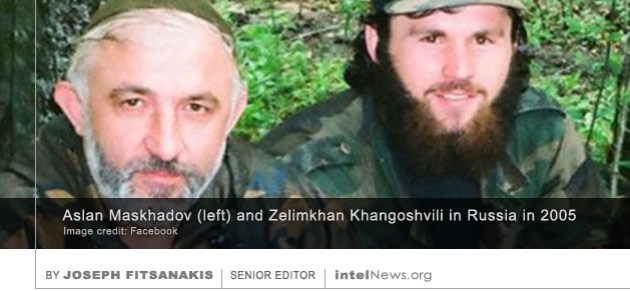 Authorities in Germany suspect that Moscow may have been behind the assassination of a Chechen separatist who was shot in broad daylight in Berlin by a man wearing a wig and carrying a pistol fitted with a silencer. The victim of the attack was Zelimkhan Khangoshvili, 40, who was a leading figure in the so-called Second Chechen War. The conflict pitted the Russian military against groups of Muslim fighters in the North Caucasus between 1999 and 2009.
Khangoshvili, a Muslim who was born in Georgia, was a bodyguard of Aslan Maskhadov, the self-described leader of the Muslim separatists in the Northern Caucasus. Maskhadov was killed in 2005 in a raid by Russian Special Forces, and Khangoshvili fled to his native Georgia. In 2015, Khangoshvili sought political asylum in Germany after two men tried to kill him in Tbilisi. The German authorities initially placed him on a terrorism watch list, but removed him after he began to collaborate with German counterterrorism agencies and participate in programs designed to de-radicalize Muslim youth.
Khangoshvili was reportedly killed last Friday as he was walking to his local mosque. Witnesses said a man on a bicycle approached Khangoshvili from behind as he was walking in the middle of Kleiner Tiergarten, a small park in downtown Berlin. The cyclist shot Khangoshvili and then immediately fled the scene on his bicycle. Police later found a Glock 26 semi-automatic pistol fitted with a silencer, a wig and the assailants bicycle. All had been dumped in a nearby lake. Later that evening the police announced the arrest of a Russian citizen identified only as “Vadim S.”, who is alleged to have shot Khangoshvili.
German newsmagazine Der Spiegel quoted Martin Steltner, from the Berlin prosecutor’s office, who said that Vadim S. had arrived in Berlin from Moscow via Paris less than a week before Khangoshvili’s murder. Steltner added that there were “indications the deed was pre-planned and may have political motives behind it”. An anonymous source from German intelligence told Der Spiegel that “if it turns out that a state actor like Russia is behind this, we will have a second [Sergei] Skripal case on our hands, with all that this entails”.
► Author: Joseph Fitsanakis | Date: 28 August 2019 | Permalink
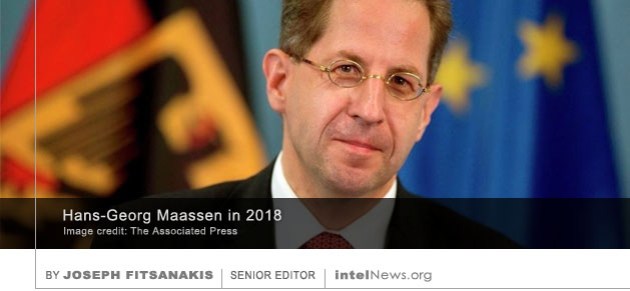 The successor to Angela Merkel in the leadership of Germany’s ruling Christian Democratic Union (CDU) urged the removal from the party of the country’s former spy chief for expressing far-right views. But she later appeared to retract her comments. Hans-Georg Maassen led Germany’s Federal Office for the Protection of the Constitution (BfV) from August 2012 until his removal last September. His BfV career was abruptly
 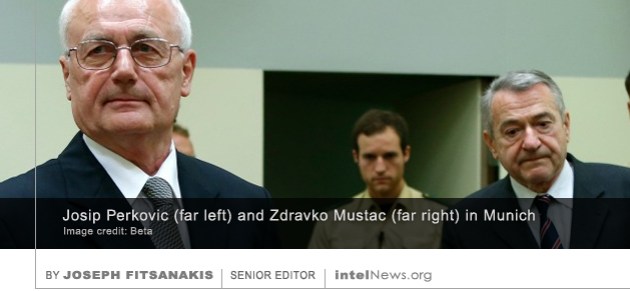 Germany has extradited a former senior official of the Yugoslav intelligence service to Croatia, where he is expected to serve a 30-year prison sentence for organizing the assassination of a dissident in Munich in 1983. Josip Perković is a former senior official in the Yugoslav State Security Service, known as UDBA. In 2014, he was extradited to Germany from Croatia alongside another former UDBA officer Zdravko Mustać. The two men were tried in a German court in the Bavarian capital Munich for organizing the assassination of Stjepan Đureković on July 28, 1983. Đureković’s killing was carried out by UDBA operatives in Wolfratshausen, Bavaria as part of a UDBA operation codenamed DUNAV. Đureković, who was of Croatian nationality, was director of Yugoslavia’s state-owned INA oil company until 1982, when he suddenly defected to West Germany. Upon his arrival in Germany, he was granted political asylum and began associating with Croatian nationalist émigré groups that were active in the country. It was the reason why he was killed by the government of Yugoslavia.
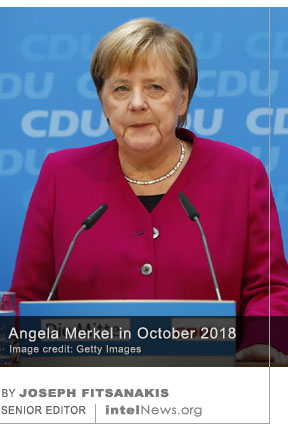 Foreign intelligence agencies are allegedly trying to acquire the medical file of German Chancellor Angela Merkel after she was seen trembling uncontrollably in public twice in as many weeks. Reports about foreign spy interest in Merkel’s health emerged in German and British newspapers last weekend, after the German chancellor was seen trembling during high-level meetings earlier this month. The first incident took place during an official meeting with Ukrainian President Volodymyr Zelensky on June 18. The German Chancellery said Merkel had suffered from dehydration and “felt like herself again after drinking a few cups of water”. But the tremors were back again on June 27 during the German leader’s visit to Japan for the G20 Summit.
 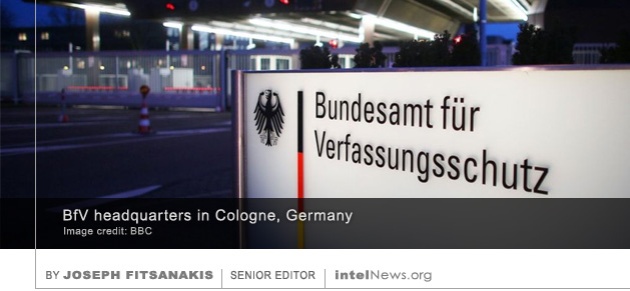 Turkey’s spy agency has developed a smart phone application to enable pro-government Turks living in Germany inform on their compatriots who speak out against the ruling Justice and Development Party (AKP). The existence of the phone application was revealed in the annual report of the Federal Office for the Protection of the Constitution (BfV), Germany’s primary counterintelligence agency. The report covers terrorist and foreign intelligence activity that took place in 2018 in Baden-Württemberg, a state in southwest Germany that borders Switzerland and France. Deutsche Welle, Germany’s state broadcaster, which
 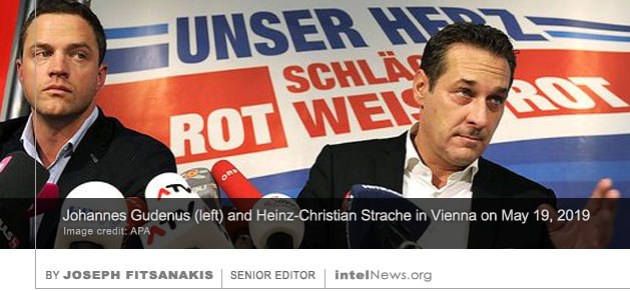 Israeli intelligence was likely behind the leaked video that brought down the far-right governing coalition in Austria on Monday, according to the former deputy director of Germany’s spy agency. The surreptitiously recorded video was
 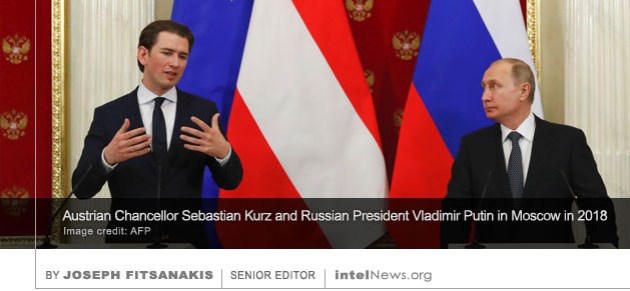 A day after Austria’s political system was thrown into a disarray by a covert video featuring the country’s vice chancellor and a woman posing as a Russian investor, German intelligence sources have raised fears that Russia may have penetrated the Austrian government with informants. Heinz-Christian Strache, who heads Austria’s far-right Freedom Party, stepped down from the post of vice chancellor on Saturday. His resignation came a day after two German media outlets aired a
  German intelligence officials appear to be dismissing Washington’s warning that it will limit security cooperation with Berlin if China’s Huawei Telecommunications is allowed to build Germany’s 5G network. The company, Huawei Technologies, is a private Chinese venture and one of the world’s leading telecommunications hardware manufacturers. In recent years, however, it has come under scrutiny by some Western intelligence agencies, who view it as being too close to the Communist Party of China. More recently, Washington has intensified an international campaign to limit Huawei’s ability to build the infrastructure for 5G, the world’s next-generation wireless network. Along with Britain, Australia and Canada, the US is concerned that the Chinese telecommunications giant may facilitate global wiretapping on behalf of Beijing’s spy agencies.
 The United States has warned Germany that intelligence sharing between the two countries will be threatened if the Chinese telecommunications giant Huawei is awarded a contract to build Germany’s 5G network. The company, Huawei Technologies, is a private Chinese venture and one of the world’s leading telecommunications hardware manufacturers. In recent years, however, it has come
 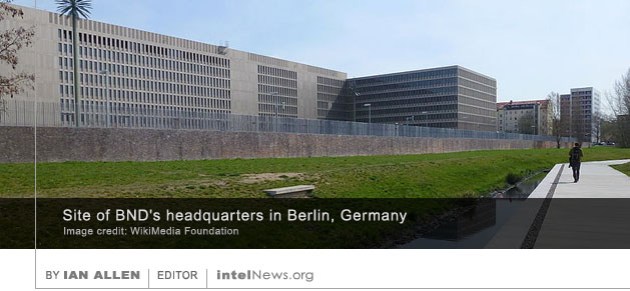 The chancellor of Germany has officially inaugurated the largest headquarters of any spy agency in the world. Last Friday, Angela Merkel led the public ceremony that marked the opening of the Zentrale des Bundesnachrichtendienstes, which is the new headquarters of the German Federal Intelligence Service. Known by the initials BND, the agency operates as Germany’s primary foreign intelligence service. It employs close to 7,000 people in more than 300 locations around the world, and its annual budget is approximately €1 billion ($1.13 billion).
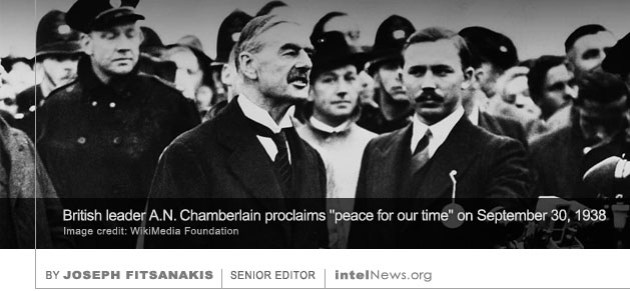 Nearly 2,000 missing British intelligence files relating to the so-called Munich Agreement, a failed attempt by Britain, France and Italy to appease Adolf Hitler in 1938, may not have been destroyed, according to historians. On September 30, 1938, the leaders of France, Britain and Italy signed a peace treaty with the Nazi government of German Chancellor Adolf Hitler. The treaty, which became known as the Munich Agreement, gave Hitler de facto control of Czechoslovakia’s German-speaking areas, in return for him promising to resign from territorial claims against other countries, such as Poland and Hungary. Hours after the treaty was formalized, British Prime Minister Neville Chamberlain arrived by airplane at an airport near London, and boldly proclaimed that he had secured “peace for our time” (pictured above). Contrary to Chamberlain’s expectations, however, the German government was emboldened by what it saw as attempts to appease it, and promptly proceeded to invade Poland, thus firing the opening shots of World War II in Europe.
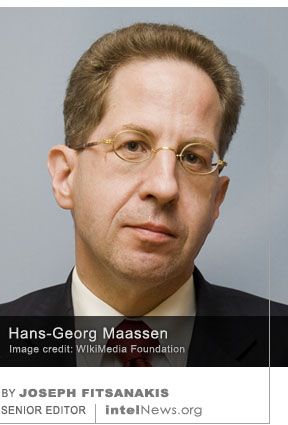 Germany’s fragile ruling coalition continues to face strong criticism two days after removing the country’s domestic intelligence chief over concerns that he may harbor far-right sympathies. Hans-Georg Maassen, a career civil servant, led Germany’s Federal Office for the Protection of the Constitution (BfV) from August 2012 until his removal on Thursday of this week. His hasty removal from the BfV was caused by the so-called
  Germany has dropped a criminal case against the second-in-command of Switzerland’s intelligence agency, who was accused by Berlin of authorizing an espionage operation against the German tax collection service. A year ago, Germany launched an








Turkey arrests German embassy lawyer on espionage charges
November 21, 2019 by Joseph Fitsanakis 2 Comments
The newsmagazine said the lawyer had been hired by the German embassy to obtain information about Turkish citizens who had applied for political asylum in Germany. German authorities would regularly give the lawyer identifying information about asylum applicants. The lawyer would then verify with Turkish police that the applicants had a blank criminal record and were not wanted for participation in criminal activity. The German embassy would then forward the information collected by the lawyer to the German Federal Office for Migration and Refugees (known in Germany as BAMF), which would subsequently approve or reject the asylum applications.
Following the lawyer’s arrest by the Turkish National Intelligence Service (MİT), German authorities are concerned that the Turkish government has seized identifying information on at least 50 Turkish applicants for political asylum in Germany. Some of these applicants are reportedly members of Turkey’s persecuted Kurdish minority. Others are alleged supporters of Fethullah Gülen a United States-based former political ally of Turkish President Recep Tayyip Erdoğan, who Turkey accuses of having orchestrated the failed 2016 military coup against Erdoğan.
The German Foreign Office has described the lawyer’s arrest as “incomprehensible” and has reportedly warned those asylum seekers affected by it that their safety may be endangered. Meanwhile, German diplomats are engaged in high-level talks with the Turkish government to secure the lawyer’s release, according to Spiegel. The effort is being led by no other than Martin Erdmann, a veteran diplomat who is serving as Germany’s ambassador to Turkey.
► Author: Joseph Fitsanakis | Date: 21 November 2019 | Permalink
Filed under Expert news and commentary on intelligence, espionage, spies and spying Tagged with espionage, German embassy in Turkey, Germany, Martin Erdmann, MİT (Turkey), NATO, News, Turkey