Ex-Yugoslav spy testifies in German trial about 1983 murder of dissident
July 6, 2016 Leave a comment
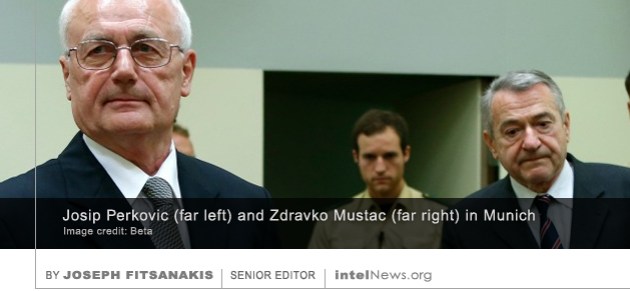 A former officer in the Cold-War-era Yugoslav intelligence service has begun testifying at a trial concerning the 1983 murder in Germany of a Yugoslav dissident by assassins sent by authorities in Belgrade. Stjepan Đureković, who was of Croatian nationality, defected from Yugoslavia to Germany in 1982, while he was director of Yugoslavia’s state-owned INA oil company. Upon his arrival in Germany, he was granted political asylum and began associating with Croatian nationalist émigré groups that were active in the country. He was killed on July 28, 1983, in Wolfratshausen, Bavaria. His killing was part of an operation codenamed DUNAV, which was conducted by the Yugoslav State Security Service, known by its Serbo-Croatian acronym, UDBA.
In 2009, following testimonies by several former UDBA agents, who were arrested in connection with the crime, the Office of the German Federal Prosecutor issued a European Arrest Warrant for Josip Perković, a former senior official in the UDBA. He is accused of having played a central role in organizing Đureković’s assassination. In 2014, Croatia, where Perković has been living since the demise of Yugoslavia, agreed to extradite Perković to Germany. The agreement materialized after heavy pressure was exercised on Croatia by the European Commission, after the country’s admission into the European Union.
Perković is now co-defendant in the trial taking place in Munich, along with another former UDBA intelligence official, Zdravko Mustać (see photo). Tuesday’s proceedings included testimony by another former UDBA man, Vinko Sindicić, who named both Perković and Mustać as direct accomplices in Đureković’s murder. Sindicić told the court that Perković was acting on orders to kill the German-based dissident, which came directly from the office of UDBA Director Zdravko Mustać. He added that Perković helped organize the logistics of Đureković’s assassination, including the location in Munich where the killing actually took place. Sindicić told the court that a female UDBA operative living in Munich was also involved in organizing the operation, and that the weapons used to kill Đureković had been secretly transported to Germany through Jadroagent, an international shipping and freight company based in Yugoslavia. During his testimony, which lasted for several hours, Sindicić claimed that the two men who carried out Đureković’s murder were UDBA assassins Branko Bijelić and Luka Sekula. The former died in 2004, but the latter still lives in Sweden and has yet to be extradited to Germany in connection with the murder trial.
It is worth noting that Sindicić spent a decade behind bars for his role in a failed attempt to kill another Yugoslav dissident émigré, Nikola Stedul, whom the UDBA tried to kill in the United Kingdom in 1988. Further charges against him were dropped in 2000, in a trial where he stood accused of complicity in the murder of yet another exiled Yugoslav dissident, Bruno Busić, who was killed in Paris in 1978. Both Perković and Mustać deny any involvement in Đureković’s assassination.
► Author: Joseph Fitsanakis | Date: 06 July 2016 | Permalink
 The senior executive body of the German government has approved draft legislation that reforms the country’s intelligence services, following revelations that Germany helped the United States spy on European states. The legislation is seen as a response by the German government to a number of recent public controversies involving the Bundesnachrichtendienst, Germany’s Federal Intelligence Service, known as BND.
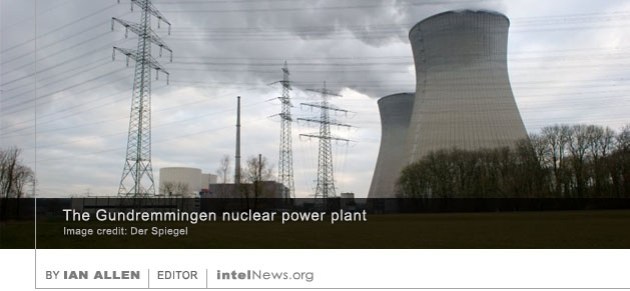 The computers of a nuclear power plant in southern Germany have been found to be infected with computer viruses that are designed to steal files and provide attackers with remote control of the system. The power plant, known as Gundremmingen, is located in Germany’s southern district of Günzburg, about 75 miles northwest of the city of Munich. The facility is owned and operated by RWE AG, Germany’s second-largest electricity producer, which is based in Essen, North Rhine-Westphalia. The company provides energy to over 30 million customers throughout Europe.
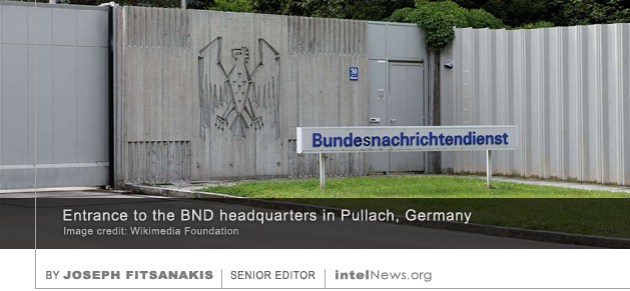 The head of Germany’s foreign intelligence agency has been removed from his post in a move described by observers as surprising. Gerhard Schindler, 63, had led Germany’s Federal Intelligence Service, known as Bundesnachrichtendienst, or BND, since 2012. Founded 60 years ago with direct input from the United States Central Intelligence Agency, the BND is today responsible for collecting intelligence abroad in the service of German national interests. Headquartered in the southern German city of Pullach, near Munich, the BND is directly subordinate to the office of German Chancellor Angela Merkel.
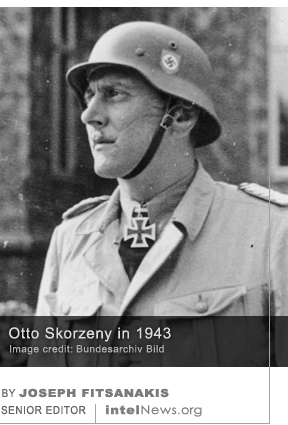 A notorious lieutenant colonel in the Waffen SS, who served in Adolf Hitler’s personal bodyguard unit, worked as a hitman for the Israeli intelligence agency Mossad after World War II, it has been revealed. Austrian-born Otto Skorzeny became known as the most ruthless special-forces commander in the Third Reich. Having joined the Austrian branch of the National Socialist German Workers’ Party at 19, at age 23 Skorzeny began serving in the Waffen SS, Nazi Germany’s conscript army that consisted largely of foreign-born fighters. In 1943, Hitler himself decorated Skorzeny with the Knight’s Cross of the Iron Cross, in recognition of his leadership in Operation EICHE, the rescue by German commandos of Italian fascist dictator Benito Mussolini, who had been imprisoned at a ski resort in the Apennine Mountains following a coup against his government.
 A court in Germany has sentenced a former officer of the country’s intelligence agency, who spied for the United States and Russia from 2008 to 2014. Regular readers of this website will recall the case of ‘Markus R.’, a clerk at the Bundesnachrichtendienst, or BND, Germany’s external intelligence agency. The 32-year-old was
  Authorities in a northern German town have called on the Israeli embassy in Berlin to pay for the cost of extricating a car belonging to two Israeli spies, which was stuck in a mud pit in a restricted area. According to the Hamburg-based television station NDR, the
 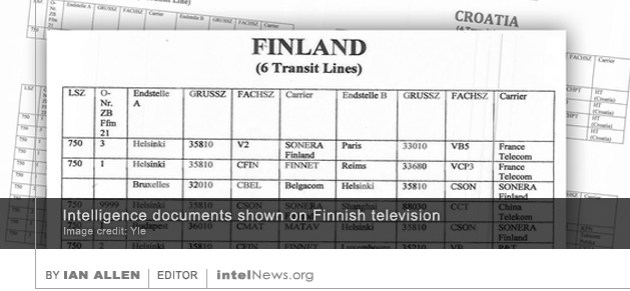 German intelligence, possibly with the collaboration of the United States, monitored communications lines connecting Finland with at least five countries in the early 2000s,
 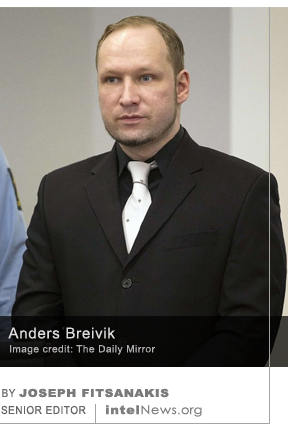 Police in Germany caught Anders Breivik with ammunition and weapon parts in 2009, two years before he killed nearly 80 people in Norway, but did not arrest him and failed to notify Norwegian police, according to a new documentary. Breivik is a jailed far-right terrorist, who in 2011 single-handedly perpetrated two terrorist attacks that killed 8 people in Norwegian capital Oslo and another 69 on the island of Utøya. During his trial, he said he killed his victims, most of whom were participants at a Norwegian Labor Party summer camp, in order to protest against “multi-culturalism” and “Islamization” in Norway. The attack, which included the use of a car bomb and semi-automatic weapons, is considered the deadliest terrorist incident in Norway’s history since World War II.
 A report by Germany’s primary intelligence agency warns that internal power struggles and broader geopolitical changes are turning the Kingdom of Saudi Arabia into a major source of regional instability. The
 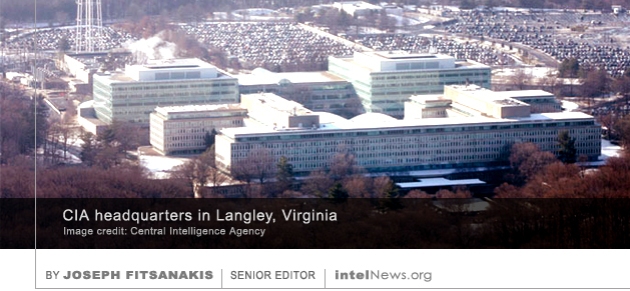 The United States Central Intelligence Agency had direct and unfiltered access to telecommunications data exchanged between German citizens, according to a new document that has surfaced in the German press. The program, codenamed GLOTAIC, was a collaboration between the CIA and Germany’s Federal Intelligence Service, known as BND. According to German newsmagazine Der Spiegel, which
  A German intelligence officer, who is accused of spying for the United States Central Intelligence Agency, has been
  The German and Dutch governments allegedly joined forces to investigate a Russian supercomputer specialist, who studied in Germany and Holland, suspecting him of passing technical information to Russian intelligence. German weekly newsmagazine Der Spiegel, which published the report in its current issue, identified the physicist only as “Ivan A.” and said that the 28-year-old man was a member of a physics laboratory affiliated with the Max Planck Institute in the western German city of Bonn.
 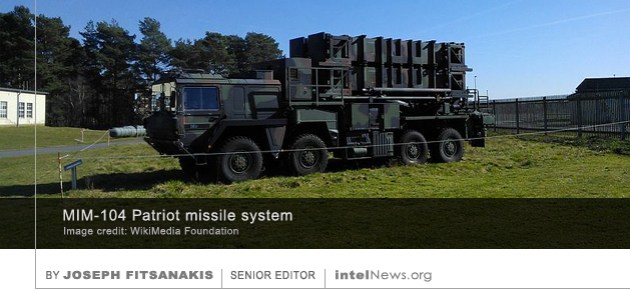 A Patriot missile system stationed in Turkey by the North Atlantic Treaty Organization (NATO) was allegedly hacked by a remote source, according to reports. German magazine Behörden Spiegel






 intelNews.org
German intelligence spied on EU and NATO allies, report finds
July 12, 2016 by Ian Allen Leave a comment
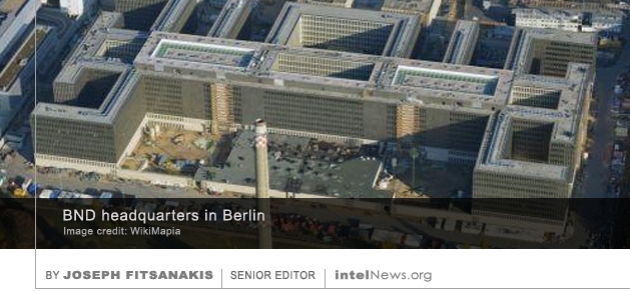
In 2015, the BND was found to have secretly collaborated with the US National Security Agency (NSA) in spying on several European governments and private companies. According to German investigative magazine Der Spiegel, the BND used its facilities at Germany’s Bad Aibling listening station to help the NSA spy on, among other targets, the palace of the French president in Paris, the headquarters of the European Commission in Brussels, and the France-based European conglomerate Airbus. In response to the revelations, Airbus filed a criminal complaint against the German government, while Belgium and Switzerland launched official investigations into the joint BND-NSA activities. The extent of the BND-NSA collaboration prompted widespread public criticism in Germany. In response to the criticism, German Chancellor Angela Merkel promptly fired the director of the BND in April of this year. Additionally, the German chancellor authorized a parliamentary inquiry into the operations of the BND, which was completed last spring.
The resulting 300-page report has not been made public. But summaries leaked to the German media reveal that the BND spied on 3,300 targets until the end of 2013. Nearly 70 percent of these targets belonged to countries that are members of the European Union or the North Atlantic Treaty Organization, and are thus some of Germany’s closest international allies. The targets allegedly included “hundreds of diplomatic missions” in Europe and elsewhere, as well as heads of state, government ministers, aides to foreign cabinet officials, and heads of foreign militaries. The report summary also states that the BND targeted non-governmental organizations and private corporations that are operate in the areas of aviation, weapons design, transportation, advertising and the media.
Last month, the German cabinet approved draft legislation that aims to reform the BND. The legislation explicitly bans the agency from spying on foreign governments or corporations for the benefit of German companies. It also prevents it from spying on targets within the European Union, unless the operation pertains to “information to recognize and confront threats to internal or external security”. The legislation also calls for the establishment of a new independent oversight body consisting of senior judges and representatives of the Office of the Federal Prosecutor, whose job will be to evaluate and approve the BND’s proposed espionage activities against foreign targets.
► Author: Ian Allen | Date: 12 July 2016 | Permalink
Filed under Expert news and commentary on intelligence, espionage, spies and spying Tagged with BND, EU, Germany, intelligence oversight, intelligence reform, NATO, News