German intelligence agency spied on thousands of targets in the United States
June 23, 2017 2 Comments
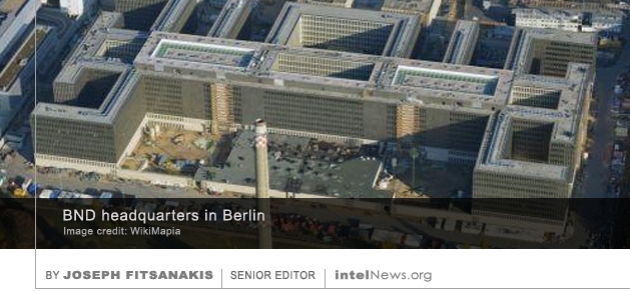 The foreign intelligence service of Germany spied on at least 4,000 targets in the United States from 1998 until 2006, according to a leaked document published yesterday by leading German newsmagazine Der Spiegel. The German investigative weekly said that the surveillance was carried out by the German Federal Intelligence Service, known as BND. The Hamburg-based magazine claimed to have in its possession a list of approximately 4,000 “selector keywords”, unique distinguishing terms, addresses or numbers that identify individual targets for surveillance. The list allegedly includes names, telephone or fax numbers, and email addresses of people that the BND had identified as worthy of individual attention between 1998 and 2006.
According to Der Spiegel, the list of targets in the United States includes officials in the White House, the Department of the Treasury and the Department of State. Their work and private phone numbers, and often emails, are listed in the BND document. The latter also focuses on the American military sector, paying particular attention to the US Air Force and the Marine Coprs. Other targets include the National Aeronautics and Space Administration and the Defense Intelligence Agency, the US Pentagon’s intelligence organization. In addition to US government targets, the BND exercised surveillance on American companies with ties to the state, such as Lockheed Martin, as well as state-owned universities. The leaked list also includes targets in international organizations that have an institutional presence in the US, such as the International Monetary Fund and the Arab League, which has an office in Washington. Hundreds of foreign embassies and consulates in the US were also targeted, said Der Spiegel.
German-American relations suffered a major setback in 2013, when it was revealed that Washington had spied on the personal cell phone of German Chancellor Angela Merkel. In response to the revelations, Germany expelled the Central Intelligence Agency’s station chief in Berlin —the most senior American intelligence officer in the country. It remains to be seen whether Thursday’s revelations will affect the current relations between the two transatlantic allies. Neither the BND nor the US embassy in Berlin responded to questions about Der Spiegel‘s report.
► Author: Joseph Fitsanakis | Date: 23 June 2017 | Permalink
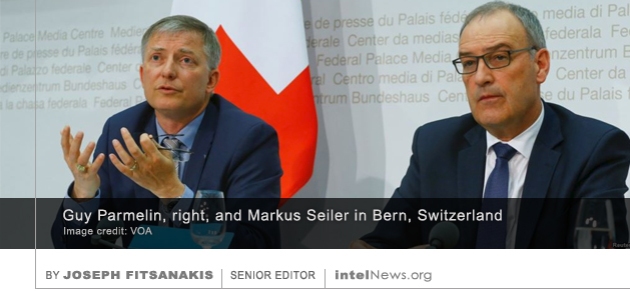 Senior Swiss government officials, including the defense minister and the director of the country’s intelligence agency, have defended Switzerland’s right to spy on European tax-fraud investigators who meddle in Swiss affairs. Earlier this week, German authorities
  Authorities in Germany have announced the arrest of a Swiss national who was allegedly spying on the activities of German tax-fraud investigators in Frankfurt. According to prosecutors in the German state of Hesse, of which Frankfurt is the largest city, the Swiss man was arrested on Friday and is currently in custody. He has been identified only as Daniel M., and is believed to be in his mid-50s. According to news reports, German counterintelligence officers had been monitoring the suspect for over a year. They were issued a warrant for his arrest in December of last year, but waited until he was on German soil to arrest him. He was arrested at Frankfurt Airport.
 The same group cyber-spies that attacked the campaign of French presidential candidate Emmanuel Macron is now attacking German institutions that are connected to the country’s ruling coalition parties, according to a report by a leading cyber-security firm. The Tokyo-based security software company Trend Micro published a 41-page report on Tuesday, in which it tracks and traces the attacks against French and German political targets over the past two years. The report, entitled
 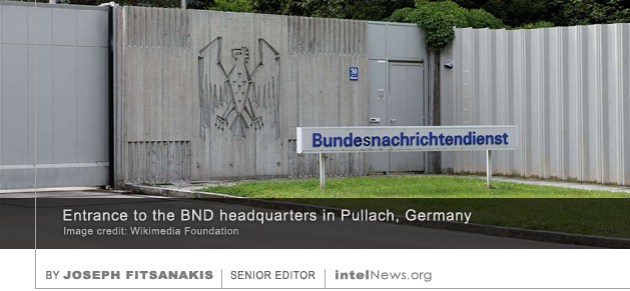 Earlier this week, it was
 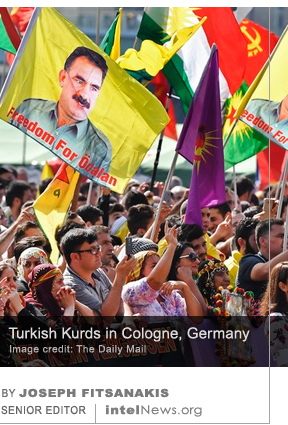 German intelligence and security agencies have publicly rejected a direct request made by Turkey’s intelligence chief to gather information on Turks who are living in Germany and are critical of the Turkish government. The request reportedly relates to attempts by the Turkish government to round up its critics, following a failed military coup in July of last year. The government of Turkish President Recep Tayyip Erdoğan accuses members of the so-called Gülen movement of orchestrating the coup, which included an armed attack on the country’s parliament and the murder of over 200 people across Turkey. The Gülen movement consists of supporters of Muslim cleric Fethullah Gülen, who runs a global network of schools, charities and businesses from his home in the United States. The government of Turkey has designated Gülen’s group a terrorist organization and claims that its members have stealthily infiltrated state institutions since the 1980s.
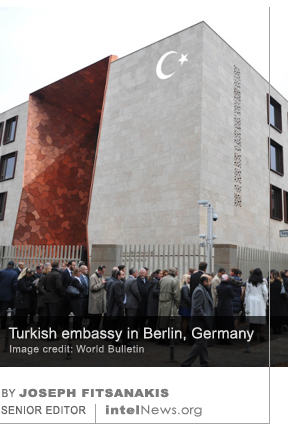 Turkish state agencies have asked the country’s diplomats stationed all over Europe to spy on Turkish expatriate communities there, in an effort to identify those opposed to the government, according to a German report. The government of Turkish President Recep Tayyip Erdoğan accuses members of the so-called Gülen movement of orchestrating a military coup in July of last year, which resulted in an armed attack on the country’s parliament and the murder of over 200 people across Turkey. The Gülen movement consists of supporters of Muslim cleric Fethullah Gülen, who runs a global network of schools, charities and businesses from his home in the United States. The government of Turkey has designated Gülen’s group a terrorist organization and claims that its members have stealthily infiltrated state institutions since the 1980s.
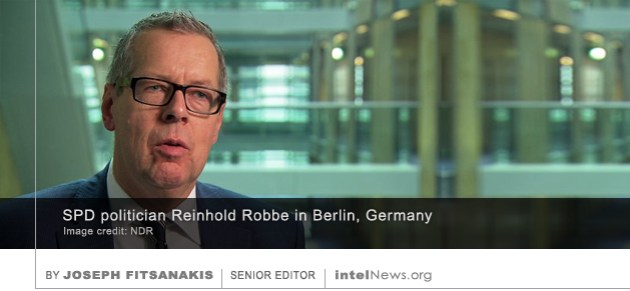 Authorities in Germany have pressed espionage charges against a Pakistani man who allegedly spied for Iran and even compiled lists of potential targets for assassination. The man, who has been identified in media reports only as “Syed Mustafa H.”, is a 31-year-old worker at the German Aerospace Center in the northern German city of Bremen. He is also reportedly a graduate of the Materials Science and Production Engineering department of the Universität Bremen. According to court documents, he is believed to have been spying for Iranian intelligence since the summer of 2015. It appears that the Federal Office for the Protection of the Constitution (BfV), Germany’s domestic intelligence agency, had been aware of the man’s espionage activities for at least a year prior to his arrest.
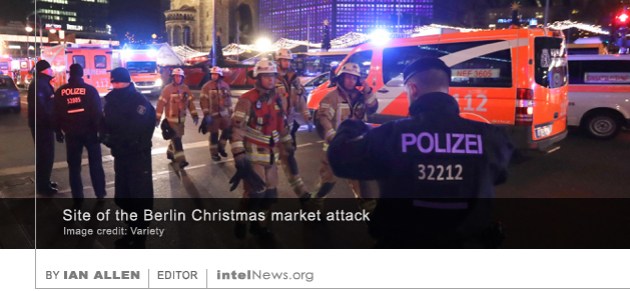 The central suspect in the Berlin Christmas market attack had been on the radar of German security agencies since January of this year, because he had links with radical Islamists and sought to buy guns for a terrorist attack. Anis Amiri, 23, left his native Tunisia in 2011, soon after the outbreak of the so-called Arab Spring there. He lived in Italy for three years before arriving in Germany in July 2015. In April of this year, he applied for an asylum in Germany. According to German authorities, Amiri was arrested multiple times in Tunisia for drug-related offenses. He is also believed to have used at least six different aliases since moving to Europe, and to have claimed to be a citizen of Lebanon and Egypt at different times.
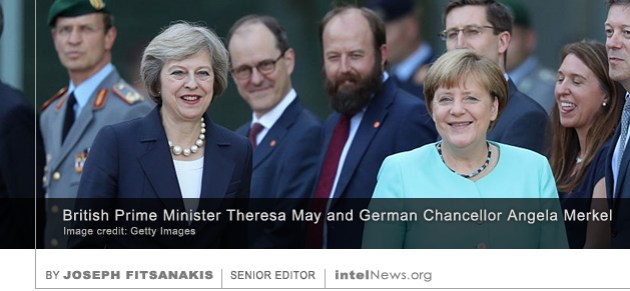 A reported discord between British and German intelligence services, which began in 2014, allegedly persists and now constitutes the “biggest rift between [the] secret services” of the two countries “since World War II”. According to British newspaper The Daily Mail, the Germans accuse Britain of working with the United States to spy on Berlin, while the British government says German intelligence agencies cannot be trusted to safeguard classified information. In an
 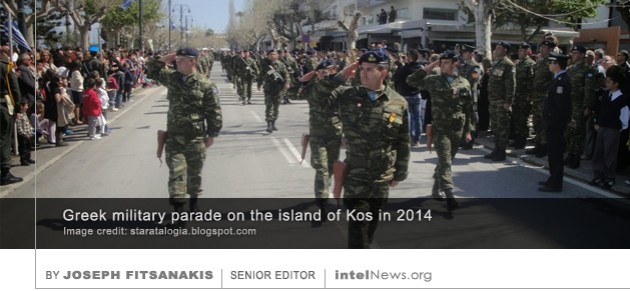 A German retiree living in Greece, who admitted in court that he was part of a network of German and other Western European residents of Greece recruited as spies by Turkish intelligence, has been jailed for 14 years. The 65-year-old man, who has not been named, was arrested two years ago in the southeastern Aegean island of Kos. He was born in Cold-War-era East Germany and worked as a locksmith before serving for 15 years in the East German National People’s Army. From 2009 to 2012, he lived in Turkey before moving permanently to Greece.
 At least 35 Turkish nationals with diplomatic passports have applied for political asylum in Germany following last July’s failed military coup in Turkey, according to German authorities. The administration of Turkish President Recep Tayyip Erdoğan accuses members of the so-called Gülen movement of orchestrating the coup, which included an armed attack on the country’s parliament and the murder of over 200 people across Turkey. The Gülen movement consists of supporters of Muslim cleric Fethullah Gülen, who runs a global network of schools, charities and businesses from his home in the United States. The government of Turkey has designated Gülen’s group a terrorist organization and claims its members have stealthily infiltrated state institutions since the 1980s.








German parliament report on NSA spying contains little consensus
July 3, 2017 by Joseph Fitsanakis Leave a comment
Last Wednesday, after three years of work, the parliamentary committee, known officially as the “German Parliamentary Committee Investigating the NSA Spying Scandal”, presented its findings to the Bundestag. They consist of thousands of pages of technical details concerning interception methods and capabilities. However, the final report fails to draw concrete conclusions, and its concluding section does not reflect a consensus among the committee’s members. The section begins by noting that, “unfortunately, despite an initial shared conviction by all parliamentary groups about the need for the investigation, substantial disagreements emerged between the governing and opposition groups, concerning the methodology and goals of the committee’s work”. Read more of this post
Filed under Expert news and commentary on intelligence, espionage, spies and spying Tagged with civil liberties, Edward Snowden, Germany, intelligence cooperation, intelligence oversight, News, NSA