News you may have missed #400 (Wikileaks Afghan War Diary edition)

  • Roundtable discussion on Wikileaks Afghan war files. Democracy Now hosts a freely-available hour-long discussion on the recent Wikileaks exposure of nearly 92,000 classified military reports on the Afghan war, with independent British journalist Stephen Grey; Pentagon Papers whistleblower Daniel Ellsberg; former State Department official in Afghanistan Matthew Hoh; independent journalist Rick Rowley; and investigative historian Gareth Porter.
  • Are the Wikileaks war docs overhyped old news? This appears to be the view of Danger Room‘s Spencer Ackerman, who suggests that “so far, there’s no My Lai, no No Gun Ri, no smoking gun linking al-Qaeda to the Boston Red Sox. And some of the heavy-breathing accounts surrounding the documents don’t really match what the logs say”.
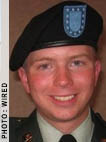
  • Pentagon investigating source of leak. The investigation into the biggest leak in US military history centers on Bradley Manning, a US Army intelligence analyst, who allegedly boasted online that he was going to reveal “the truth” about the war in Afghanistan.

Bookmark and Share

Largest leak in US military history reveals Afghan war details

WikiLeaks

WikiLeaks

By JOSEPH FITSANAKIS | intelNews.org |
American, British and German military planners are scrambling to contain the political impact of a massive cache of classified reports from Afghanistan, which has been leaked by an anti-secrecy activist group. It has now become known that, several weeks ago, the group Wikileaks.org handed over a total of 91,731 classified incident and intelligence reports from the US-led occupation force in Afghanistan to American newspaper The New York Times, British broadsheet The Guardian, and German newsmagazine Der Spiegel. All three outlets agreed to examine the material, abiding by Wikileaks’ condition that they would wait until Sunday, July 25, to release it. All three news media published news of the leak almost simultaneously on Sunday night, (see here, here and here), and posted several of the files, which provide an unprecedented six-year archive (from 2004 to 2009) of day-to-day US-led military operations in Afghanistan. This unprecedented disclosure is believed to represent the largest public leak of classified material in US military history. Read more of this post
Comment: Washington Post’s ‘Top Secret America’

Dana Priest

Dana Priest

By JOSEPH FITSANAKIS | intelNews.org |
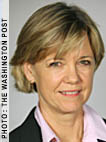
Like most intelligence observers, we at intelNews have monitored with interest The Washington Post’s recent investigation into the current state of the US intelligence complex. Authored by longtime investigative reporter Dana Priest and national security correspondent William Arkin, the three-part series offers a long-overdue examination of some of the most pressing issues in American intelligence. The articles are well written, detailed and informative, and intelNews recommends that they be read by all those interested in understanding broad trends in contemporary American intelligence. However, those readers interested in a sneak peak of some of the most important findings of the Post’s investigation, may wish to browse the helpful summary provided by Liz Goodwin, of Yahoo! News’ Upshot blog. In it, she delineates the main conclusions of the report, which –broadly speaking– focuses on three critical issues.

Read more of this post

News you may have missed #389

  • Secrecy over attack on Syrian nuclear plant unjustified, says ex-CIA chief. The secrecy surrounding the Israeli attack on the nuclear plant in eastern Syria in September 2007 was justified only for the period immediately after the operation, according to the CIA head at the time, Gen. Michael Hayden. That secrecy had been meant to save Syrian President Bashar al-Assad from embarrassment that could have provoked him to retaliate, argues Hayden in an authorized scholarly journal article.
  • No proof yet of Colombian spying, says Ecuador. Ecuadorean Security Minister Miguel Carvajal said Thursday that allegations that Colombian security agency DAS spied on Ecuadorean President Rafael Correa and other officials is “so far just a newspaper story”. Late last month, the Ecuadorean government threatened to break off diplomatic ties with Colombia over the media revelations.
  • GCHQ releases Stalin-era Soviet intercepts. A series of newly released telegrams and telephone conversations, intercepted by the UK’s General Communications Headquarters, paint a picture of Joseph Stalin’s regime in the immediate aftermath of the Second World War.

Bookmark and Share

US Army intel analyst arrested over Wikileaks probe

Bradley Manning

Bradley Manning

By IAN ALLEN | intelNews.org |
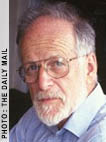
Speaking last Thursday at the annual Personal Democracy Conference in New York, Daniel Ellsberg said he was amazed that the US National Security Agency “can’t crack” Wikileaks. The former Pentagon employee, who in 1971 leaked the Pentagon Papers, was referring to the activist website that anonymously publishes secret governmental and corporate documents from around the world. But Ellsberg may have been talking too soon. On Sunday, Wired magazine’s Threat Level blog revealed that a US Army intelligence analyst had been detained for allegedly giving Wikileaks secret video footage and “hundreds of thousands of classified State Department records”. Specialist Bradley Manning, 22, was reportedly detained two weeks ago by the US Army’s Criminal Investigation Division while stationed in Forward Operating Base Hammer, near Baghdad, Iraq. Read more of this post

Essential links on WikiLeaks video of Iraq shooting

WikiLeaks

WikiLeaks

By JOSEPH FITSANAKIS | intelNews.org |
Whistleblower site WikiLeaks has released a leaked video taken from a US military helicopter in July 2007, showing US forces indiscriminately firing on Iraqi civilians, killing 12 people and wounding two children. The dead included two employees of the Reuters news agency. There are several edited versions of the video, which can be found in its entirety here. Cryptome offers a series of selected stills from the leaked WikiLeaks video, with some visual analysis of the footage. It is worth keeping in mind that the leaked video is of substantially lower quality than what the US helicopter pilots saw, because it was converted through several stages before it was released by WikiLeaks. Read more of this post

UK special forces chief trying to prevent book publication

SAS seal

SAS seal

By JOSEPH FITSANAKIS | intelNews.org |
The director of Britain’s Special Forces is actively trying to stop the publication of a new book that sheds unprecedented light on the elite combat group’s operations in Iraq. The official, whose name cannot be revealed for security reasons, has said that the book, authored by BBC journalist Mark Urban, will negatively impact the operational effectiveness of the Special Air Service (SAS) and other UK Special Forces units. The official’s objections have come to overshadow a compromise struck earlier this month between Mr. Urban’s publishers and the UK Ministry of Defence. Following four months of negotiations, the Ministry reportedly decided that the book “would not compromise the operational effectiveness of the SAS”. Read more of this post

News you may have missed #0285

  • Canadian government resists release of Cold-War-era files. Canadian journalists are fighting for the release of Cold-War-era government files on Tommy Douglas, a prominent social democratic politician idolized in Canada for his central role in establishing the country’s public health care system. But the government argues that releasing the files would imperil national security and compromise contemporary spy sources and methods.
  • NPR launches series on confidential informants. Informants are often considered a vital crime fighting tool; but what happens if those informants go astray? Washington-based National Public Radio is launching a special investigation into this controversial subject.
  • CIA returns to US university campuses. American anthropologist David Price explains that the US intelligence community is gradually re-establishing its academic recruitment network, which was shattered in the 1970s.

Bookmark and Share

US, UK spy agencies on alert after unprecedented court decision

Binyam Mohamed

Binyam Mohamed

By JOSEPH FITSANAKIS | intelNews.org |
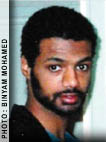
British and American intelligence agencies have been placed on alert following an unprecedented ruling by a British court, which forces the British government to disclose CIA documents in its possession. The documents relate to the case of Binyam Mohamed, an Ethiopian resident of Britain, who says he was severely tortured with the collaboration of the CIA and British domestic intelligence agency MI5, after he was renditioned to Morocco. Last February, two British judges overseeing Mr. Mohamed’s case revealed that the British government kept “powerful evidence” secret after being threatened by the US that it would “stop sharing intelligence about terrorism with the UK”. In July, it emerged that US Secretary of State Hillary Clinton personally threatened the British government that Washington would stop collaborating with London on intelligence matters if evidence in Mr. Mohamed’s case was publicly released. Read more of this post

News you may have missed #0280

  • Interview with Canadian ambassador who worked for the CIA. Iran’s Press TV has published an extensive interview with Ken Taylor, Canada’s former ambassador to Iran, who recently admitted that he secretly worked for the CIA in the late 1970s, after the US embassy in Iran was taken over by students during the Islamic Revolution. Part one of the interview is here. Parts two and three here, and parts four, five and six here.
  • US Pentagon’s black budget tops $56 billion. About $56 billion of the US Defense Department’s publicized 2010 budget goes simply to “classified programs” or to projects known only by their code names, like “Chalk Eagle” and “Link Plumeria”. That’s the Pentagon’s black budget, an it’s about $6 billion more than last year.
  • CIA agents working for private companies on the side. In the midst of two US wars and the fight against al-Qaeda, the CIA is offering operatives a chance to peddle their expertise to private companies on the side –a policy that gives financial firms and hedge funds access to the nation’s top-level intelligence talent.

US officials sought ‘national security’ clause to keep bailout details secret

Securities and Exchange Commission logo

SEC logo

By IAN ALLEN | intelNews.org |
US officials in charge of regulating securities exchanges sought to apply a ‘national security’ clause to information relating to the government’s bailout of giant insurance company American International Group (AIG). Emails obtained by Reuters show that, in November of 2008, the New York Federal Reserve (NYFR), which administered the bailout, collaborated with AIG in requesting that US Securities and Exchange Commission (SEC) officials apply “special security procedures” to shield bailout-related information from public scrutiny. Instead of dismissing the –possibly illegal– request, SEC officials advised NYFR and AIG to publicly file heavily redacted versions of the documents in question, and request “confidential treatment” for the redacted portions, citing ‘national security’ clauses. Read more of this post

Uproar as UK government classifies details of weapon expert’s death

Dr. David Kelly

Dr. David Kelly

By JOSEPH FITSANAKIS | intelNews.org |
Public speculation over the alleged suicide of UK biological weapons expert Dr. David Kelly is bound to increase, after a senior state official secretly ordered that details of his death be kept secret for 70 years. Dr. Kelly, a British Ministry of Defense scientist, who had been employed by the United Nations as a weapons inspector, caused a major stir by becoming one of the sources of a 2003 BBC report disputing the British government’s claim that Iraq could deploy chemical or biological weapons at 45 minutes’ notice. He was later called to appear before a Parliamentary committee investigating the government’s claims about Iraq’s purported ‘weapons of mass destruction’. But on July 18, 2003, four days after appearing before the committee, Dr. Kelly’s was found dead at a wooded area near his home. Read more of this post

Released cable reveals CIA decision to destroy torture tapes

CIA HQ

CIA HQ

By IAN ALLEN | intelNews.org |
The US Justice Department’s investigation into the destruction of videotapes by the CIA, which reportedly showed acts of torture committed during interrogations of terrorism detainees, began in 2007, but has stalled. The American Civil Liberties Union (ACLU) is spearheading what appears to be the only organized attempt to discover when and why those tapes were destroyed. Last year the ACLU uncovered that the CIA destroyed the videotapes in question after –not before, as the Agency had originally claimed– a spring 2004 report by the Agency’s inspector general, which described the interrogation methods employed on CIA prisoners as “constitut[ing] cruel, inhumane and degrading treatment”. Thanks to the ACLU, we have also known for quite some time that the decision to destroy the incriminating tapes was taken sometime in November of 2005. But now, with the release of a new batch of documents in response to an ACLU Freedom of Information Act lawsuit, we have the exact date that decision was taken: Read more of this post

News you may have missed #0248

  • Cuba insists jailed US contractor is secret service agent. Cuban officials say that a US citizen working for Maryland-based international aid group Development Alternatives Inc., who was arrested in Havana last month, was actually recruiting local Cubans to spy on the government.
  • Analysis: Spying in Eastern Europe heats up again. The Cold War may be 20 years dead and buried, but it seems that the old East-West spying game is not only alive and kicking, but gaining vigor in places like Warsaw, Prague and Tallinn.
  • Obama designates new list of secrecy gatekeepers. The US president has designated over two dozen officials as “original classification authorities” (OCAs), who have the power to classify government information as Top Secret or Secret, and (in most cases) to delegate such authority to their subordinates. Importantly, the directive says that OCAs will lose their job if they fail to “receive training in proper classification […] at least once a calendar year”.

Bookmark and Share

US court upholds NSA’s refusal to admit or deny wiretap data

Glomar Challenger

The Glomar

By IAN ALLEN | intelNews.org |
A US federal appeals court has concluded that the National Security Agency can refuse to admit or deny it possesses information about the US government spying on lawyers representing Guantánamo prison detainees. The decision by the 2nd US Circuit Court of Appeals in New York relates to a Freedom of Information Act (FOIA) request under a civil liberties lawsuit challenging post-9/11 warrantless surveillance operations by US agencies. The latter typically respond to most FOIA requests by confirming or denying possession of information relating to particular requests, and then by proceeding to either deny release, or release selected segments of the requested data. It is rare for an agency to refuse even to acknowledge the existence of information sought through FOIA. Read more of this post