News you may have missed #826 (suspicious deaths edition)

Pablo Neruda (right) and Salvador AllendeBy IAN ALLEN | intelNews.org |
►►Key suspect in Russian spy murder refuses to cooperate. Andrey Lugovoi, who is now an elected official in Russia, says he will not talk even by video to British investigators about the poisoning of Alexander Litvinenko in London just over six years ago. The murder of former Russian spy Alexander Litvinenko in London in 2006, has never been solved and remains the subject of conflicting narratives and still-deepening intrigue over who may have killed him and why.
►►Exhumation of Neruda’s remains set for April. A court in Chile has set April 8 as the date for the exhumation of the remains of the Nobel Prize-winning poet Pablo Neruda, as part of an inquest into his death. The poet and leftwing activist died 12 days after a military coup replaced the socialist President Salvador Allende with General Augusto Pinochet. The poet’s family maintains that he died at 69 of advanced prostate cancer. But in 2011, Chile started investigating allegations by his former driver, Manuel Araya Osorio, that the poet had been poisoned.
►►Venezuela to investigate Chavez murder allegations. Venezuelan officials have said they will set up an inquiry to investigate suspicions that President Hugo Chavez was “murdered by foreign agencies”. Venezuelan Oil Minister Rafael Ramirez told the BBC the United States and Israel were to blame for Chavez’s death, and that he had no doubt that Chavez’s death was an act “similar to Yasser Arafat’s“. Earlier this week, the US expelled two Venezuelan diplomats following the expulsion of two American officials from Caracas.

Israel wiretapped PLO head office in Tunisia: report

Yasser Arafat in Tunis in 1993By JOSEPH FITSANAKIS | intelNews.org |
Israeli intelligence was able to intercept the conversations of senior Palestinian leaders in Tunisia in the months leading to the 1993 Oslo Accords, according to an article published Monday by a leading Israeli newspaper. Veteran security correspondent Ronen Bergman wrote in Yedioth Ahronoth  that sophisticated listening devices were planted in the office of Mahmoud Abbas. Today, Abbas, known also as Abu Mazen, is the President of the Palestinian National Authority, based in the occupied West Bank. But in 1993 he was Deputy Chairman of the Palestinian Liberation Organization (PLO), serving under its founder and Chairman, Yasser Arafat. At that time, the PLO was headquartered in Tunisian capital Tunis, where it had relocated in 1982 after it was driven out of Lebanon during Israel’s invasion. Bergman said that the operation, codenamed GOLDEN FLEECE, was authorized by Shabtai Shavit, who was at the time Director of the Mossad, Israel’s primary covert-action agency. The operation, considered one of the Mossad’s most important and secret at the time, was carried out by a Palestinian agent who had been recruited by Israeli intelligence. The agent, described by Bergman as a “man within the PLO leadership”, was allegedly affiliated with Fatah, a Palestinian political party that has traditionally formed the largest faction within the PLO. The agent allegedly managed to plant at least two eavesdropping devices at the personal office of the PLO’s Vice Chairman, one in his office chair and one inside one of the desk lamps in the room. Bergman says that, on the day the devices became operational, Shavit held an emergency meeting to inform the Mossad’s senior commanders about their existence. Read more of this post
British journalists worked for MI6 during the Cold War: investigation

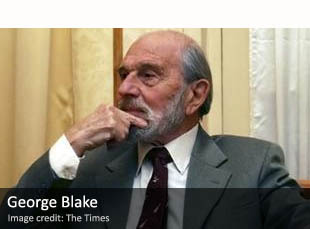
George BlakeBy JOSEPH FITSANAKIS | intelNews.org |
Numerous notable journalists working for some of Britain’s most prestigious publications routinely collaborated with British intelligence during the Cold War, according to a BBC investigation. In 1968, Soviet newspaper Izvestia published the contents of an alleged British government memorandum entitled “Liaison Between the BBC and SIS”. SIS, which stands for Secret Intelligence Service, also known as MI6, is Britain’s foremost external intelligence agency. The paper, which was the official organ of the Presidium of the Supreme Soviet of the USSR, claimed that the foreign correspondents of most leading British newspapers secretly collaborated with the British intelligence community. It also alleged that the BBC’s world radio service had agreed with MI6 to broadcast preselected sentences or songs at prearranged times. These signals were used by British intelligence officers to demonstrate to foreign recruits in the Eastern Bloc that they were operating on behalf of the UK. At the time, the BBC virulently rejected the Izvestia’s claims, calling them “black propaganda” aimed at distracting world opinion from the invasion of Czechoslovakia by Warsaw Pact troops, which had taken place some months earlier. But an investigation aired this week by the BBC Radio 4’s investigative Document program suggests that the memo published by the Soviet newspaper was probably genuine. The program says it discovered a memorandum in the BBC’s archives, which laments the embarrassment caused to MI6 by the Soviet claims. The memorandum, dated April 24, 1969, describes MI6 as “our friends”. The BBC program, which is available to listen to here, discusses the Soviets’ claims that several notable British journalists were MI6 agents. Read more of this post

News you may have missed #824 (India edition)

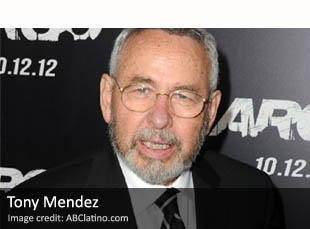
Tony MendezBy IAN ALLEN | intelNews.org |
►►CIA honed ARGO exfiltration skills in India. The Oscar-winning movie Argo has popularized the 1980 exfiltration by the CIA of a group of American diplomats from Tehran. But few know that Tony Mendez, the CIA officer in charge of the Iran operation, cut his teeth exfiltrating CIA targets in India. In his book, titled Argo, Mendez mentions the 1970 exfiltration of a Soviet defector in India codenamed Nestor. He claims that Nestor was a “huge catch” for the CIA, as he provided the Agency with “invaluable intelligence on the KGB’s operations in Central and Southeast Asia”.
►►Ex-CIA officer says al-Qaeda wanted India-Pakistan nuclear war. In his latest book, Avoiding Armageddon: America, India, and Pakistan to the Brink and Back, former CIA officer Bruce Riedel says al-Qaeda helped plan the 2008 Mumbai attacks. Its goal was to “spark a nuclear war between India and Pakistan in order to polarize the world between Islam and the ‘Crusader-Zionist-Hindu’ conspiracy”. But the group’s plan was hampered by India’s restraint and refusal to strike back using force, he argues.
►►Man passing defense info to Pakistan held in India. Reports suggest that Sumer Khan, 34, from Rajasthan’s Jaisalmer district, has been arrested for sending strategic information to Pakistan’s ISI intelligence agency via emails and mobile calls for the past three years. A source said that Khan was caught after his calls to Pakistan were intercepted by Indian military intelligence and Intelligence Bureau. The arrest comes just two days after the conclusion of India’s biggest-ever air exercise, ‘Iron Fist’, in Jaisalmer.

Philby’s son, widow, speak on 50th anniversary of his defection

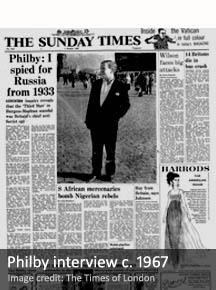
Philby interview c.1967 By IAN ALLEN | intelNews.org |
For most of us, January 23, 2013, was a day like any other. But for intelligence history aficionados it marked the 50th anniversary of the escape to Moscow of notorious double spy Harold Adrian Russell Philby. Known as ‘Kim’ to his friends, Philby secretly defected to the USSR from his home in Beirut, Lebanon, in 1963. He is widely considered history’s most successful double spy. While working as a senior member of British intelligence, he spied on behalf of the Soviet NKVD and KGB from the early 1930s until his defection. In 1965, he was awarded the Order of the Red Banner. When he died, in 1988, he was buried with honors by the Soviet authorities. Philby’s defection sent ripples of shock across Western intelligence and is often described as one of the most dramatic moments of the Cold War. On the 50th anniversary of Philby’s defection to Moscow, British newspaper The Daily Telegraph carried an article with excerpts of interviews with one of Philby’s sons, Dudley Thomas Philby, and his Russian widow, Rufina Pukhova Philby. Born in 1946, Dudley ‘Tommy’ Philby is the third of Kim’s five children with his second of four wives, Aileen Furse Philby. Aileen died in 1957, when Tommy was just 11 years old; his contact with his father was cut off as soon as the double spy defected to the USSR in January 1963. But it was resumed a few months later, when he received a letter from his father in Moscow. Eventually, Tommy visited Kim five times in Moscow in the 1970s. Speaking on the anniversary of his late father’s defection, he described him as “a very kind man” and “a very good father”, who “had his belief [in] communism [and] carried it out”. He told The Telegraph that he personally did not agree with his father’s political views, but added: “he was what he was, what could I do?”. He told the paper that Kim eventually came to think that “it was all wrong”, implying that Philby grew disillusioned with the Soviet system. Read more of this post

Revealed: German neo-Nazi who helped Palestinians was CIA agent

Willi Pohl, a.k.a. Willi VossBy JOSEPH FITSANAKIS | intelNews.org |
A German far-right militant, whose animosity against Jews led him to aid Palestinians kill Israeli athletes in the 1972 Munich massacre, says he was later recruited by the United States Central Intelligence Agency. Willi Pohl, also known as Willi Voss, 68, was arrested by German authorities a few weeks after Palestinian terrorist group Black September stormed the Olympic village in Munich and took hostage 11 Israeli athletes. All of them were eventually killed by their captors during a botched escape attempt at the nearby Fürstenfeldbruck airport. Voss, who was a known neo-Nazi activist at the time, was charged with possession of weapons and providing logistical support to the Black September militants. However, after his sentence was suspended, Voss managed to secretly emigrate to Beirut, Lebanon, where he was recruited as an agent of Jihaz el-Razd, the intelligence service of the Fatah, the main group in the Palestine Liberation Organization. But in 1975, while on a PLO mission in Belgrade, Yugoslavia, he decided to switch sides. He made the decision after discovering that the car he and his girlfriend were transporting on behalf of the PLO from Beirut to Belgrade contained weapons and highly unstable explosives. He says that the PLO had apparently failed to mention the existence of the hidden items when they asked him to transport the car to Europe. According to Voss’ new book, which has just been published in Germany under the title UnterGrund (Underground), the guns and explosives were discovered by customs officers in Romania (then Rumania); but because at that time the communist country was an ally of the PLO, Voss and his girlfriend were allowed to travel to Belgrade, minus the car and the weapons. Read more of this post

Soviets used civilian airliners to gather intelligence, documents show

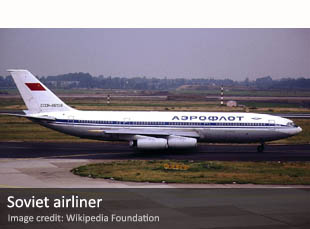
Soviet Aeroflot airlinerBy JOSEPH FITSANAKIS | intelNews.org |
Soviet spy agencies routinely used civilian airplanes to collect aerial intelligence over Western military installations, according to newly declassified documents. The revelation is contained in British government files from 1982 that were declassified on Friday, following the expiration of the United Kingdom’s 30-year classification rule. According to Bloomberg’s Robet Hutton and Thomas Penny, who accessed the files, they include a detailed memorandum addressed to Conservative Party politician Margaret Thatcher, who was serving as Britain’s Prime Minister at the time. The memorandum, which was authored by then Secretary of State for Defence, John Nott, informed Mrs. Thatcher that the airborne behavior of airliners belonging to Aeroflot, the Soviet Union’s state-owned civilian air carrier, appeared suspicious. Secretary Nott wrote in the memo that Britain’s Royal Air Force had “established that some [Soviet] aircraft deviated from their flight-plan routes” when flying over Western military bases. He goes on to describe an “incident of particular interest”, in which an Aeroflot Ilyushin IL62 airplane descended without authorization from 35,000 feet to 10,000 feet right above the village of Boulmer. Located in Northumberland, England, Boulmer is adjacent to a Royal Air Force base, which at the time featured a newly modernized radar system. The same Aeroflot airplane behaved in similar fashion while flying over a United States Navy base in Groton, Connecticut, which at the time hosted the first US submarine equipped with Trident Ballistic Missiles. The memorandum states that the circumstances surrounding the flight patterns of Aeroflot airliners had led the Royal Air Force to assume that the Soviet airplanes “were gathering intelligence” on Western military targets. Read more of this post

Fascinating profile of the Soviet KGB’s little-known tech wizard

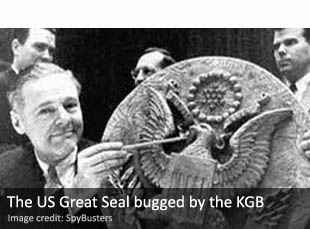
US Ambassador Henry Cabot Lodge, Jr., displays the Soviet KGB's Great Seal bug at the United NationsBy JOSEPH FITSANAKIS | intelNews.org |
It is often suggested by intelligence researchers that one major difference between Western and Soviet modes of espionage during the Cold War was their degree of reliance on technology. It is generally accepted that Western espionage was far more dependent on technical innovation than its Soviet equivalent. While this observation may be accurate, it should not be taken to imply that the KGB, GRU, and other Soviet intelligence agencies neglected technical means of intelligence collection. In a recent interview with top-selling Russian newspaper Komsomolskaya Pravda, Russian intelligence historian Gennady Sokolov discusses the case of Vadim Fedorovich Goncharov. Colonel Goncharov was the KGB’s equivalent of ‘Q’, head of the fictional research and development division of Britain’s MI6 in the James Bond films. A veteran of the Battle of Stalingrad, Goncharov eventually rose to the post of chief scientific and technical consultant of KGB’s 5th Special Department, later renamed Operations and Technology Directorate. According to Sokolov, Goncharov’s numerous areas of expertise included cryptology, communications interception and optics. While working in the KGB’s research laboratories, Goncharov came up with the idea of employing the principles behind the theremin, an early electronic musical instrument invented by Soviet physicist Léon Theremin in 1928, in wireless audio surveillance. According to Sokolov, the appropriation of the theremin by the KGB under Goncharov’s leadership “changed the world of intelligence”. Read more of this post

Illegal spy agency operated in West Germany, new book claims

Willy BrandtBy JOSEPH FITSANAKIS | intelNews.org |
Conservative politicians in Cold-War West Germany set up an illegal domestic intelligence agency in order to spy on their political rivals, a forthcoming book claims. In Destroy After Reading: The Secret Intelligence Service of the CDU and CSU, German journalist Stefanie Waske exposes what she says was an elaborate plot to undermine West Germany’s rapprochement with Soviet-dominated Eastern Europe. The book, which is scheduled for publication in February of 2013, claims that the illegal intelligence agency, known as ‘the Little Service’, was set up by politicians from Germany’s conservative Christian Democratic Union (CDU) and its sister organization, the Christian Social Union of Bavaria (CSU). The two parties allegedly founded ‘the Little Service’ in 1969, in response to the election of Willy Brandt as German Chancellor in 1969. Brandt, who was leader of the center-left Social Democratic Party of Germany (SDP), was elected based on a program of normalizing West Germany’s relations with Eastern Europe. Under this policy, which became known as ‘Neue Ostpolitik’ (‘new eastern policy’), Brandt radically transformed West German foreign policy on Eastern Europe. In 1970, just months after his election, he signed an extensive peace agreement with the Soviet Union, known as the Treaty of Moscow, which was followed later that year by the so-called Treaty of Warsaw. Under the latter agreement, West Germany officially recognized the existence and borders of the People’s Republic of Poland. Brandt’s Neue Ostpolitik, which continued until the end of his tenure in the Chancellery in 1974, earned him the Nobel Peace Prize for his efforts to achieve reconciliation between West Germany and the countries of the Soviet bloc, primarily East Germany. But Brandt’s policy of rapprochement alarmed the CDU/CSU coalition, says Waske, which quickly set up ‘the Little Service’ by enlisting former members of Germany’s intelligence community. Read more of this post

News you may have missed #814

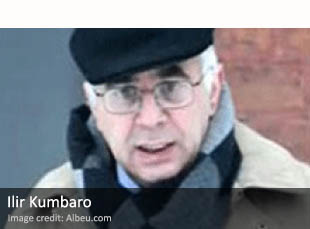
Ilir KumbaroBy IAN ALLEN | intelNews.org |
►►Israel accuses Palestinian of spying for Hezbollah. Israel’s Shin Bet internal security agency says a Palestinian man has been charged with relaying information to Hezbollah in Lebanon about sensitive government sites, including parliament. It identified the suspect as Azzam Mashahara, a resident of east Jerusalem, which Israel captured in 1967. Palestinian residents of east Jerusalem, unlike Palestinians from the West Bank or the Gaza Strip, have Israeli identity cards that allow them to travel freely within Israel. Mashahara was charged with maintaining contacts with a foreign agent and relaying information to the enemy.
►►UK agency tries to crack coded message from WWII-era carrier pigeon. The note, written on official stationary with the heading “Pigeon Service,” was discovered in a red canister attached to the skeletal leg of a pigeon in a chimney in Surrey, England. The message is made up of 27 seemingly random five-letter blocks and though it’s undated, government analysts believe the pigeon met his end while on a secret mission during the Second World War. The note is signed “Sjt W Stot” and was intended for the destination “XO2”. In a statement, Britain’s Government Communications Headquarters (GCHQ), said that during the war secret communications would often utilize specialized codebooks “in which each code group of four or five letters had a meaning relevant to a specific operation, allowing much information to be sent in a short message”. The GCHQ said that those messages may have been put through an additional layer of security by being re-coded with what’s known as a one-time pad.
►►Albania court convicts fugitive ex-spy chief. An Albanian court has convicted Ilir Kumbaro, the country’s fugitive former intelligence chief, of murder for the 1995 death of a suspect who was illegally detained for an alleged plot to murder the President of the Republic of Macedonia. The victim, businessman Remzi Hoxha, an ethnic Albanian from Macedonia, was abducted by the secret police 17 years ago along with two other suspects for allegedly planning to kill then-Macedonian President Kiro Gligorov during a visit to Albania. The court said the three suspects were held illegally and tortured during questioning. Kumbaro traveled to Britain in 1996 under a false identity, claiming to be a refugee from Kosovo. He has been missing for a year, after skipping an extradition hearing in London. Hoxha was never found and is presumed to have died in custody.

News you may have missed #812

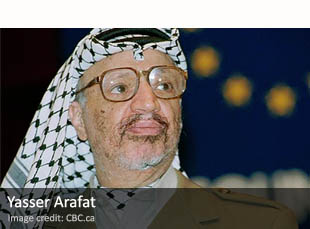
Yasser ArafatBy IAN ALLEN | intelNews.org |
►►Russia to help probe Yasser Arafat’s death. Russia will join an international investigation to determine whether the first Palestinian president, Yasser Arafat, was murdered, the current Palestinian leader, Mahmoud Abbas, has said. French and Swiss experts are due to exhume Arafat’s body in Ramallah later this month in an attempt to discover how he died after an al-Jazeera documentary in July suggested he was killed by a rare radioactive poison. Abbas asked Russian foreign minister Sergei Lavrov for Moscow’s help during talks in Jordan, Palestinian sources said.
►►Revisiting the foiled 1984 Nigerian kidnap plot. In London in 1984, a team of Nigerians and Israelis attempted to kidnap and repatriate the exiled former Nigerian minister Umaru Dikko. Mr. Dikko, who had fled Nigeria after a military coup, was accused of stealing $1bn (£625m) of government money. The plot was foiled by a young British customs officer and, as a result, diplomatic relations between the UK and Nigeria broke down and were only fully restored two years later. The Nigerian and Israeli governments have always denied involvement in the kidnapping.
►►Putin congratulates KGB double spy on his birthday. Russian President Vladimir Putin has congratulated famous double agent George Blake on his 90th birthday, the Kremlin press office has said. Blake betrayed British intelligence starting in the 1950s; he was found out in 1961 and sentenced to 42 years in prison. But he escaped five years later using a ladder of rope and knitting needles, made his way to the Soviet Union and has been living out his last years serenely in a cottage outside Moscow. After his escape from the Wormwood Scrubs prison in London, he was smuggled to Berlin in a wooden box in the back of a van. In the interview published last week, he said he then presented himself to border guards in East Berlin, asked to speak to a Soviet officer, and when told to wait, immediately fell into a deep sleep.

Mossad ‘tried to kill’ Saddam Hussein using ‘exploding book’

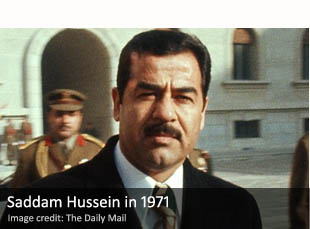
Saddam HusseinBy JOSEPH FITSANAKIS | intelNews.org |
Israeli intelligence tried unsuccessfully to kill Iraqi leader Saddam Hussein in the 1970s using a bomb disguised as a book. This revelation is included in a new documentary film, which was aired on Monday evening on Israel’s Channel 1 television. The documentary, entitled Sealed Lips, focuses on the life and intelligence exploits of Yitzhak Hofi. Known informally as “Khaka”, Hofi was the fifth Director of the Mossad, Israel’s foremost covert-action intelligence agency, which he led form 1974 to 1982.  Aside from Hofi, who is still living in Israel, aged 85, the film includes interviews with five other former Directors of the Mossad, as well as with some of the agency’s best-known covert-action operatives. One of them is Brigadier General (ret.) Tzuri Sagi, said to have been the mastermind behind the plan to kill Hussein, who had assumed power in Iraq following a coup in 1968. According to the documentary, as soon as the Mossad tasked Sagi with assassinating Hussein, he employed the best-known bomb-maker in the Israeli intelligence and security services, known by his operational name, “Natan”. “Natan” put together a carefully constructed explosive device, which was hidden inside an Arabic-language book. The device was wired to detonate once the front cover of the book was opened. The film suggests that the Mossad did manage to find a way for the book to reach the Iraqi leader. However, Hussein appeared suspicious about the book and had one of his close aides, an unnamed senior Iraqi government official, open it. Read more of this post

News you may have missed #807

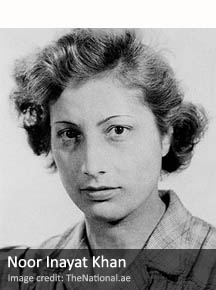
Noor Inayat KhanBy IAN ALLEN | intelNews.org |
►►Britain to unveil statue of female SOE spy of Indian origin. Born in Moscow to an Indian father and an American mother, Noor Inayat Khan was in Paris when it fell to Nazi occupation. She immediately returned to London to volunteer for the war effort, joined the Women’s Auxiliary Air Force and was recruited by the Special Operations Executive (SOE). She was sent into France on a secret mission in June 1943, but was betrayed and captured a few months later. She was shot by the Nazis in Dachau in September 1944, aged 30, and was posthumously awarded the George Cross as well as the Croix de Guerre by France. She was one of only three women in the SOE to be awarded the George Cross.
►►US intelligence spending falls or second year in a row. The US government’s total spending on intelligence activities fell in 2012, the second year in a row of declining numbers after years of soaring security spending since the September 11 attacks in 2001. The Office of Director of National Intelligence, the top US intelligence authority, announced on Tuesday that total funding appropriated for the National Intelligence Program, covering activities of the CIA and high-tech spy agencies such as the National Reconnaissance Office, was $53.9 billion in Fiscal Year 2012, which ended on September 30. That was down from the $54.6 billion appropriated during Fiscal Year 2011, according to government officials and figures published by the private Federation of American Scientists.
►►Russia wants to park spy planes on French base. France has been asked by Moscow to allow two Russian spy planes to be deployed at a French base in Djibouti to help track down pirates. Russian Defense Minister Anatoly Serdyukov said last week that the Ilyushin Il-38 naval reconnaissance planes would improve Russia’s ability to spot pirates plaguing waters off the coast of Somalia. Djibouti is at the juncture of the Red Sea and the Gulf of Aden. The French base is home to several thousand French service members and a number of military aircraft.

Israel admits assassinating Palestinian commander in Tunisia

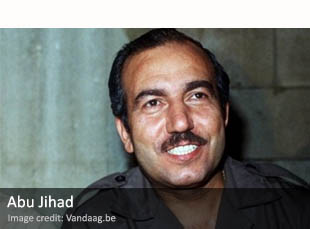
Abu JihadBy JOSEPH FITSANAKIS | intelNews.org |
Authorities in Israel have authorized the publication of an interview acknowledging Israel’s role in the assassination of a senior Palestinian military commander in Tunisia in 1988. The target of the assassination was Khalil al-Wazir, better known as Abu Jihad, one of the co-founders of Fatah, the secular wing of the Palestinian Liberation Organization chaired by Yasser Arafat. In the 1960s and 1970s, Abu Jihad rose within the ranks of Fatah and eventually became commander of its armed wing, known as al-Assifa. However, he was killed on April 16, 1988, when a group of unidentified gunmen stormed his villa in Tunisian capital Tunis, before managing to slip away. In the past 23 years, the Israeli intelligence services have been repeatedly singled out as prime suspects in Abu Jihad’s assassination. Nearly 15 years ago, Israeli newspaper Yedioth Ahronot announced that it had secured an interview with an Israeli commando who had a leading role in the operation and had been the one who fired the shots that killed the Fatah commander. But the interview was blocked from publication by the Israeli military censors, who, under Israeli law, have the power to prevent the airing of information that might harm national security. In 2000, however, the commando, Nahum Lev, died in a motorcycle accident, which prompted the Israeli newspaper to renew its application for the ban on the interview to be lifted. This week, Israeli authorities officially lifted the ban, which allowed Yedioth Ahronot to run the interview with Lev. The airing of the interview was coupled by a more substantial account of the operation, which appeared in the specialist Israel Defense magazine. According to the article, the operation was planned over several months by the Israeli covert action agency Mossad and the Sayaret Matkal, a special forces unit of the Israel Defense Forces. It involved 26 commandos who allegedly reached the Tunisian shore on rubber boats. Several of them walked the streets of Tunis disguised as women tourists. Read more of this post

MI5 official’s diaries reveal tensions between UK, US spy agencies

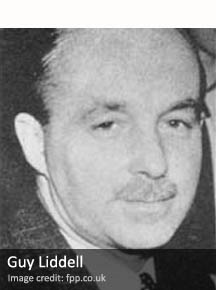
Guy LiddellBy JOSEPH FITSANAKIS | intelNews.org |
Newly declassified personal diaries belonging to a senior British intelligence official reveal tensions between British and American spy agencies in the years immediately following World War II. The National Archives, an executive agency operating under the United Kingdom’s Secretary of State for Justice, released the diaries on Friday. They belong to Guy Maynard Liddell, a longtime British intelligence operative who rose to the post of Deputy Director General of MI5, Britain’s domestic intelligence agency. Liddell meticulously kept a diary during most of the 1940s and 1950s, in which he detailed both personal information and details of his work at MI5. Two volumes of his diaries (from 1939 to 1945, edited by Nigel West) have already been published. Now a third installment has been declassified by the National Archives, containing Liddell’s diary entries from the late 1940s and 1950s. The diaries project what some intelligence historians describe as “a certain friction” between postwar British and American intelligence services. Even though the two countries were largely viewed as allies in the immediate postwar period, their respective intelligence agencies did not always see eye to eye. In one instance, Liddell describes his American colleagues as “utterly incapable […] of seeing anybody’s point of view except their own” and accuses them of being “quite ready to cut off their noses to spite their faces”. He also comes across as skeptical of the then-newly established Central Intelligence Agency, which, he writes, “someday” may be able to produce information that would be “worth disseminating, evaluating, or coordinating”. In 1947, shortly after the CIA’s founding, Liddell wrote with a degree of uncertainty that “in the course of time, [the Agency] may produce something of value”. Further on he relayed the opinion of CIA Deputy Director Edwin Kennedy Wright, who apparently told British intelligence officials that in American intelligence organizations “500 people were employed to do what 50 people would do” in the UK. Read more of this post