Cold War KGB agent Judith Coplon dies in Manhattan

Judith Coplon

Judith Coplon

By JOSEPH FITSANAKIS | intelNews.org |
Judith Coplon, an American Justice Department analyst who spied for the Soviet Union, and whose 1949 espionage trial became an international sensation, died last weekend in New York. When she was arrested by the FBI at age 27, Coplon worked as an analyst for the Justice Department’s Foreign Agents Registration Section, and was privy to counterintelligence reports issued daily by the Bureau. A few years prior to her March 1949 arrest, Coplon had begun an affair with Valentin A. Gubitchev, a married Soviet NKGB (forerunner of the KGB) officer stationed at the United Nations headquarters in New York. It is believed that Gubitchev recruited her and acted as her handler, meeting her regularly at various New York locations in order to obtain from her copies of Justice Department documents. In 1948, her role as an NKGB agent code-named ‘Sima’, was revealed through the National Security Agency’s VENONA project, which decoded wartime Soviet diplomatic cables that had been intercepted by US intelligence. Read more of this post

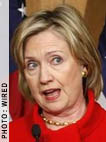
Leaked cable confirms end of US-NZ spy quarrel

Hillary Clinton

Hillary Clinton

By JOSEPH FITSANAKIS | intelNews.org |
To regular readers of this blog, this is not so much a revelation, as it is a confirmation. Back in October of 2009, we wrote about a peculiar comment made Hillary Clinton. The United States Secretary of State had told a press conference that “we [the US] are resuming our intelligence-sharing cooperation [with New Zealand], which we think is very significant”. Resuming? When had it been disrupted, and why? Most intelligence observers agree that the only glitch that could have caused the cooperation to end would have been New Zealand’s nuclear ban. It was in 1984 when, under mounting popular pressure, the Labour government of David Lange voted to bar nuclear-powered or nuclear-armed ships from entering New Zealand territorial waters. At the time, the ban was heralded by the global nuclear disarmament movement as a major victory. But Washington did not see it that way. Successive US administrations pressured Wellington to repeal the nuclear-free legislation and allow US warships to make use of strategic New Zealand ports. Washington’s pressure increased in the years after 9/11, culminating in 2006, when it threatened to cancel a free-trade agreement between the two countries if New Zealand refused to repeal the ban. It appears that, at some point in time, possibly after 9/11, the US actually terminated intelligence sharing between the two countries in order to force New Zealand to comply. Read more of this post
News you may have missed #459 (Russia edition)

  • Son of CIA double spy strikes deal with FBI. Nathan Nicholson, son of CIA officer Harold James Nicholson, who in 1997 was jailed for spying for Russia, has avoided a prison sentence after promising to help the FBI build a new case against his father. The latter has pleaded guilty to enlisting his son from prison to sell the Russians more secrets and collect money owed to him by the Russian spy services.
  • Moscow warns UK of tit-for-tat expulsions. Alexander Sternik, the Russian government’s senior official in Britain, has hinted that any attempt to deport parliamentary assistant Katia Zatuliveter, detained by MI5 for allegedly spying for Russia, could result in tit-for-tat expulsions.
  • Kim Philby honored by plaque at Moscow SVR HQ. Russia has honored British Cold War spy Kim Philby with a plaque at the headquarters of the country’s foreign intelligence agency. Philby, who defected to the Soviet Union in 1963, is depicted in a sculptured portrait on the plaque as the two-faced Roman god Janus.

News you may have missed #456 (Israel edition)

  • US Senate intel committee ex-chief wants Israel spy free. Former Democratic Senator Dennis DeConcini, who used to chair the US Senate Select Committee on Intelligence, has called for the release of Jonathan Pollard, a US Navy Intelligence Analyst who was found guilty in 1987 of spying on the US on behalf of Israel. Pollard “is guilty, but it’s time for this to be resolved in a better way”, said DeConcini.
  • Israel about to announce next Mossad chief. On Thursday, or at the latest, early next week, the Israeli Prime Minister will announce his pick for the top post at the Mossad. Despite widespread speculation, nobody really knows who will replace Meir Dagan, the current Mossad chief.
  • Mossad book authors accused of plagiarism. The Mossad, a new book on the major exploits of Israel’s storied spy agency, has been on the Israeli best-seller list for months. But if much of the text sounds familiar, it’s because the authors, Nissim Mishal and Michael Bar-Zohar, apparently relied on previously published material –without crediting the original sources.

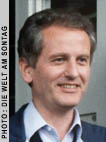
Did Mossad kill German politician involved in Iran-Contra scandal?

Uwe Barschel

Uwe Barschel

By JOSEPH FITSANAKIS | intelNews.org |
Accusations of Israeli involvement in the suspicious death of a German politician have been revived, following new autopsy evidence revealed by a medical examiner. The case involves the death of Christian Democratic Union politician Uwe Barschel, who on October 11, 1987, was found dead in the bathtub of room 317 of the Beau-Rivage hotel in Geneva, Switzerland. His sudden death occurred less than a month after he was forced to resign from the post of Governor of West Germany’s Schleswig-Holstein state, following his involvement in a dirty-tricks campaign against his rival Björn Engholm, of Germany’s Social Democratic Party. Swiss authorities, based on an initial postmortem that revealed lethal levels of barbiturates in Barschel’s system, ruled the death a suicide. But now Dr Hans Brandenberger, who was one of the toxicological experts that examined Barschel, claims that he is possession of new evidence that points to murder as the cause of the German politician’s death. Read more of this post

News you may have missed #451 (history edition)

News you may have missed #448

  • Russian intel source threatens WikiLeaks. A Russian secret services expert has denied that whistleblower website WikiLeaks poses a threat to Russia, and warned that the “right team” of people could simply shut down WikiLeaks “forever” if it posts classified Russian government documents.
  • UK female spy gave rare interview about WWII exploits. It has emerged that British wartime spy Eileen Nearne, who died aged 89 in September, and whose exploits echoed the fictional character Charlotte Gray, gave an interview 13 years ago –in disguise– in which she told how she was tortured by the Gestapo.
  • Lebanon sentences 3 to death for spying for Israel. A Lebanese military court on Monday sentenced three people to death for spying for Israel. Two of the Lebanese nationals, Sami Farhat and Amar al-Halabi, were sentenced in absentia because they have fled the country. The third man, Jawdat el-Hakim, is held by Lebanese authorities. Dozens of alleged Israeli spy cells have been uncovered in Lebanon in the past year.

News you may have missed #447

  • UK MI6 chief speaks publicly for the first time. Sir John Sawers, the head of Britain’s Secret Intelligence Service, also known as MI6, has delivered what he said was the first public address by a serving chief of the agency in its 101-year history.
  • WikiLeaks to release secret Russia, China logs. Whistleblower website WikiLeaks, which has published hundreds of US war logs, is preparing to release secret files from Russia and China, Russian newspaper Kommersant said on Tuesday.
  • Renegade CIA agent’s papers acquired by NYU. The private papers of the late Philip Agee, the disaffected CIA operative whose unauthorized publication of agency secrets 35 years ago was arguably far more controversial than anything WikiLeaks has produced, have been obtained by New York University, which plans to make them public next spring.

News you may have missed #440 (USA edition)

News you may have missed #434 (book news edition)

News you may have missed #432

  • French spy agency chief warns of high terror risk. Bernard Squarcini, director of France’s Direction de la Surveillance du Territoire (DST) counterintelligence agency, has warned that the country’s military presence in Afghanistan is among the reasons that have made France a prime target for radical Islamist groups.
  • Iran frees one of three Americans held on spy charges. American Sarah Shourd, who has been held in Iran for more than a year on suspicion of spying, has been released by authorities in the Islamic Republic.
  • American civil rights photographer was FBI informant. New information shows that celebrated civil rights-era photographer Ernest Withers had been a paid informant for the FBI, reporting on the whereabouts and activities of the movement’s leaders, many of whom considered him a personal friend.

News you may have missed #428 (history edition)

  • US government study of Soviet-era spy services released. A historiographic blog has released a study by the US Federal Office of Criminal Investigations on Practices and Methods of East-Bloc Intelligence Services, which examines the spy craft and operations of Soviet-aligned secret services active in Germany.
  • Simon Wiesenthal worked for Mossad, claims book. A new book claims that famous Israeli Nazi hunter Simon Wiesenthal worked as an informant for Israel’s Mossad spy agency. Written by Tom Segev, the book, entitled Wiesenthal: The Life and Legends, claims that Wiesenthal gave the Mossad valuable information during Operation DAMOCLES.
  • UK spies did ‘very bad things’ in Cold War, says Le Carre. But even though they assassinated individuals and engaged in “a lot of direct action”, “decent humanitarian instincts came into play” in Western intelligence agencies’ operations, claims the former MI5 and MI6 spy and novelist. Raw Story‘s Daniel Tencer offers an interesting response.

News you may have missed #411

  • Third Lebanese telecom worker charged with spying for Israel. A Lebanese prosecutor has charged a third state telecommunications employee with spying for Israel. Milad Eid, who worked at the state-owned fixed-line operator Ogero, is accused of “dealing with the Israeli enemy [and] giving them technical information in his position as head of international communications at the Telecommunications Ministry”.
  • Author Roald Dahl was British spy, new book claims. A new book by Donald Sturrock, entitled Storyteller: The Life of Roald Dahl, claims that children’s author worked for British Security Coordination (BSC), a 1940s secret service network based in the United States, and was ‘run’ from New York by Canadian industrialist William Stephenson.
  • Israeli nuclear whistleblower wants to leave country. Nuclear whistle-blower Mordechai Vanunu has been released from prison after serving a 10-week sentence for violating the terms of his parole by speaking to a foreign journalist. Upon his release, he asked that he be allowed to leave the country.

Bookmark and Share

News you may have missed #409

  • Probe unearths secrets of Bulgaria’s assassination bureau. Previously unknown details on Service 7, Bulgaria’s Cold War-era assassination bureau, have been unearthed by one of Bulgaria’s leading newspapers, following a probe into 5,000 pages of declassified archives from the country’s former communist intelligence service, the First Directorate of the Committee on State Security.
  • US Pentagon bars troops from reading WikiLeaks. Any citizen, any foreign spy, any member of the Taliban, and any terrorist can go to the WikiLeaks web site, and download detailed information. Members of that same military, however, are now banned from looking at those internal military documents, because “doing so would introduce potentially classified information on unclassified networks”.
  • Analysis: Chasing Wikileaks. “[W]hatever the imperfections of WikiLeaks as a startup, its emergence points to a real shortcoming within our intelligence community. Secrets can be kept by deterrence –that is, by hunting down the people who leak them […]. But there are other methods: keep far fewer secrets, manage them better –and, perhaps, along the way, become a bit more like WikiLeaks. An official government Web site that would make the implementation of FOIA quicker and more uniform, comprehensive, and accessible”.

Bookmark and Share

News you may have missed #407

Bookmark and Share