Saudis recall ambassador from Sweden after arms deal is scrapped

Margot WallströmBy IAN ALLEN | intelNews.org
The government of Saudi Arabia has withdrawn its ambassador from Sweden after the Scandinavian country annulled a multimillion dollar defense contract with the Arab kingdom. Stockholm scrapped the contract on Monday, a day after the Saudis blocked a scheduled speech by the Swedish Minister of Foreign Affairs, Margot Wallström, at the Arab League conference in Cairo. Wallström said she was “astonished” after Arab delegates backed a last-minute push by the Saudi delegation to the meeting to block her from speaking. The effort to block the Swedish politician’s speech was initiated once it became clear that she intended to criticize the Kingdom’s human-rights record. The Swedish politician had reportedly planned to broach the issue of freedom of expression and religious worship, as well as touch on the subject of women’s rights in Saudi Arabia. The speech was meant to highlight Wallström’s “feminist foreign policy”, which she has previously said will form “an integral part” of the policy strategy of the Swedish Ministry of Foreign Affairs under her leadership.

On Tuesday, the Swedish government announced that a lucrative weapons agreement, which was first signed between Stockholm and Riyadh in 2005, would be scrapped in protest against the Arab Kingdom’s poor human-rights record. The day before the announcement, Wallström had proceeded to post online the text of the speech that she had been scheduled to deliver in Cairo, where she had been invited by the Arab League as a guest of honor. Fewer than 24 hours later, the Saudi Foreign Ministry said it would be recalling its ambassador to Sweden, Ibrahim bin Saad Al-Ibrahim, in protest against what it said were Sweden’s “offensive” and “harmful” actions against the Kingdom. An official statement by the Saudi government described Wallström’s criticisms as a “blatant interference” in the Kingdom’s internal affairs that had “violated accepted international conventions”.

Sweden’s Ministry of Foreign Affairs confirmed late on Wednesday that the Saudi ambassador to the country was being recalled, but it refused to speculate on whether it would respond by recalling its ambassador to the Arab Kingdom.

News you may have missed #796

Richard FaddenBy IAN ALLEN | intelNews.org |
►►Iranian spy scandal sparks outrage in Turkey. After a nearly yearlong investigation into an alleged Iranian spy ring in Turkey, seven people were charged in early September with “providing information related to state security and establishing an [illegal] organization”. The charges against five Turkish citizens and two Iranian nationals followed a raid on the suspects’ residences and workplaces on August 29, in which videos and pictures of border security, documents, correspondence with Iranian intelligence and weapons were found, according to the investigation materials. Tehran denied any connections to those arrested, while officials in Ankara revealed more alleged evidence showing that Iran is providing support to the PKK.
►►British SIGINT agency ‘helps US drone attacks’. Britain’s former Director of Public Prosecutions, Lord Macdonald, has said there is “pretty compelling” evidence that the British government’s signals intelligence agency, GCHQ, is passing information to the United States to help it locate targets for controversial drone attacks in Pakistan. Earlier this year David Anderson, the British state’s independent reviewer of terrorism-related legislation, warned that the British government faced “a raft of civil cases” over possible complicity in the CIA drone attacks.
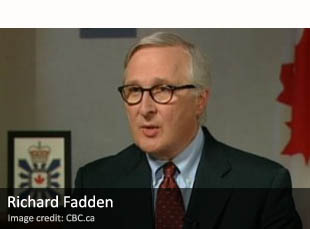
►►Canada’s top spy dismisses call for human rights scrutiny. In a newly declassified memo, CSIS director Richard Fadden appears to dismiss the Canadian Human Rights Commission’s recommendation that national security agencies do more to ensure they are not taking part in racial profiling or other objectionable practices. “I am confident in the service’s existing human rights policies and procedures, as well as our accountability and review structures”, Fadden says in the January 2012 memo, which is addressed to Canada’s Public Safety Minister Vic Toews. The memo —initially classified secret— was discovered by Mike Larsen, a criminology instructor in British Columbia, who obtained it under the Access to Information Act.

News you may have missed #744

Navi PillayBy IAN ALLEN | intelNews.org |
►►Source says Mikhailov ‘will not be exchanged’ with US. There are rumors going around that the US might consider exchanging Russian arms merchant Viktor Bout, who is serving a 25-year sentence in a New York prison, for one or more CIA spies currently being held in Russian prisons. Russian news agency RIA Novosti has cited a “high ranking official in the Russian security services”, who suggests that Bout “might be exchanged”, but not with Valery Mikhailov, a Russian former counterintelligence officer, who was sentenced this week to 18 years in prison for allegedly spying for the CIA.
►►CIA preparing to pull back from Iraq. The US Central Intelligence Agency is preparing to cut its presence in Iraq to less than half of wartime levels, according to The Wall Street Journal, which cites “US officials familiar with the planning”. Under the plans being considered, says the paper, the CIA’s presence in Iraq would be reduced to 40% of wartime levels, when Baghdad was the largest CIA station in the world with more than 700 agency personnel. Interestingly, the plan would also reduce the US intelligence presence in the region as neighboring Syria appears to be verging on civil war.
►►Senior UN official blasts US drone strikes. The United Nations High Commissioner for Human Rights, Navi Pillay, has said US drone attacks in Pakistan “raise serious questions about compliance with international law, in particular the principle of distinction and proportionality”. She also voiced concerns that the strikes were being conducted “beyond effective and transparent mechanisms of civilian or military control”. IntelNews provided this opinion on the matter, in 2009.

US resumes controversial weapons sale to Bahrain

Gulf Cooperation Council countriesBy JOSEPH FITSANAKIS | intelNews.org |
The United States has announced that it will resume a controversial weapons deal with the Kingdom of Bahrain, despite its government’s substandard human rights record, which has been internationally criticized in the context of the Arab Spring. The administration of President Barack Obama halted all weapons sales to the oil-rich Gulf state in September of 2011, nearly a year following the eruption of widespread popular protests in the Kingdom. On May 11, however, Washington announced that the weapons sale would go ahead after all, with the exception of some items that could be used against human rights protesters. According to The Christian Science Monitor, one of a handful of American news outlets that covered the story, US officials said that the decision to resume weapons sales to Bahrain was taken “in light of US national security interests”. The paper quotes an unnamed US government official who told reporters that Washington had given the go-ahead to the weapons sale in order to “help Bahrain maintain its external defense capabilities” against Iran. The regime in Bahrain has accused human rights activists of operating under the control of the Iranian government. The Monitor says that the resumption of US military aid to Bahrain has dealt a significant blow to the pro-democracy movement, and appears to have “incensed opposition activists”, who see it “as a signal that that the US supports Bahrain’s repression of opposition protests”. The article quotes one such activist, Mohammed al-Maskati, who describes the weapons deal as a “direct message [from the US] that we support the authorities and we don’t support democracy in Bahrain, we don’t support protesters in Bahrain”. Meanwhile, all eyes are in Saudi Arabia this week, as Arab Gulf leaders are meeting to discuss plans for forming a pan-Arab Gulf union. Read more of this post

Scandinavian phone company helps ex-Soviet republics spy on citizens

TeliaSonera CEO Lars NybergBy JOSEPH FITSANAKIS | intelNews.org |
A highly profitable cellular telecommunications company, which is jointly owned by a Swedish-Finnish public-private consortium, is enabling some of the world’s most authoritarian regimes to spy on their own citizens, according to a new report. TeliaSonera AB, the dominant telephone company and mobile network operator in Sweden and Finland, is currently active in nearly 20 countries around the world. In 2011, it posted a net profit of nearly $3 billion, 25 percent of which came from the company’s operations in countries of the former Soviet Union. They include some of TeliaSonera’s most lucrative franchises, such as Geocell in Georgia, Kcell in Kazakhstan, Ucell in Uzebekistan, Tcell in Tajikistan, and Azercell in Azerbaijan, among others. But a new investigation by Sweden’s public broadcaster, Sveriges Television AB  (SVT), accuses TeliaSonera of knowingly giving some of the world’s most oppressive governments the means to spy on their own citizens. The report, which is available online in English, effectively states that TeliaSonera is directly complicit in some of the world’s most severe human rights abuses. The accusation is bound to cause embarrassment among senior officials in the Swedish government, which owns nearly 40 percent of TeliaSonera’s stock. The SVT investigation singles out Uzbekistan, Belarus and Azerbaijan, where TeliaSonera operates monopoly cellular networks on behalf of the state, “in exchange for lucrative contracts”. While running the networks, TeliaSonera allegedly grants local intelligence agencies complete and real-time access to the all telephone calls, pen-register data, and content of text messages exchanged by users. This, says the SVT report, has in turn facilitated several arrests of pro-democracy activists and political dissidents in countries like Belarus and Azerbaijan. Read more of this post

US gave N. Ireland police weapons, spy equipment, despite Congress ban

Royal Ulster Constabulary forces in the 1980sBy JOSEPH FITSANAKIS | intelNews.org |
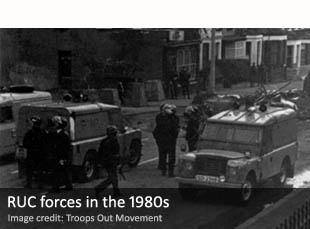
Declassified documents show that thousands of American-made weapons, as well as spy equipment, ended up in the hands of Northern Ireland’s police force in the 1980s, despite a strict ban enacted by Congress. The ban was passed in 1979, following strong pressure by organized groups in the Irish-American community. The latter accused Northern Ireland’s police, known as the Royal Ulster Constabulary (RUC), of severe human rights violations and systematically excluding Catholic recruits. But internal government documents released in Northern Ireland this week, reveal that thousands of pieces of American-made weaponry, as well as surveillance equipment, continued to get into the hands of the RUC, despite the official ban. According to the documents, which were released under the UK’s 30-year declassification rule, the RUC eventually managed to collect all 6,000 Ruger revolvers it had ordered from American manufacturers before 1979, when the Congressional ban was enacted. The weapons continued to be shipped to Northern Ireland by way of “third-party suppliers”, who sent them secretly and in small quantities, so as not to arouse suspicion. The documents also state that the RUC was able to “receive [from the United States] some US equipment for surveillance work which is arguably more sensitive than guns”. The documents do not specify if the White House was aware that the Congressional ban against selling weapons to the RUC was being broken, or if the weapons were being surreptitiously smuggled by the British government, which hid the shipments from Washington. But The Belfast News Letter, which accessed the declassified documents, said it spoke to “one former senior RUC officer” who said that “the Reagan Administration was aware of the shipments” and had “turned a blind eye to the issue”. Read more of this post

Pakistan removed spy from US at CIA’s request

ISI HQ

ISI HQ

By JOSEPH FITSANAKIS | intelNews.org |
A Pakistani intelligence officer was quietly removed from the United States last April, after the director of the CIA complained about him to his Pakistani counterpart. According to The New York Times, which aired the revelation last weekend, the then Director of the CIA, Leon Panetta, had “a tense conversation” with Lt. Gen. Ahmed Shuja Pasha, head of Pakistan’s Inter-Services Intelligence directorate (ISI), which led to the removal “within days” of the ISI officer. The officer in question is Mohammed Tasleem, whose diplomatic cover was that of attaché in the Pakistani Consulate in New York, but whose actual task was monitoring the political activities of the sizeable Pakistani diaspora in the United States. According to the FBI, which briefed the CIA about Tasleem earlier this year, his intelligence activities centered on pressuring politically active Pakistanis in the United States to refrain from speaking publicly on ‘controversial issues’. FBI counterintelligence reports claim that, on at least one occasion, Tasleem posed as an FBI agent, in order to extract intelligence from a member of the Pakistani community in the United States. The Times spoke to members of Pakistan’s ex-pat community who allege that the ISI systematically approaches Pakistanis speaking openly about ‘national issues’, such as the indigenous insurgency in Pakistan’s Baluchistan province, the disputed Indian region of Kashmir, or Pakistan’s appalling human rights record. Read more of this post

European Union targeted by Colombian intelligence, documents show

DAS seal

DAS seal

By JOSEPH FITSANAKIS | intelNews.org |
Several members of the European Parliament have voiced concern over the recent disclosure in Colombia of an alleged operation to undermine the European Union’s parliamentary and human rights bodies. The operation is reportedly mentioned in internal documents belonging to Colombia’s Administrative Department of Security (DAS), which were recently confiscated by the office of the Colombian Attorney General. The confiscated documents describe a clandestine program codenamed Operation EUROPE, which aims to wage a “legal war” intended to discredit and “neutralize the influence of the European judicial system, the European Parliament’s human rights subcommittee, and the office of the United Nations High Commissioner for Human Rights”. Read more of this post

News you may have missed #314

  • Canadian spy agency to display cold war spy tools. The Canadian Security Intelligence Service is lifting the lid on some of Canada’s secret Cold War history with a first-ever public exhibit of the era’s exotic gadgetry and shadowy tradecraft, from a James Bond attaché case to Igor Gouzenko’s revolver.
  • Why planespotting in Egypt is a bad idea. British tourist Corbie Weastell, who was planespotting from his hotel window in Egypt, was arrested for spying, thrown in a filthy cell without food or water and left handcuffed and chained to other inmates for two days

Bookmark and Share

.

News you may have missed #0289

  • UK spies worry about human rights lawsuits. Intelligence officers at Britain’s MI5 and MI6 are allegedly being diverted from counter-terrorism work to sift through thousands of documents relating to former terrorism detainees, who are suing the security services for breaching their human rights. The article makes it look like it is the torture victims’ fault for pursuing their rights. But in reality, MI5 and MI6 should have known better than to allow and participate in extralegal torture.
  • Bangladesh arrests alleged Burmese spies. Bangladesh coast guards have arrested eight citizens of Myanmar on suspicion of spying. Photographs of Bangladesh Navy warships and security installations were found in their possession, according to the country’s police chief.

US Looks Away from Worsening Philippines Rights Record

Lumbera

Lumbera

By JOSEPH FITSANAKIS and IAN ALLEN | intelNews.org |
Just days after Filipino prizewinning poet and dramatist Bienvenido Lumbera caught a Naval Intelligence Security Force agent spying on him outside his home, another Filipino intellectual has come forward with allegations of government spying. Pedro “Jun” Cruz Reyes, professor of creative writing at the University of the Philippines in Diliman, Quezon City, said he has been the subject of surveillance investigations by government agents since 2006. Such incidents are not a new phenomenon in the Philippines. In 2005, the US State Department noted in its annual human rights report that the Philippines National Police was the country’s “worst abuser of human rights” and that government security elements often “sanction extrajudicial killings and vigilantism”. However, the report adds that these practices are utilized “as expedient means of fighting crime and terrorism”, which may explain why no discernable action has been taken by US authorities to prevent them. In an article published today in The Foreign Policy Journal we examine the recent record of US-Philippine relations. Continue reading at The Foreign Policy Journal

Bookmark and Share

News you may have missed #0080

Bookmark and Share

Obama administration denies UN access to Guantánamo, CIA prisons

Guantánamo

Guantánamo

By JOSEPH FITSANAKIS | intelNews.org |

The US government has turned down calls by United Nations human rights monitors for access to the US Pentagon’s Guantánamo Bay prison camp and to CIA prison sites around the world. It is the second time that Obama administration officials have declined this request by UN monitors, despite the administration’s rhetorical commitment to increasing its collaboration on human rights issues with the international agency. Commenting anonymously to The Washington Post, which is one of a handful of US news outlets that are running this story, US government officials said that the Obama administration “support[s] the work of the UN human rights researchers”, but is “constrained in releasing information on sensitive intelligence matters”. The news comes ten days after unconfirmed reports that the US Department of Justice is considering the appointment of a special prosecutor to investigate the use of torture by US intelligence agencies after September of 2001.

Bookmark and Share