British foreign secretary admits errors in intelligence assessments of Afghanistan
September 3, 2021 1 Comment
 THE CONSENSUS VIEW OF British intelligence in the weeks leading to the fall of Kabul to the Taliban was that the Afghan government would be challenged, but that the rebels were unlikely to take over the country in 2021. This was revealed on Wednesday in the House of Commons by Britain’s Foreign Secretary, Dominic Raab. Speaking at an emergency meeting of the House of Commons’ Foreign Affairs Select Committee, Raab fielded criticism that he had reacted slowly to the crisis in Afghanistan.
The foreign secretary told his critics that his department’s decisions had relied on assessments by the Joint Intelligence Committee, an interagency body that coordinates Britain’s intelligence agencies in issuing reports about pressing security matters. He told Parliament that the assessments he had been given pointed out that the pro-Western government of Afghan President Ashraf Ghani would be threatened by the Taliban following the withdrawal of Western troops. But they concluded that the government would remain in control of Kabul through 2021, said Raab.
The rapid fall of the Afghan capital to the Taliban caught the British intelligence establishment —and, consequently, the government as a whole— by surprise, said Raab, adding that the sheer “scale and speed of the fall of Kabul” was unexpected. The foreign secretary blamed “optimism bias” for the reports, but added that similar optimistic views were “widely shared” across the North Atlantic Treaty Organization. All parties involved would have to learn lessons from Afghanistan about the accuracy of intelligence reports, Raab concluded.
But the foreign secretary was less clear about why his office did not heed the warnings of the principal risk assessment of his own department, which was issued on July 22, approximately a month before the fall of Kabul. The assessment warned starkly that the return of the Taliban to power could be rapid, as “peace talks are stalled and [United States and] NATO withdrawal is resulting in Taliban advances”. This, said the assessment, could lead to the “fall of cities, collapse of security forces, [and] Taliban return to power”. The document also discussed the possibility that the British “embassy may need to close if security deteriorates” in the Afghan capital.
► Author: Joseph Fitsanakis | Date: 3 September 2021 | Permalink
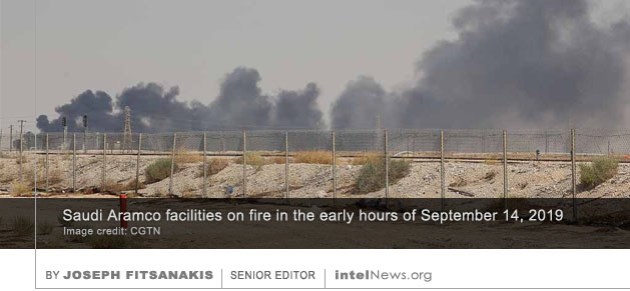 Saudi Arabia and the United States suffered “a total and embarrassing [intelligence] failure” in the lead-up to the drone strikes that shut down half of the kingdom’s oil production last month, according to Israeli sources. In the early hours of September 14, missiles
  The escalating tension between the United States and Iran, and the ensuing military buildup in the Persian Gulf, may have resulted from a misreading of intelligence by both sides, according to a new report in The Wall Street Journal. Reports from the Middle East continue to describe the situation there as tense, while the political rhetoric by both Washington and Tehran remains heightened. Last week, the White House ordered the USS Abraham Lincoln carrier strike group to sail to Middle Eastern waters, following intelligence
 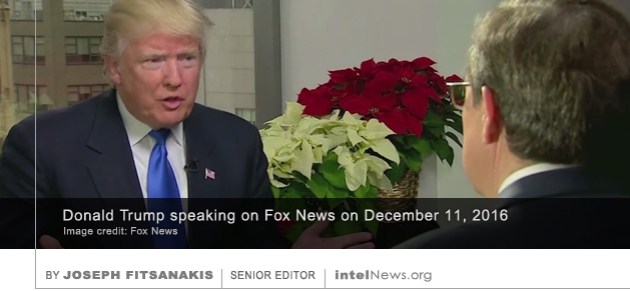 With nearly 53 million Twitter followers, United States President Donald Trump could easily be described as the most social-media-friendly American leader in our century. It is clear that Trump uses Twitter to communicate directly with his followers while circumventing mainstream media, which he views as adversarial to his policies. However, according to former Central Intelligence Agency analyst Nada Bakos, foreign intelligence agencies are among those paying close attention to the president’s tweets. Bakos spent 20 years in the CIA, notably as the Chief Targeter of the unit that tracked down Abu Musab al-Zarqawi, the founder of al-Qaeda in Iraq, which later evolved into the Islamic State of Iraq and Syria. In a June 23
 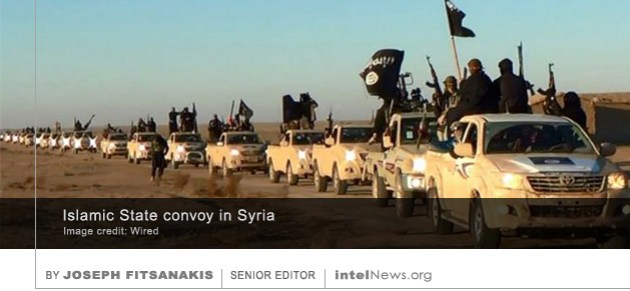 An investigation by Republican lawmakers in the United States House of Representatives has reportedly found that military intelligence analysts were pressured into changing reports on the Islamic State by their superiors. The investigation follows
 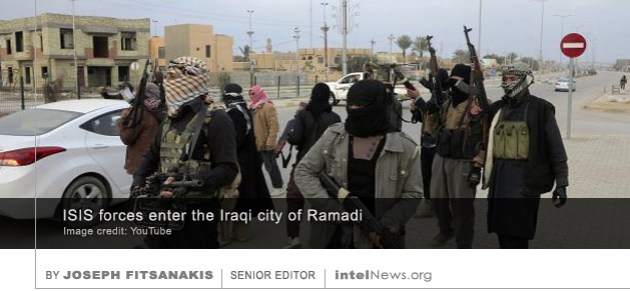 The leading lawmaker in the United States Congressional intelligence committee has accused the Department of Defense of resisting his efforts to investigate claims that intelligence products on the Islamic State were manipulated. Representative Devin Nunes (R-Ca.), who chairs the US House of Representatives Permanent Select Committee on Intelligence, said last week that he and his staffers were experiencing a “lack of cooperation” from the military during the course of an official probe into intelligence products. Nunes was referring to
 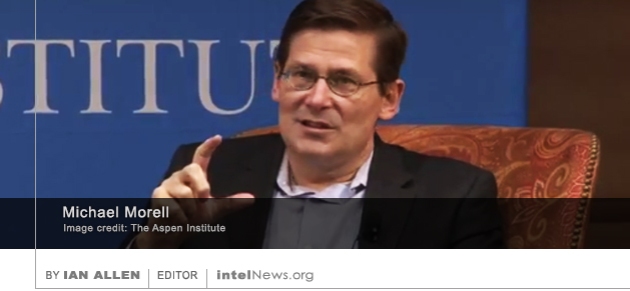 A senior Central Intelligence Agency official, who led the agency as its acting director before retiring in 2013, has said that not having sources in the Iraqi government’s upper echelons led to the intelligence failure of 2003. Michael Morell retired as deputy director of the CIA, after having served twice as its acting director, in 2011 and from 2012 to 2013. A Georgetown University graduate, Morell joined the agency in 1980 and rose through the ranks to lead the Asia, Pacific and Latin America divisions. In May 2015, Morell published his book, The Great War of Our Time: The CIA’s Fight against Terrorism from al Qa’ida to ISIS, which he has been promoting while working as a consultant in the private sector.









 intelNews.org
Gathering intelligence on the world’s largest secret society: the Chinese government
July 21, 2022 by Joseph Fitsanakis 2 Comments
How does one manage to monitor developments in the inner sanctum of the Chinese state in the face of such formidable obstacles? According to two intelligence experts, it is still possible to gather and analyze actionable intelligence on China, by adopting the right approach. In their article “Beijingology 2.0: Bridging the ‘Art’ and ‘Science’ of China Watching in Xi Jinping’s New Era”, published on Monday in the International Journal of Intelligence and CounterIntelligence, Bjørnar Sverdrup-Thygeson and Stig Stenslie outline the main contours of such an approach. China specialist Sverdrup-Thygeson is Senior Research Fellow at the Norwegian Institute of International Affairs. Stenslie is Research Director and Head of the Centre for Intelligence Studies at the Norwegian Defense Intelligence School.
From Beijingology to Beijingology 2.0
The two authors explain that the Chinese intelligence riddle is not new. In fact, China-focused intelligence practitioners have long referred to their work as “Beijingology”. The term refers to the art (as opposed to science) of studying the Chinese closed political system, based on widely divergent sources of intelligence. These range from “rumor mills among Beijing diplomats” and speculations on social media, to social-science-based quantitative studies. Sverdrup-Thygeson and Stenslie explain that the two extremes of Beijingology are invariably disconnected from what is actually happening on the ground in China, and are thus of limited value.
The key, they argue, is a well-balanced mixture of approaches, which they term “Beijingology 2.0”. This approach combines traditional Beijingology methods with a host of advanced and innovative tools in social science research, such as discourse analysis and textual analysis of official Chinese government documents. The latter “offer one of very few windows into Chinese elite-level political dynamics” and thus cannot be ignored. Like all bureaucratic regimes, the Chinese political system produces copious amounts of official information in the form of public documents, speeches, and CPC-authorized statements. Such sources include daily editions of the People’s Daily (the CPC’s official media organ) and the People’s Liberation Army Daily. Read more of this post
Filed under Expert news and commentary on intelligence, espionage, spies and spying Tagged with academic research, Analysis, China, Communist Party of China, intelligence analysis, Newstex