New Zealand base in Afghanistan was secret CIA station, book claims
September 1, 2011 1 Comment
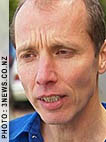
Nicky Hager
By JOSEPH FITSANAKIS | intelNews.org |
A Kiwi “peacekeeping” and “civil reconstruction” base in Afghanistan was a secret station for the US Central Intelligence Agency, according to a new book by New Zealand’s preeminent investigative writer. Nicky Hager first made international headlines in 1996, with his groundbreaking book Secret Power: New Zealand’s Role in the International Spy Network. In it, he revealed the existence of the UK-USA Security Agreement and of ECHELON, a US-managed signals intelligence (SIGINT) collection and analysis platform that serves as an intelligence-sharing mechanism between UK-USA signatories. The publication of his latest book, entitled Other People’s Wars: New Zealand in Afghanistan, Iraq and the War on Terror, is scheduled to coincide with the ten-year anniversary of 9/11. The book focuses on —among other things— the Bamyan Province base in central Afghanistan, which serves as the center of operations for the New Zealand Provincial Reconstruction Team in the Central Asian country. It serves as a symbol of New Zealand’s cautious contribution to the NATO-led war in Afghanistan, by allowing Kiwi forces to participate with boots on the ground, while performing strictly noncombatant functions, officially described as “peacekeeping” and “civil rebuilding”. But Hager’s book alleges that the “noncombatant” mission of the Bamyan base was simply a cover, devised by the New Zealand Defence Forces’ public relations apparatus, and aimed at pacifying the country’s population. The real mission of the Bamyan base, says Hager, was to “help the Americans” by essentially concealing a covert CIA station. The author further alleges that the Kiwi forces at Bamyan were instructed to keep the presence of the CIA team secret. This they did, even as they shared daily meals with American spies in civilian clothes, who refused to disclose even basic details of their mission to their New Zealand guardians. Hager alleges that New Zealand’s defense establishment took the decision to help the CIA as part of a broader strategy of rapprochement between Wellington and Washington. Why rapprochement? It was in 1984, when, under mounting popular pressure, New Zealand’s Labour government of David Lange voted to bar nuclear-powered or nuclear-armed ships from entering New Zealand territorial waters. At the time, the nuclear ban imposed by New Zealand was heralded by the global nuclear disarmament movement as a major victory. But Washington did not see it this way. Read more of this post







 intelNews.org
CIA Helped Gaddafi Torture Libyan Dissidents, Documents Show
September 5, 2011 by Joseph Fitsanakis 5 Comments
Abdel Belhaj
By JOSEPH FITSANAKIS | intelNews.org |
Back in February, when Libyan leader Muammar al-Gaddafi blamed the popular revolt against him on al-Qaeda, he was ridiculed in the international media. But documents discovered at an abandoned Libyan government office complex show that the Libyan rebels’ supreme military commander was abducted in 2004 by the CIA, which suspected him of links to al-Qaeda. Abdel Hakim Belhaj, also known as Abdullah al-Sadiq, was snatched by a CIA team in Malaysia, and secretly transported to Thailand, where he says he was “directly tortured by CIA agents”. The CIA then renditioned him to Libya, where he says he was tortured routinely until his release from prison, in 2010. In the 1980s, Belhaj was a member of the foreign Mujahedeen summoned by Osama bin Laden’s al-Qaeda to fight the Russians in Afghanistan. Upon returning to Libya in the early 1990s, he led the Libyan Islamic Fighting Group, an al-Qaeda-inspired armed organization that unsuccessfully sought to assassinate Colonel Gaddafi. Ironically, Belhaj is now the Tripoli-based military commander of the Libyan National Transitional Council, and says that he wants a full apology from the United States and Britain “for the way he was transported to prison in Libya in 2004”. But the former Mujahedeen is one of several terrorism suspects delivered to Libya by Western intelligence agencies in the years after 9/11, according to Libyan government documents discovered by Human Rights Watch (HRW) workers at the office of Libyan former intelligence chief and foreign minister Moussa Koussa. The documents show that Libya’s External Security Organization maintained extremely close relations with German, Canadian, British, and American intelligence services. Read more of this post
Filed under Expert news and commentary on intelligence, espionage, spies and spying Tagged with 2011 Libyan civil war, Abdel Hakim Belhaj, Abdullah al-Sadiq, Canada, CIA, Germany, Human Rights Watch, intelligence cooperation, Joseph Fitsanakis, Libya, Libyan Islamic Fighting Group, MI6, Moussa Koussa, Muammar al-Gaddafi, UK, United States