British SIGINT agency criticized for ‘vanity project’ that went 83% over budget
November 20, 2020 Leave a comment
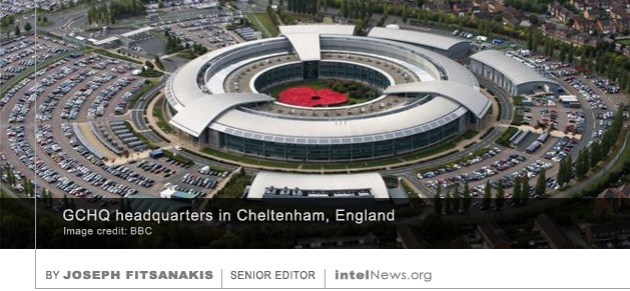 BRITAIN’S SIGNALS INTELLIGENCE AGENCY has been severely criticized in a report for undertaking a pointless “vanity project” that exceeded its allocated funds by 83 percent and needlessly cut into its operational budget. The agency, known as the Government Communications Headquarters (GCHQ) is responsible for collecting signals intelligence (SIGINT) and protecting the information systems of the British government and Armed Forces.
In 2015, the country’s Conservative government announced the establishment of the National Cyber Security Centre (NCSC), under the GCHQ, whose mission would be to protect Britain from cyber-espionage, cyber-terrorism and cyber-sabotage, among other cyber-security goals. Soon after the announcement was made, the then-Chancellor of the Exchequer, George Osborne, appointed a planning committee whose chief priority was to decide where to house the NCSC. The decision was made to house it in London, rather than the GCHQ’s Cheltenham base in southwestern England, so as to place it in close proximity to government and business centers.
But the planning committee rejected an initial plan to house the NCSC in Canary Wharf, one of London’s primary business districts, located on the Isle of Dogs. The reasons were that Canary Wharf is not close to the Palace of Westminster —Britain’s seat of government— and that Canary Wharf would be “very unpopular” with NCSC personnel. Instead, the committee chose Nova South, a luxury building situated near London’s Victoria station, which is one of the world’s most expensive urban areas. The government’s National Security Adviser, Mark Lyall Grant, rejected the Nova South option, arguing it would be too costly without adding any real benefits to the NCSC’s operations. But in May of 2016 Osborne overruled Grant’s decision and unilaterally decided to house the NCSC at Nova South.
Now a report (.pdf) from the British Parliament’s Intelligence and Security Committee has described Osborne’s role in the decision-making process as “highly unsatisfactory”, and his choice to house the NCSC at Nova South as “unacceptable”. According to the report, Osborne viewed the NCSC’s location as “a pet project” that prioritized image over cost and operational effectiveness. The result was that the NCSC housing project “considerably over-shot the funds originally allocated”, by over 80 percent. What is worse, according to the report, the money shortfall has been affecting the GCHQ’s operational budget by nearly £3 million ($4 million) a year since 2016.
► Author: Joseph Fitsanakis | Date: 20 November 2020 | Permalink
 Successive directors of the Secret Intelligence Service used a secret slush fund to finance spy operations without British government oversight after World War II, according to a top-secret document unearthed in London. The document was found in a collection belonging to the personal archive of the secretary of the British cabinet, which was released by the United Kingdom’s National Archives. It was discovered earlier this year by Dr Rory Cormac, Associate Professor of International Relations in the Faculty of Social Sciences of the University of Nottingham in England. It forms the basis of an episode of BBC Radio 4’s investigative history program, Document, which
 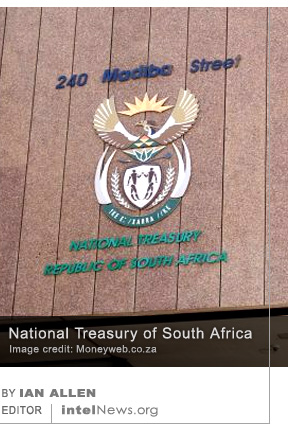 South Africa’s National Treasury threatened to terminate all funding for covert operations last year, after the country’s spy agency refused to account for tens of millions of dollars in expenses, saying the money had been put to “secret use”. An investigation by two leading South African news outlets, the Afrikaans-language weekly newspaper Rapport and the English-language online news portal News24, has revealed the existence of a major bureaucratic spat between the National Treasury and the State Security Agency (SSA), the country’s primary civilian intelligence organization.
 The combined budget of the two primary intelligence agencies of Israel, the Mossad and the Shin Bet, has doubled in the past decade, according to a report issued by the Israeli Ministry of Finance. Shin Bet is Israel’s domestic intelligence service, and is primarily responsible for counterterrorism and counterintelligence. The Mossad is Israel’s primary intelligence service, which means that it collects intelligence from foreign targets. The secretive agency also conducts covert and clandestine operations when authorized to do so by Israel’s government. The two agencies tend to work together with varying degrees of succces, but have distinct budgets.
 American Congressional lawmakers have voted to cut funding for the Central Intelligence Agency’s secret operations in Syria, in a surprise move that indicates growing concern on Capitol Hill with Washington’s strategy on the Syrian Civil War. The CIA’s involvement in the Syrian Civil War began in 2012, when US President Barack Obama












 intelNews.org
China’s intelligence modernization has outpaced military increases: British report
August 9, 2023 by Joseph Fitsanakis 4 Comments
The redacted version of the report was issued last month by the British Parliament’s Intelligence and Security Committee, which monitors the activities of the British intelligence community. It concentrates on China’s domestic and global ambitions and discusses the role of the Chinese intelligence services in these pursuits. A theme that permeates the 222-page report is that China’s domestic and international ambitions are interconnected, as Beijing does not distinguish between its key national interests in the domestic and foreign domains. Moreover, the report notes that the Chinese intelligence community plays a central role in both facets.
The report notes that China “almost certainly maintains the largest state intelligence apparatus in the world”, dwarfing those of its Western rivals. The latter are forced to concentrate their counterintelligence work “on those aspects that are most demanding”. The official Chinese intelligence agencies are three, the report notes; they consist of the Ministry of State Security and the Ministry of Pubic Security —both of which are civilian— as well as the Strategic Support Force of the Chinese People’s Liberation Army. The latter provides signals intelligence support, whereas the two civilian agencies carry out a host of intelligence and counterintelligence duties.
Nevertheless, the Chinese state’s “whole-of-government” approach on matters of security means that almost every government agency fulfils some type of intelligence-related role. This makes it difficult to calculate with accuracy the full extent of the Chinese intelligence apparatus, the report notes.
Notably, Chinese intelligence agencies are focused primarily on what the Chinese government perceives as domestic threats to its rule, which Beijing has termed “the five poisons”. According to the report, these consist of: the Taiwanese independence movement; the separatist movements in Tibet and Xinjiang; the Falun Gong religious movement; and pro-democracy activism inside China. Intelligence collection and other operations that relate to the so-called “five poisons” include intelligence activities that take place abroad and target Chinese expatriate communities.
It is also worth noting that, according to the report, Beijing spends “almost 20% more on domestic security than on external defence”. Moreover, the rise in expenditures for intelligence infrastructure and operations is impressive by any standards of assessment and “has outpaced even China’s recent dramatic military modernization” of recent years, the report notes. The increase in spending “appears to have led to an improvement in capability”, the report concludes.
► Author: Joseph Fitsanakis | Date: 09 August 2023 | Permalink
Filed under Expert news and commentary on intelligence, espionage, spies and spying Tagged with China, Chinese Ministry of State Security, intelligence funding, Ministry of Public Security (China), Strategic Support Force (China)