Norwegian spy service seeks right to break law during espionage operations
November 21, 2018 Leave a comment
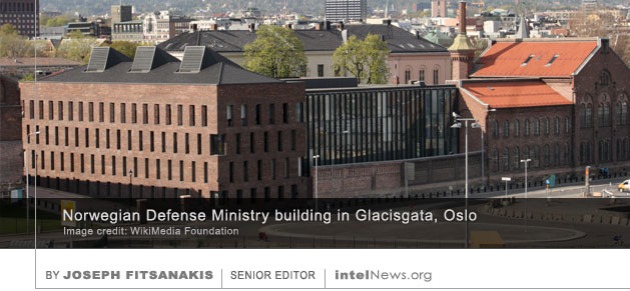 Norway’s supreme legislature body is considering a bill that would offer immunity from prosecution to intelligence officers and informants who are authorized by the country’s spy service to conduct espionage. The bill has been proposed on behalf of the Royal Norwegian Ministry of Defense, which supervises the operations of the Norwegian Intelligence Service (NIS), Norway’s primary intelligence agency. The NIS operates primarily abroad and is the only institution of the Norwegian state that can be authorized by the government to break laws in foreign countries. However, supporters of the new bill point out that NIS overseas operations can also break Norwegian law. That is something that the proposed bill addresses, they argue.
The proposed bill offers immunity from prosecution to NIS case officers and their assets —either informants or foreign spies— who may commit offenses under Norwegian law, as part of authorized espionage operations. In its consultation note that accompanies the proposed bill, the Norwegian Ministry of Defense admits that a number of NIS operations “already violate existing Norwegian laws”. That is inevitable, argues the Ministry, because officers and informants who engage in espionage operations will often “act contrary to the stipulations of criminal law […] as part of their assignments”. They may, in other words, “do certain things that would be illegal if they were done not on behalf of the intelligence service”, states the consultation note.
The document does not provide details of the types of offenses that are committed in pursuit of intelligence operations, arguing that “the offenses that the NIS commits, as well as its methods, must remain secret”. It does, however, suggest that intelligence officers may make use of “false or misleading identities, documents and information”. They may also “smuggle large amounts of cash from the country”, which they will use to pay foreign assets. Given that these assets receive Norwegian taxpayers’ funds, and that some of them end up settling in Norway, it is important that their proceeds not be considered taxable income under Norwegian law, according to the Defense Ministry. By reporting their revenue to the Norwegian Tax Administration, these assets would make their NIS connection known, and thus blow their cover, the document states.
The Defense Ministry notes that the new bill “will have little legal significance”, as NIS espionage operations are generally shielded from prosecution under Norway’s existing legal codes. It will, however, formalize the NIS’ legal scope and allow the agency to assure its case officers that they can perform their missions without fearing arrest or prosecution, so long as they act within the parameters of their authorized missions. The spy agency will also be able to recruit more “informants, sources and contractors”, says the document.
► Author: Joseph Fitsanakis | Date: 21 November 2018 | Permalink

 For the past year, the Netherlands has had a new law governing its two secret services, the AIVD and the MIVD. The new Intelligence and Security Services Act (Wet op de inlichtingen- en veiligheidsdiensten or Wiv) was and still is heavily criticized, especially because it allows untargeted access to cable-bound telephone and internet traffic. Under the previous law, which dates from 2002, the intelligence services were only allowed to conduct bulk interception of wireless transmissions, like satellite and radio communications —besides of course the traditional targeted telephone and internet taps aimed at individual targets.
 On March 21, the Dutch public cast their vote about the new Intelligence and Security Services Act, in Dutch
  Officials in Switzerland say new laws enacted in recent months will help them change their country’s image as one of Europe’s most active spy venues. For decades, the small alpine country has been a destination of choice for intelligence officers from all over the world, who use it as a place to meet assets from third countries. For example, a case officer from Britain’s Secret Intelligence Service (MI6) will travel to Switzerland to meet her Algerian agent. She will exchange money and documents with him before she returns to Britain and he to Algeria, presumably after depositing his earnings into a Swiss bank account.
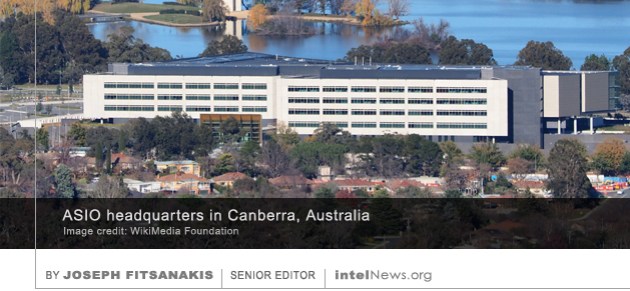 Foreign intelligence collection and espionage threats against Australia are greater today than at any time during the Cold War, according to a senior Australian intelligence official. The claim was made on Wednesday by Peter Vickery, deputy director general of the Australian Security Intelligence Organisation (ASIO), the country’s primary counterintelligence agency. He was speaking before a parliamentary committee that is considering aspects of a proposed bill, which aims to combat foreign influence on Australian political and economic life. If enacted, the bill would require anyone who is professionally advocating or campaigning in favor of “foreign entities” to register with the government. Several opposition parties and groups, including the Catholic Church, have
  The British government has announced that it will form a new intelligence unit tasked with preventing the spread of so-called “fake news” by foreign states, including Russia. The decision was revealed earlier this week in London by a government spokesman, who said that the new unit will be named “National Security Communications Unit”. The spokesman added that the unit will be responsible for “combating disinformation by state actors and others”. When asked by reporters whether the effort was meant as a response to the phenomenon often described as “fake news”, the spokesman said that it was.
 United States President Barack Obama has signed a new law that designates $160 million to set up a government center for “countering foreign propaganda and disinformation”. The law authorizes the US departments of State and Defense to work with other federal agencies in establishing the new body. Its precise tasks are not yet known, nor is the role in it —if any— of intelligence agencies, though the Director of National Intelligence is mentioned in the
 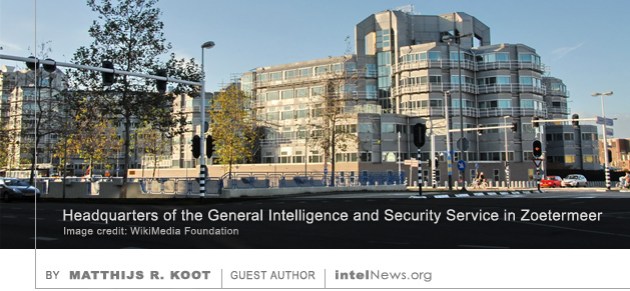 On July 2, 2015, the Dutch government released for public consultation a long-awaited bill that overhauls the Dutch Intelligence and Security Act of 2002. Known also as Wiv2002, the Act is the legal framework for the operations of the General Intelligence and Security Service (AIVD) and the Military Intelligence and Security Service (MIVD). The bill is a complete rewrite of the present law, and includes expansions of power, as well as changes to the approval regime and oversight. The below provides a brief overview focused on the interception and hacking powers.









 intelNews.org
New law to give Australian intelligence officers more rights to use firearms
November 29, 2018 by Joseph Fitsanakis 2 Comments
In 2004, ASIS was given legal permission for the first time to use firearms during undercover operations abroad. However, under current Australian law, this is allowed only as a last resort. ASIS personnel engaged in overseas operations are allowed to employ firearms in self-defense or to protect their agents —foreigners that have been recruited by ASIS to spy for Australia. However, the current government of Prime Minister Scott Morrison argues that ASIS personnel must be given broader powers to exercise “reasonable force” via the use of firearms during overseas operations. In a speech on Wednesday, Australia’s Minister for Foreign Affairs Marise Payne said that the overseas environment in which ASIS operates today is more complex than that of 2004, when the current laws of engagement were enacted. She added that nowadays ASIS personnel work in more hazardous locations, including warzones, and carry out “more dangerous missions in new places and circumstances”.
The government argues that the proposed changes will allow ASIS personnel to “protect a broader range of people and use reasonable force if someone poses a risk to an operation”. The new law will give ASIS officers permission to open fire against adversaries in order to protect parties other than themselves —such as hostages— or to avoid getting captured. This, says the government, will allow them to efficiently “protect Australia and its interests”. The last time that the Australian government flirted with the idea of giving ASIS broader powers to use firearms during undercover operations was in 2010. That year, the government of Prime Minister Kevin Rudd commissioned a multimillion dollar independent review of the Australian intelligence community’s mission and operations. The review proposed that ASIS personnel be allowed more powers to carry and handle weapons while engaging in “paramilitary activities” outside Australia. But the proposal was never enacted into law.
The latest proposal by the Morrison administration is scheduled to be discussed in the Australian Parliament today.
► Author: Joseph Fitsanakis | Date: 29 November 2018 | Permalink
Filed under Expert news and commentary on intelligence, espionage, spies and spying Tagged with Australia, Australian Secret Intelligence Service, covert operations, intelligence legislation, News