Senate bill proposes closer links between US spies, private sector

Olympia Snowe

Olympia Snowe

By IAN ALLEN| intelNews.org |
A bipartisan bill, unveiled yesterday in the US Senate, proposes closer links between US intelligence agencies and private sector companies active in areas of “critical infrastructure”. Drafted and proposed by Republican senator Olympia Snowe and Democrat Jay Rockefeller, the legislation builds on concerns by government officials that US energy and telecommunications systems may not be able to sustain a concentrated cyber-attack by a foreign government agency or organized cybercriminal group. The major practical problem in terms of the government protecting these systems is that most have been deregulated since the Reagan era, and are now almost entirely under the control of private corporations. According to the bill, the US government would have to define the term “critical infrastructure”, and then designate the companies in control of such infrastructure networks as “critical partners” in protecting strategic national interests. Read more of this post

US, UK spy agencies on alert after unprecedented court decision

Binyam Mohamed

Binyam Mohamed

By JOSEPH FITSANAKIS | intelNews.org |
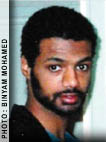
British and American intelligence agencies have been placed on alert following an unprecedented ruling by a British court, which forces the British government to disclose CIA documents in its possession. The documents relate to the case of Binyam Mohamed, an Ethiopian resident of Britain, who says he was severely tortured with the collaboration of the CIA and British domestic intelligence agency MI5, after he was renditioned to Morocco. Last February, two British judges overseeing Mr. Mohamed’s case revealed that the British government kept “powerful evidence” secret after being threatened by the US that it would “stop sharing intelligence about terrorism with the UK”. In July, it emerged that US Secretary of State Hillary Clinton personally threatened the British government that Washington would stop collaborating with London on intelligence matters if evidence in Mr. Mohamed’s case was publicly released. Read more of this post

News you may have missed #0258

Bookmark and Share

News you may have missed #0251 (analysis edition)

Bookmark and Share

News you may have missed #0250

  • Pakistanis ask US to quit drone strikes. A Pakistani intelligence official has told the Associated Press that the response to the December 30 suicide bombing that killed seven CIA agents should not include intensifying unmanned drone strikes inside Pakistan. However, the CIA has reportedly “stepped up drone strikes” since the bombing.
  • Bush, Obama administrations guilty for neglecting info sharing. Thomas E. McNamara, former head of the US federal Information Sharing Environment, says the Bush and Obama administrations are both guilty of either losing interest or not focusing at all on promoting information sharing among often-secluded US government agencies.
  • China ends probe into Rio Tinto espionage case. Chinese prosecutors have now taken over the case of Stern Hu, the jailed boss of Anglo-Australian mining corporation Rio Tinto, after officials ended their investigation. Hu was arrested last July on espionage charges.

Bookmark and Share

Too much intelligence collection overwhelms US agencies

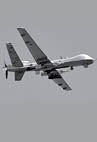
Predator drone

USAF drone

By JOSEPH FITSANAKIS | intelNews.org |
The broad debate about America’s recent intelligence setbacks has centered on the view that US spy agencies do not share enough information with each other. Several days ago, however, Politico’s Laura Rozen noticed an important remark by an anonymous former intelligence official, buried in a longer piece in The Washington Post about the Christmas Day bomber. The official told the Post that “[t]he real story line internally [in the Christmas Day bomber affair] is not information-sharing or connecting dots […]. Information was shared. It was separating noise from chaff. It’s not that information wasn’t passed around, it’s that so much information is being passed. There’s an inherent problem of dealing with all the data that is sloshing around” (emphasis added). This view may in fact be closer to reality than the more dominant ‘turf war’ argument. Read more of this post

News you may have missed #0237

  • Christmas Day bomb plot exposes fissures in US spy community. As intelNews regulars know, turf wars between US intelligence agencies are nothing new. But lapses that allowed Umar Farouk AbdulMutallab to board a Detroit-bound plane with a bomb on Christmas Day, and the finger-pointing that followed, have raised questions about supposedly sweeping changes made to improve intelligence-sharing after the 9/11.
  • Mysterious life of Soviet spy couple unveiled. Soviet agents Mikhail and Yelizaveta Mukasey were legends among illegals –i.e. international spies operating without diplomatic credentials. Now the Russian government is carefully releasing information on their activities and missions, which ranged from the US to Israel, Czechoslovakia and elsewhere.

Bookmark and Share

News you may have missed #0200

  • New N. Ireland justice minister wants MI5 to share data. David Ford, who appears to be the preferred choice for Northern Ireland’s justice minister, says he will “insist that MI5 share all intelligence on republican dissidents with the Police Service of Northern Ireland”.
  • Prisoners remain in CIA black site. A US military detention camp in Afghanistan is still holding inmates, sometimes for weeks at a time and without access to the Red Cross, according to human rights researchers and former detainees held at Bagram Air Base.

Bookmark and Share

Is Pakistani-American insurgent a rogue CIA agent?

By IAN ALLEN | intelNews.org |
Earlier this month US authorities said they wouldn’t let an Indian intelligence team question Pakistani-American David Coleman Headley, who was arrested by the FBI in October for plotting an attack on a Danish newspaper that published cartoons of the prophet Muhammad. The Indians said they wanted to talk to Headley, born Daood Gillani, about his reported association with Lashkar-e-Taiba, a Pakistani militant group responsible for several high-profile attacks inside India. But US officials blamed “bureaucratic” and “procedural” hurdles for denying Indian investigators access to Headley. Considering the close security ties between Washington and New Delhi, intelligence observers were surprised by the US move. Why did the FBI bar Indian intelligence from questioning Headley? Some Indian commentators suggest an intriguing theory: that Headley may be “an undercover agent whom the [US] authorities are shielding from the media and the hapless Indian investigators who were told to take a hike when they came to [Washington to] interview [him]”. Read more of this post

One third of Pakistani spy budget comes from CIA, say officials

ISI HQ

ISI HQ

By IAN ALLEN | intelNews.org |
As much as one third of the annual budget of Pakistan’s Inter-Services Intelligence has come from the CIA in the last eight years, according to a new report in The Los Angeles Times. The paper says that even more US dollars have been supplied to the ISI through a secret CIA monetary rewards program that pays for the arrest or assassination of militants wanted by Washington. The payments reportedly began during the early years of the George W. Bush administration, and are now continuing under the Obama administration, despite “long-standing suspicions” that the ISI and the Pakistani military maintain close links with the Afghan Taliban and al-Qaeda operatives in Pakistan and elsewhere. Read more of this post

CIA-DNI turf war over embassy posts continues

Joe Biden

Joe Biden

By IAN ALLEN | intelNews.org |
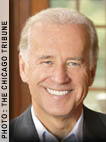
This blog has kept tabs on the latest US bureaucratic turf war between the CIA and the office of the Director of National Intelligence (DNI). It started last May, when when DNI Dennis Blair argued in a still-classified directive that his office should have a say in certain cases over the appointment of senior US intelligence representatives in foreign cities. Former CIA officials publicly denounced the directive, which would allow the appointment of non-CIA personnel to these positions for the first time in 60 years, as “simple insanity”. The turf war appeared to be close to an end in July, when the US Senate Select Committee on Intelligence came out in support of the DNI, arguing that “some locations may give rise to circumstances where th[e CIA station chief’s] responsibility is best met by an official with expertise derived from another I[ntelligence] C[ommunity] element”. Read more of this post

News you may have missed #0157

Bookmark and Share

US wont’ share al-Qaeda intelligence, say Pakistani spies

Quetta, Pakistan

Quetta, Pakistan

By IAN ALLEN | intelNews.org |
A number of senior Pakistani security officials have accused US spy agencies of systematically withholding from their Pakistani counterparts actionable intelligence on al-Qaeda and Taliban activities in Pakistan. Speaking on condition of anonymity, the officials complained to The Washington Times that the last time the CIA shared actionable intelligence on al-Qaeda with the government of Pakistan was in 2007. They also said that recent public assertions by US officials that senior al-Qaeda leaders are hiding in Quetta, Pakistan, have not been followed with corresponding actionable intelligence by US spy agencies. The allegations shed further light on the increasingly severed intelligence relationship between Washington and Islamabad, which began shortly before the 2008 ousting of American-supported Pakistani dictator General Pervez Musharraf. Read more of this post

News you may have missed #0140

  • CIA Intellipedia gurus get Homeland Security Medal. Don Burke and Sean Dennehy, the CIA agents behind Intellipedia, have been awarded a medal for “promoting and expanding information-sharing in the Intelligence Community”. As intelNews noted last August, Intellipedia, the intelligence community’s version of Wikipedia, has grown markedly since its formal launch in 2006. It now averages more than 15,000 edits per day and is home to 900,000 pages and 100,000 user accounts.
  • Cuban Five resentencing delayed. A US federal judge has accepted requests from the lawyers of Antonio Guerrero, a member of the Cuban Five spy ring, to delay their resentencing, after the US government refused to turn over any national security damage assessments in the case. Washington accuses the Five of spying on the US for Cuba. But an appeals court ruled earlier this year that the sentences they received (ranging from 19 years to life) were too long. It appears that Guerrero’s sentence will be reduced from life to 20 years behind bars.
  • Was Christopher Columbus a spy? An independent researcher is raising eyebrows by suggesting that Columbus was a Portuguese spy who knew exactly what he was doing when he supposedly “got lost” in the Atlantic in 1492.

Bookmark and Share

Analysis: Bush focus on Daily Brief skewed policy decisions

Lieberthal

Lieberthal

By JOSEPH FITSANAKIS | intelNews.org |
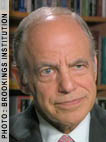
A study by a Brookings Institution analyst says the “unprecedented” level of importance given to the President’s Daily Brief (PDB) by George W. Bush skewed his administration’s policy decisions after 9/11 and had negative consequences for the US intelligence community. The PDB arrives at the US President’s desk every morning with highly classified summaries of the latest findings from America’s intelligence community. The importance given to the PDB, whose contents are often highly speculative or unprocessed, varies with Presidents. But Kenneth Lieberthal, former National Security Council staffer in the Bill Clinton administration and senior fellow at Brookings, says the Bush cabinet overwhelmingly relied on the PDB to make policy decisions, which were often based on information that lacked substantial analysis. Read more of this post