Mossad, CIA, ‘agree Iran has no active nuclear weapons program’

Iran's Natanz nuclear enrichment facilityBy JOSEPH FITSANAKIS| intelNews.org |
Quoting American intelligence sources, The New York Times reports that intelligence agencies from the United States and Israel agree that Iran suspended its nuclear weapons program years ago, and that Tehran is not currently attempting to revive it. As intelNews has been reporting consistently since 2009, the overwhelming consensus in the US intelligence community is that the Iranian regime suspended all efforts to build a nuclear bomb in 2003. Furthermore, the US intelligence community maintains that the decision to turn Iran into a nuclear power has yet to be conclusively taken in Tehran. This was first outlined in the 2007 US National Intelligence Estimate (NIE), an annual report cooperatively authored by the heads of all US intelligence agencies. This consensus appears even wider after Sunday’s New York Times report, which maintains that, even though many hawkish Israeli politicians advocate aggressive action against Iran, Israel’s intelligence agency, the Mossad, is in broad agreement with the premise of the 2007 NIE. The Times cites an anonymous “former senior American intelligence official”, who says that, although Israeli intelligence planners direct “very hard questions” to their American counterparts, the “Mossad does not disagree with the US on the [Iranian] weapons program”, and that “there is not a lot of dispute between the US and Israeli intelligence communities on the facts”. Undeniably, the 2007 NIE has its detractors, including some who accuse the US intelligence community of refusing to realize “that Iran now has the capability to change the balance of power in the Gulf”. The latest report in The Times does not deny that there are “significant intelligence gaps” in Washington’s ability to understand Iran’s intentions. Iran, argues the report —correctly— is “one of the most difficult intelligence collection targets in the world”. Read more of this post

News you may have missed #693: Israel edition

Meir DaganBy IAN ALLEN| intelNews.org |
►►India soon to announce Iranian role in New Delhi bomb attack. The Delhi Police has cracked the Israeli embassy car blast case and traced the conspiracy to Iranian secret agents. According to sources privy to the investigation, it has now been “conclusively established” that Syed Mohammad Kazmi, the freelance journalist recently arrested in the case, was in touch with an Iranian intelligence officer and had even visited Iran as part of the conspiracy. Sources in the Indian security establishment said that the breakthrough in the February 13 blast on an Israel diplomat’s car, will be announced by the New Delhi Police in a “day or two.” They added that another couple of detentions have been made in the case.
►►Ex-Mossad chief says Iran’s response to attack would be devastating. An Israeli attack on Iran would lead to a missile attack on Tel Aviv that would have a “devastating impact” on the ability of Israelis to continue their daily lives, Meir Dagan, former head of Israel’s spy agency Mossad, said on Monday. Dagan said that Iran doesn’t have only four nuclear sites, but it has “dozens” of them. He seemed quite skeptic over the effectiveness of an Israeli attack on Iran, saying that no military attack could halt the Iranian nuclear project. “The attack could only delay it”, he said.
►►Ex-Mossad chief says Iran regime is ‘very rational’. The Iranian regime is “very rational” and is moving deliberately in its secretive nuclear program, the former head of Israel’s Mossad intelligence agency says. “Maybe it’s not exactly rational based on what I call ‘Western thinking’, but no doubt that they are considering all the implications of their actions”, Meir Dagan said in an interview with CBS‘ 60 Minutes that aired Sunday.

Israel ‘has decided to attack Iran’, claims US intelligence source

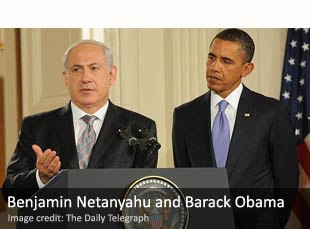
Benjamin Netanyahu and Barack ObamaBy JOSEPH FITSANAKIS| intelNews.org |
The consensus in the US intelligence community is that Israel has decided “on principle” to launch a military strike on Iran in order to halt its nuclear program, according to an American intelligence insider. The American source was quoted on Israel’s Channel 2 (Arutz 2) television on Monday as saying that most US intelligence analysts believe “the attack will go ahead”. The source also argued that the Israeli public remains unaware of the “catastrophic consequences” of such an attack, which, according to US intelligence analysts, will be met with thousands of missiles launched against Israel by Iran and several Arab states. The confrontation will most likely trigger a regional war and “possibly even World War III”, said the source, citing US intelligence reports on the subject. He also warned Israel that the decision to attack Iran would be “tantamount to suicide”. The Channel 2 report claimed that the American and Israeli governments are “deeply at odds” over the potential consequences of a military attack on Iran, but that Tel Aviv has already decided to authorize strikes. The latter will allegedly take place before summer, unless there is “a significant change in the Iranian nuclear program in the next few weeks”, said the report. However, sources close to the Office of Israeli Prime Minister Benjamin Netanyahu rejected the Channel 2 report as part of “scare tactics” employed by Washington. The sources dismissed the so-called “nightmare scenario” as a method employed by members in the administration of President Barack Obama, who “want to constrain Israel from contemplating an attack on Iran”. Meanwhile, British newspaper The Daily Telegraph effectively corroborates the Channel 2report, and adds that Israeli Prime Minister Netanyahu issued the US President with “an ultimatum” during their closed-door meeting in Washington on Monday. Read more of this post

News you may have missed #687

Hans BlixBy IAN ALLEN | intelNews.org |

►►Analysis: Is Obama abusing the US Espionage Act? Prosecutors may still attempt to indict WikiLeaks founder Julian Assange under the 1917 Espionage Act, though their case will likely depend on exactly how he received his information. But, WikiLeaks aside, the Obama administration has made increasing use of the act to clamp down on whistleblowers.
►►Ex-head admits IAEA does work with spies (shock, horror). The International Atomic Energy Agency, which acts as the nuclear watchdog of the United Nations has been closely cooperating with the world’s spy agencies, including on Iran and Syria, for years, according to its former director. Hans Blix told RT that the IAEA’s cooperation with the world’s intelligences started following the Iraqi crisis of the 1990s. “Of course, intelligence can always try to fool everybody”, he said. “Half of the information may be true, half of it may be disinformation, and therefore they have to examine it critically”.
►►Afghanistan arrests diplomat on spying charges. Afghanistan’s State Intelligence Agency (KHAD) on Monday said that a senior foreign ministry diplomat and three other government officials had been arrested over charges of spying for Iran and Pakistan. The men were detained “on charges of spying for neighboring regions” and “the arrests were made with concrete evidence”, KHAD’s spokesman, Lutfullah Mashal, said. An unnamed source in the same agency also claimed that the deputy head of KHAD’s Asia desk and two government employees had been arrested in a similar incident in the eastern Afghan province Nangarhar a month before.

Israel ‘not to warn US’ on Iran attack, says US intelligence official

White House National Security Adviser Tom DonilonBy JOSEPH FITSANAKIS | intelNews.org |
The Israeli government has reportedly decided not to forewarn the United States if and when it decides to launch military strikes against Iran’s nuclear energy program. Citing a US intelligence insider, the Associated Press reported on Monday that American officials have been given the message “in a series of private, top-level” meetings with senior Israeli leaders. Tel-Aviv’s decision not to notify Washington about a possible attack on Tehran has been allegedly communicated to US officials by none other than Israeli Prime Minister Benjamin Netanyahu and Minister of Defense Ehud Barak. The US intelligence official, who tipped off the Associated Press anonymously, said that the two men have been relaying the same message to a host of American officials who have visited Israel in the past several weeks. The officials include the US Director of National Intelligence James Clapper, Chairman of the Joint Chiefs of Staff Martin Dempsey, as well as several senior American lawmakers. The intelligence source told The Associated Press that Tel Aviv’s decision to keep its cards on Iran close to its chest was solidified following a series of meetings last week between the Israeli leadership and White House National Security Adviser Tom Donilon (pictured). The American official relayed to Netanyahu, Barak and others, the opinion of the White House that a military attack on Iran would be both dangerous and counterproductive. This appears to have further alarmed the Israeli leadership, which last week chastised the United States for voicing criticism of a possible Israeli military attack on Iran, arguing that this criticism effectively “served Iran’s interests”. Read more of this post

US spy agencies see no clear evidence of Iran building nukes

Cover of the 2007 National Intelligence EstimateBy JOSEPH FITSANAKIS| intelNews.org |
The United States intelligence community still believes Iran has no immediate goals to produce nuclear arms, and says that Tehran terminated its atomic weapons program in 2003, according to American officials. This is not to say that Iran is not interested in potentially building nuclear weapons. Most intelligence analysts agree that Iran’s long-term goal is to explore the possibility of establishing a nuclear arsenal. However, putting aside the broad concurrence of opinion about Iran’s long-term goal, very little is clear about the current state of Tehran’s nuclear program. Iran maintains that its goal is peaceful, namely to invest in nuclear energy so as to free up large quantities of oil for exports. It is important to stress that the consensus among America’s intelligence agencies is that this is in fact Iran’s immediate goal. This was pronounced in the 2007 National Intelligence Estimate (NIE), a publicly available annual report cooperatively authored by the heads of all 16 US intelligence agencies. The 2007 report stated “with high confidence that in fall 2003, Tehran halted its nuclear weapons program”. The US intelligence community has come under sustained criticism from many who have denounced the 2007 and subsequent NIEs as mistaken, or even reckless. Last Friday, however, a New York Times article citing “current and former American officials” said that the consensus among US intelligence analysts remains “that there is no hard evidence that Iran has decided to build a nuclear bomb”. According to the article, the US intelligence community’s consensus remains “broadly consistent” with the 2007 and 2010 NIEs. Read more of this post

News you may have missed #683

Lech WalesaBy IAN ALLEN | intelNews.org |
►►Walesa scorns new claims he was communist informant. Poland’s former President and Solidarity founder Lech Walesa has brushed off new claims that crucial documents concerning his alleged collaboration with Poland’s communist secret services may be stored in the Polish parliament’s archives. “I know that if there are any papers on me that are unknown, they are only toilet paper”, he said in an interview with Polish television network TVN. Rumors and accusations that Walesa, an anti-communist union leader was in fact a secret communist informant have been circulating for years in Poland.
►►Israeli embassy in Singapore dismisses Barak assassination plot. The Israeli embassy in Singapore confirmed Friday that Defense Minister Ehud Barak had visited the city-state, but dismissed reports of an assassination plot targeting him. Kuwaiti newspaper Al Jarida wrote recently that Barak had been targeted for assassination by three members of a Hezbollah militant cell during his trip to Singapore from February 12-15.
►►Moves to question Turkish spy chiefs quashed. State prosecutors have abandoned an attempt to question Turkey’s spy chiefs over past secret contacts with Kurdish militants, after government moves to curb their investigation of the intelligence agency (MİT). State media said on Monday that prosecutors lifted an order summoning MİT head Hakan Fidan. Nice to be reminded who is really in charge in 21st-century ‘democratic’ Turkey.

Analysis: The How and Why of Modern Assassinations

Bomb blast site in New Delhi, IndiaBy JOSEPH FITSANAKIS | intelNews.org |
Reports on the discovery last week of a synchronized plan to attack Israeli diplomats in India, Georgia, and Thailand, are still unfolding. At least four people —including the wife of an Israeli diplomat— were injured in New Delhi, when a bomb ripped through a van belonging to the Israeli embassy there. Another bomb was defused by Georgian counterterrorist forces after it was found fastened under an Israeli diplomatic vehicle in Tbilisi. And in Bangkok, two Iranian nationals were arrested after a bomb they were manufacturing exploded prematurely in a rented house in the Thai capital. In an interview I gave this past weekend to The Journal, one of Ireland’s most popular newsmagazines, I noted that the use of targeted assassinations as a means of achieving broader political goals is, of course, not new. But there are definite trends that we have been able to see developing during the past decade or so. For starters, even though the methods of assassination vary greatly, there are common trends one can point out, particularly in the organizational infrastructure of state-sponsored assassination operations. There is, to be precise, an increasing complexity in the way these operations are planned prior to their execution by specialized hit teams. I told The Journal’s interviewer, Susan Ryan, that the increasing sophistication of these types of operations can be appreciated by comparing older examples with case studies that are more recent. Take, for instance, the Black September killings, conducted by Israeli intelligence in response to the 1972 massacre of Israeli athletes at the Munich Olympics. Read more of this post

News you may have missed #682

Lieutenant General Ronald BurgessBy IAN ALLEN | intelNews.org |

►►Is there a Mossad base near Iran? The London-based Sunday Times has published an interview with a man claiming to be an Azerbaijan-based agent of Israeli intelligence agency, who confirmed the existence of such a base. The man, identified in the article as “Shimon,” told the paper that there were dozens of Israeli Mossad agents working out of the base. The meeting between the agent and the London Times‘ reporter took place in Baku, near the Israeli Embassy, the report said.
►►Analysis: CIA report on Soviet bioweapons still secret. It has been three decades since the Reagan administration accused the Soviet Union and Vietnam of using chemical weapons known as yellow rain. We still do not know how the US came to this conclusion, but have good reason to believe that it was based on flawed or distorted intelligence. A classified critique of the intelligence behind those charges, written several years ago for the Central Intelligence Agency, could shed light on what happened. Last year, Matthew Meselson, a Harvard expert on chemical and biological weapons, filed a Freedom of Information Act request to get the report released. He was turned down.
►►US official says Iran unlikely to strike first. Lieutenant General Ronald Burgess, director of the US Defense Intelligence Agency, said the Iranian military is unlikely to intentionally provoke a conflict with the West. He said Iran probably has the ability to “temporarily close the Strait of Hormuz with its naval forces”, as some Iranian officials have threatened to do if attacked or in response to sanctions on its oil exports by the US and European Union. But, he added, “Iran is unlikely to initiate or intentionally provoke a conflict or launch a preemptive attack”.

Israeli-Iranian ‘dirty war’ nearing point of no return

Bomb blast in New DelhiBy JOSEPH FITSANAKIS | intelNews.org |
The ongoing intelligence war between Israel and Iran appears to be reaching unprecedented levels following the exposure earlier this week of a simultaneous bombing campaign against Israeli targets in Europe and Asia. The wife of Israel’s Defense Attaché in New Delhi, India, was among four people injured on Monday, after a magnetic bomb attached to her car exploded just 500 yards from the gates of the Israeli embassy. Three thousand miles away, in Tbilisi, Georgia, a sharp-eyed employee of the Israeli embassy there discovered a bomb attached to a diplomatic car; the device was eventually diffused by Georgian counterterrorist authorities. A few hours later, the government of Thailand announced that two Iranian nationals had been detained following an explosion at a rented house in the capital Bangkok, which critically injured one of the arrestees. A second man was reportedly arrested in Bangkok’s Suvarnabhumi International Airport while he was trying to board a flight to Malaysia. At least two other men, also Iranian nationals, remain at large, though Thai officials suspect they have already fled to Iran. (Update: Thai authorities have confirmed the bombers’ targets were Israeli diplomats). Speaking anonymously to Bloomberg news agency, US intelligence officials said that operations directed at Israeli targets were also “disrupted” in Baku, the capital of Azerbaijan, as well as in Bulgaria. Observers have also noted that the attack that injured the wife of the Israeli diplomat was carried out in one of Israel’s strongest allies in Asia, thus delivering a two-fold message to both Tel Aviv and New Delhi. India’s Home Affairs Minister, Palaniappan Chidambaram, told journalists yesterday that the attack in the Indian capital was conducted by a “well trained” motorcyclist, who attached “a magnetic device” to the car before speeding away. Read more of this post

Pakistan will retaliate if Israel attacks Iran, says diplomat

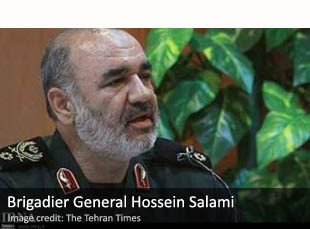
Hossein SalamiBy JOSEPH FITSANAKIS | intelNews.org |
A European diplomat has quoted Pakistani officials as saying that Islamabad will retaliate in kind if the Israeli military attacks Iran. Speaking to the Associated Press, the anonymous diplomat, who is stationed in Pakistan, said Pakistani military leaders have decided that “if Iran is attacked [they] will have no alternative but to launch a reprisal attack”. The warning, which the Associated Press appears to be treating as reliable, implies the involvement of Pakistan —the world’s only predominantly Muslim nuclear power— in a possible war between Iran and Israel. The latter is also widely considered to possess a formidable nuclear weapons arsenal. Other reports quote several international experts who seem to agree that it will be impossible to contain the ramifications of a possible military confrontation between Iran and Israel to a strictly regional level. Nick Witney, former Director of the European Defense Agency, who is currently Senior Fellow at the European Council on Foreign Relations, argues that an Iranian-Israeli war will have immediate effects on the global economy. According to Witney, “the political and economic consequences of an Israeli attack would be catastrophic for Europe”, as the immediate spike in oil prices will cause out-of-control defaults in countries like Italy and Greece. This will eventually push the entire European Union, including economic powerhouse Germany, into a deep and prolonged recession, and may even cause the euro to collapse altogether. Moreover, says Witney, Iran will “probably retaliate against European interests in the region, and conceivably more directly with terrorism aimed at Western countries and societies”. Read more of this post

News you may have missed #675

Maria del Pilar HurtadoBy IAN ALLEN | intelNews.org |

►►Panama refuses to extradite Colombian ex-spy chief. Panama’s foreign ministry cited the Inter-American Convention on Human Rights, an international accord on asylum and Panamanian law, as reason for denying Colombia’s request to extradite Maria del Pilar Hurtado, who faces charges in Bogota over an illegal wiretapping scandal. Currently enjoying asylum in Panama are former presidents of Guatemala, Jorge Serrano Elias; and Ecuador, Abdala Bucaram; as well as erstwhile Haitian military strongman Raoul Cedras.
►►Russian spy chief to visit Syria. Russian Foreign Minister Sergei Lavrov said on Saturday he and Foreign Intelligence Service (SVR) head Mikhail Fradkov will visit Syria and meet with President Bashar al-Assad on February 7. The visit will be made on instructions from Russian President Dmitry Medvedev. Lavrov did not reveal any details of the upcoming the visit.
►►US spy chief: ‘we don’t know if Iran is building a bomb’. At a hearing of the Senate Select Committee on Intelligence last Tuesday, James Clapper, the US Director of National Intelligence, released the following statement: “We assess Iran is keeping open the option to develop nuclear weapons, in part by developing various nuclear capabilities that better position it to produce such weapons, should it choose to do so.  We do not know, however, if Iran will eventually decide to build nuclear weapons”.

US Senate hearing accidentally reveals Mossad director’s secret visit

Tamir PardoBy JOSEPH FITSANAKIS | intelNews.org |
The chairwoman of a public hearing at the United States Senate, which was televised live across America, accidentally revealed that the Director of Israeli intelligence service Mossad secretly visited the US for talks last week. The revelation took place on Tuesday at a high-profile hearing conducted by the Senate Select Committee on Intelligence, with the participation of the Director of National Intelligence James Clapper and Central Intelligence Agency Director David Petraeus. While addressing the latter, Committee chairwoman Dianne Feinstein mentioned in passing that “the vice chairman [of the Committee] and I have just met this past week with the director of Mossad”, and that the meeting was classified. She was referring to Tamir Pardo, the newly installed head of Israel’s foremost external intelligence agency. Without blinking an eye, Petraeus responded saying: “Like you, obviously, I met with the head of Mossad when he was here”. Subsequent discussion during the hearing appeared to establish that Pardo visited the United States specifically to discuss the possibility of an Israeli attack on Iran’s known nuclear installations. In responding to Senator Feinstein’s comment, the CIA Director said that Pardo’s secret visit was “part of an ongoing dialogue that has also included conversations that I’ve had with [Israeli] Prime Minister [Benjamin] Netanyahu and with [Defense] Minister [Ehud] Barak”. No further information was shard on the Mossad official’s visit, and US government representatives refused to elaborate, when asked about it later. Read more of this post

Analysis: Why is Israel so chatty about a possible strike on Iran?

Ronen Bergman By JOSEPH FITSANAKIS | intelNews.org |
This past Sunday, Israeli intelligence expert Ronen Bergman published an extensive cover story in The New York Times Magazine, titled simply: “Will Israel Attack Iran?”. He answers his question in the affirmative, saying that “after speaking with many senior Israeli leaders and chiefs of the military and the intelligence, I have come to believe that Israel will indeed strike Iran in 2012”. Bergman, who a year ago wrote an excellent, well-informed account of the Mahmoud al-Mabhouh assassination, sees a “small and ever-diminishing” window of opportunity to stop the looming war.  But he says that few in Israel believe that the United States administration of President Barack Obama is willing or able to prevent an Israeli attack on Iran. Instead, the predominant sentiment in the Jewish state is that “only the Israelis can ultimately defend themselves”, he writes. But the intense discussion about a possible Israeli attack on Iran begs a critical question, which is asked by Laura Rozen, Senior Foreign Affairs Reporter for Yahoo News. She asks, why are Israeli leaders so chatty on the topic? One would think that, by being so vocal about their intentions, they risk losing a major strategic advantage that Israel’s military has relied on in the past: namely the element of surprise. In her search for an answer, she did what good reporters usually do: she actually picked up the phone and called Bergman in Israel. A condensed version of their interesting discussion is provided here. In it, she queries the Israeli intelligence expert about the widespread view that, if Israeli planes were indeed preparing to strike Iran, Tel Aviv would be very discrete about it. Bergman’s response is somewhat convincing; he says that most Israeli statements on the subject are “not meant for Israeli ears” —though they often reverberate inside Israel. Read more of this post

News you may have missed #674

Fayez KaramBy IAN ALLEN | intelNews.org |

►►Lebanese ex-general gets prison sentence for spying for Israel. Last Tuesday’s sentence of former Brigadeer General Fayez Karam (pictured) means he will spend six more months in jail. He has been in prison since mid-2009, said the officials on condition of anonymity in line with regulations. Karam, who in the late 1980s led Lebanon’s counterespionage unit, ran for a parliament seat in 2009 as a senior member of the Free Patriotic Movement of Christian leader and Hezbollah ally Michel Aoun.
►►US may share intelligence with Nigeria. Nigeria and the United States plan to “explore the development of intelligence fusion capability”. This statement was contained in a joint communiqué issued at the end of a two day inauguration of a regional security cooperation working group held at the Ministry of Foreign Affairs in Abuja, Nigeria. The two countries will be collaborating “on training, logistics intelligence sharing, modernization of the security services and other requirements”.
►►Afghan jailed for 16 years for spying for Iran. An Afghan man, named only as Mahmmood, has been jailed for 16 years for spying for neighboring Iran. He was allegedly found in possession of photographs of foreign and Afghan military installations in western Herat province, and had Iranian intelligence officials’ phone numbers in his notebook.