News you may have missed #650

Robert BaerBy IAN ALLEN | intelNews.org |
►►US ex-DoD official says drone captured by Iran ‘seems fake’. Newspaper USA Today quotes an anonymous US former Pentagon official, who said that, according to video footage of the drone on display in Iran, not only is it the drone the wrong color, but also the welds along the wing joints do not appear to conform to the stealth design that helps it avoid radar detection.
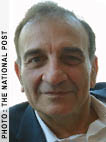
►►Ex-CIA officer says collapse of CIA operations benefits Iran. The collapse of CIA operations in Lebanon, following Hezbollah’s unmasking of several CIA spies and the recent naming of the agency’s station chief, is a serious blow to the US’ ability to gather intelligence, says Robert Baer, a former CIA officer who operated in Lebanon in the 1980s.
►►Iran indicts 15 in alleged US-Israeli spy ring. An Iranian prosecutor announced on Tuesday that his government has indicted 15 people who allegedly spied on the Islamic Republic for the US and Israel. Tehran prosecutor Abbas Jafari Dolatabadi did not name the alleged spies, who are suspected of having ties to the American CIA and Israel’s Mossad intelligence agency. IntelNews readers may remember that, in May, Iran’s intelligence minister, Heidar Moslehi, announced the alleged discovery of a CIA-directed spy network in Iran of more than 30 people.

Does Iran have access to satellite jamming technology?

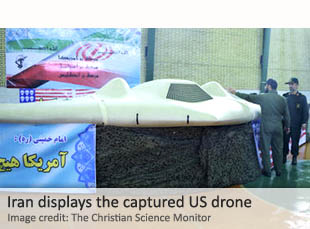
Iran displays captured US droneBy JOSEPH FITSANAKIS | intelNews.org |
A European intelligence official has said that Iran downed an unmanned American surveillance aircraft earlier this month by remotely sabotaging its satellite navigation system. The official, who has not been named, told The Christian Science Monitor that the Iranians used a state-of-the-art laser system to effectively “blind” the American spy satellite that guided the drone’s global positioning system (GPS). In doing this, Iran’s military was able to remotely skyjack the aircraft and assume control over its navigational system. The paper also published an exclusive interview with an Iranian electronic warfare specialist, who claimed he was part of a team that hacked into the drone’s communication frequency and reprogrammed its GPS data. Eventually, the Iranian specialists managed to cause the unmanned aircraft to switch into autopilot mode, and guided it to land relatively smoothly on Iranian territory, where it was eventually captured intact by Iranian authorities. If this is true, it will mark the first-ever indication that the Iranian state is in possession of sophisticated satellite jamming technology. In an important development, Iran’s Minister of Foreign Affairs, Ali Akbar Salehi, told Iran’s government-run IRNA news agency on Saturday that the American drone was brought down by Iranian armed forces, without any foreign assistance. If this is so, then does it mean that the Iranians developed the state-of-the-art jamming system themselves? Read more of this post
Iran shows video footage of captured CIA surveillance drone

Iran

Iran

By JOSEPH FITSANAKIS | intelNews.org |

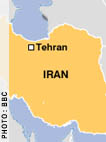
Iranian state television has aired pre-recorded footage of a surveillance drone that looks similar to the stealth RQ-170 Sentinel, which the US Central Intelligence Agency admitted it was missing earlier this week. Images of the unmanned surveillance drone, built by US military contractor Lockheed Martin, were broadcast during the main news bulletin on Thursday evening. The captured aircraft was shown in near-immaculate condition, resting on a display platform, with two men in Iranian military fatigues inspecting it. One of them was identified in the news report as Amir Ali Hajizadeh, Brigadier General of the Islamic Revolutionary Guard Corps’ Aerospace Forces. He told the news reporters that the drone was brought down last week “in an electronic ambush” conducted jointly by the Revolutionary Guards and the Iranian armed forces. He did not specify what he meant by “electronic ambush”, nor the exact location where the drone was physically captured by Iranian authorities. However, one report in the Iranian press alleged that the aircraft was initially detected by Iranian forces while flying over the town of Kashmar, in east Iran, located nearly 250 kilometers (about 150 miles) from the Afghan-Iranian border. If this report is accurate, it would signify that the CIA drone was flying deep within Iranian airspace, thus disputing initial claims to the contrary by the US Department of Defense. Another Iranian news outlet quoted anonymous military sources in Tehran, which said that the Chinese and Russian governments had already requested from the Iranian authorities permission to view the captured aircraft. Another pro-government newspaper said that Tehran was considering sharing the intelligence gathered from the captured drone with its regional allies in the Syrian government and the Lebanese Shiite group Hezbollah. Read more of this post

US considered covert mission to recover drone captured by Iran

Iran

Iran

By JOSEPH FITSANAKIS | intelNews.org |

What a difference two days can make! On Monday we speculated that Iran may have captured intact a United States Air Force RQ-170 Sentinel surveillance drone. At that time, most American officials questioned or flatly denied Iran’s capture claims. It now appears almost certain that Iran is indeed in possession of the aircraft; what is more, it seems increasingly likely that the captured drone was conducting a Central Intelligence Agency reconnaissance mission when it crashed in the desert along the country’s 1,000 km-long border with Afghanistan. The significance of the drone’s capture by Iranian authorities can be discerned from the fact that US officials are said to have considered last weekend several options for retrieving it from Iranian territory. According to an article in The Wall Street Journal, the US Department of Defense, in association with the CIA, discussed at least three separate plans for recovering or destroying the aircraft wreckage. One of the options discussed involved sending an airborne team of US covert operatives into northeast Iran to locate the crashed drone, disassemble it, and carry its top-secret mechanical and electronic components back to a US base in Afghanistan. The US also considered deploying Special Forces stationed in Afghanistan, or tasking US intelligence assets inside Iran, with locating and blowing up the crashed drone. A third option involved destroying the downed aircraft with a remote airstrike from Afghanistan. Read more of this post

News you may have missed #643 (Israel edition)

Mosab Hassan Yousef

Yousef/Joseph

►►Hezbollah uncovers more Israeli spy devices. Lebanese media reported on Friday that two people were wounded in a blast that occurred in the south of the country, between the towns of Srifa and Deir Kifa. According to some of the reports, the blast targeted espionage devices which were destroyed by Israel after being exposed by Hezbollah. This is not the first time such devices have been discovered in Lebanon: see here and here for previous such incidents.
►►PLO subpoenas Palestinian who spied for Israel. The Palestine Liberation Organization served Mosab Hassan Yousef, who says he is a former spy for Israeli domestic intelligence agency Shin Bet, with a subpoena in the United States last month. The Palestinian group says it wants his notes and details of his spy work for the Israeli government.
►►Analysis: The complex relationship between the Mossad and Israeli media. “Former Mossad chief Meir Dagan’s crusade this week against an Israeli strike on Iran took on a new dimension with his several media interviews. His campaign also reflects the Mossad’s attitude toward journalists, something along the lines of respect them, suspect them and use them. The degree shifts from one Mossad head to the next”. An enlightening analysis by veteran Israeli intelligence correspondent Yossi Melman.

News you may have missed #642

Predator drone

Predator drone

►►Australia concerned China using civilian satellites to spy. Concerns that China may use civilian satellite tracking stations to monitor Australian military operations have been dismissed by the Swedish Space Corporation. The company owns and operates two satellite tracking stations 400 km north of the West Australian capital, Perth. One was used by the China Satellite Launch Company last month in China’s first space docking operation.
►►Did Iran capture US stealth drone intact? For the second time this year, the Iranian government is claiming it forced down a stealthy US Air Force spy drone. Only this time, it says it bagged the RQ-170 “with little damage” by jamming its control signal —a potentially worrying development for American forces heavily reliant on remote-controlled aircraft. A US official, who asked not to be named, told Reuters that “there is absolutely no indication up to this point that Iranians shot down this drone”.
►►Canadian Mounties spied on native protest groups. Canada’s federal government created a vast surveillance network in early 2007 to monitor protests by First Nations, including those that would attract national attention or target “critical infrastructure” like highways, railways and pipelines, according to RCMP documents. The RCMP intelligence unit reported weekly to approximately 450 recipients in law enforcement, government, and unnamed “industry partners” in the energy and private sector. The news follows revelations last month of the RCMP’s largest-ever domestic intelligence operation, aimed against G8 and G20 protesters.

News you may have missed #640

Amos Yadlin

Amos Yadlin

►►Chinese defector says Canada right to worry about spying. Li Fengzhi, a former intelligence officer for China’s Ministry of State Security, who defected to Canada in 2003, has told a conference that Canada should be concerned about relationships between senior politicians and journalists from China, saying Beijing is targeting lawmakers everywhere. He was referring to the case of senior Conservative MP Bob Dechert, who was enveloped by controversy in September over amorous e-mails he sent to Shi Rong, a Chinese government journalist based in Toronto. After the Dechert controversy broke, the journalist recalled to Beijing to meet with her superiors and has not returned to her Canadian posting.
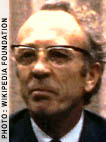
►►More intel officials warn against airstrikes on Iran. Meir Dagan, the former head of Israeli spy agency Mossad, is not alone in warning against the possibility of Israeli attacks against Iran’s nuclear program. He has now been joined by Major General Amos Yadlin, who until recently headed Israel’s Military Intelligence directorate. Speaking at Israel’s Institute for National Security Studies, Yadlin doubted that airstrikes could threaten Iran’s numerous, distant and well-defended nuclear facilities. Another intelligence official, Saudi Arabia’s Prince Turki al-Faisal, also cautioned last week against any attacks on Iran, saying that “there are other non- military policy alternatives, as yet unexplored, that could have the desired result without the unwanted consequences”.
►►GCHQ challenges code breakers via social networks. Britain’s signals intelligence agency, the General Communications Headquarters, has launched a code cracking competition to help attract new talent. The organization has invited potential applicants to solve a visual code posted at an unbranded standalone website. The challenge will also be ‘seeded’ to social media sites, blogs and forums. A spokesman said the campaign aimed to raise the profile of GCHQ to an audience that would otherwise be difficult to reach.

Blast reported in Isfahan, site of major Iranian nuclear facility

Iran

Iran

By JOSEPH FITSANAKIS | intelNews.org |

Iranian media are reporting a blast in the city of Isfahan, in central Iran, which is home to one of Iran’s most active nuclear facilities. News reports, including one from Iran’s state-operated FARS News Agency, say that the blast was heard across the city at 2:40 p.m. on Monday, and that an investigation is currently underway to determine its cause. With a population of nearly two million, Isfahan, capital of the province by the same name, is Iran’s third largest city. It is also home to one of the country’s premier nuclear research facilities, which includes a nuclear plant that produces uranium pellets for use in nuclear reactors. Intriguingly, after an initial period of silence, regional government officials in Isfahan appeared to downplay reports of the explosion. Speaking to Iran’s Mehr news agency, the Deputy Governor of Isfahan, Mohammad-Mehdi Ismaeli, said characteristically that reports of an explosion were “unfounded”, and speculated with a dose of sarcasm that “maybe someone’s water heater blew up”.  But Western reports from Iran, including one by United Press International, interpret the media attention given to the Isfahan blast as an indication of “how the country is being spooked by cover operations against its nuclear program”. Reports of the alleged blast come only weeks after a major explosion at a military base 25 miles west of Iranian capital Tehran killed 17 members of Iran’s elite Revolutionary Guards Corps, including Major General Hassan Moqqadam. The late General was described by Iran’s state media as the “founder of Iran’s missile program” and a pioneer in the country’s missile development after the 1979 Iranian Revolution. Meanwhile, the former Director of Israeli intelligence agency Mossad, Meir Dagan, has reiterated his warnings against plans by Tel Aviv to attack Iran. Speaking on Israeli television on Tuesday, Dagan cautioned Israel Read more of this post

News you may have missed #632 (Israel edition)

Ari Ben-Menashe

Ari Ben-Menashe

►►What are Mossad ex-chief’s business ties to Uganda? Former director of operations in the Israeli spy agency Mossad, Rafi Eitan, is now a private businessman. Yet he helped organize Ugandan President Yoweri Museveni’s recent visit to Israel. He is said to have been trying to establish business operations in Uganda and to set up a cattle ranch in the country.
►►Israel FM meets Mossad chief in bid to end row. Israel’s Foreign Minister Avigdor Lieberman met on Sunday with Mossad chief Tamir Pardo, in a bid to end the crisis between the two men, which culminated last week, when Lieberman ordered the foreign ministry to boycott the Mossad, to stop sharing information and to refrain from inviting Mossad officials to discussions and meetings.
►►Canada’s spy watchdog’s in shady deal with Israeli businessman. Arthur Porter, the federally appointed chairman of Canada’s Security and Intelligence Review Committee (SIRC), wired $200,000 in personal funds to Ari Ben-Menashe. A former Israeli government employee, Ben-Menashe was charged in the United States with illegally attempting to sell military planes to Iran. He said that he acted on orders from Israel. He then wrote a memoir called Profits of War, filled with accounts of international espionage and conspiracies he says he either participated in or was privy to.

News you may have missed #631

Tommy Douglas

Tommy Douglas

►►Some spy files on Canadian prominent politician released. Newly declassified records from the early 1960s show that the Royal Canadian Mounted Police spied on Saskatchewan Premier Tommy Douglas (pictured), suspecting him of communist sympathies. Douglas, a popular leftwing politician, led the first social democratic government in North America.
►►Aussie diplomats urged to welcome defectors in 1980s. The Australian government urged its spies and diplomats to encourage foreign officials to defect to Australia and welcome intelligence they might bring with them, according to internal documents from the 1980s, released this week. The directives noted that applications from defectors were not expected to be numerous “but failure on our part to handle them deftly could result in the loss of intelligence relevant to Australia’s security and other interests”. One observer notes that the 1980s policy towards defectors still applies today in Australia’s diplomatic community.
►►Iran arrests two Kuwaitis on suspicion of espionage. Iran’s semiofficial Fars news agency says Iranian security has detained two Kuwaiti citizens in southwestern Iran for suspected espionage activities. Fars quoted Bahram Ilkhaszadeh, governor of Abadan, a town close to Kuwait, as saying that Iran’s security agents detained the two on possession of “spying equipment”. Kuwait has denied the charges.

News you may have missed #630

Riad Al Assad

Riad al-Assad

►►Senior Syrian military defector in Turkey denies training troops. Colonel Riad al-Assad, who acts as head of Syria’s military defectors, has denied a news report that he crossed the border from Turkey to Syria to command troops loyal to the opposition force called the Free Syrian Army. “News reports that appeared on a number of Internet sites that I had crossed into Syria to command troops there are false. I am in Turkey at the moment, in a safe place,” he told the Turkey’s Anadolu Agency on Tuesday.
►►Iran says missile base blast was not caused by Mossad. Iran has insisted that last weekend’s huge blast at the Alghadir missile base at Bid Ganeh, 30 miles to the west of Tehran, was not carried out by Israel or the US, despite widespread reports that it was the work of the Israeli secret service, the Mossad. The explosion killed 17 of the country’s elite revolutionary guards, including Major General Hassan Moqqadam, a senior commander described as the pioneer of the regime’s missile programme.
►►British official says MI6 foiled Libyan assassination plan. British intelligence foiled a plot by Colonel Muammar al-Gaddafi’s forces to assassinate Western diplomats and Libya’s revolutionary leadership, Britain’s Foreign Secretary has disclosed. In a rare speech about the secret services, William Hague said the Libyan intelligence service launched a “sustained effort” to conduct suicide and car bomb attacks against the National Transitional Council, but that “the attacks were prevented”.

Intel official claims Mossad was behind Iran missile depot blast

Iran blast siteBy JOSEPH FITSANAKIS | intelNews.org |
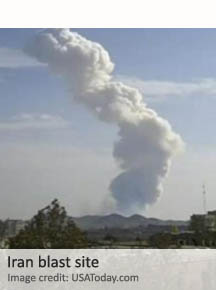
A Western intelligence official has told Time magazine that an Israeli spy agency was behind a weekend blast at an Iranian missile depot, which killed at least 17 people. The government of Iran claims that the powerful explosion, which wrecked a heavily guarded base belonging to Iran’s Revolutionary Guard Corps, was an accident, caused during the transport of munitions. But Time quotes an unnamed “Western intelligence source”, as saying that the blast was a deliberate act of sabotage carried out by agents of the Mossad, Israel’s primary covert operations agency. The source urged Time not to “believe the Iranians that it was an accident”, and added that the operation was part of an ongoing covert action effort to impede Iran’s nuclear program, saying characteristically that “there are more bullets in the magazine”. The base, located approximately 25 miles west of Iranian capital Tehran, is reported to house several of Iran’s Shahab-3 long-range missiles, with an alleged reach of up to 2,000 miles. The blast was reported to have been powerful enough as to have been audible across Tehran itself. The victims of the blast included Major General Hassan Moqqadam, described by Iran’s state media as the “founder of Iran’s missile program” and a foremost pioneer in the country’s missile development after the 1979 Iranian Revolution. The death of Moqqadam, an Islamic Revolutionary Guard Corps commander, was so important that his funeral was attended by none other than Ayatollah Ali Khamenei, Iran’s Supreme Leader. Read more of this post

Analysis: CIA Open Source Center monitors Facebook, Twitter, blogs

CIA HQ

CIA HQ

By JOSEPH FITSANAKIS | intelNews.org |

The Associated Press has been given unprecedented access to the United States Central Intelligence Agency’s Open Source Center, which is tasked with, among other things, monitoring social networking media. The Center, which was set up in response to the events of 9/11, employs several hundred multilingual analysts. Some are dispatched to US diplomatic missions abroad, but most work out of “an anonymous industrial park” in the US state of Virginia, which the Associated Press agreed not to disclose. The analysts, who are jokingly known in CIA OSINT (open-source intelligence) parlance as “ninja librarians”, engage in constant mining of publicly available information. The latter ranges from articles found in scholarly journals, to civilian television and radio station programs, as well as information available on the Internet. According to the Associated Press report, the Center began paying particular attention to social networking websites in 2009, when Facebook and Twitter emerged as primary organizing instruments in Iran’s so-called “Green Revolution”. The term describes the actions that Iranians opposed to President Mahmoud Ahmadinejad took to protest the disputed election results that kept him in power. Since that time, the CIA’s Open Source Center has acquired the ability to monitor up to five million tweets a day, and produces daily snapshots of global opinion assembled from tweets, Facebook updates and blog posts. Its executive briefings reportedly find their way to President Barack Obama’s Daily Brief on a regular basis. The Associated Press was given access to the Center’s main facility, and interviewed several of its senior staff members, including its Director, Doug Naquin. He told the news agency that the CIA Open Source Center had “predicted that social media in places like Egypt could be a game-changer and a threat to the regime”, but had been unable to foresee the precise development of Internet-based social activism in the Arab world. Read more of this post

News you may have missed #622

SVR seal

SVR seal

►►Russian spies in Germany focused on politics and military. A married couple arrested on suspicion of spying for Russia is believed to have been gathering information on political developments and military affairs, according to German newsmagazine Der Spiegel. The two have been identified as Andreas and Heidrun Anschlag. German prosecutors accuse them of spying for SVR, the successor to the KGB’s First Chief Directorate.
►►Israel releases spy who gave information to Iran. Israel has released Nahum Manbar, who was sentenced to 16 years in prison in 1997, after he was convicted of harming state security and selling information and supplies to create chemical weapons to Iran. Israel’s Attorney General Yehuda Weinstein approved the early release of Manbar on Monday, one and a half years before the end of his sentence. This was the third time Manbar had requested to be released early.
►►FBI releases Russian illegals’ photos and videos. Documents released Monday, including photos, videos and papers, offered new details about the FBI’s decade-long investigation into a ring of Russian sleeper agents who, US officials say, were trying to burrow their way into American society to learn secrets from people in power. The investigation was apparently code-named Operation GHOST STORIES because six of the 10 Russian agents had assumed the identities of dead people. If you are wondering what these spies are doing now, read this informative update from the Associated Press.

News you may have missed #612 (analysis edition)

Cevat Ones

Cevat Ones

►►What is a senior CIA clandestine officer doing at NYPD? Three months ago, one of the CIA’s most experienced clandestine operatives started work inside the New York Police Department. His title is special assistant to the deputy commissioner of intelligence. On that much, everyone agrees. Exactly what he’s doing there, however, is much less clear.
►►Iranian plot shows even super spies have bad days. The alleged Iranian plot to assassinate the Saudi ambassador to the United States may have revealed the biggest secret of all –intelligence agencies mess up and do not always live up to the James Bond ideal.
►►Former spy makes plea for peace in Turkey. Cevat Ones, former deputy chief of MİT, Turkey’s leading spy agency, speaks candidly to Canada’s Globe & Mail newspaper about the state of Turkey’s internal security and foreign policy.