Ex-CIA officer says US may be ‘dangerously wrong’ on alleged Iran plot

Robert Baer

Robert Baer

By JOSEPH FITSANAKIS | intelNews.org |
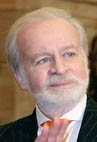
Robert Baer, who spent over two decades working for the CIA in the Middle East, has warned that the FBI may be “dangerously wrong” in its assessment that Iran is behind an alleged plot to assassinate the Saudi ambassador to the United States. The Obama administration said yesterday that two Iranian agents had been arrested for planning to kill Saudi diplomat Adel al-Jubeir in Washington, DC, with help by members of a Mexican drug cartel. The FBI said that the two Iranians, Manssor Arbabsiar and Gholam Shakuri, were operating on behalf of Iran’s Quds Force, a unit inside the Islamic Revolutionary Guard Corps’ (IRGC) specifically tasked with exporting the Iranian Revolution abroad. The arrests prompted a strong reaction from the United States, which said it will impose new punitive measures against the regime in Tehran —a move that is certain to further-ignite tensions between the two countries. But speaking on Australian national radio, Baer said that the alleged assassination plan does not appear to be connected with the IRGC or any other part of Iran’s state apparatus. The operation, as outlined by the FBI, does not fit the “modus operandi” of the Iranian security services, said Baer. The latter are “much better than this […]. They wouldn’t be sending money through an American bank; they wouldn’t be going to the cartels in Mexico to do this. It’s just not the way they work. I’ve followed them for 30 years and they’re much more careful. They always use a proxy between them and the operation, and in this case they didn’t”. Baer also spoke to the BBC World Service and to The Washington Post, where he is quoted as saying that there is “sloppiness about the case that defies belief”. The former CIA case officer urged the Obama administration to step back, re-examine its case, and avoid “retaliatory attacks [such as bombing] a Quds Force base in Tehran […], which would lead to a huge escalation”. Instead, he urged Washington to open “direct diplomatic channel with the Iranian regime or risk igniting an uncontrollable war”. Read more of this post

White House considering covert operations against Iran

Iran

Iran

By JOSEPH FITSANAKIS | intelNews.org |
One of the major strategic objections to the US invasion of Iraq in 2003 was the near-certain prospect that removing the Sunni-dominated Ba’ath Party from power would increase Iranian-Shiite influence in the country. As the US military exit strategy gradually unfolds in Iraq, the administration of US President Barack Obama is faced with precisely this prospect. While US troops are leaving Iraq, Iran is doing what any logical regional power would do: namely strengthening its clandestine footprint inside Iraq and preparing Tehran-allied Iraqi groups for the impending showdown with Sunni power centers. An article that appeared in today’s Wall Street Journal notes that “growing concern [about regional] influence from Iran” has prompted the Obama administration to explore covert ways of countering it. According to the article, US intelligence agencies have detected “increased arms smuggling [by Iran] to its allies” in Iraq, Bahrain and Syria (and, one would suppose, Lebanon, though this is not mentioned in the piece). The administration has therefore “pushed the military and intelligence communities to develop proposals to counter Tehran”, says the Journal. The push has prompted American intelligence and military planners to request “greater authority to conduct covert operations to thwart Iranian influence in neighboring Iraq”. This essentially implies an appeal for a Presidential “finding”, a secret executive authorization that —under the National Security Act— would provide the required legal basis for covert operations conducted abroad. Read more of this post

News you may have missed #585 [updated]

GCHQ

GCHQ

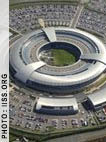
►►GCHQ recovers £300m worth of stolen information. Details stolen from more than a million credit cards across Europe, worth an estimated £300 million, have been recovered by Britain’s GCHQ signals intelligence spy agency, according to The Daily Telegraph.
►►Kuwait arrests alleged Iraqi spy. Kuwait security forces have arrested a man of Iraqi origin for alleged intelligence links with Iraq, a Kuwaiti daily said on Sunday. The man, who was arrested on Friday, and is referred to by the media as “Abu Ahmad”, was staying illegally in the country and allegedly provided Iraq with sensitive information about vital facilities in Kuwait. This is the third time in recent months that the government of Kuwait has pressed espionage charges against a spy suspect. [Update: Kuwait denies reports of spy’s arrest]
►►Hackers steal CIA and Mossad SSL certificates. The tally of digital certificates stolen from a Dutch company in July has exploded to more than 500, including ones for intelligence services like the CIA, the UK’s MI6, and Israel’s Mossad, a Mozilla developer said Sunday. According to some sources, the hackers were Iranian.

Western companies help Bahrain spy on democracy activists

NSN Logo

By JOSEPH FITSANAKIS | intelNews.org |
While Western governments preach to the world about the benefits of democracy, Western companies supply some of the most detestable dictatorial regimes with surveillance technologies for use against pro-democracy activists. One example in point is the repressive government of Bahrain, which, according to Amnesty International, is responsible for some of the most extensive human rights violations anywhere in the Middle East. Bahrain is the kind of place where even medical professionals who treat people wounded by police or soldiers in demonstrations are charged with “incitement”. Despite the fervor of the pro-democracy movement that has risen as part of the Arab Spring, the oil-rich royal clique that rules the nation has managed a series of debilitating hits against the reformists. The success of the crackdown is largely due the use of sophisticated telecommunications surveillance systems that allow Bahraini authorities to spy on cell phones and social networking platforms used by members of the pro-democracy opposition. Who supplied the Bahraini dictators with this equipment? Step forward German engineering conglomerate Siemens AG, and Finnish multinational Nokia. An article published this week in Bloomberg’s Markets magazine, fingers the German company as the primary supplier of telecommunications surveillance systems to the Bahraini royals. The latter rely on contracts with Nokia’s Trovicor GmbH subsidiary to maintain the sophisticated software and hardware. Bloomberg says it was notified of the Nokia Siemens Networks (NSN) partnership by two unnamed insiders, “whose positions at the companies gave them direct knowledge of the installations and the sale and maintenance contracts”. Read more of this post

News you may have missed #566 (analysis edition)

Jeffrey Richelson

Jeffrey Richelson

►►Stuxnet virus opens new era of cyberwar. Well-argued article by quality German newsmagazine Der Spiegel on Stuxnet, the sophisticated computer virus that attacked the electronic infrastructure of Iran’s nuclear program last year. The article argues that, in terms of strategic significance, the virus, which is widely considered a creation of Israeli intelligence agency Mossad, is comparable to cracking Germany’s Enigma cipher machine by Polish and British cryptanalists during World War II.
►►The fallout from the Turkish Navy’s recent spy scandal. Recently, the Turkish High Criminal court indicted members of an alleged spy ring operating inside the Turkish Navy. According to the indictment, members of the ring stole more than 165,000 confidential documents and obtained dozens of surveillance records and classified military maps. Its biggest customers were allegedly the intelligence services of Israel, Greece and Russia.
►►New edition of classic intelligence handbook published. A new edition of Jeffrey Richelson’s encyclopedic work on Read more of this post

Turkish intel report raises fears of Syrian, Iranian support for PKK

PKK banner

PKK banner

By JOSEPH FITSANAKIS | intelNews.org |
By all accounts, in 1998 Syria discontinued its clandestine support for the Kurdistan Workers’ Party (PKK), a leftist secessionist movement that aspires to create a Kurdish homeland comprising mostly of territories in Turkey’s Anatolia region. But a leading Turkish newspaper claims that, according to a classified intelligence report, Damascus has resumed its support for the PKK. The paper, Zaman, said that according to the report, Turkey’s main intelligence directorate, the MİT, has concluded that Syria has “started to support the PKK” again, thus reverting to its pre-1998 stance. It was on that year that Damascus expelled the PKK’s founder and leader, Abdullah Öcalan, who had previously been given shelter and protection in the country. A few months later, Öcalan was snatched by Turkish commandos from the hands of Greek diplomats in Nairobi, Kenya, and flown to Turkey, where he is now serving a life sentence. Following Öcalan’s expulsion, Syria, which is home to an estimated 400,000 Kurds, quietly began cooperating with Ankara against the PKK and its sister organizations operating on Syrian soil. But the MİT report cited by Zaman says that, under the fear of anti-government militancy and continuous popular and ethnic uprisings, Damascus has tried to mend relations with its Kurdish minority, and is now “providing shelter to some of the PKK’s most important leaders”. The classified report, which Zaman says gives “a highly detailed overview” of the PKK’s regional activities, also alleges that Syria has increased its security collaboration with Iran, which is also home to several thousand ethnic Kurds. Read more of this post

Ex-CIA counterterrorist chief says al-Qaeda to turn to computer hacking

Cofer Black

Cofer Black

By JOSEPH FITSANAKIS | intelNews.org |
The strategic retreat currently being experienced by al-Qaeda will force the group to concentrate on inflicting damage on its enemies through the Internet. This is the opinion of Cofer Black, the straight-talking CIA veteran who retired in 2002 as Director of the Agency’s Counterterrorism Center. Black, who is known for his hawkish views on Washington’s ‘war on terrorism’, gave the keynote speech on Wednesday at the Black Hat Technical Security Conference in Las Vegas, Nevada. He told an audience of nearly 7,000 conference participants that “the natural thing” would be for al-Qaeda in the post-bin-Laden age to continue to engage in terrorism by “fall[ing] back to things that are small and agile”, with computer hacking being an ideal candidate. Black, who since 2002 has worked for private contractors, including Blackwater/Xe, illustrated his point by referring to Stuxnet, the elaborately programmed computer virus that targeted electronic hardware in Iran’s nuclear energy program in July of 2010. “The Stuxnet attack is the Rubicon of our future”, said the former CIA official, adding that it was the computer virus designed to cause “physical destruction of a national resource”. Black is rightly revered by intelligence observers for having warned US government officials of a large-scale terrorist attack in August of 2001, one month prior to the September 11 hijackings. Having said this, it is not exactly prophetic to state, as he did, that “cyber will be a key component of any future conflict”. Read more of this post

News you may have missed #558

Amrullah Saleh

Amrullah Saleh

►► US government says Iran aids al-Qaeda. The US Treasury Department has accused the Iranian authorities of aiding al-Qaeda, saying Tehran had entered into financial agreements with six people believed to be al-Qaeda operatives in Iran, Kuwait, Qatar and Pakistan. According to Treasury officials, one of the six “is believed to have recently ascended to the No. 2 position in Al Qaeda, reporting directly to the organization’s new leader, Ayman al-Zawahri”.
►►Interview with Afghan spy chief. CNN has an exclusive interview with Amrullah Saleh, the –usually media-shy– former head of Afghanistan’s National Directorate for Security. The interview is essentially one long attack on Pakistan, which Saleh blames for destabilizing Afghanistan, hiding and sheltering al-Qaeda members, and providing funding and arms to the Taliban.
►►Sudan’s spy chief secretly visited France in June. The director of Sudan’s National Security and Intelligence Services (NISS), Mohamed Atta al-Moula Abbas, secretly traveled to Paris last June. He held talks there with Read more of this post

‘We killed Iranian scientist’ claims Israel intel source

Daryoush Rezaei

Daryoush Rezaei

By JOSEPH FITSANAKIS | intelNews.org |
A source in Israeli intelligence has told a quality German newsmagazine that Israel was behind the recent killing of an Iranian physicist in Tehran. The 35-year-old physicist, Darioush Rezaei, was shot twice in the throat on July 23, by two men on a motorcycle, as he and his wife were picking up their four-year-old daughter from kindergarten. Iranian authorities dismissed early reports that Rezaei was a nuclear academic, saying that there had been “some confusion” about the dead man’s identity, and that Rezaei was simply studying for a masters’ degree in electronics. It later became clear, however, that Rezaei’s electronics expertise was in the use of high-voltage switching systems for triggering nuclear warheads explosions. Rezaei was the fourth Iranian physicist or nuclear expert to be assassinated since 2007, after Ardeshire Hassanpour,  Masoud Ali Mohammadi and Majid Shahriari. Another nuclear scientist, Fereydoon Abbasi, who was injured in a separate bomb attack on the same day Dr Shahriari was killed, now heads Iran’s Atomic Energy Organization. There is little doubt in intelligence circles that the attacks on the Iranian researchers are part of a wider Western and Israeli covert action program that includes —apart from assassinations— sabotage and cyberwarfare. Now an article in German quality newsmagazine Der Spiegel quotes an unnamed “Israeli intelligence source” as saying that Rezaei’s July 23 assassination “was the first serious action taken by the new Mossad chief Tamir Pardo”. Read more of this post

Iran revises earlier reports of nuclear scientist’s assassination

Daryoush Rezaei

Daryoush Rezaei

By JOSEPH FITSANAKIS | intelNews.org |
The government of Iran has revised earlier reports of a nuclear scientist’s assassination, saying the murdered man was a university student, and not a nuclear physicist, as it was first announced. On Saturday afternoon, Iran’s government-controlled media began carrying news of the fatal shooting of a man named Darioush Rezaei, in the Iranian capital Tehran. According to early reports, Rezaei, 35, who researched neutron transport at a Tehran university, was identified as “an expert with links to the Atomic Energy Organization of Iran”. He was allegedly shot dead in broad daylight by two men on a motorcycle, as he and his wife were returning to their house after picking up their four-year-old daughter from kindergarten. The report, which was first aired by the Iranian Students’ News Agency (ISNA) was rapidly echoed by other Iranian government-controlled media. Early the next day, Iran’s parliamentary speaker, Ali Larijani, condemned the attack as a provocation by Israeli and American intelligence agencies, which Iran suspects of being behind a series of assassinations against Iranian nuclear scientists during the past five years. Later on Sunday, however, a number of Iranian media started withdrawing the reports of Rezaei’s assassination, saying there had been “some confusion” about the dead man’s identity. Eventually it emerged that the man’s full name was Darioush Rezaei-Nejad, and that he was not a career academic nor “a physicist involved in the disputed nuclear program”, but rather an “a university student” studying for a master’s degree in electronics. Read more of this post

News you may have missed #545

Robert Baer

Robert Baer

By IAN ALLEN | intelNews.org |
►►Pakistan restores visas to CIA personnel. The government of Pakistan has reissued entry visas to nearly 90 CIA officers, which were withdrawn following the assassination of Osama bin Laden last May. Pakistan’s Dawn newspaper reports that the visas were approved hours after ISI director Ahmed Shuja Pasha’s visit to the United States last week. It is interesting to note the speed of official authorization of the visas in Pakistan –a country where even basic government services routinely fall victim to endless bureaucratic delays. Does this mean that the ISI and the CIA are back in business? If Pakistani media reports are to be believed, the two agencies were back in business as early as last May. ►►German spy agency accused of playing down stolen blueprints. New reports in the German media say that the stolen blueprints of Germany’s intelligence agency BND may contain even more sensitive security information than previously believed. German newsmagazine Focus alleged earlier this month that the top-secret architectural plans for the BND’s state-of-the-art new building “mysteriously disappeared” a year ago, without anyone in government noticing their absence. Ernst Uhrlau, BND’s Director, responded by claiming that only the building’s car park, cafeteria and energy supply areas had been affected by the theft. But according to Focus and Der Spiegel, Germany’s other major newsmagazine, the stolen documents contain classified plans for the headquarters’ main building. There are now rumors in Berlin that the scandal may force Uhrlau to resign. ►►Ex-CIA operative says he never claimed Israel would attack Iran. Recently we reported on former CIA officer Robert Baer’s warning that Israel was planning an armed attack against Iran. Read more of this post

News you may have missed #543 (CIA edition)

John Rizzo

John Rizzo

By IAN ALLEN | intelNews.org |
►►Ex-CIA officer warns of Israeli attack on Iran. Few in the CIA are more knowledgeable about Shiite politics than Robert Baer, a veteran of the Agency’s National Clandestine Service, who spent over 20 years in the Middle East, notably in Lebanon. Last weekend, Baer spoke to Los Angeles radio station KPFK, and said that “[t]here is almost near certainty [in Israel] that Netanyahu is planning an attack [on Iran] and it will probably be in September before the vote on a Palestinian state. And he’s also hoping to draw the United States into the conflict”. Baer is not alone in issuing such warnings in recent months. Former Mossad director Meir Dagan has been echoing Baer’s concerns. ►►Campaigners seek arrest of ex-CIA legal chief. We have written before about John A. Rizzo, the CIA’s former Acting General Counsel, who has been termed “the most influential career lawyer in CIA history”. Some readers may remember that Rizzo retired hurriedly from his post in 2009, amidst fears that he could get in trouble for acting as what some observers termed “a legal enabler” of the CIA torture practices under the George W. Bush administration. Now a group of human rights campaigners in Britain and Pakistan are seeking Rizzo’s arrest for his role in justifying the CIA drone strikes in Pakistan, the legality of which is often questioned by experts. The CIA has refused to comment on the campaign to indict Rizzo. ►►Analysis: The fallout from the CIA’s vaccination ploy in Pakistan. We wrote on Monday that not everyone is amused by news that the CIA tried to collect DNA evidence on Osama bin Laden by running a phony vaccination program in Pakistan. Read more of this post

News you may have missed #538

Wali Karzai

Wali Karzai

By IAN ALLEN | intelNews.org |
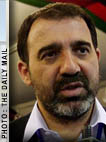
►►Egyptian diplomat dead in London after bizarre suicide attempt. Police in London are trying to solve the mysterious apparent suicide of Ayman Mohammed Fayed, a 41-year-old employee of the Egyptian embassy, who plunged to his death from one of the embassy’s third-floor windows last week. Embassy officials said he did so after hurriedly signing a brief suicide note to his family. Interestingly, one witness saw him trying to get back into the building from the window, apparently having changed his mind about killing himself. But, says The Daily Mail, he seems to have “lost control and fell”. The death does not seem to be related to the political changes that have taken place in Egypt this year. ►►CIA agent Wali Karzai dead in Afghanistan. Another death, that of Afghan President Hamid Karzai’s brother, has featured all over the news media in the past few days. Ahmed Wali Karzai, Afghan drug lord and influential strongman, was shot dead by his bodyguards last Tuesday. Wali Karzai’s role as a CIA agent is less widely advertised in obituaries (with a few notable exceptions). IntelNews readers will remember that, in October of 2009, The New York Times revealed that Wali Karzai had been financially sustained by the CIA ever since the initial US invasion of Afghanistan, in 2001, and that he was still —as of 2009— receiving “regular payments” from the Agency.  Read more of this post

News you may have missed #536 (US edition)

James Risen

James Risen

By IAN ALLEN | intelNews.org |
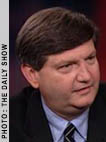
►►US federal agencies sitting on decade-old FOIA requests. In the United States, as Freedom of Information Act (FOIA) requests are growing, a new study has found that eight government agencies are sitting on requests filed over ten years ago. According to the Knight Open Government Survey, conducted by the National Security Archive at George Washington University, the single oldest request is now 20 years old. FOIA requires agencies to process and respond to a request within 20 business days. ►►US journalist seeks to avoid testifying at CIA agent’s trial. A sizeable percentage of FOIA requests are filed by journalists, who are also on the receiving ends of most intelligence-related ‘leaks’ in the United States. One of those journalists, James Risen, of The New York Times, has been subpoenaed by the Obama administration to testify at the trial of Jeffrey Sterling. Sterling is a former CIA employee, who has been arrested under the Espionage Act for allegedly revealing details about Operation MERLIN to Risen. MERLIN was a botched US effort to provide Iran with a flawed design for building a nuclear weapon, in order to delay the alleged Iranian nuclear weapons program. Times lawyers argue that the First Amendment should shield Risen from having to testify at Sterling’s trial. ►►US intel research agency works on 3-D holographs. Also in the United States, IARPA, the US intelligence community’s technical research wing, has announced that it is working on a system that lets intelligence analysts collaborate with each other using “interactive 3-D holographic displays”. Through this system, IARPA hopes that intelligence personnel could take simultaneous virtual strolls through real-life target locations, help plan raids, etc.

News you may have missed #534

MI6 HQ

By IAN ALLEN | intelNews.org |
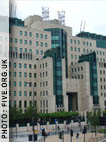
According to extracts from the diary of Alastair Campbell, British Prime Minister Tony Blair’s communications director from 2000 to 2003, officials from the MI6 intelligence agency told Blair that France and Germany aimed to “exploit his feud” with then Chancellor of the Exchequer Gordon Brown. Gotta love European unity. In Kuwait, meanwhile, the oil state’s Al-Shahed daily quotes “knowledgeable sources”, who claim that “a lot of spy networks exploit the Kuwaiti environment” and use the country as a transit point to spy on neighboring countries. Hopefully the Kuwaitis will not emulate authorities in Dubai, which in March of last year called on all foreign spies “to leave the region within a week. If not”, they warned, “we will cross that bridge when we come to it”. In the nearby state of Israel, public opinion is still divided about former Mossad chief Meir Dagan’s criticism of the Netanyahu government. As Bloomberg columnist Jeffrey Goldberg notes, Dagan has “called into question the wisdom –and, privately, even the sanity– of any Israeli leader who contemplates a preemptive strike on Iran’s nuclear facilities”. But why is he doing it, and could it backfire?