News you may have missed #478

  • Israel and Chile collaborated to spy on Iran and Venezuela. Documents released by WikiLeaks show Israel and Chile cooperated to spy on Iran as it developed bilateral links with Venezuela. A diplomatic cable from the US embassy in Santiago to the State Department in Washington, dated July 21, 2008, said Chile and Israel both expressed concern about growing ties as well as a potential Iranian presence on the border with Brazil, Argentina and Paraguay.
  • Korean spies broke into Indonesian delegation’s hotel room. Members of South Korea’s NIS spy agency broke into a hotel room of a visiting high-level Indonesian delegation to try to steal sensitive information on a possible arms deal, according to Seoul-based Chosun Ilbo newspaper. The report said the NIS officers left “after being disturbed by a delegate”.
  • High-ranking Libyan pilots defect to Malta. Two air force jets landed in Malta on Monday and their pilots, who said they are “senior colonels” in the Libyan air force, asked for political asylum. The pilots claim to have defected after refusing to follow orders to attack civilians protesting in Benghazi in Libya. Meanwhile, a group of Libyan army officers have issued a statement urging fellow soldiers to “join the people” and help remove Muammar Gaddafi by marching to Tripoli.

Emirates authorities deny Oman spy ring allegations

Oman

Oman

By IAN ALLEN | intelNews.org |
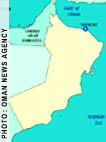
The government of the United Arab Emirates has denied operating an espionage network in the neighboring Sultanate of Oman, saying that spying goes against the country’s values. The official denial was issued in response to a news report by Oman’s state news agency, which said that Omani authorities had uncovered a spy ring targeting the country’s intelligence and military apparatus. According to the report, issued yesterday by the Oman News Agency, the country’s security services “discovered a spy network affiliated to the State Security Service in the United Arab Emirates”, leading to several arrests across the Sultanate. No further information was issued by the news agency, but Reuters quoted an anonymous Omani government source, who said that the alleged spy network was first uncovered two months ago, and that the arrestees include “Omani nationals”. The news of the espionage allegations have perplexed observers, who consider the UAE and Oman to be generally on good terms. Both countries belong to the Cooperation Council for the Arab States of the Gulf, an increasingly unified political and economic union that involves the region’s pro-Western oil states, including Saudi Arabia. One notable difference between the UAE and Oman is the latter’s traditionally close relations with Iran, with which it maintains common energy concerns. Read more of this post
Analysis: What is the CIA doing in Egypt?

Egypt

Egypt

By JOSEPH FITSANAKIS | intelNews.org |
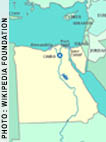
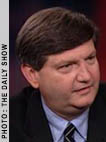
Every time there is a popular uprising anywhere in the Muslim world, the minds of American intelligence planners go immediately to 1979, when the Iranian Revolution tore down almost overnight one of Washington closest allies in the Middle East. By ignoring the immense unpopularity of the Shah’s brutal regime, and by limiting its Iranian contacts among the pro-Shah elites in the country, the CIA was caught completely in the dark as the Islamic revolution unfolded. Could the same be happening now in Egypt? Hopefully not, says The Washington Post’s veteran intelligence correspondent Jeff Stein. As in the case of Iran under the Shah, the US has stood by the 33-year dictatorship of Hosni Mubarak, choosing to abide by the simplistic dogma of ‘either secular repression or anti-American Islamism’. But, unlike 1970s Iran, one would hope that US intelligence agencies have been able to develop useful contacts across the fragmented but dynamic and energized Egyptian opposition community, says Stein, quoting former US Defense Intelligence Agency official Jeffrey White. It is unlikely that the CIA and other agencies have fully embraced persistent calls, such as those by Emile Nakhleh, former head of the CIA’s program on political Islam, to develop trustworthy contacts inside the Egyptian Islamic Brotherhood, as well as groups close to it, such as Hamas and Hezbollah. Read more of this post

News you may have missed #470

  • Blackwater still working for US despite denials. Reports that Blackwater is out of the US government’s private-security game appear to have been greatly exaggerated. A consigliore to the company’s new owners has said the firm still holds security contracts with the US State Department, and intends to seek more.
  • CIA gets spooky with new radio commercials. The CIA’s National Clandestine Service is continuing its recruitment drive with new radio commercials, complete with a spooky soundtrack of sawing violins and rising timpani –and something about “no one will ever know what you do”.
  • Iranian shah’s son found dead in Boston. Alireza Pahlavi, the youngest son of the late shah of Iran, has been found dead from a self-inflicted gunshot wound in Boston’s South End. In June 2001, Alireza’s sister Leila was found dead in a London hotel room from an overdose of barbiturates. The late siblings’ father was overthrown in the 1979 Islamic revolution. He died in Egypt in 1980.

News you may have missed #467

  • Ex-Mossad chief says Iran nuke program behind schedule. Meir Dagan, Israel’s recently retired spy chief, thinks Iran will not be able to build a nuclear bomb before 2015, further pushing back Israeli intelligence estimates on the subject. Time for critics of the 2007 US National Intelligence Estimate to reconsider their views?
  • NSA breaks ground on Utah cybersecurity center. Ground was broken last Thursday on the Utah Data Center, a $1.2 billion, 1 million-square-foot cybersecurity center being built for the US National Security Agency at Camp Williams, near Salt Lake City. Secrecy is expected to shroud the center, with the groundbreaking being one of the public’s last chances to take an open look at the project.
  • Colombian judge orders arrest of ex-spy chief. Colombia’s Prosecutor General has ordered the arrest of Jorge Noguera, a former director of the country’s DAS intelligence agency, for his alleged involvement in the spying on government opponents. This is not the first time Noguera, who was director of the DAS between 2002 and 2006, has been sent to jail. He was imprisoned and released twice for his alleged involvement in allowing members of paramilitary organization United Self-Defense Forces of Colombia to infiltrate the intelligence agency.

Ex-CIA officer faces up to 120 years for leaking secrets

James Risen

James Risen

By IAN ALLEN | intelNews.org |
A former CIA officer, who sued the Agency after he was fired, was arrested last Thursday in St. Louis, Missouri n charges of leaking classified information about a botched CIA covert operation in Iran. There is no information on the indictment about the recipient of the information that was leaked by Jeffrey Alexander Sterling, who worked for the CIA from 1993 until 2002. But it is common knowledge Sterling spoke to James Risen, a Pulitzer Prize winning journalist for The New York Times. In 2002, Risen wrote an article about Sterling’s lawsuit, in which the plaintiff claimed he was told by his superiors that he was “too big and black” to operate covertly overseas. According to the indictment, in 2003, after Sterling’s lawsuit was thrown out on national security grounds, he started leaking information (presumably to Risen), which he had gathered while working for the CIA’s Iran Task Force. Risen reportedly tried to publish Sterling’s disclosures, but The New York Times declined to print them, after its editors were warned by the White House that they would be severely detrimental to national security. Read more of this post

News you may have missed #465

  • Germany denies secret spy collaboration with the US. Germany’s aerospace center denied Monday that it is working with the US on a $270 million high-tech secret spy program, insisting that its plans for a high-resolution optical satellite have purely scientific and security uses. The denial was in response to US State Department cables obtained by WikiLeaks and revealed by Norwegian daily Aftenposten.
  • Was Iranian nuclear defector tortured? Iranian nuclear scientist Shahram Amiri, who returned to Tehran in July after what he called a “kidnapping” by the CIA, has been held in detention by Iranian authorities for two months and tortured so badly he was hospitalized, according to a dissident Iranian web site.
  • WikiLeaks reveals France leads industrial spying in Europe. France is the country that conducts the most industrial espionage on other European countries, even ahead of China and Russia, according to leaked US diplomatic cables, reported in a translation by Agence France Presse of Norwegian daily Aftenposten‘s reporting.

News you may have missed #464 (Mossad edition)

News you may have missed #463

  • Iranian spy minister admits hacking emails. Iran’s Intelligence Minister Heydar Moslehi has publicly admitted that the Iranian government has hacked into the emails of Iranian opposition members. He claimed the hacking, conducted by Iran’s Intelligence Ministry, revealed messages exchanged between “foreigners and their elements inside Iran”.
  • Details on CIA officer killed in Afghanistan. An interesting article in The Washingtonian offers an interesting background story on Jennifer Matthews, a CIA officer who was killed nearly a year ago in Afghanistan in a suicide bombing by Taliban double-agent Humam Khalil Abu-Mulal al-Balawi.
  • China jails South Korean alleged spy. China is getting tougher with South Korean spies caught on Chinese soil collecting intelligence on North Korea, and has jailed one of them for more than a year, despite pleas from Seoul, according to news reports.

News you may have missed #458

  • More arrests of alleged Russian agents in Georgia. The government of Georgia arrested six people suspected of being agents for Russia and accused them of staging a series of explosions, including one outside the US embassy in capital Tbilisi. At least 13 more people were arrested last month in Georgia, and are facing charges of spying for Moscow.
  • Iran defector says Tehran hosted N. Korean techs. Mohammad Reza Heydari, who resigned in January from his post as Iranian consul in Norway, and defected to the West, has told a conference in Paris that he saw North Korean technicians “repeatedly” travel to Iran.
  • Spy scandal MP helped second Russian woman stay in UK. British Liberal Democrat parliamentarian Mike Hancock, whose assistant, Katia Zatuliveter, is accused by MI5 of spying for Russia, helped 25-year-old Russian citizen Ekaterina Paderina stay in Britain after she ran into visa problems, in the late 1990s.

Some spy news in the shadow of WikiLeaks’ revelations

Katia Zatuliveter

Katia Zatuliveter

By JOSEPH FITSANAKIS | intelNews.org |
The WikiLeaks revelations continue, and so does the global news storm concerning the whistleblower site. Obviously, the news value of the WikiLeaks disclosures is unquestionable. However, there are notable intelligence-related developments taking place outside the now-familiarWikiLeaks context. Take for instance the recent arrest of what appears to be a Polish spy in Limassol, Cyprus. The unidentified man, who was reportedly detained in the vicinity of a Greek-Cypriot military base on the island, was carrying “a camera containing photos of National Guard posts, a laptop, two mobile phones, five memory cards, a GPS system and three pairs of binoculars”. Another interesting development concerns the arrest on espionage charges of Katia Zatuliveter, a Russian citizen who works as an assistant to British Member of Parliament Mike Hancock. Zatuliveter is expected to be deported on the basis of evidence gathered by MI5, Britain’s counterintelligence service, which has apparently been monitoring her for several months. Interestingly, Mr. Hancock, who is a member of the British House of Commons’ Defence Select Committee, is standing by his assistant. Read more of this post

More underreported WikiLeaks revelations

Julian Assange

Julian Assange

By JOSEPH FITSANAKIS | intelNews.org |
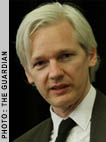
As the world’s media shift their attention to the consequences of the WikiLeaks revelations for its founder Julian Assange, as well as the reactions of American officials, the leaked diplomatic cables keep coming in, almost on an hourly basis. Some of the least noticed revelations include a 2009 dispatch from a US diplomat in Tel Aviv, which appears to confirm the close secret relations between Israel and the United Arab Emirates, despite the fact that these two countries have no official diplomatic connections. Another diplomatic cable reveals that Iranian intelligence officials approached their Canadian counterparts in 2008 and offered to share with them “information on potential attacks in Afghanistan”. Perhaps not surprisingly, the Canadians reacted guardedly, with Canadian Security Intelligence Service Director Jim Judd stating that his agency had “not figured out what they [the Iranians] are up to”. Read more of this post

Some underreported WikiLeaks revelations

WikiLeaks

WikiLeaks

By JOSEPH FITSANAKIS | intelNews.org |
There is little point in recapping here the bulk of disclosures contained in the ongoing WikiLeaks revelations. The news sphere is jam-packed with them —and perhaps this is the real story in the WikiLeaks revelations, namely the fact that espionage and intelligence issues have near-monopolized the global news cycle for the first time since the post-Watergate Congressional investigations of the 1970s. But it is worth pointing out a handful of news stories on the WikiLeaks revelations that have arguably not received the media coverage that they deserve. Undoubtedly the most underreported disclosure concerns a 2007 meeting between US officials and Meir Dagan, the then Director of Israel’s Mossad intelligence agency. During the meeting, Dagan apparently “presented US with five-step program to perform a coup in Iran“.  But there are other underreported disclosures. Take for instance the revelation that US Secretary of State Hillary Clinton personally authorized US diplomats to engage in all-out and indiscriminate spying on senior United Nations officials. Although there is nothing here that will surprise seasoned intelligence observers, the breadth of intelligence collection that US diplomats are instructed to engage in (which includes collecting credit card numbers and biometric data of UN officials) is astonishing and certainly unprecedented. Moreover, it should be noted that many senior UN officials are in fact American, which leads to the intriguing question of whether US diplomats are routinely required to engage in intelligence collection against American UN officials. Read more of this post

Blasts target Iranian nuclear scientists, killing one [updated]

Shahriari's car

Shahriari's car

By JOSEPH FITSANAKIS | intelNews.org |
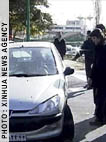
Teams of unknown assailants chose the first day of the WikiLeaks diplomatic revelations to attack two senior Iranian nuclear scientists in capital Tehran, managing to kill one of them. While the world is preoccupied with the WikiLeaks releases of United States diplomatic cables, two teams of motorcyclists, each consisting of a driver and a backseat rider, targeted the two scientists during the morning rush hour in Tehran, as they were driving to work with their wives in their cars. They attached small bombs to the car windows of their targets and detonated them from a relatively safe distance before speeding away through heavy traffic. The attackers managed to kill Dr. Majid Shahriari, a senior nuclear researcher and prominent professor at the Shahid Beheshti University in the northern suburbs of Tehran, who had taught at the Iranian armed forces’ Supreme National Defense University. Dr. Shahriari’s wife was injured in the attack. A separate bomb attack injured Dr. Fereydoon Abbasi Davan, who also teaches at Shahid Beheshti, and is described in Iranian media reports as “one of a handful of [Iranian] experts who are able to isolate isotopes” for the purpose of manufacturing uranium required for both nuclear energy and weapons. Read more of this post

Did Mossad kill German politician involved in Iran-Contra scandal?

Uwe Barschel

Uwe Barschel

By JOSEPH FITSANAKIS | intelNews.org |
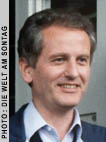
Accusations of Israeli involvement in the suspicious death of a German politician have been revived, following new autopsy evidence revealed by a medical examiner. The case involves the death of Christian Democratic Union politician Uwe Barschel, who on October 11, 1987, was found dead in the bathtub of room 317 of the Beau-Rivage hotel in Geneva, Switzerland. His sudden death occurred less than a month after he was forced to resign from the post of Governor of West Germany’s Schleswig-Holstein state, following his involvement in a dirty-tricks campaign against his rival Björn Engholm, of Germany’s Social Democratic Party. Swiss authorities, based on an initial postmortem that revealed lethal levels of barbiturates in Barschel’s system, ruled the death a suicide. But now Dr Hans Brandenberger, who was one of the toxicological experts that examined Barschel, claims that he is possession of new evidence that points to murder as the cause of the German politician’s death. Read more of this post