Iran threatens to retaliate against Greece if US uses military bases to launch attack

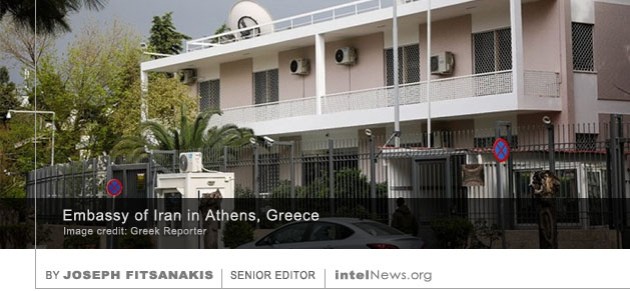
Iran embassy GreeceIran has issued a warning against Greece, saying that it will retaliate if the United States attacks the Islamic Republic using its military bases on Greek soil. It is the first time that Iran has threatened to launch attacks against a member of the European Union in connection with the recent rise in tensions between Tehran and Washington.
Iranian officials issued the warning against Greece in response to comments made by Greek Prime Minister Kyriakos Mitsotakis during his recent visit to the White House, which coincided with the assassination of Iranian General Qasem Soleimani by the US. Speaking about Soleimani’s killing, Mitsotakis said that “we [Greeks] are allies with the US, so we stand by our allies through difficult times”. And he continued: “I understand this particular decision was taken by taking into consideration what is the US national interest, and we stand by that decision”.

Iran’s response to the Greek prime minister’s comments came in a letter that was sent by the Iranian embassy in Athens to one of Greece’s leading broadsheets, Kathimerini. The letter pointed out that Greece and Iran enjoyed “friendly, traditional and historical relations”. Given “the absence of any differences or tension between [the two countries] in recent centuries”, said the letter, “we believe that [Mr. Mitsotakis’] statement cannot be the official position of the Greek government”. It went on to warn that “The Islamic Republic of Iran has made it very clear that in the event of a US-led war against the country, the concession of [military] bases by any country to the American invader will be considered a hostile act and Iran reserves the right to respond in a clear and decisive manner”.

Last weekend, Greece’s Foreign Affairs Minister, Nikos Dendias, revealed that the Iranian government had delivered a statement to his office, protesting Mitsotakis’ comments. But he added that he had not had a chance to read it. He also said that his Iranian counterpart, Mohammad Javad Zarif, had asked to speak with him about Greece’s stance in the US-Iran dispute.

Author: Joseph Fitsanakis | Date: 17 January 2020 | Permalink

Assessing the implications of Iran’s missile attack on Iraqi military bases

Iran IraqThe missiles that targeted American troops in Iraq a few hours ago offer significant clues about the evolving confrontation between Iran and the United States. The attack appears to have been largely symbolic —a somewhat rushed attempt to restore some of Iran’s wounded prestige following the assassination of its military commander, Qasem Suleimani. At the same time, however, it is also the prelude to a broader regional conflict that appears increasingly unavoidable.
There are two notable aspects in the attack. First, the fact that Tehran did not —as many expected— take aim at American targets using its proxies in Iraq, Lebanon, or Yemen. Instead, not only did the attack come directly from Iran, but the Islamic Revolutionary Guard Corps (IRGC), of which Soleimani was a leading commander, openly claimed responsibility for it. This is a major paradigm shift for the Iranians, who in the past have taken great care to avoid giving any indication of their direct involvement in military or paramilitary attacks on their opponents. It is clear that Q QuoteSoleimani’s killing is viewed by Tehran as too insulting to be responded to indirectly. This does not mean that Tehran will not revert to its standard method of employing proxies in the future. But the fact that it consciously chose to deviate from that time-tested method is in itself extremely important.
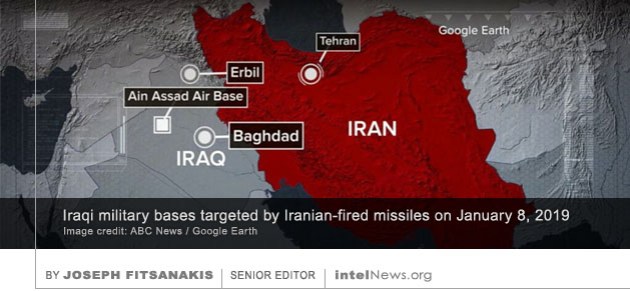
The second notable aspect of the attack is that it was markedly muted, especially considering the many options that are available to the Iranians. According to reports, 22 ballistic missiles were fired, most of which struck two military bases housing US troops in western and northern Iraq. The number of missiles fired is surprisingly low, given that Iran possesses the largest ballistic-missile force in the entire Middle East. Additionally, it is interesting that Tehran directed its attacks against the most obvious and predictable American target in the region —uniformed US personnel stationed in what is essentially Iranian-controlled territory. These troops have been on high alert since the moment Soleimani was assassinated. It is therefore highly unsurprising that no American casualties have been reported (although Iranian state media are apparently telling their domestic audiences that “80 terrorists” died in the attack).

The fact remains that, if Iran’s leaders truly wanted to cross the point of no return, they could have attacked American diplomatic facilities in over a dozen countries in the region, including Iraq, Israel, Jordan, and many others. Alternatively, they could have directed their ire against American political and commercial targets in Saudi Arabia, of which there are countless. They could have also sent an unmistakably ominous message to the global financial markets by attacking energy facilities in the region, or by blocking maritime traffic in the Strait of Hormuz. Or they could have carried out all of the above simultaneously, thus virtually ensuring a US response, which would in turn ignite an all-out war. But they didn’t —which should be interpreted that the IRGC is not, for now, interested in going to war. Read more of this post

Analysis: Soleimani’s killing was tactically flawless, but was it strategically wise?

Qasem SoleimaniBy assassinating Qasem Soleimani, a Shia celebrity and the Middle East’s most influential military leader, US President Donald Trump has made the most fateful decision of his presidency to date. Tehran has no option but to respond. When it does, the way that Mr. Trump and his administration handle the situation will largely determine the future of the Middle East and the fate of his presidency. In the meantime,Quote it is becoming increasingly clear that victory, if and when it comes, will not be unblemished for whomever claims it.
Mr. Trump’s decision to assassinate General Soleimani was shocking because it was unexpected. It must be remembered that, not only has this president based his entire political program on his desire to end America’s decades-long military engagement in the Middle East, but he had also in recent months signaled his desire to negotiate with Tehran. In the summer he said he wanted to “make Iran rich again, let them be rich, let them do well, if they want”, adding that no regime change was necessary. In December, following a surprise prisoner exchange between the US and Iran, Mr. Trump tweeted: “Thank you to Iran on a very fair negotiation. See, we can make a deal together!”. The news prompted one notable expert to speak of “a very positive step, because it’s the first time under the Trump Administration that Iran and the US have agreed on anything”. That was on December 8, just 25 days before Soleimani’s Quoteassassination. And yet, while publicly thanking Iran, Trump was likely formulating plans to kill its leading general.
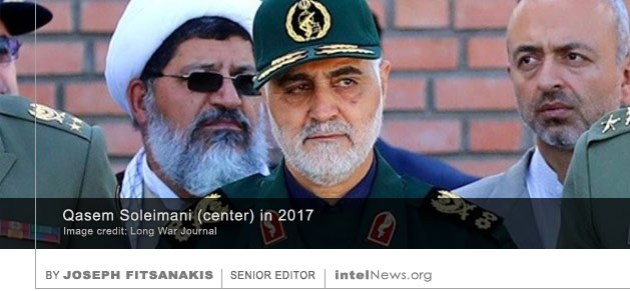
Why did the president do it? To some extent, one should not dismiss his argument that he wanted to put an end to the slow tit-for-tat escalation of tensions in the Middle East, before it boiled over. He wanted to make Iran listen. Writing in The Washington Times just hours after Soleimani’s assassination, former CIA official Charles Faddis noted that Mr. Trump’s decision honored US President Theodore Roosevelt’s famous dictum, “speak softly and carry a big stick”. Your adversary is more willing to listen to you if he is able to “see the big stick, and he needs to understand you will wield it”, wrote Faddis. A few hours later, David Petraeus, former director of the US Central Intelligence Agency, described Mr. Trump’s decision to kill Soleimani as “a very significant effort to reestablish deterrence, which obviously had not been shored up by the relatively insignificant responses up until now”. Read more of this post

Analysis: Middle East on verge of new regional war as US kills top Iran general

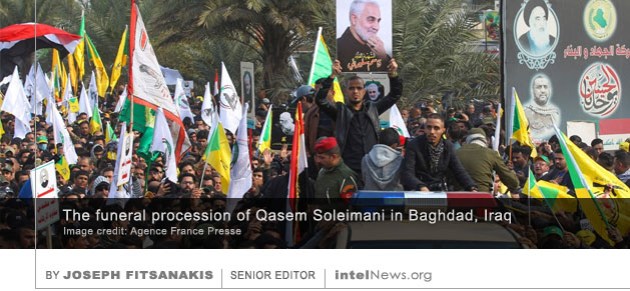
Qasem SoleimaniIn an act whose implications are impossible to overstate, the United States has assassinated General Qasem Soleimani, arguably Iran’s second most powerful official. In the early hours of this morning, the entire Middle East stood on the verge of a regional war as the US Department of Defense announced it killed Soleimani in a “defensive action […] aimed at deterring future Iranian attack plans”. But Soleimani’s killing will be seen by the Iranian government as nothing short of an official declaration of war. Tehran’s next move will determine the precise form this new war will take.
The United States, Israel and Saudi Arabia have targeted Soleimani for assassination for over a decade. In 2019 alone, Iran reported over half a dozen alleged plots to kill the general, the most recent of which was in early October. Soleimani’s killing is therefore not surprising. Moreover, Washington’s move rests on a number of crucial calculations by the White House, which help explain why US President Donald Trump made the decision to kill Soleimani, and why he did so now.

In the not-too-distant past, some of America’s tactical security goals aligned with Soleimani and his Quds Force —an elite unit inside the Islamic Revolutionary Guard Corps, which is tasked with exporting the Iranian Revolution abroad. The Iranian paramilitary unit helped Washington deal with the Afghan Taliban in the days after the 9/11 attacks, and its proxies in Iraq and Syria helped the US and its allies deliver fatal blows to the Islamic State. But in doing so, Tehran solidified its power within Iraq, turning its government into a satellite of Iran. The rise of the Popular Mobilization Forces (PMF), the Iranian-supported militias in Iraq, is largely a replay of the rise of Hezbollah, Iran’s paramilitary proxy in Lebanon, in the 1980s. Having painted themselves into a corner, America’s political leadership had to act. It chose to do so by essentially ‘decapitating’ the Quds Force, which is the main conduit between Iran and the PMF. It is worth noting that Abu Mahdi al-Muhandis, the deputy head of the PMF, was also killed in the same strike. Washington’s hope is that these killings can somehow prevent —or at least curtail— the Lebanization of Iraq. Read more of this post

Iranians may have used female spy to ‘honey-trap’ dissident living in France

Ruhollah ZamThe Iranian government may have used a female intelligence officer to lure a leading Iranian dissident from his home in France to Iraq, where he was abducted by Iranian security forces and secretly transported to Iran. Iranian authorities announced the arrest of Ruhollah Zam on October 15. On that day, Iranian state television aired a video showing a blindfolded Zam surrounded by officers of the Islamic Revolutionary Guard Corps (IRGC).
Zam, 46, was a prominent online voice of dissent during the 2009 Green Movement, an Iranian youth-based reform campaign whose leaders called for the toppling of the government in Tehran. He joined other young Iranians in launching AmadNews, a website whose stated purpose was “spreading awareness and seeking justice” in Iran. Soon after its emergence, AmadNews became the online voice of the Green Movement. Following a brief period of detention in 2009, Zam fled Iran and settled in France, from where he continued his online work through AmadNews and its successor, a website and Telegram channel called Seda-ye Mardom (Voice of the People).

Earlier this month, the Iranian government announced that Zam had been captured in a “complicated intelligence operation” that used “modern intelligence methods and innovative tactics” to lure Zam out of France and into the hands of the IRGC. But it did not provide further information about the method that was used to convince Zam to travel to Iraq, whose government is closely aligned with Iran’s. A few days ago, however, the London-based newspaper The Times claimed that the IRGC used a woman to gain Zam’s trust and lure him to Iraq.

Citing exiled Iranian activists that work closely with Zam, the British newspaper said that the woman entered his life nearly two years ago, thus pointing to a lengthy intelligence operation by the IRGC. Over time, she won his trust and eventually convinced him to travel to Jordan on October 11, and from there to Baghdad, Iraq, on October 12. The reason for his trip was that, allegedly, the woman convinced him that Ali al-Sistani, one of the most prominent Shiite clerics in Iraq, had agreed to fund Zam’s online activities. However, the cleric needed to confer with the exiled dissident in person before agreeing to fund his work, according to the woman. It is not known whether Zam and the unnamed woman were romantically involved.

The Times also alleged that Zam’s abduction and arrest was met with “at least tacit approval” by the French intelligence services. The latter now expect that two French academics, who have remained imprisoned in Iran for alleged espionage activities for over a year, will be released as part of a swap with Zam.

Author: Joseph Fitsanakis | Date: 23 October 2019 | Permalink

Russian government cyber spies ‘hid behind Iranian hacker group’

Computer hackingRussian hackers hijacked an Iranian cyber espionage group and used its infrastructure to launch attacks, hoping that their victims would blame Iran, according to British and American intelligence officials. The information, released on Monday, concerns a Russian cyber espionage group termed “Turla” by European cyber security experts.

Turla is believed to operate under the command of Russia’s Federal Security Service (FSB), and has been linked to at least 30 attacks on industry and government facilities since 2017. Since February of 2018, Turla is believed to have successfully carried out cyber espionage operations in 20 different countries. Most of the group’s targets are located in the Middle East, but it has also been connected to cyber espionage operations in the United States and the United Kingdom.

On Monday, officials from Britain’s Government Communications Headquarters (GCHQ) and America’s National Security Agency (NSA) said Turla had hijacked the attack infrastructure of an Iranian cyber espionage group. The group has been named by cyber security researchers as Advanced Persistent Threat (APT) 34, and is thought to carry out operations under the direction of the Iranian government.

The officials said there was no evidence that APT34 was aware that some of its operations had been taken over by Turla. Instead, Russian hackers stealthily hijacked APT34’s command-and-control systems and used its resources —including computers, servers and malicious codes— to attack targets without APT34’s knowledge. They also accessed the computer systems of APT34’s prior targets. In doing so, Turla hackers masqueraded as APT34 operatives, thus resorting to a practice that is commonly referred to as ‘fourth party collection’, according to British and American officials.

The purpose of Monday’s announcement was to raise awareness about state-sponsored computer hacking among industry and government leaders, said the officials. They also wanted to demonstrate the complexity of cyber attack attribution in today’s computer security landscape. However, “we want to send a clear message that even when cyber actors seek to mask their identity, our capabilities will ultimately identify them”, said Paul Chichester, a senior GCHQ official.

Author: Joseph Fitsanakis | Date: 22 October 2019 | Permalink

Iran abducts France-based dissident in ‘complex intelligence operation’

Ruhollah ZamIranian authorities have announced the capture of a Paris-based Iranian dissident, who was reportedly lured out of France and then abducted by Iranian agents in a third country. The kidnapped dissident is Ruhollah Zam, 46, son of  Mohammad-Ali Zam, a well-known reformist cleric who served in top Iranian government posts after the 1979 Islamic Revolution. But in 2009 the younger Zam distanced himself from this father and sided with the so-called Green Movement, whose leaders called for the toppling of the government in Tehran. Around that time, Zam was part of a group of Internet-savvy Iranians who launched AmadNews. The website’s stated purpose was “spreading awareness and seeking justice” in Iran, and it soon became the online voice of the Green Movement.
Zam was promptly arrested and jailed for urging Iranian protesters to topple the government. He was eventually released thanks to his father’s status and reputation. He quickly fled Iran and settled in France, from where he continued his online work through AmadNews and its successor, a website and Telegram channel called Seda-ye Mardom (Voice of the People). The Iranian government accuses Zam of inciting violence against the state and claim that his online agitation is funded by the intelligence services of countries like France, Israel and the United States.

On October 15, Iran’s state-owned media network aired a video showing a bound and blindfolded Zam surrounded by armed officers of the Islamic Revolutionary Guard Corps (IRGC). The Iranian government announced that Zam had been captured following a “complicated intelligence operation” using “modern intelligence methods and innovative tactics” to lure Zam out of France and into the hands of the IRGC. It eventually emerged that Zam had flown from France to Jordan on October 11, and from there to Baghdad, Iraq, on October 12. He appeared to be under the impression that he would travel to the Iraqi city of Najaf in order to meet Ali al-Sistani, arguably the most senior Shiite cleric in Iraq.

In the same video, Zam is shown sitting in an armchair next to an Iranian flag, making a statement. He calmly looks at the camera and says that he “fully regrets” his actions directed against Iran. He then says that he made the mistake of entrusting his security to the intelligence services of France. Finally, he warns other dissidents who are involved in agitation against the Iranian state to not trust foreign governments. He names the latter as “the United States, Israel, Saudi Arabia and Turkey”. Iranian officials have not responded to questions about Zam’s current status and fate.

Author: Joseph Fitsanakis | Date: 21 October 2019 | Permalink

US and Saudi Arabia ‘suffered intelligence blackout’ during Iran drone strikes: sources

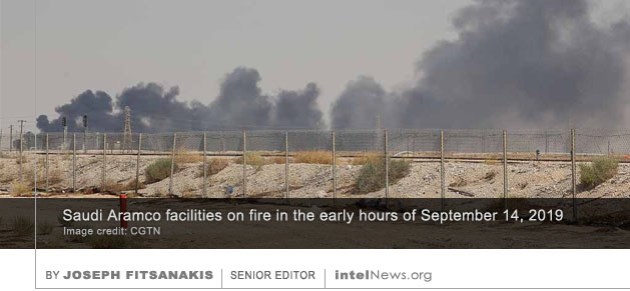
Saudi AramcoSaudi Arabia and the United States suffered “a total and embarrassing [intelligence] failure” in the lead-up to the drone strikes that shut down half of the kingdom’s oil production last month, according to Israeli sources. In the early hours of September 14, missiles struck two refineries belonging to the world’s largest crude oil processing facility in eastern Saudi Arabia. The facilities, which belong to Aramco, Saudi Arabia’s government-owned oil conglomerate, were forced to cease operation so that repairs could be carried out. This drastically reduced Saudi Arabia’s oil production by close to 50 percent, which amounted to a 5 percent drop in global oil production. By Monday morning, global oil prices had seen their most significant one-day surge since the 1991 Gulf War.
Soon after the attacks, Saudi and American officials accused Iran of having launched the missile strikes. But according to Breaking Defense, Riyadh and Washington suffered “a total and embarrassing [intelligence] failure” in the hours prior to and following the attacks. The US-based website cited a number of anonymous Israeli sources, who said that officials in Tel Aviv were surprised by the lack of intelligence in the US and Saudi Arabia about the missile strikes. The Israelis told Breaking Defense that Saudi intelligence agencies “had no idea Iran was planning to attack the kingdom’s oil facilities […]. It seems that the Americans were also in the dark [or that possibly] Washington […] did not share the data in time with the Saudis”, they added.

The above information was allegedly discussed at an emergency meeting of the Israeli defense cabinet on October 6, which included a briefing on the attacks by the Mossad, Israel’s main external intelligence agency. According to the Israeli sources, Mossad officials were quickly able state with high confidence that the missiles had been launched from military bases in southeast Iran or by Iranian militias in Iraq. It was only following an examination of missile fragments that Saudi and American intelligence officers were able to point the finger at Iran, according to Aahron Ze’evi Farkash, former director of the Israeli Military Intelligence Directorate.

Breaking Defense also said that Israeli intelligence analysts were impressed by the precision of the weapons systems used in the Iranian strikes. Additionally, the specific targets of the attacks were selected with the help of “very accurate intelligence”, said the Israeli sources.

Author: Joseph Fitsanakis | Date: 11 October 2019 | Permalink

Iran arrests Russian journalist for espionage in rare spat with key ally Moscow

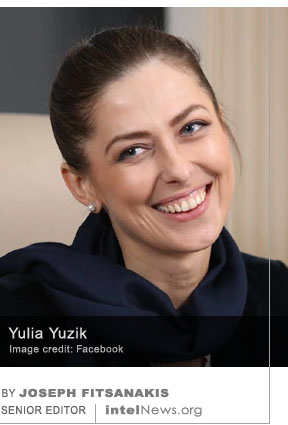
Yulia YuzikIn a surprising move last week, Iranian authorities arrested a Russian journalist and expert on the Caucasus region, whom they accused of spying for Israel. They later agreed to release her following significant diplomatic pressure from Russia. But the move surprised observers, because Iran rarely acts in ways that have the potential to damage its close relations with Moscow.
The journalist in question is Yulia Yuzik, a 38-year-old reporter with considerable expertise on Russia’s Caucasus region. Her articles on the security situation in the Caucasus have been published in several Russian and Western outlets, including Foreign Policy and GQ. She has also authored a number of books on Islamist militancy in the Russian Caucasus, which have been translated into several foreign languages, such as German, Italian and French.

In 2017, Yuzik spent several months in Iran while working on a number of stories. She returned to Russia before returning to Iran on September 29 of this year, reportedly “on a private trip”. Media reports stated that Yuzik intending to meet a number of Iranian journalists that she worked with back in 2017. However, upon landing at Iran’s Imam Khomeini International Airport, Yuzik had her passport confiscated without explanation, and was forced to enter the country without identity and travel documents. Then, last Thursday she was arrested at her hotel in downtown Tehran by members of the Iranian Revolutionary Guard Corps (IRGC), who apparently broke down the door of her hotel room before arresting her.

There were no news of Yuzik’s whereabouts until the following day, when staff at the Russian embassy in the Iranian capital were contacted by her family. Yuzik’s family said that the IRGC had charged her with collecting intelligence for the Mossad, Israel’s spy service. Russian media reports said that the accusations against Yuzik took Russian diplomats by the surprise, given that Yuzik has no apparent connection to Israel, nor does she have a travel visa to enter that country. She reportedly spent a few days there in 2004 while writing a story about the Israel Defense Forces for Russian newspaper Komsomolskaya Pravda.

Yuzik’s family told the Russian embassy that she had been scheduled to appear in a Tehran court on Saturday. The Russian embassy gave a press briefing to reporters on Friday, saying that the Russian Foreign Ministry had summoned the Iranian ambassador to Moscow to complain about Yuzik’s arrest. Then early on Saturday, Maria Zakharova, a spokeswoman for the Russian Foreign Ministry in Moscow, announced that Yuzik would be released soon and would be allowed to return home to Russia.

The incident has surprised observers, because Russia is one of Iran’s closest international allies. It is therefore highly unusual for Tehran to take any action that might potentially provoke Moscow or otherwise damage its diplomatic relations with the Kremlin.

Author: Joseph Fitsanakis | Date: 07 October 2019 | Permalink

Opinion: Saudi Arabia will not go to war with Iran, but it may pay others to do so

Saudi AramcoEver since a barrage of drone and missile attacks struck Saudi Arabia on September 14, many have wondered whether the oil kingdom will go to war with Iran. Riyadh has directly accused the Islamic Republic of being behind the attacks. But the speculation about a possible war is baffling, argues Nesrine Malik in a well-argued article published last Sunday in Britain’s Guardian newspaper. Saudi Arabia does not “go to war”, she says —it pays others to do so on its behalf.

The war in Yemen is a perfect example, argues Malik. Even though the Saudi monarchy is leading the foreign military involvement in that war, Saudi Arabia is supplying almost no ground troops in that war. There are only Saudi commanders who are managing groups of mercenaries from Morocco, Jordan and Egypt. A large portion of the Saudi-led force consists of Sudanese child soldiers, whose families are paid handsomely for supplying the oil kingdom’s force in Yemen with what Malik describes as “cannon fodder”. The Saudi commanders communicate their battle orders to their hired troops via satellite phones and use unmanned drones and high-flying planes to attack the predominantly Shiite Houthi rebels. That largely explains the high civilian toll in that war.

Meanwhile, the United States government announced last week that it will be sending several hundred troops to the oil kingdom and will be beefing up its air defense systems. But Malik wonders why it is that Saudi Arabia, which has been the world’s largest weapons importer since 2014, and whose 2018 arms purchases accounted for 12 percent of global defense spending last year, requires the presence of American troops on its soil for its protection. The answer is simple, she says: the Saudi regime purchases weapons, not to use them, but to make Wester defense industries dependent on its purchasing power. In other words, the Saudi monarchy buys Western weapons for political reasons. These purchases enable it to get away with its abysmal human-rights record at home, as well as its kidnappings and assassinations abroad.

In the meantime, says Malik, if Saudi Arabia goes to war against Iran, it will do so the way it always does: it will hire proxies —including the United States— to fight on its behalf.

Author: Joseph Fitsanakis | Date: 25 September 2019 | Permalink

Iranian engineer recruited by Holland helped CIA and Mossad deliver Stuxnet virus

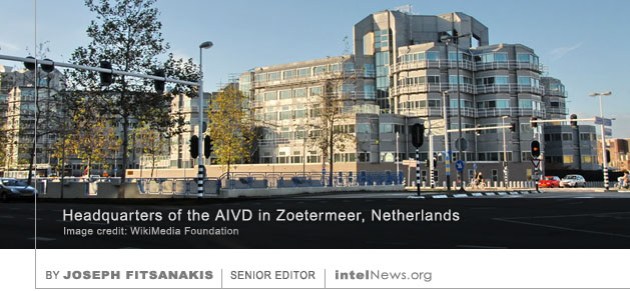
AIVD HollandAn Iranian engineer who was recruited by Dutch intelligence helped the United States and Israel infect computers used in Iran’s nuclear program with the Stuxnet cyber weapon, according to a new report. Discovered by researchers in 2010, Stuxnet is believed to have been designed with the aim of sabotaging the nuclear program of the Islamic Republic of Iran. The virus targeted the industrial computers —known as programmable logic controllers— that regulated mechanical and electronic hardware in Iranian nuclear installations. By compromising the software installed on these computers, Stuxnet manipulated the rotor speed of nuclear centrifuges at Iran’s Natanz Fuel Enrichment Plant. By increasing the centrifuges’ rotor speed to unmanageable levels, Stuxnet rendered many of these machines permanently inoperable.

Most observers agree that Stuxnet was a joint cyber sabotage program that was devised and executed by the United States and Israel, with crucial assistance from Germany and France. But now a new report from Yahoo News claims that the contribution of Dutch intelligence was central in the Stuxnet operation. Citing “four intelligence sources”, Yahoo News’ Kim Zetter and Huib Modderkolk said on Monday that Holland’s General Intelligence and Security Service (AIVD) was brought into the Stuxnet operation in 2004. In November of that year, a secret meeting took place in The Hague that involved representatives from the AIVD, the United States Central Intelligence Agency, and Israel’s Mossad.

It was known that the Islamic Republic’s nuclear weapons program was crucially assisted by A.Q. Khan, a Pakistani nuclear physicist and engineer. In 1996, Khan sold the Iranians designs and hardware for uranium enrichment, which were based on blueprints he had access to while working for a Dutch company in the 1970s. By 2004, when the Dutch were consulted by the CIA and the Mossad, the AIVD had already infiltrated Khan’s supply network in Europe and elsewhere, according to Yahoo News. It also had recruited an Iranian engineer who was able to apply for work in the Iranian nuclear program as a contractor. This individual was provided with proprietary cover, said Yahoo News, which included two “dummy compan[ies] with employees, customers and records showing a history of activity”. The goal of the AIVD, CIA and Mossad was to have at least one of these companies be hired to provide services at the Natanz nuclear facility.

That is precisely what happened, according to Yahoo News. By the summer of 2007, the AIVD mole was working as a mechanic inside Natanz. The information he provided to the AIVD helped the designers of Stuxnet configure the virus in accordance with the specifications of Natanz’s industrial computers and networks. Later that year, the AIVD mole was able to install the virus on Natanz’s air-gapped computer network using a USB flash drive. It is not clear whether he was able to install the virus himself or whether he was able to infect the personal computer of a fellow engineer, who then unwittingly infected the nuclear facility’s system. The Yahoo News article quotes an intelligence source as saying that “the Dutch mole was the most important way of getting the virus into Natanz”.

It is believed that, upon discovering Stuxnet, the Iranian government arrested and probably executed a number of personnel working at Natanz. The Yahoo News article confirms that there was “loss of life over the Stuxnet program”, but does not specify whether the AIVD mole was among those who were executed. The website said it contacted the CIA and the Mossad to inquire about the role of the AIVD in the Stuxnet operation, but received no response. The AIVD declined to discuss its alleged involvement in the operation.

Author: Joseph Fitsanakis | Date: 04 September 2019 | Permalink

Trump’s photo tweet gave away US secrets, say experts

Satellite reconnaissanceA tweet by United States President Donald Trump may have compromised secrets about America’s reconnaissance satellite capabilities, according to experts who analyzed it over the weekend. The American president posted a message about Iran’s space program on his personal Twitter account on Saturday, August 30. The message read: “The United States of America was not involved in the catastrophic accident during final launch preparations for the Safir SLV Launch at Semnan Launch Site One in Iran. I wish Iran best wishes and good luck in determining what happened at Site One”.

Trump was referring to an apparent rocket launch failure that happened on Friday, August 29, at the Semnan Space Center in northern Iran. The suspected rocket failure caused significant damage to Semnan’s Site One launching pad, some of which appears to have burned down. It is thought to be the second such incident in Iran and it must be a source of frustration for Tehran, which has been trying to place a new satellite in orbit for almost a year now. Washington and other countries have criticized Tehran’s space program, saying it is a disguised missile program that could potentially be used to launch a nuclear bomb.

Along with his written message, the US president tweeted an aerial photograph showing the damage at the Semnan Space Center. Some have since claimed that the photograph, which Trump appears to have taken from a printed document given to him by a US spy agency, offers “an unprecedented example of US spy satellites at work” and inadvertently reveals some of America’s most closely guarded satellite capabilities. Experts say they have been able to determine that the photograph was taken by a satellite, rather than a surveillance aircraft or unmanned drone. Some say they have even been able to pinpoint the exact satellite that was used to generate the image, by analyzing the angle of the photograph. It is believed that it was taken by USA 224, which is one of America’s top-secret optical reconnaissance satellites.

More importantly, the US president’s tweet may have provided Washington’s adversaries with an example of the precise power of America’s reconnaissance satellites. Their exact surveillance capabilities are a closely held secret that is known by specialists at the National Reconnaissance Office and the National Geospatial Intelligence Agency, two of America’s most obscure intelligence agencies. It has long been speculated that the images captured by American spy satellites far surpass the 25 centimeter resolution that is available to commercial satellite services. A number of experts have suggested that the photograph tweeted by Trump displays a resolution that “is amazingly high” and must be “at least 10 centimeters, if not better”. One specialist juxtaposed the image tweeted by the US president next to an image of the same launch site taken with a commercial satellite. The difference is indeed remarkable. One expert told the NBC news network that Trump’s “utterly careless” tweet would “have global repercussions”.

Last year Nada Bakos, who spent 20 years in the Central Intelligence Agency, wrote an editorial in The Washington Post in which she warned that foreign intelligence agencies were paying close attention to the US president’s tweets. Bakos argued that President Trump’s “Twitter feed is a gold mine for every foreign intelligence agency”. She added that, throughout her CIA career, she and her team “never had such a rich source of raw intelligence about a world leader, and we certainly never had the opportunity that our adversaries (and our allies) have now”, because of Trump’s social media presence.

Author: Joseph Fitsanakis | Date: 02 September 2019 | Permalink

US offensive cyber campaign disabled Iran’s strike capabilities, say sources

IRGC IranThe Islamic Revolutionary Guard Corps (IRGC) is still recovering from the damage it suffered by an offensive American cyber campaign against it that took place in June, according to sources. The attack allegedly degraded the IRGC’s ability to strike at oil tankers and other ships in the Persian Gulf. The New York Times said on Thursday that the cyber attack took place on June 20, hours after United States President Donald Trump called off airstrikes on Iran. The White House had considered launching the airstrikes in retaliation against the downing of an American surveillance drone by Iranian forces and their alleged use of limpet mines against commercial oil tankers by the IRGC the previous month.

The paper did not reveal details of the cyber campaign, but said it did not target any part of Iran’s missile or other defense programs. Its mission was to degrade the covert strike capabilities of the IRGC, which operates in a paramilitary capacity and is not supervised by the military. Washington blamed the IRGC for the limpet mine attacks against oil tankers, and expressed concerns that they would continue. The cyber attack corrupted the computer databases and communications networks that the IRGC uses to co-ordinate covert operations at sea, and resulted in the temporary cessation of IRGC attacks on oil tankers, said The Times.

The June 20 cyber attacks were not meant to be permanent but their effects have endured much longer than was expected, according to the paper. It cited claims by anonymous senior American officials that the IRGC is “still trying to repair critical communications systems and has not recovered the data lost in the attack”. It is also worth noting that, according to US sources, Iran did not escalate its own cyber attacks against Western targets in retaliation to the American cyber campaign against the IRGC.

However, according to The Times, some American officials have expressed doubts about the wisdom and long-term impact of the cyber operation. They claim that the cyber attack gave the Iranians the opportunity to collect valuable information about US cyber capabilities. It also allowed them to detect and fix their vulnerabilities so that they are now better able to defend against future cyber attacks. Lastly, the attacks neutralized IRGC communications networks, which the US had penetrated and was collecting vital intelligence from, they argue.

Author: Joseph Fitsanakis | Date: 30 August 2019 | Permalink

Security official confirms ‘unprecedented’ anti-corruption campaign in Iran’s judiciary

Ebrahim RaeesiA senior Iranian intelligence official has confirmed widespread rumors that an unprecedented anti-corruption campaign is taking place at the top echelons of Iran’s all-powerful judiciary, with some senior figures already in prison. The Iranian judiciary is one of the most powerful and secretive institutions in the Islamic Republic. It is nominally supervised by the Iranian Justice Ministry, but its senior officials, including the chief justice (the head of the judiciary), are appointed directly by Iran’s Supreme Leader Ali Khamenei. It follows that the judiciary has been a deeply conservative institution throughout the country’s existence, and especially after the 1979 Islamic Revolution.

Until earlier this year, the judiciary was headed by Ayatollah Sadeq Amoli Larijani, a protégé of Khamenei, who named him chief justice in August of 2009. Throughout Larijani’s decade-long tenure, there were rumors of rampant corruption in the judiciary, but Khamenei never seemed to intervene. However, in March of this year Larijani was suddenly removed from his position and replaced with Ebrahim Raeesi (pictured), a conservative former attorney general with middle-to-low-rank clerical credentials. Almost as soon as he took charge of the judiciary, Raeesi announced a sweeping anti-corruption campaign. In July, rumors began to circulate in the media that Iran’s Deputy Chief Justice, Akbar Tabari, had been arrested.

On Wednesday, Ali Abdollahi, head of the judiciary’s intelligence and security wing, said during a speech that Tabari had indeed been imprisoned for “exerting influence on some legal cases” and “having unlawful and unethical relationships”. He added that a number of other members of the judiciary had been placed under arrest in connection with the investigation on Tabari. On Thursday, Abdollahi said that the arrests had taken place under the direction of Supreme Leader Khamenei and that they would continue both inside and outside the judiciary. There would be “no delay in cleansing the inside and outside of the judiciary”, said Abdollahi. Raeesi and Khamenei have not made any public comments. But observers now believe that the unprecedented wave of arrests would never have reached the upper levels of the judiciary unless the supreme leader had personally given the anti-corruption campaign the green light.

Author: Joseph Fitsanakis | Date: 16 August 2019 | Permalink

Analysis: Iran’s energy sector is now a high-stakes espionage target

Iran Petroleum Oil MinistryThe state-owned energy sector of Iran, one of the world’s most lucrative, has become a major target of international espionage since the imposition of new sanctions by the United States this year. The purpose of Washington’s sanctions is to limit the Islamic Republic’s ability to export energy, and by doing so end the country’s reliance on its primary source of income. It is estimated that Tehran’s energy exports have fallen by about 80 percent during the past year, and may continue to fall if the US has its way. This means that American and Iranian intelligence agencies are currently engaged in an intense war of espionage that concentrates on what remains of Iran’s oil exports. Iran continues to entice international buyers by selling energy at below-market prices, while sales are facilitated through the use of throwaway bank accounts that are difficult to trace. Exports are then carefully smuggled into overseas destinations through a variety of means.

In an article published last week, The New York Times’ Farnaz Fassihi explains that every snippet of information about Iran’s oil industry has now become “a prized geopolitical weapon” in a “a high-stakes global game of espionage and counterespionage”. Fassihi quotes a recent statement by Iran’s Minister of Petroleum Bijan Zanganeh that “information about Iran’s oil exports is war information”. That includes information on how Iran manages to deliver its exports abroad and how it gets paid for doing so. Once the US tightened its sanctions on Tehran, Iranian energy officials began to suspect that most inquiries to purchase oil were from foreign spies in search of information on the methods of transaction, writes Fassihi. So the Ministry of Petroleum stopped allowing thousands of freelance energy brokers to mediate between it and buyers. It proceeded to concentrate all transactions into the hands of fewer than five vetted individuals with prior tenure in the Iranian Revolutionary Guards Corps and other vetted government agencies. It also began to train Ministry officials on security and counterespionage protocols.

When the Iranians made it difficult to access information through the Ministry of Petroleum, foreign spy agencies changed their tactics, writes Fassihi. They used foreign academic researchers, including PhD students, who offered payments in hard cash for information on Iranian oil export methods that would help them in their research. Others descended on Tehran offering visas to the US, alcohol, prostitutes, and cash payments ranging from $100,000 to over $1 million in exchange for intelligence on the Iranian energy export sector. There is an atmosphere of paranoia in the Iranian capital, writes Fassihi, and the process of purchasing oil from Iran resembles a Hollywood spy thriller. Representatives of foreign buyers are asked to come to Tehran in person and are regularly required to switch hotels in the middle of the night. Additionally, once a transaction is agreed upon, the buyer’s representative is required to stay at a Petroleum Ministry safe house until the funds are transferred into Iranian government coffers. After that, the representative is allowed to leave, writes Fassihi.

Author: Joseph Fitsanakis | Date: 13 August 2019 | Permalink