Analysis: Why is Israel so chatty about a possible strike on Iran?

Ronen Bergman By JOSEPH FITSANAKIS | intelNews.org |
This past Sunday, Israeli intelligence expert Ronen Bergman published an extensive cover story in The New York Times Magazine, titled simply: “Will Israel Attack Iran?”. He answers his question in the affirmative, saying that “after speaking with many senior Israeli leaders and chiefs of the military and the intelligence, I have come to believe that Israel will indeed strike Iran in 2012”. Bergman, who a year ago wrote an excellent, well-informed account of the Mahmoud al-Mabhouh assassination, sees a “small and ever-diminishing” window of opportunity to stop the looming war.  But he says that few in Israel believe that the United States administration of President Barack Obama is willing or able to prevent an Israeli attack on Iran. Instead, the predominant sentiment in the Jewish state is that “only the Israelis can ultimately defend themselves”, he writes. But the intense discussion about a possible Israeli attack on Iran begs a critical question, which is asked by Laura Rozen, Senior Foreign Affairs Reporter for Yahoo News. She asks, why are Israeli leaders so chatty on the topic? One would think that, by being so vocal about their intentions, they risk losing a major strategic advantage that Israel’s military has relied on in the past: namely the element of surprise. In her search for an answer, she did what good reporters usually do: she actually picked up the phone and called Bergman in Israel. A condensed version of their interesting discussion is provided here. In it, she queries the Israeli intelligence expert about the widespread view that, if Israeli planes were indeed preparing to strike Iran, Tel Aviv would be very discrete about it. Bergman’s response is somewhat convincing; he says that most Israeli statements on the subject are “not meant for Israeli ears” —though they often reverberate inside Israel. Read more of this post

News you may have missed #670: Analysis edition

Michael ChertoffBy IAN ALLEN | intelNews.org |
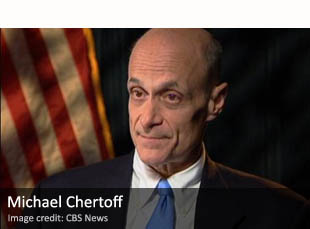
►►Some argue US DHS should change intelligence mission. A decade after Congress created the Department of Homeland Security, the Aspen Homeland Security Group, which is co-chaired by former Homeland Security Secretary Michael Chertoff (pictured), says it is time for the agency to shift its focus from foreign threats to working with local governments and the private sector. Aspen pushes for even more intelligence outsourcing —no surprises there.
►►Not-so-covert Iran war buys West time but raises tension. “Ten out of 10. They hit the target and nobody got caught”, former US intelligence officer Robert Ayers told Reuters of the January 11 killing of Iranian nuclear scientist Mostafa Ahmadi-Roshan. “What makes these things so impressive is they gather a lot of information and do their ‘on the ground’ homework, which can take months”. Sidney Alford, a British explosives expert, says the hit was technically “professional. It worked and it worked very well”.
►►Inside Mossad’s war on Tehran. “In the five attacks on nuclear scientists, the hit squad has used a motorbike every time. The motorcyclist is ubiquitous in the capital’s traffic jams, often wearing a surgical mask for protection against the heavy pollution and able to move close to the target between the lines of stationary cars without attracting attention”.

News you may have missed #668

John McLaughlinBy IAN ALLEN | intelNews.org |
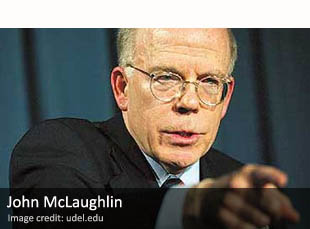
►►Ex-CIA chief says war against Iran would be ‘very bad option’. Former CIA acting director John McLaughlin (pictured) said the United States can engage Iran through diplomacy, sanctions or military action, but warned the latter choice “would be a very bad option”. Speaking during a panel discussion in Washington Tuesday, McLaughlin said direct military action with Iran could grow to involve Hezbollah, the militant group based in Lebanon.
►►US warns Israel on Iran strike. US defense leaders are increasingly concerned that Israel is preparing to take military action against Iran, over US objections, and have stepped up contingency planning to safeguard US facilities in the region in case of a conflict. The US wants Israel to give more time for the effects of sanctions and other measures intended to force Iran to abandon its perceived efforts to build nuclear weapons.
►►Iran tightens security for scientists after killing. The nature of the extra security was not disclosed, but it was reported a day after Iran’s Parliament speaker, Ali Larijani, an outspoken promoter of Iran’s nuclear independence, said that investigators had identified and detained an unspecified number of suspects in the assassination of Mostafa Ahmadi Roshan, the deputy director at the Natanz enrichment site.

News you may have missed #665

Matthew M. AidBy IAN ALLEN | intelNews.org |
►►Joseph Fitsanakis interviewed on ABC Radio National. IntelNews‘ own Dr Joseph Fitsanakis was interviewed on Friday by reporter Suzanne Hill, for ABC Radio National’s flagship evening news program ‘PM‘. In the interview, which was about the assassination of Iranian nuclear scientist Mostafa Ahmadi-Roshan, Fitsanakis points the finger at the Mossad, and explains why he doesn’t believe the United States had anything to do with the killing. You can listen to the interview here. The transcript is here.
►►India releases diplomat jailed for spying. Last April, Madhuri Gupta, second secretary at the Indian high commission in Islamabad, Pakistan, was arrested for working for Pakistan’s ISI spy agency. She apparently had a “relationship of personal affection” with an aide of her Pakistani handler. On Tuesday, she was granted bail by an Indian court, after 21 months in prison.
►►Matthew Aid interviewed about his new book. Matthew M. Aid, author of The Secret Sentry, has written a new book, Intel Wars: The Secret History of the Fight Against Terror. You can listen to an extensive interview he gave on January 11 on NPR’s Fresh Air, in which Aid outlined his view that “overlapping jurisdictions, bureaucratic policies and a glut of data have crippled the intelligence community in its war against would-be terrorists”.
►►British spies to be cleared on torture allegations. The British government, including Scotland Yard and the Crown Prosecution Service, has just finished a four-year inquiry into the country’s security and intelligence services, sparked by allegations by terrorist suspects released from Guantanamo Bay, that they were severely tortured. The results have not yet been announced. But British media report that, according to information from trusted sources, the inquiry has concluded that (…drumroll…) there is no evidence that officers from either MI5 or MI6 were aware of the mistreatment of prisoners.

Comment: Drawing Careful Conclusions from the Iran Assassination

Mostafa Ahmadi-Roshan's carBy JOSEPH FITSANAKIS* | intelNews.org |
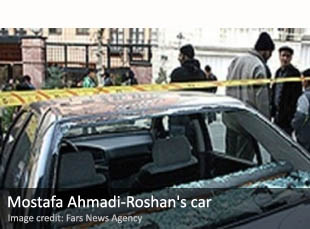
The body of Iranian academic Mostafa Ahmadi-Roshan was still warm when officials in Tehran began accusing Israel and the United States of having planned his assassination. Leveling such accusations without offering adequate proof is certainly unstatesmanlike; but even hasty conclusions can be logical, and even sworn enemies of the Iranian government would find it difficult to point at other possible culprits. Keeping in mind that, at this early stage, publicly available information about the assassination remains limited, are there conclusions that can be drawn with relative safety by intelligence observers? The answer is yes. Roshan, 32, was a supervisor at Iran’s top-secret Natanz fuel enrichment plant. His scientific specialty was in the technology of gas separation, the primary method used to enrich uranium in Iran’s nuclear energy program. His assassination, which took place in broad daylight amidst Tehran’s insufferable morning traffic, was a faithful reenactment of the attacks that killed two other Iranian nuclear scientists in November of 2010. A motorcycle, practically indistinguishable from the thousands of others that slide maniacally between cars in the busy streets of the Iranian capital, made its way to the car carrying Ahmadi-Roshan. As the driver kept his eyes on the road, the passenger skillfully affixed a magnetic explosive device to the outside surface of the targeted vehicle, next to where Ahmadi-Roshan was sitting. By the time the blast killed the scientist, as well as the car’s driver, and injured a third passenger, the motorcyclists were nowhere to be found. Two-and-a-half hours later, when the report of Ahmadi-Roshan’s assassination was making its way through the newsroom of Iran’s state-owned Fars news agency, the assassins were making their way to Dubai, Oman, Qatar, or various other destinations around the Middle East. Read more of this post

News you may have missed #664

Hakan FidanBy IAN ALLEN | intelNews.org |
►►Iran nuclear defector’s family spared deportation from Canada. Family members of a top defector who worked for Iran’s nuclear energy program have been temporarily spared deportation from Canada, after claiming they will be tortured by Iran’s secret police. The defector, his daughter and mother, have not been identified in media reports. The names of their lawyers were not made public either.
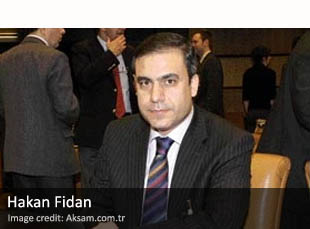
►►Turkish spy services to be “among world’s largest”. Turkey commemorates the 85th anniversary of its National Intelligence Organization, known as MİT. The agency’s undersecretary, Hakan Fidan (pictured), told Turkish media that within the next two to three years, they aim to become one of the largest intelligence services in the world, and that they are “synthesizing the CIA-FBI model”.
►►Analysis: New rules for CIA drones in Pakistan. The current pause in CIA drone strikes in Pakistan (55 days and counting) is now the longest during Barack Obama’s presidency. The break in drone strikes was enforced by Islamabad after NATO killed 24 Pakistani soldiers in November. The break coincided with a major policy reappraisal by Washington, and it has given Islamabad room to refocus on its own strategic needs. In the coming weeks CIA drone attacks are expected to resume in Pakistan. But according to leaks and hints, there are likely to be far fewer strikes, and far fewer casualties.

Israeli Mossad training Iranian exiles in Kurdistan: French newspaper

Predomiantly Kurdish Middle East regionsBy JOSEPH FITSANAKIS | intelNews.org |
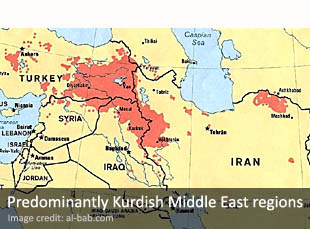
A leading French newspaper has claimed that Israeli intelligence agents are recruiting and training Iranian dissidents in clandestine bases located in Iraq’s Kurdish region. Paris-based daily Le Figaro, France’s second-largest national newspaper, cited a “security source in Baghdad”, who alleged that members of Israeli intelligence are currently operating in Iraq’s autonomous northern Kurdish region. According to the anonymous source, the Israelis, who are members of the Mossad, Israel’s foremost external intelligence agency, are actively recruiting Iranian exiles in Kurdistan. Many of these Iranian assets, who are members of Iran’s Kurdish minority and opposed to the Iranian regime, are allegedly being trained by the Mossad in spy-craft and sabotage. The article in Le Figaro claims that the Iranian assets are being prepared for conducting operations inside the energy-rich country, as part of Israel’s undercover intelligence war against Iran’s nuclear energy program. The Baghdad source told the French daily that part of Israel’s sabotage program against sensitive Iranian nuclear facilities, which includes targeted assassinations of Iranian nuclear experts, is directed out of the autonomous region of Iraqi Kurdistan, “where [Mossad] agents have stepped up their penetration”. For this, “the Israelis are using Kurdish oppositionists to the regime in Iran, who are living are refugees in the Kurdish regions of Iraq”, the source told Le Figaro. Although the article makes no mention of official or unofficial sanction of the Israeli operations by the Iraqi Kurdish authorities, it implies that the alleged Mossad activities are an open secret in Iraqi Kurdistan. This is not the first time that allegations have surfaced in the international press about Israeli intelligence activities in Kurdistan. In 2006, the BBC flagship investigative television program Newsnight obtained strong evidence of Israeli operatives providing military training to Kurdish militia members. Read more of this post

Nuclear Iran ‘not an existential threat to Israel’, says Mossad chief

Tamir PardoBy JOSEPH FITSANAKIS | intelNews.org |
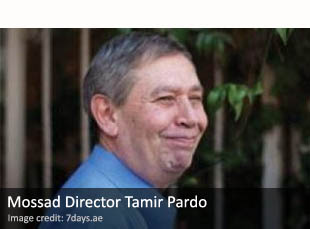
The director of Israel’s primary external intelligence agency, the Mossad, has said that it would be wrong to consider a nuclear-armed Iran an “existential threat” to Israel. For years, senior Israeli politicians and American military planners have described the prospect of a nuclear-capable Iran as an “existential threat” to the Jewish state. But this widespread belief is apparently not shared by Tamir Pardo, head of Israel’s revered Mossad intelligence agency. Pardo outlined his view while speaking yesterday before an audience of over 100 Israeli ambassadors and consuls general, at a conference dealing with diplomatic security issues and public affairs. Lectures at the conference, which is held annually at the Israeli Foreign Ministry in Jerusalem, are given behind closed doors. But Israeli newspaper Ha’aretz quoted three Israeli ambassadors who attended Pardo’s talk; they confirmed that the Mossad director rejected the view that Israel’s existence would necessarily be endangered by an Iranian nuclear arsenal, and dismissed the maxim “existential threat” as a “term used too liberally”. The Israeli newspaper quoted Pardo as saying: “Does [a nuclear-armed] Iran constitute a threat to Israel? Certainly. However, if we were to claim that a nuclear weapon in Iran’s possession was an existential threat [to Israel], it would simply mean that we would have to terminate [our operations] and go home. But this is not the case. The term [existential threat] is used too liberally”. The unnamed ambassadors told Ha’aretz that Pardo’s comments did not imply that the Mossad would stop its covert war on Iran, nor that Israel would accept the prospect of a nuclear Iran as inevitable. “However, what [Pardo’s] remarks undoubtedly imply is that he does not view a nuclear-armed Iran as an existential threat to Israel”, they said. Pardo’s comments closely echo those of his predecessor, Meir Dagan, who last May condemned a possible Israeli attack on Iran as an act that would be “patently illegal under international law” and “the stupidest thing [he had] ever heard”. Read more of this post

News you may have missed #640

Amos Yadlin

Amos Yadlin

►►Chinese defector says Canada right to worry about spying. Li Fengzhi, a former intelligence officer for China’s Ministry of State Security, who defected to Canada in 2003, has told a conference that Canada should be concerned about relationships between senior politicians and journalists from China, saying Beijing is targeting lawmakers everywhere. He was referring to the case of senior Conservative MP Bob Dechert, who was enveloped by controversy in September over amorous e-mails he sent to Shi Rong, a Chinese government journalist based in Toronto. After the Dechert controversy broke, the journalist recalled to Beijing to meet with her superiors and has not returned to her Canadian posting.
►►More intel officials warn against airstrikes on Iran. Meir Dagan, the former head of Israeli spy agency Mossad, is not alone in warning against the possibility of Israeli attacks against Iran’s nuclear program. He has now been joined by Major General Amos Yadlin, who until recently headed Israel’s Military Intelligence directorate. Speaking at Israel’s Institute for National Security Studies, Yadlin doubted that airstrikes could threaten Iran’s numerous, distant and well-defended nuclear facilities. Another intelligence official, Saudi Arabia’s Prince Turki al-Faisal, also cautioned last week against any attacks on Iran, saying that “there are other non- military policy alternatives, as yet unexplored, that could have the desired result without the unwanted consequences”.
►►GCHQ challenges code breakers via social networks. Britain’s signals intelligence agency, the General Communications Headquarters, has launched a code cracking competition to help attract new talent. The organization has invited potential applicants to solve a visual code posted at an unbranded standalone website. The challenge will also be ‘seeded’ to social media sites, blogs and forums. A spokesman said the campaign aimed to raise the profile of GCHQ to an audience that would otherwise be difficult to reach.

Blast reported in Isfahan, site of major Iranian nuclear facility

Iran

Iran

By JOSEPH FITSANAKIS | intelNews.org |

Iranian media are reporting a blast in the city of Isfahan, in central Iran, which is home to one of Iran’s most active nuclear facilities. News reports, including one from Iran’s state-operated FARS News Agency, say that the blast was heard across the city at 2:40 p.m. on Monday, and that an investigation is currently underway to determine its cause. With a population of nearly two million, Isfahan, capital of the province by the same name, is Iran’s third largest city. It is also home to one of the country’s premier nuclear research facilities, which includes a nuclear plant that produces uranium pellets for use in nuclear reactors. Intriguingly, after an initial period of silence, regional government officials in Isfahan appeared to downplay reports of the explosion. Speaking to Iran’s Mehr news agency, the Deputy Governor of Isfahan, Mohammad-Mehdi Ismaeli, said characteristically that reports of an explosion were “unfounded”, and speculated with a dose of sarcasm that “maybe someone’s water heater blew up”.  But Western reports from Iran, including one by United Press International, interpret the media attention given to the Isfahan blast as an indication of “how the country is being spooked by cover operations against its nuclear program”. Reports of the alleged blast come only weeks after a major explosion at a military base 25 miles west of Iranian capital Tehran killed 17 members of Iran’s elite Revolutionary Guards Corps, including Major General Hassan Moqqadam. The late General was described by Iran’s state media as the “founder of Iran’s missile program” and a pioneer in the country’s missile development after the 1979 Iranian Revolution. Meanwhile, the former Director of Israeli intelligence agency Mossad, Meir Dagan, has reiterated his warnings against plans by Tel Aviv to attack Iran. Speaking on Israeli television on Tuesday, Dagan cautioned Israel Read more of this post

Intel official claims Mossad was behind Iran missile depot blast

Iran blast siteBy JOSEPH FITSANAKIS | intelNews.org |
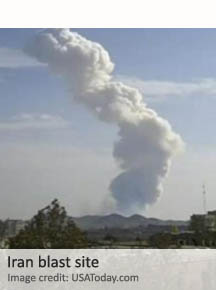
A Western intelligence official has told Time magazine that an Israeli spy agency was behind a weekend blast at an Iranian missile depot, which killed at least 17 people. The government of Iran claims that the powerful explosion, which wrecked a heavily guarded base belonging to Iran’s Revolutionary Guard Corps, was an accident, caused during the transport of munitions. But Time quotes an unnamed “Western intelligence source”, as saying that the blast was a deliberate act of sabotage carried out by agents of the Mossad, Israel’s primary covert operations agency. The source urged Time not to “believe the Iranians that it was an accident”, and added that the operation was part of an ongoing covert action effort to impede Iran’s nuclear program, saying characteristically that “there are more bullets in the magazine”. The base, located approximately 25 miles west of Iranian capital Tehran, is reported to house several of Iran’s Shahab-3 long-range missiles, with an alleged reach of up to 2,000 miles. The blast was reported to have been powerful enough as to have been audible across Tehran itself. The victims of the blast included Major General Hassan Moqqadam, described by Iran’s state media as the “founder of Iran’s missile program” and a foremost pioneer in the country’s missile development after the 1979 Iranian Revolution. The death of Moqqadam, an Islamic Revolutionary Guard Corps commander, was so important that his funeral was attended by none other than Ayatollah Ali Khamenei, Iran’s Supreme Leader. Read more of this post

News you may have missed #566 (analysis edition)

Jeffrey Richelson

Jeffrey Richelson

►►Stuxnet virus opens new era of cyberwar. Well-argued article by quality German newsmagazine Der Spiegel on Stuxnet, the sophisticated computer virus that attacked the electronic infrastructure of Iran’s nuclear program last year. The article argues that, in terms of strategic significance, the virus, which is widely considered a creation of Israeli intelligence agency Mossad, is comparable to cracking Germany’s Enigma cipher machine by Polish and British cryptanalists during World War II.
►►The fallout from the Turkish Navy’s recent spy scandal. Recently, the Turkish High Criminal court indicted members of an alleged spy ring operating inside the Turkish Navy. According to the indictment, members of the ring stole more than 165,000 confidential documents and obtained dozens of surveillance records and classified military maps. Its biggest customers were allegedly the intelligence services of Israel, Greece and Russia.
►►New edition of classic intelligence handbook published. A new edition of Jeffrey Richelson’s encyclopedic work on Read more of this post

US government wants to use secret witnesses in CIA leak trial

James Risen

James Risen

By JOSEPH FITSANAKIS | intelNews.org |
Prosecutors in the case of an ex-CIA officer accused of disclosing classified information to a journalist have asked the court for permission to introduce evidence in secret and to use privacy screens to shield the identities of witnesses. Jeffrey Sterling, who worked for the CIA’s Iran Task Force,  faces 10 felony counts and up to 120 years in prison for sharing information about the CIA’s operations in Iran. Court documents do not name the recipient of Sterling’s information, but it is common knowledge that Sterling spoke to James Risen, a Pulitzer Prize-winning journalist for The New York Times. In chapter 9 of his 2006 book State of War: The Secret History of the CIA and the Bush Administration, Risen details a botched operation by the Iran Task Force, which tried to pass to the Iranians a series of faulty nuclear bomb design documents. To do this, the CIA apparently recruited a Russian former nuclear scientist, who had defected to the United States. The unnamed scientist was told to travel to Vienna, Austria, in early 2000, and offer to sell the documents to the Iranians. But the documents contained a deliberate technical flaw, which, Risen alleges, the Russian CIA operative thought was so obvious that it could make him look untrustworthy in the eyes of the Iranians, thus endangering the entire mission. The Russian scientist ended up letting the Iranians know about the flaw, reveals Risen. He further alleges that the CIA operation may have actually helped the Iranian nuclear weapons program, as Iranian scientists would have been able to “extract valuable information from the blueprints while ignoring the flaws”. Read more of this post

‘We killed Iranian scientist’ claims Israel intel source

Daryoush Rezaei

Daryoush Rezaei

By JOSEPH FITSANAKIS | intelNews.org |

A source in Israeli intelligence has told a quality German newsmagazine that Israel was behind the recent killing of an Iranian physicist in Tehran. The 35-year-old physicist, Darioush Rezaei, was shot twice in the throat on July 23, by two men on a motorcycle, as he and his wife were picking up their four-year-old daughter from kindergarten. Iranian authorities dismissed early reports that Rezaei was a nuclear academic, saying that there had been “some confusion” about the dead man’s identity, and that Rezaei was simply studying for a masters’ degree in electronics. It later became clear, however, that Rezaei’s electronics expertise was in the use of high-voltage switching systems for triggering nuclear warheads explosions. Rezaei was the fourth Iranian physicist or nuclear expert to be assassinated since 2007, after Ardeshire Hassanpour,  Masoud Ali Mohammadi and Majid Shahriari. Another nuclear scientist, Fereydoon Abbasi, who was injured in a separate bomb attack on the same day Dr Shahriari was killed, now heads Iran’s Atomic Energy Organization. There is little doubt in intelligence circles that the attacks on the Iranian researchers are part of a wider Western and Israeli covert action program that includes —apart from assassinations— sabotage and cyberwarfare. Now an article in German quality newsmagazine Der Spiegel quotes an unnamed “Israeli intelligence source” as saying that Rezaei’s July 23 assassination “was the first serious action taken by the new Mossad chief Tamir Pardo”. Read more of this post

Iran revises earlier reports of nuclear scientist’s assassination

Daryoush Rezaei

Daryoush Rezaei

By JOSEPH FITSANAKIS | intelNews.org |
The government of Iran has revised earlier reports of a nuclear scientist’s assassination, saying the murdered man was a university student, and not a nuclear physicist, as it was first announced. On Saturday afternoon, Iran’s government-controlled media began carrying news of the fatal shooting of a man named Darioush Rezaei, in the Iranian capital Tehran. According to early reports, Rezaei, 35, who researched neutron transport at a Tehran university, was identified as “an expert with links to the Atomic Energy Organization of Iran”. He was allegedly shot dead in broad daylight by two men on a motorcycle, as he and his wife were returning to their house after picking up their four-year-old daughter from kindergarten. The report, which was first aired by the Iranian Students’ News Agency (ISNA) was rapidly echoed by other Iranian government-controlled media. Early the next day, Iran’s parliamentary speaker, Ali Larijani, condemned the attack as a provocation by Israeli and American intelligence agencies, which Iran suspects of being behind a series of assassinations against Iranian nuclear scientists during the past five years. Later on Sunday, however, a number of Iranian media started withdrawing the reports of Rezaei’s assassination, saying there had been “some confusion” about the dead man’s identity. Eventually it emerged that the man’s full name was Darioush Rezaei-Nejad, and that he was not a career academic nor “a physicist involved in the disputed nuclear program”, but rather an “a university student” studying for a master’s degree in electronics. Read more of this post