Iran announces arrests of alleged nuclear spies

Heidar Moslehi

Heidar Moslehi

By IAN ALLEN | intelNews.org |
The Iranian government has announced the arrest of an unspecified number of alleged nuclear spies, reportedly in connection with a sophisticated virus that infected computers used in Iran’s nuclear energy program. The arrests were publicized on Sunday by Heidar Moslehi, Iran’s Minister of Intelligence, who said those arrested had helped facilitate the spread of the so-called Stuxnet virus last June. The malicious program, which appears to have been designed to sabotage sensitive hardware components found specifically in nuclear centrifuges, has infected at least 100,000 computer systems worldwide, most of which are located in Iran. Speaking to Iranian media, Moslehi accused Israel and the United States of trying to sabotage the Iranian nuclear energy program, but noted that Iran’s intelligence services have resumed “complete supervision of cyberspace” and will successfully prevent “any leak or destruction” of the Islamic Republic’s nuclear research and development program by outside forces. But elsewhere in Tehran, Hamid Alipour, an Iranian government Senior Information and Technology official, admitted that technical experts are still working on containing the virus, which appears to be mutating. Read more of this post

News you may have missed #435 (cyberwarfare edition)

  • Analysis: Cyber attacks test US Pentagon. US military and civilian networks are probed thousands of times a day, and the systems of the North Atlantic Treaty Organization headquarters are attacked at least 100 times a day. Meanwhile, more than 100 countries are currently trying to break into US defense networks.
  • US should be able to shut Internet, ex-CIA chief says. Cyberterrorism is such a threat that the US President should have the authority to shut down the Internet in the event of an attack, Former CIA Director Michael Hayden has said.
  • Iran battling alleged ‘spy virus’. Iranian officials have confirmed reports that a malicious computer code, called Stuxnet, was spreading throughout the nation’s nuclear infrastructure. But they have given differing accounts of the damage, said to be capable of taking over computers that operate huge facilities, including nuclear energy reactors. Did someone say ‘Israel‘?

News you may have missed #416 (Iran edition)

  • Israel not to attack Iran in 2011, say US sources. The Obama administration, citing evidence of continued troubles inside Iran’s nuclear program, has persuaded Israel that it would take roughly a year for Iran to complete a “dash” for a nuclear weapon. US officials say the assessment has dimmed the prospect that Israel would pre-emptively strike Iran within the next year.
  • Iran launches first spy drone. Iran has launched a domestically made long-range high-altitude drone, called Karrar, according to state media. Hamed Saeedi, managing director of Farnas Aerospace Company, which is in charge of the project, said plans are under way to produce additional drones and unmanned choppers.
  • Iranian tried for espionage collapses in Armenian court. Behnam Bagheri, an Iranian citizen being tried in Armenia on charges of spying for Azerbaijan, collapsed in court in Yerevan on August 19 while delivering his defense speech, according to reports. In a similar case in October of 2009, Armenia charged one of its own officers with spying for Azerbaijan.

Bookmark and Share

News you may have missed #412

Bookmark and Share

News you may have missed #401

Bookmark and Share

News you may have missed #398

  • Britain’s first spy chief ordered Rasputin’s murder. Mansfield Cumming, or ‘C’ as he became known, was the first chief of Britain’s Secret Intelligence Service (MI6). In December 1916, he sent three agents in Russia to eliminate Grigori Rasputin, an influential Orthodox Russian priest who had a positive view of Germany.
  • Russian spy network moved money to Zimbabwe. A Zimbabwean company called Southern Union is alleged to have been used by exposed Russian spy Anna Chapman in a money smuggling operation involving a syndicate linked to the Robert Mugabe regime.
  • Iran says nuclear scientist gave valuable info on CIA. Iran’s semiofficial Fars news agency says that Iranian nuclear scientist Dr. Shahram Amiri, who resurfaced and returned home last week from the United States, after having disappeared during a 2009 religious pilgrimage to Mecca, has provided Iran with “valuable information” on the CIA.

Bookmark and Share

Comment: Defector’s Wish to Return to Iran Not Unusual

Shahram Amiri

Shahram Amiri

By IAN ALLEN | intelNews.org |
This website has covered extensively the case of Dr. Shahram Amiri, a scientific researcher employed in Iran’s nuclear program, who disappeared during a religious pilgrimage to Mecca in May or June of 2009. Tehran maintains that Dr. Amiri was abducted by CIA agents. However, most intelligence observers, including this writer, believe that the Iranian researcher willfully defected to the West, following a long, carefully planned intelligence operation involving the CIA, as well as French and German intelligence agencies.

Read more of this post

Author gets subpoenaed to reveal CIA sources

James Risen

James Risen

By JOSEPH FITSANAKIS | intelNews.org |
The US government has issued a subpoena against a journalist who authored a book on the CIA’s operations during the years of the Bush administration. The move has surprised many, because the book in question, State of War: The Secret History of the CIA and the Bush Administration, by New York Times journalist James Risen, has been out since 2006. The subpoena, which Risen received last Monday, requests him to testify before a grand jury about his confidential sources for chapter 9 of his book (pages 193-218), entitled “A Rogue Operation”, in which he describes in relative detail an attempt by the CIA to sabotage the Iranian nuclear weapons program. In the chapter, Risen writes of a thwarted CIA operation to pass to the Iranians a series of faulty nuclear bomb design documents. To do this, the Agency apparently recruited a Russian former nuclear scientist, who had defected to the United States. The unnamed scientist was told to travel to Vienna, Austria, in early 2000, and offer to sell the documents to the Iranians. Read more of this post

News you may have missed #338

  • US intel on Iran suffering from information overload? The US National Intelligence Estimate was due last fall but has been delayed at least twice amid efforts to “incorporate information from [Iranian] sources who are still being vetted”. Some say that significant new material has come from Iranian informants, who are motivated by antipathy toward the Iranian government and its suppression of the opposition.
  • Canada’s ex-intel boss slams new anti-terrorism measures. Reid Morden, the former director of the Canadian Security Intelligence Service, has urged the country’s Conservative government to re-think its plans to re-introduce controversial anti-terrorism measures initially adopted in the wake of 9/11.
  • Wiretapping scandals continue in Colombia. Caracol TV reports that Colombian security agency DAS has asked opposition Senator Piedad Cordoba to hand over evidence of her claims that President Alvaro Uribe ordered DAS to spy on her.

Bookmark and Share

News you may have missed #337

  • Another Iranian nuclear researcher reportedly defects. An academic linked with Iran’s nuclear program has defected to Israel, according to Ayoub Kara, Israel’s deputy minister for development in the Negev and Galilee. Kara said it “is too soon to provide further details”, adding that the defector is “now in a friendly country”.
  • Dutch spies to become more active abroad. The Dutch secret service, the AIVD, has announced a shift in strategy, deployed increasingly more officers abroad: “in Yemen, Somalia, and the mountains between Afghanistan and Pakistan”.
  • Why did the CIA destroy waterboarding evidence? It has been established that Porter J. Goss, the former director of the CIA, in 2005 approved the destruction of dozens of videotapes documenting the brutal interrogation of two terrorism detainees. But why did he do it? Former CIA officer Robert Baer examines the question.

Bookmark and Share

Analysis: Can the CIA sabotage the Iranian nuclear weapons program?

Shahram Amiri

Shahram Amiri

By JOSEPH FITSANAKIS | intelNews.org |
There is no doubt that the CIA has been actively trying to sabotage Iran’s nuclear weapons program since at least February of 2008, when US President George W. Bush authorized Langley to intensify its covert efforts against Tehran. It is also true that the US was able to partially sabotage Iran’s nuclear program by eliminating the A.Q. Khan nuclear proliferation network, and by employing scientific front companies and cooperative suppliers, who gave the Iranians faulty hardware. The defection to Washington of senior Iranian nuclear scientist Shahram Amiri provides recent evidence of the existence of a covert US project to “decapitate” the Iranian nuclear weapons program, by luring away leading Iranian researchers. On the other hand, it is worth wondering why the CIA chose to remove Amiri from the Iranian nuclear program, instead of asking him to remain an agent-in-place, which would have been far more beneficial for Langley. Read more of this post

Senior Iranian scientist defected to CIA: report

Shahram Amiri

Shahram Amiri

By JOSEPH FITSANAKIS| intelNews.org |
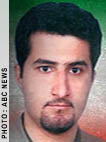
ABC News appears to confirm earlier rumors, which intelNews reported on last December, that a senior Iranian nuclear scientist has defected to the CIA. The Iranian government had initially accused American and Saudi intelligence agencies of kidnapping Shahram Amiri, a central figure in the Iranian nuclear research program, who disappeared last June during a hajj pilgrimage in Mecca, Saudi Arabia. However, as intelNews reported last year, French intelligence sources  claimed that Amiri’s defection was facilitated through a carefully planned intelligence operation involving the CIA, as well as French and German operatives. Moreover, the alleged defector was said to have secretly briefed International Atomic Energy Agency inspectors in Frankfurt, Germany, before they traveled to Iran to inspect a previously undeclared Iranian nuclear facility near the city of Qum. According to ABC News, which cites “people briefed on the operation by intelligence officials”, not only has Amiri defected to the CIA, but he has already been “extensively debriefed” since his defection. Read more of this post

Analysis: The limits of Israeli espionage

Ronen Bergman

Ronen Bergman

By JOSEPH FITSANAKIS| intelNews.org |
Israeli investigative journalist Ronen Bergman (The Secret War with Iran) has written an editorial in Yedioth Ahronoth, in which he argues that Israel’s espionage successes in recent years have failed to bring about significant changes on the strategic level. Bergman briefly recounts the significant post-9/11 reforms in Israeli intelligence, most notably the appointment of Meir Dagan as the director of the Mossad, Israel’s national intelligence agency. Dagan has “created a new Mossad”, argues Bergman, one that is more narrowly focused in its operations, and more collaborative with foreign intelligence agencies –notably American, Jordanian, Turkish and Indian. This shift in focus and tactics has undeniably helped Israel score some significant espionage victories, including the 2008 assassination of Hezbollah commander Imad Mughniyah in Beirut, Lebanon; the seizure of several ships carrying Iranian and Syrian weapons to Hezbollah; as well as the more recent assassination of Hamas military official Mahmoud al-Mabhouh in Dubai. Read more of this post

News you may have missed #309

  • Iran claims arrest of US cyberspies. Iranian security forces have arrested 30 people accused of waging cyberwar against the country, with the backing of the United States. The Iranian government accuses them of running a network of websites funded by US intelligence, which aims to “collect information about Iran’s nuclear program”.
  • Nazis planned to infiltrate Vatican with spies. Nazi Germany hatched a plan during World War II to infiltrate the Vatican with spies disguised as monks, according to secret MI5 intelligence reports. The codename for the plan was Operation GEORGIAN CONVENT.
  • US misled even us on detainees, says ex-MI5 chief. Eliza Manningham-Buller, the former head of the Britain’s foremost domestic spy agency, MI5, has said that United States intelligence agencies misled even MI5 about the mistreatment of suspected terrorists.

Bookmark and Share

News you may have missed #0253

  • Iran undecided on nukes, says US military spy chief. The US Pentagon’s top intelligence official, Lieutenant General Ronald Burgess, has said what intelNews has been pointing out again and again, namely that the key finding of the 2007 National Intelligence Estimate, that Iran has not yet committed itself to nuclear weapons production, is still valid.
  • Nobel winner demands Germany uncover Romanian ex-spies. Herta Mueller, the Romanian-born German winner of the 2009 Nobel Prize for Literature, has called on Germany to find and prosecute former agents of Romania’s Securitate secret police, large numbers of whom have resettled in Germany after communism ended in Romania 20 years ago.

Bookmark and Share