Opinion: Amidst war with Iran, Netanyahu tries to subjugate Israel Security Agency

David ZiniTHE GOVERNMENT OF ISRAEL recently appointed a new acting chief at the Israel Security Agency (ISA, also known as Shabak or Shin Bet). Identified only by their first initial, “S.”, this individual is one of the deputies of the outgoing ISA chief, Ronen Bar, and has reportedly served in the ISA for nearly 30 years. For the first time in ISA’s history, the organization is now being led by someone without a permanent appointment, marking a significant departure from usual practice.

This temporary appointment arises from Israeli Prime Minister Benjamin Netanyahu’s insistence on nominating Major General (ret.) David Zini for the position. However, Zini’s nomination has been met with legal challenges. The Supreme Court of Israel has ruled that Netanyahu cannot appoint the chief of the ISA, due to a conflict of interest. This is because the ISA is currently conducting a comprehensive investigation into the connections of Netanyahu’s close advisors with Qatar—a case popularly referred to as Qatargate.

Yet, even amidst Israel’s war with Iran, Netanyahu finds time to advocate for Zini’s appointment as ISA chief, arguing that the ongoing war creates an urgent need for a permanent ISA chief. The matter is once again pending a Supreme Court decision. Nevertheless, it seems that, given the unique circumstances that Israel is currently facing, Zini is likely to be appointed head of the ISA.

It is important to note that Zini lacks experience in intelligence operations. Following the failure of the ISA to provide a warning before the Hamas attack on October 7, 2023, the ISA chief has been expected to have extensive experience in intelligence operations, and to be well-versed in Arab affairs, which are central to ISA’s operations.

The issues surrounding the appointment of Major General Zini are complex. There is concern about the fact that Zini is being nominated personally by the prime minister, who is also requesting that the ISA head relinquish their autonomy and comply with the Prime Minister’s directives. Thus, the ISA could be used as a tool by the Netanyahu administration to advance the prime minister’s own political agenda.

What are the potential immediate risks if Zini is appointed to the role of ISA chief?

  1. Zini will likely respond to Netanyahu’s request and impose secret surveillance on political activists who have long opposed the prime minister. Netanyahu demanded that the former ISA head, Ronen Bar, take similar action. However, Bar refused, asserting that political protest in Israel was legitimate and that political motives, rather than state interests, drove the prime minister’s request.

Read more of this post

Israeli Supreme Court dismisses spy chief’s firing as illegal

Yitzhak AmitEARLIER THIS WEEK THE High Court of Israel delivered its ruling regarding the dismissal of the head of the Israel Security Agency (ISA, more widely known as the Shin Bet), Ronen Bar, who had already announced his intention to leave his position. The court ruled that the Bar’s dismissal by Prime Minister Benjamin Netanyahu violated the law and that Netanyahu had a conflict of interest due to the ISA’s ongoing investigation into the “Qatar-Gate” affair.

Supreme Court President Yitzhak Amit and Justice Dafna Barak-Erez were in the majority, with Supreme Court Vice President Noam Solberg in the minority. “The government’s decision [to fire Bar] is unprecedented in the history of the State of Israel,” they ruled. The legal advisor to the government, Israel’s Attorney General Gali Baharav-Miara, requested that the court issue a verdict of principle regarding the relationship between a prime minister and the ISA. Her request followed an earlier request by government for the court to dismiss the petitions against the dismissal, claiming that they were no longer relevant.

Justice Amit ruled that “Israel’s security agencies, including the ISA, are responsible for maintaining the security of Israel, the security of its citizens, and the institutions of the state and the democratic regime. Their activities, roles, and powers make the security agencies a central component of the country’s governmental and legal foundations. Having been entrusted with the holiest of holies of the state, all heads of the security agencies —including the head of the ISA— owe a duty of loyalty to the public.”

According to Amit, “[t]he loyalty of the heads of the security apparatus is not a party-political loyalty to a particular government or personal loyalty to one or another prime minister. It is loyalty to the entire Israeli public, which has entrusted them with what is most precious: its life and its security. This duty of loyalty does not contradict the duty of the Shin Bet head to fulfill and promote government policy, but rather expresses the core principle of the fundamental commitment of all state authorities to the rule of law.”

Justice Amit added that, although the petitions were dismissed, as the dissenting judge, Justice Solberg, emphasized, there is still a need to create a deterrent against the government so that such cases do not recur. “The matter may repeat itself, and it is necessary to deter similar and inappropriate behavior in the future, in the sense of preempting a disaster,” he stated. “A question of legality or interpretation of a general norm arises.” Read more of this post

Before resigning, Israeli security official accuses Netanyahu of serious misconduct

Israel Supreme CourtVETERAN ISRAELI INTELLIGENCE OFFICER Ronen Bar, who has led the Israeli Security Agency (ISA, more widely known as the Shin Bet) since 2021, has submitted an affidavit to Israel’s Supreme Court, accusing Prime Minister Benjamin Netanyahu of serious misconduct. Netanyahu fired Bar in March, but the Supreme Court later suspended Bar’s firing.
Now Bar has submitted an open affidavit alongside a confidential one, alleging serious misconduct by Netanyahu, accusing him of attempting to use the ISA’s investigative powers against protestors and activists. He links this accusation to a number of conspiracies that are circulating in Israel, blaming the ISA for the October 7 intelligence failure. The veteran security official concludes his open affidavit by stating that he “will soon announce the date on which I will end my duties”. Last week, Bar said he would resign in June.

The ISA director also repeats earlier claims regarding the reasons behind Netanyahu’s statement that he “distrusts” him. Among other things, Bar claims that Netanyahu “expressed himself to me more than once in a way that sought to substantiate his expectation that the ISA should act against citizens involved in legal protest activities and demonstrations against the government”. Thus, Bar was asked to provide details about the identities of Israeli citizens, mostly protesting activists, because, according to Netanyahu, they were “following security targets”.

Furthermore, Bar claims he was asked to use the investigatory powers of the ISA to “monitor protest financiers”. He adds he was told during a conversation on the topic that, in the event of a constitutional crisis, he, as the head of the ISA, was required to take his orders from prime minister, and not from the High Court of Justice —another name for the Israeli Supreme Court. Bar notes that the full details of the matter will be provided to the Supreme Court in his confidential affidavit.

In his open affidavit, Bar clarifies that he established several criteria to address the question of whether the ISA should exercise its investigative powers without violating the constitutional right to protest. The criteria were largely based on the legal definition of subversion, defined as illegal activity involving clandestine aspects and has the potential for violence. According to Bar, actions that fail to meet this criterion are not a matter the ISA; rather, if any monitoring is warranted, the police should intervene in the interests of public order. “In borderline cases we consulted with the government’s legal counsel to ensure that the ISA’s broad powers would only be exercised within its designated framework and functions”, states Bar. He adds that “[t]he prime minister’s requests to act contrary to these criteria were refused. In quite a few cases, [Netanyahu] asked to discuss issues related to these issues at the end of working meetings, and after asking the military secretary and the typist, who operates the recording device, to leave the room with the clear goal that the exchange of words would not be recorded”. Read more of this post

Israeli citizens arrested on suspicion of working for Iranian intelligence

Ronen Bar Israeli Security AgencyTHE ISRAELI SECURITY AGENCY (ISA) has announced the arrest of 18 Israeli citizens suspected of working for Iranian Intelligence. Among them are seven Israelis, who immigrated to Israel from Azerbaijan, and are suspected of having been in contact for two years with Iranian intelligence. Some of the seven were caught carrying out surveillance against a senior Israeli Air Force officer, whom they were reportedly planning to assassinate.

Israeli authorities accuse the suspects of photographing and collecting information on military bases and facilities, including Air Force bases, Iron Dome battery sites, a power plant, and other energy infrastructure facilities. The suspects are also accused of having received from their Iranian handlers a set of maps of Israeli strategic sites, including the Golani Brigade’s training base, where four Israeli soldiers were killed by a drone attack last week. In over two years, the suspects allegedly performed approximately 600 missions under the direction of two handlers from Iranian intelligence. They did so in return for hundreds of thousands of shekels, which were paid to them in cash and various crypto-currencies.

Another Israeli citizen, who was arrested on suspicion of spying for Iranian intelligence in return for payments, has been named as Vladimir Varehovsky, 35, from Tel Aviv. Among other tasks, Varehovsky is suspected of gathering information about an Israeli scientist, whom he agreed to murder in exchange for a $100,000 payment. The suspect had reportedly acquired weapons for the assigned task, but the ISA arrested him before he could carry it out.

In another counterintelligence operation, the ISA arrested seven young Palestinians from the east of Jerusalem, who have been charged with working for Iranian Intelligence. The main suspect recruited the other six to carry out tasks for a fee. Tasks included setting cars on fire, gathering information about a city mayor in Israel, and plotting to assassinate one of the country’s top scientists. The suspects used social media for recruitment purposes. They were reportedly arrested before they were able to execute their missions. Read more of this post

Interview reveals state of mind of Israeli intelligence prior to October 7 attack

Israeli General Staff MilitaryON MARCH 23, CHANNEL 12 of Israeli television aired a remarkable interview with Sassi Elya, the former director of technology at the Israel Security Agency (ISA). Better known by the acronyms Shin Bet or Shabak, the ISA is Israel’s domestic security service. The interview had initially been scheduled for broadcast as part of the evening news on October 7, 2023. However, its airing was canceled due to the attack on Israel by Hamas, which occurred that morning.
But on March 23, after about 5 months, Channel 12 aired the original interview with Elya. The retired official spoke with glee about the advanced technological capabilities developed by the ISA in order to prevent terrorist attacks against Israel. Elya said Israeli intelligence had built a unique system, known as “the Tool”, which allegedly provided intimate knowledge about the life of every Palestinian living in the West Bank and Gaza. This technologically advanced surveillance system allegedly monitored every move of its targets, all for the purpose of preventing potential terrorist attacks against the Jewish state. Elya claimed that, as a result of this advanced technological system, there was no chance that Israel would be surprised by Palestinian militants. This system was so advanced, he said, that intelligence agencies from all over the world were coming to Israel to learn about it.

Thanks to Channel 12, we can now examine Elya’s interview retrospectively, and especially in light of the ISA’s poor performance on October 7, as well as its failure to warn Israeli authorities about Hamas’ preparations for the attack. Notably, Elya was interviewed again for the same television program. Predictably, he admitted that his prior assessment had been wrong and regretted being so overly confident about the technology.

This case demonstrates the overestimation by Israeli intelligence of its own capabilities, because of arrogance and over-confidence. This approach refutes the basic premise of intelligence work: be skeptical and be modest. Furthermore, this case highlights that Israeli intelligence agencies overly relied on technology (SIGINT) in the lead-up to October 7, while seemingly neglecting the low-tech activity of gathering information through human intelligence (HUMINT).

The system that Elya described in his initial interview as the ultimate counterintelligence tool was reportedly criticized internally by some in the ISA for gathering huge amounts of information without offering sufficient analytical capability. This imbalance between collection and analysis can render an entire surveillance system practically useless. The bottom line is that, almost by accident, we are now aware of the state of mind that the ISA was in before the sudden attack by Hamas on October 7, which cost so many lives as a result of the ISA’s complacency.

► Author: Avner Barnea | Date: 01 April 2024 | Permalink

Dr. Avner Barnea is research fellow at the National Security Studies Center of the University of Haifa in Israel. He served as a senior officer in the Israel Security Agency (ISA). He is the author of We Never Expected That: A Comparative Study of Failures in National and Business Intelligence (Lexington Books, 2021).

Probing the intelligence failure behind the assassination of Israeli PM Yitzchak Rabin

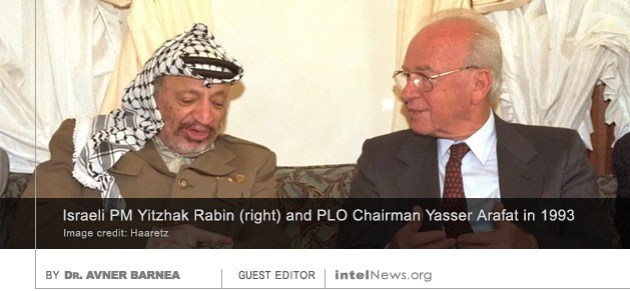
Rabin ArafatLAST WEEK, THE CHAIRMAN of the Israeli Religious Zionist Party, Bezalel Smotrich, who will soon be appointed as a cabinet minister, alleged that the Israel Security Agency (ISA) encouraged the killer of the late Israeli Prime Minister, Yitzhak Rabin. Smotrich’s allegation shocked many Israelis, because of the unfortunate timing —it was uttered close to the annual Remembrance Day for Prime Minister Rabin, who was assassinated by radical rightwing activist Yigal Amir 27 years ago. But also because of the unacceptable content, which echoes conspiracy theories that have accompanied Rabin’s assassination for many years. To counter these conspiracy theories, it is fitting to discuss the failure to defend Rabin that did occur under the responsibility of the ISA.
The failure that caused Rabin’s assassination was investigated by a National Inquiry Commission (known as the Shamgar Commission), which found the ISA responsible. In fact, it was deemed a double failure: the first by the personnel of the VIP Security Unit of the ISA, and the second by the intelligence personnel of the ISA, whose job it was to thwart in advance murderous intentions by extreme rightwing elements in Israel. The intelligence failure was not investigated in depth by the Shamgar Committee. It dealt mainly with the security failure and only partially with the intelligence failure. Its investigation focused on the activities of ISA agent Avishi Raviv (code name CHAMPAGNE) who was tasked by the ISA to infiltrate extreme rightwing groups. The Committee did not ask: could the ISA’s intelligence have prevented the murder?

It is also possible to ask: why was the mandate of the Shamgar Committee limited to investigating the area of security, and not intelligence? And why did its members refrain from extending their investigation to the issue of the intelligence failure? There are no answers to this question, even in the autobiographical book of the Committee’s chairman, the late Supreme Court Chief Justice Meir Shamgar.

A Key Piece of Intelligence

Smotrich referred to agent Raviv, who was indeed run in a deficient and unprofessional manner. Yet no malicious intentions can be attributed to the ISA. In any case, Raviv’s defense attorney convinced the court that Raviv did not know about the assassin’s intentions before the murder. The key piece of intelligence, which the ISA had received six months before Rabin’s murder, regarding Amir’s intentions, was handled extremely poorly: an asset of the IDF Central Command’s intelligence department told his commander that he had heard “a small, rotund and armed Yemeni” speaking at a bus stop about his intention to assassinate Rabin. The intelligence was immediately passed on to the head of the appropriate department in the ISA. Unfortunately, however, instead of the source being interrogated by trained ISA personnel, a police investigation was conducted that did not reveal any significant additional information. Read more of this post

Israel busts alleged Iranian spy ring made up of middle-aged women

Shin BetAUTHORITIES IN ISRAEL CLAIM they busted a ring of spies for Iran, which was composed solely of middle-aged Jewish women. The Israel Security Agency, known as Shin Bet, said on Thursday that it had arrested four Jewish women, all of them Iranian-born Israeli citizens. The four women were charged with espionage against the state of Israel. The Shin Bet described the case as “serious” and as part of a broader plan by Iran to build a sophisticated espionage network inside the Jewish state.
According to news reports, the women were recruited via the Facebook social networking platform by a user using the name Rambod Namdar. Namdar claimed to be a Jewish man living in Iran. After recruiting the women, Namdar operated as their handler, and provided them with regular payments in exchange for taking photographs of sensitive military sites and civilian government buildings. According to the Shin Bet, these included the buildings of the Ministry of Interior and the Ministry of Welfare and Social Affairs. The women were allegedly also asked to take photographs of the embassy of the United States, as well as commercial facilities, including shopping malls.

At least two of the women were asked to befriend Israeli politicians and government officials, according to the Shin Bet. The agency also claims that the women were asked to convince their sons to serve their mandatory military service by joining military intelligence units. In one case, according to the indictment, the son of one of the women did serve in an intelligence post in the Israeli military, which allowed his mother to pass a number of military documents to her Iranian handler.

Reports in the Israeli media and the BBC mention that Namdar communicated with the four women “for several years” using the encrypted messaging service WhatsApp. WhatsApp is owned by Meta, the same company that owns Facebook and Instagram.

Author: Joseph Fitsanakis | Date: 14 January 2022 | Permalink

Israel Security Agency uses Facebook to reach out to young Palestinians – report

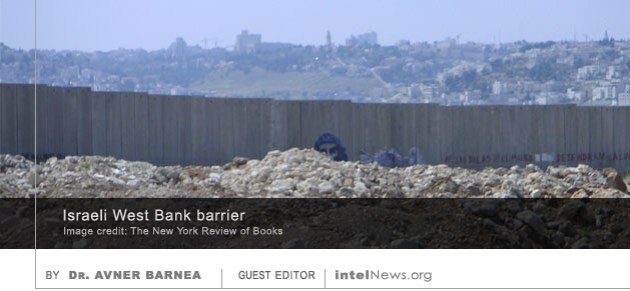
Israeli West Bank barrier

AN ARTICLE PUBLISHED LAST month in one of Israel’s leading newspapers, Haaretz, shed light on how the Israel Security Agency (ISA) is using Facebook to combat militant groups in the Palestinian occupied territories, namely the West Bank and the Gaza Strip. According to the article’s author, Amira Hess, the ISA operates about 35 Arabic-language profile pages on Facebook, which are accessible in the various Palestinian areas under Israeli occupation.

ISA case officers (agent handlers) with Arabic monikers are in charge of various regions. For example, the officer in charge of the Hebron area is known as “Captain Eid”, the officer in charge of the Al-Amari refugee camp is known as “Captain Zaker”, and so on. Every Facebook profile page has a telephone number for users to send messages using WhatsApp. In addition, a general Facebook page of the ISA was opened under the heading in Arabic, “Badna Naish” (“Want to Live” in Arabic).

The transition to using Facebook pages is in the spirit of the times, and reflects the fact that many younger Palestinians receive their daily news through social networks, and not through traditional media, such as radio or television. The purpose of the ISA’s open-referral method using Facebook is to talk to the Palestinian population directly, and especially to the younger generation, who is very active on social networks. This also allows social media users to pass on security information to thwart terrorist attacks without disclosing their identity. The Facebook pages also serve the ISA as a tool for recruiting Palestinians who are willing to help Israel.

Additionally, the ISA uses Facebook’s pages to warn Palestinians who plan terrorist acts before they go into action. Here are some examples of the use of Facebook’s pages: In March of this year, an ISA case officer using the moniker “Captain Eid” wrote on his Facebook page covering the Hebron area that he called several masked men who fired shots in the air while welcoming the released terrorist Mahmoud Hushia, and warned them that their identities were known. “In their deeds, they will be punished. Please stay away from unnecessary problems”, wrote Captain Eid. Read more of this post

Opinion: Israel Security Agency should tackle organized crime in the Arab sector

Israeli policeLAST MONTH I WROTE an article on Ynet, Israel’s most popular news website, calling on the Israel Security Agency (ISA) to prevent organized crime in the Arab sector in Israel, which has reached a level that the police cannot deal with. The article caused a broad public debate in Israel, as it marked the first time that the ISA was urged to take responsibility outside its security jurisdiction. It elicited public support, as well as opposition against perceived further invasion of privacy and granting additional powers to the ISA.

Crime in the Arab sector in Israel —especially murders— has reached record highs and is rising year after year. In 2020, over 100 people were killed in the Arab sector. There are many allegations that the police are failing to stop this murky wave of crime. The police are at a loss. The opening of more police stations in the Arab sector and increases in the forces allocated to the Arab sector have not made an impact on this gloomy picture.

The most serious crime in the Arab sector, especially organized crime, requires making out-of-the-box, inventive decisions. The Israel Police is not succeeding in this for several reasons: it has no quality intelligence; there is public distrust in the police that prevents citizens from cooperating with it; the police are perceived as an unreliable body that cannot maintain the confidentiality of sources; and mainly because the police is not an intelligence-oriented organization. The issue of crime in this sector, much of which is organized, requires advanced intelligence capabilities and only the ISA knows how to deal with organizations and individuals operating in secret. This is because the ISA has gained vast experience in covering the Arab sector in Israel for counterintelligence reasons. Read more of this post

Opinion: Mishandled analysis of 1982 Tyre attack had implications for US, France

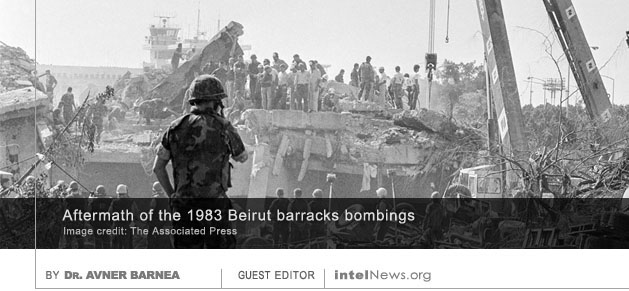
1983 Beirut barracks bombings

BETWEEN 1982 AND 1983, 450 defense personnel and civilians from Israel, the United States and France were killed in Lebanon as a result of four consecutive terrorist attacks conducted by Hezbollah. For years, questions have been raised whether these attacks could have been prevented.

In 2000, a senior Israel Security Agency (ISA) official wrote a report on the huge explosion in the Israeli compound in Tyre, Lebanon, in 1982. Based on the available intelligence, he reached a firm conclusion: it was a suicide bombing by a Shiite terrorist inside a booby-trapped vehicle, and not a gas balloon explosion, as was officially claimed. Requests to publish the new report with the recent conclusions were denied by ISA senior officials, for reasons that remain unknown. This prompted questions and strong doubts among counterterrorism experts and the Israeli the public, about whether the initial report from 1982 was actually a serious mistake of judgement, or even a cover-up.

Twenty years later, in November 2020, an investigative article was published in Israel by Ronen Bergman, which shed light on new details indicating a high probability that the attack in Tyre was a Hezbollah terrorist attack and not a result of an explosion of gas balloons. The article stated that in 1982 Israeli authorities, especially the ISA, were not ready to admit that their intelligence missed the attack and did not stop it in time. As a result, lessons were not learned regarding the immediate need to strengthen the security of foreign compounds in Lebanon against possible threats from Hezbollah. In 1983 Hezbollah used the same modus operandi of car bombs to attack US and French forces in Beirut and later the —then new— Israeli compound of Tyre.

Read more of this post