Analysis: Cyprus-Russia-Israel Arms Affair Points to Wider Questions
November 22, 2009 3 Comments
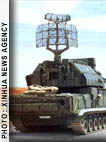
TOR-M1 radar
By JOSEPH FITSANAKIS | intelNews.org |
Diplomatic observers were surprised in November 2008, when the then Russian President Vladimir Putin failed to meet his Cypriot counterpart, Dimitris Christofias, during the latter’s official visit to Moscow. Considering the traditionally close bilateral ties between Russia and Cyprus, the excuse from President Putin’s office, that he was too busy attending his United Russia party’s national conference, appeared unconvincing. An article published recently in Greek-Cypriot newspaper O Politis, traced the cause of the Russian President’s apparent snub to a 2007 attempt by the Cypriot government to hand over parts of a Russian-made missile system to Israel. The paper said the Cypriot plan was hatched in response to a request by Israeli intelligence officials, who were interested in acquiring technical insights into the Russian-made TOR-M1 surface-to-air missile defense system. The Israelis were concerned about the TOR-M1 because Iran was also said to be using a variant of the same system, which features a radar apparatus unknown to Israel, the United States or NATO. On the website of the Research Institute for European and American Studies, I explain what this alleged breach of trust between traditional Greek ally Cyprus and Russia may mean for the wider geostrategic balances in the east Mediterranean. Read article →

















 intelNews.org
Comment: Did Russian Intelligence Hack Climate-Change Emails?
December 7, 2009 by intelNews 16 Comments
Tomsk, Siberia
By JOSEPH FITSANAKIS* | intelNews.org |
For over a fortnight, the world’s news services have focused on the so-called ‘Climategate’, the hundreds of University of East Anglia’s Climatic Research Unit emails that were hacked from the university’s server and leaked onto the Internet. The stolen emails, some of which date back to 1996, have reignited conspiracy theories about the role of human activity in climate change. But there is surprisingly little discussion about who hacked into the university’s server and stole the personal emails.
Read more of this post
Filed under Expert news and commentary on intelligence, espionage, spies and spying Tagged with 2009 United Nations Climate Change Conference, CIA Center on Climate Change, climate change, climategate, closed cities, computer hacking, Copenhagen (Denmark), cyberespionage, cybersecurity, Denmark, energy resources, FSB, Joseph Fitsanakis, Novosibirsk, Pyaty Pochtovy, Russia, Seversk, Siberia, Tomcity, Tomline, Tomsk, Tomsk Oblast, Tomsk State University, Tomsk-7, UK, United Nations, University of East Anglia (UK), University of East Anglia Climatic Reseach Unit (UK)