The mysterious case of Glenn Souther, US defector to the USSR

Glenn Michael SoutherBy JOSEPH FITSANAKIS | intelNews.org |
This past June marked 23 years from the death of Glenn Michael Souther, a United States Navy photographer who defected to the Soviet Union in 1986. Despite the passage of time, a thick veil of mystery remains over the life and works of Souther, an ideological defector to the USSR, who was one of the very few foreign agents and defectors given officer rank in the KGB, the Soviet Union’s foremost intelligence agency during most the Cold War. In 1975, following his graduation from high school, Souther joined the US Navy, and was stationed in Italy in the early 1980s. It was there where he married an Italian woman, and where –it is believed– he was recruited by the KGB’s Boris Solomatin, a legendary Soviet intelligence officer who is believed to have handled US spy John Anthony Walker. In 1982, Souther left the US Navy and enrolled at Old Dominion University, where he studied Russian literature, while at the same time working as a reservist in the US Navy. During that time, Souther worked for naval intelligence, specializing in processing satellite-reconnaissance photographs; he is also believed to have had access to classified intercepts circulating within the US Navy’s communications network. In May 1986, soon after the Federal Bureau of Investigation started to suspect Souther may be working for a foreign intelligence agency, he suddenly disappeared. Two years later, an article in the morning edition of Soviet newspaper Izvestia, official publishing organ of the Soviet Presidium, announced that Souther had been granted political asylum in the USSR. Later that evening, Souther appeared on Soviet Central Television, criticizing American foreign policy and explaining his decision to defect to the Soviet Union. However, on June 22, 1989, an article in Krasnaya Zvezda, official newspaper of the Soviet Ministry of Defense, announced that Souther had killed himself in the garage of his home. Read more of this post

News you may have missed #751

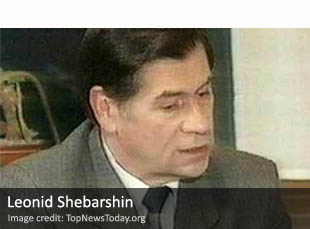
Leonid ShebarshinBy IAN ALLEN | intelNews.org |
►►Ex-CIA officer remembers his KGB rival. In April, Leonid Shebarshin, a retired General of the KGB, who was often referred to as “the last Soviet spy”, was found dead in his downtown Moscow apartment. Apparently, he had committed suicide. Now Milt Bearden, who was the CIA’s Chief of the Soviet/East European Division during the final years of the USSR, has written a piece in which he remembers Shebarshin. He says that, even though Shebarshin was “the closest thing [he] had to a main adversary” in the USSR, the two became friends in the late 1990s, despite the fact that Shebarshin remained a true believer in the USSR until the very end of his life.
►►NSA won’t reveal how many Americans it spied on. Last month, US Senators Ron Wyden and Mark Udall –both members of the US Senate’s Select Committee on Intelligence– asked the NSA how many persons inside the US it had spied upon since 2008. But Charles McCullough, the Inspector General of the Office of the Director of National Intelligence, has told the two Senators that giving such a figure of how many Americans were spied on was “beyond the capacity” of NSA’s oversight mechanisms, and that –ironically– looking into this matter would violate the privacy of American citizens.
►►Russian scientist who ‘spied for China’ freed. Igor Reshetin, the former director of Russian rocket technology firm TsNIIMASH-Export, who was jailed in 2007 for selling state secrets to China, has been released on parole. Reshetin had been initially sentenced to nearly 12 years, for illegally selling state-controlled technology secrets to a Chinese firm, and with stealing 30 million rubles (US$925,000) through a scheme involving bogus companies. His initial sentence was later reduced on appeal.
Ex-CIA officer sheds light on 1977 spy arrests in Moscow

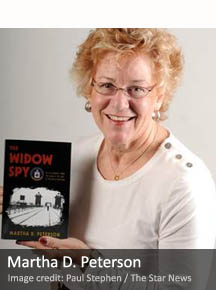
Martha D. PetersonBy JOSEPH FITSANAKIS | intelNews.org |
A recently retired CIA officer has spoken publicly for the first time about the 1977 arrest and eventual suicide of a Soviet double agent considered one of the Central Intelligence Agency’s most important assets during the Cold War. Aleksandr Dmitryevich Ogorodnik was an official in the Soviet diplomatic service who, while stationed at the Soviet embassy in Bogotá, Colombia, was compromised and later blackmailed by Colombian intelligence into spying on Moscow. Ogorodnik was initially handled by the Colombians, with little success. Later, however, when he was moved to a sensitive post in the Soviet Ministry of Foreign Affairs in Moscow, the Colombians turned him over to the CIA. He was handled by CIA officer Aldrich Ames —himself a double spy for the Soviet KGB— who gave Ogorodnik the codename TRIGON. After establishing contact with him in Moscow, the CIA provided Ogorodnik with a miniature camera and other essentials, which he used regularly to take photographs of classified Soviet documents. As a go-between, the Agency selected Martha D. Peterson, the first female CIA case officer ever to be posted in Moscow. Peterson was a fresh CIA recruit, who had completed her Career Training program in 1974, less than a year before being sent to the Soviet capital. Having retired in 2003, after 31 years with the CIA, Peterson has now published a memoire entitled The Widow Spy. In it, she reveals that she coordinated regular dead-drops with Ogorodnik for nearly two years, picking up his used film while supplying him with fresh film and other espionage accessories. On July 15, 1977, however, her mission was abruptly terminated after she was arrested by a large team of KGB officers underneath a railway bridge in Moscow, a few minutes after conducting a dead-drop for Ogorodnik. She was taken to the KGB’s Lubyanka prison, where she says she was interrogated for three days before being released by way of her diplomatic immunity, and ordered to leave the USSR. Ogorodnik was not so fortunate. A few months prior to his arrest, he had requested that the CIA provide him with a poison pill, which he could take in case he was arrested by the KGB. Read more of this post

News you may have missed #711 (ex-spy edition)

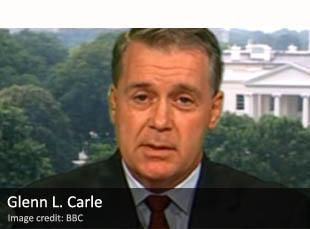
Glenn L. CarleBy IAN ALLEN | intelNews.org |
►►Egypt ex-spy chief to run for President. Omar Suleiman, 74, announced his candidacy on Friday and collected around 72,000 signatures of eligible voters in one day, more than twice the 30,000 required. Hosni Mubarak’s former intelligence chief insisted that his bid for the presidency does not have the support of Egypt’s military rulers and accused Islamists of sending him death threats. Mr Suleiman, made vice-president by Mubarak in the last days of his three-decade rule, symbolizes that era’s tough security regime and poses a threat to Islamists, who were routinely harassed and arrested during Mubarak’s era, and to liberals, who spearheaded Mubarak’s ouster. But his candidacy might appeal to some Egyptians hoping for an end to political instability.
►►Ex-CIA officer says evidence in alleged case was flawed. Information from the US Central Intelligence Agency used by Canada to link accused Ottawa terrorist Mohamed Harkat to al-Qaeda was untrue, according to Glenn Carle, a retired CIA case officer who interrogated Harkat at secret CIA black site prisons in 2002. Speaking to promote his blistering memoir about the case, The Interrogator: An Education, Carle said that Harkat, who was thought to be Osama bin Laden’s main financial administrator, “wasn’t the senior member of al-Qaeda that we had assessed. He wasn’t even a member of al-Qaeda”. Yet as recently as 2010, Canadian Security Intelligence Service evidence and testimony before the Federal Court of Canada continued to point to Harkat’s relationship with Haji Pacha Wazir as evidence of Harkat’s ties to the bin Laden terror network.
►►Ex-KGB agent wins South Ossetia vote. Former senior KGB agent Leonid Tibilov has won a tense run-off to lead Georgia’s rebel pro-Russian region of South Ossetia, after two earlier polls ended in turmoil. Tibilov won 54.12 percent of the vote with all ballots counted against human rights commissioner David Sanakoyev’s 42.65 percent. The peaceful end to the election contrasts sharply with the angry protests that followed a November 27 ballot in which Alla Dzhioyeva, a female candidate who opposed the local administration was disqualified after coming out ahead in the poll. Dzhioyeva was then hospitalized in February after being interrogated and allegedly beaten by police following allegations that she planned to seize power.

Senior Soviet KGB ex-official found dead in Moscow apartment

Leonid ShebarshinBy JOSEPH FITSANAKIS | intelNews.org |
Leonid Shebarshin, a retired General of the KGB, who was often referred to as “the last Soviet spy” was found dead in his downtown Moscow apartment over the weekend. Police said a pistol and an apparent suicide note were found next to his body. In a separate statement on Saturday, law enforcement investigators said Shebarshin had shot himself. Born in 1935, Shebarshin was posted as an interpreter at the Soviet embassy in Islamabad, Pakistan, shortly after graduating from the Moscow Institute of International Relations. He eventually became personal assistant to the Soviet Ambassador to Pakistan, who recommended him to the KGB. Shebarshin returned to Moscow in 1962 to attend the KGB’s training school, before being sent back to Pakistan in 1964, this time as an intelligence officer. In 1975, he moved to India, where he became rezident (station chief) of the KGB’s field station in New Delhi. Two years later he was transferred to the KGB’s field station in Tehran, Iran, which he headed through the 1979 Islamic Revolution. In 1982, however, his meteoric rise within the ranks of the KGB was temporarily halted by the defection of Soviet Vladimir Kuzichkin, a Major in the KGB, who escaped to Turkey with the help of the British Secret Intelligence Service —also known as MI6. The British brought Kuzichkin in contact with the CIA, which in turn passed along the defector’s debriefing notes to the government of Iran. This information led to the summary expulsion from Tehran of nearly 20 Soviet KGB field officers, including Shebarshin himself. After a brief period in Moscow, Shebarshin returned to the field, this time to Soviet-occupied Afghanistan, where he traveled at least 20 times. He was in Russia on August 19, 1991, during the so-called ‘August coup’, when a group of hardline communist officials took power in Moscow and temporarily arrested Soviet Premier Mikhail Gorbachev. But, even though he headed the KGB’s First Chief Directorate (now renamed to Foreign Intelligence Service), Shebarshin persisted in remaining neutral during the coup, and spent all of August 19 playing tennis at his summer residence. Read more of this post

News you may have missed #684

Boris KarpichkovBy IAN ALLEN | intelNews.org |

►►Pakistan sacks health workers who helped CIA locate bin Laden. Seventeen local health workers have been fired in Abbottabad for their part in a CIA scheme to try to confirm the presence of Osama bin Laden in the northern Pakistani town. The low-ranking health department employees were punished for helping Dr Shakil Afridi, who was assigned by the CIA to set up a fake vaccination scheme in Abbottabad, ahead of the US military operation that found and killed the al-Qaida leader there.
►►Estonia arrests couple for spying for Russia. Estonian prosecutors said Aleksei Dressen, who works for Estonia’s security police, and his wife, Viktoria Dressen, were arrested at Tallinn airport as she was boarding a flight to Moscow on February 22. Aleksei Dressen allegedly went to the airport to give his wife a folder that contained classified information. Meanwhile, in neighboring Lithuania, the government has released the names of 238 citizens who were reservists for the KGB during the Cold War.
►►KGB defector talks to British newspaper. Since fleeing to Britain in the late 1990s Boris Karpichkov has preferred to keep a low profile —unlike another, better-known Moscow agent who fled to London, one Alexander Litvinenko. He says he ran audacious disinformation operations against the CIA and broke into and planted bugs in the British embassy in Riga. But in 1995 he grew unhappy with the increasingly corrupt FSB (the KGB’s successor), which, he says, failed to pay him. He spent several months in a Moscow prison before slipping into Britain on one of the false passports he was given as a KGB officer. He hasn’t been back to Russia since.

Ex-KGB spy Litvinenko was working for MI6 when he died

Alexander LitvinenkoBy JOSEPH FITSANAKIS | intelNews.org |
Confidential documents leaked to the British press show that a leading medical examiner wants to reinspect the 2006 death of a former Soviet intelligence officer, in light of new revelations. Alexander Litvinenko was an employee of the Soviet KGB and its successor organization, the FSB, who in 2000 defected with his family to the United Kingdom. He soon became known as an increasingly vocal critic of the administration of Russian President Vladimir Putin. In 2006, Litvinenko came down with radioactive poisoning soon after meeting a former colleague, Andrey Lugovoy, in a London restaurant. The latter is believed by British authorities to have assassinated Litvinenko “with the backing of the Russian state”. Although much of the case remains shrouded in mystery, an important new clue was added to the equation in October, when Litvinenko’s widow publicly admitted that her husband had been a paid employee of British intelligence services MI5 and MI6. Marina Litvinenko told British tabloid newspaper The Mail on Sunday that Alexander had advised both agencies on “combat[ing] Russian organized crime in Europe”. She had previously denied rumors that her husband had been working for British intelligence when he was killed —ostensibly by the Russian government. The revelation appears to have prompted a British coroner to request that the medical investigation into Litvinenko’s death be reopened. Documents leaked to The Mail on Sunday appear to show that Andrew Reid, a coroner at St Pankras Hospital in London, has formally requested that both MI5 and MI6 release all of their internal files on Litvinenko, in the context of a new investigation. Read more of this post

News you may have missed #656: Outed spies edition

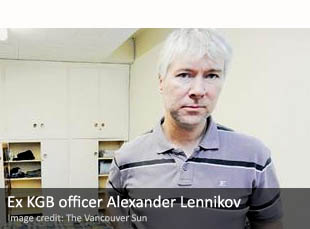
Alexander LennikovBy IAN ALLEN | intelNews.org |

►►Iran seeks death penalty for alleged CIA spy. Iran is seeking the death penalty for an American man accused of working for the U.S. Central Intelligence Agency, officials said. At his trial Tuesday, Amir Mizraei Hekmati said the CIA sent him to Iran to infiltrate Iran’s intelligence systems, Iran’s Fars News Agency reported. Sources in America deny Hekmati’s intelligence connections and say the confession was coerced. Washington has also accused Iran of denying Hekmati access to Swiss consular officials.
►►North Korean alleged spy ‘kills self’ in South. A man who claimed to be a North Korean defector has reportedly committed suicide after allegedly confessing that he was sent to spy on the South. During questioning, the unnamed man, who was in his 30s, said he had received orders from Pyongyang to report on a South Korean organization that helps defectors from the North.
►►Ex-KGB spy spends third Christmas in Vancouver church. Ex-KGB spy Alexander Lennikov (pictured) has been living in Canada with his wife and teenage son since 1992. But in 2009, the Canadian government ordered him to leave the country, under a law which dictates that any former member of a spy agency that spies on democratic governments is inadmissible to Canada. Since then, he has taken sanctuary at the First Lutheran Church in Vancouver, and has not left the building. For previous intelNews coverage of this story see here.

New book on British double spy Kim Philby published in Russia

Kim Philby

Kim Philby

By JOSEPH FITSANAKIS | intelNews.org |
An important new biography of H.A.R. “Kim” Philby, the British MI6 officer who defected to Russia during the Cold War, has been published in Moscow. It is based on candid interviews with his surviving fourth wife, Rufina Pukhova-Philby, as well as on an array of declassified documents from Russian state archives. The book, titled just Kim Philby, is authored by Nikolai Dolgopolov, editor of Moscow-based daily Rossiiskaya Gazeta, which acts as the official organ of the Russian state. Aside from Pukhova-Philby, the book, whose publication is set to coincide with the 100th anniversary of Kim Philby’s birth, on January 1, enjoyes the official blessing of Russia’s Foreign Intelligence Service (SVR), the successor organization to the KGB’s external intelligence directorate. The SVR allowed Dolgopolov access to previously secret documents on Philby, including a newly declassified Russian translation of the British double spy’s personal account of the events that led to his 1963 defection, as well as a description of his escape to Russia through Lebanon. Dolgopolov’s books describes Philby as “one of the greatest Soviet spies”, thus siding with the mainstream view in intelligence research literature, which recognizes Philby as one of the most successful double spies in history. While working as a senior member of British intelligence, Philby spied on behalf of the Soviet NKVD and its successor, the KGB, from the early 1930s until his 1963 defection. Two years later, he was awarded the Order of the Red Banner. The Soviet authorities buried him with honors when he died in 1988. Read more of this post

News you may have missed #637

Dmitri Bystrolyotov

D.A. Bystrolyotov

►►South African spy boss to quit. Director General of the State Security Agency Jeff Maqetuka, who has been entangled in a never-ending war with Minister Siyabonga Cwele, is expected to step down this week, according to South Africa’s Sunday Independent. The paper claims that that plans are afoot to expedite Maqetuka’s departure from the country’s intelligence infrastructure by placing him on summer leave and then making sure he would not return to work in 2012.
►►Slovakian defense minister resigns over wiretap scandal. The interception of journalists’ telephone calls by the Slovakian Defense Ministry’s counterintelligence arm has cost the country’s Defense Minister, Lubomír Galko, his job. The scandal involved Slovakia’s Military Defense Intelligence (VOS). It has also emerged that the VOS operation involved wiretapping of the head of TV news channel TA3 and two senior Defense Ministry employees, according to leaked documents obtained by Slovak media outlets.
►►Book on Soviet spy Dmitri Bystrolyotov. Excerpt from Emil Draitser’s book Stalin’s Romeo Spy: The Remarkable Rise and Fall of the KGB Most Daring Operative (Northwestern University Press, 2010), about one of the 20th century’s most outstanding undercover operatives. Bystrolyotov acted in Western Europe in the interwar period, recruiting and running several important agents in Great Britain, France, Germany, and Italy.

Vladimir Putin ‘targeted by German spy agency’ during his KGB days

Vladimir Putin

Vladimir Putin

By JOSEPH FITSANAKIS | intelNews.org |
A German researcher claims that Russian Prime Minister Vladimir Putin was targeted by West German intelligence in the 1980s when he was a KGB operative in East Germany. In the Cold War’s closing stages, Putin and his wife, Ludmila Putina, who were then in their thirties, spent five years in Dresden, German Democratic Republic. As one of four KGB officers in Dresden, Putin was tasked with infiltrating the local university and monitoring the on-campus activities of the children of Soviet and East German notables. But according to new research published last week, an undercover agent of the BND, West Germany’s external intelligence agency, was able to infiltrate the Putin household in Dresden, and pass private information about the couple’s personal life to her spymasters in Bonn and in NATO. The agent, codenamed LENCHEN, a native German, worked as a translator at the KGB station in Dresden. She reportedly befriended Ludmila Putina, eventually becoming her “shoulder to cry on”, according to Erich Schmidt-Eenboom, director of the Weilheim-based Institute for Peace Studies, who has published several books on the history of the BND. Schmidt-Eenboom claims that LENCHEN became Ludmila Putina’s closest confidante in Dresden. The latter told her that Vladimir Putin had been involved in numerous infidelities over the years and that he often beat his wife. LENCHEN reported to her handlers that life in the Putin household was highly dysfunctional, despite an outward appearance of happiness and normality. Schmidt-Eenboom claims he confirmed the report with at least two unconnected sources with knowledge of BND operations during the Cold War. If the story is historically accurate, it will signify only the second known penetration of KGB structures in Europe by the BND. The only other such example, says Schmidt-Eenboom, involved an agent named COLONEL VIKTOR, who also worked as an agent for the BND in the 1980s. Read more of this post

Alleged Russian spies in Germany used low-tech methods to evade detection

Anna Chapman

Anna Chapman

By JOSEPH FITSANAKIS | intelNews.org |
A couple arrested in Germany last week on suspicion of working for Russian intelligence, was using low-tech radio communications to receive orders from Moscow, according to media reports. The two arrestees have been identified as Andreas and Heidrun Anschlag; German prosecutors accuse them of spying for SVR, the successor to the KGB’s First Chief Directorate (PGU), responsible for foreign operations and intelligence collection abroad. They are said to have worked as non-official-cover operatives for the KGB and SVR since at least 1990, when they entered Germany from Mexico, using forged Austrian travel documents. Authorities in Germany say that Heidrun Anschlag, 51, was caught by German police in the act of listening to encrypted radio messages from Moscow. German investigators are reportedly puzzled by the fact that, in the Internet age, when most intelligence operatives employ digital secure communications, the Anschlags insisted on using a low-tech method that mostly died with the end of the Cold War. But intelNews readers will remember the case of former United States State Department analysts Walter and Gwendolyn Myers, who were arrested in 2009 for spying on the US for Cuba for over 30 years. Shortly after the Myers’ arrest, we wrote that the couple appeared to have avoided capture for decades, precisely because their communications with the government of Cuba were too low-tech to be detected by sophisticated US monitors. The latter tend to focus on scanning for encrypted satellite or microwave communications which —among other hi-tech means— are now the communication method of choice for modern clandestine spy networks. But some intelligence agencies, including —apparently— the SVR, appear to insist on using old-school oral cipher signals, based on straightforward number-to-letter codes, which they broadcast to their agents over predetermined shortwave frequencies at specified times. Read more of this post

News you may have missed #615

Clair E. George

Clair E. George

►►Ex-KGB spy Litvinenko’s widow seeks donations. The widow of Alexander Litvinenko has appealed for donations to help expose her husband’s murderers. Marina Litvinenko said she has to know the truth about the Russian ex-KGB spy’s death in London on November 23, 2006. He died of radioactive Polonium 210 poisoning in London’s University College Hospital. He had fallen ill shortly after drinking tea during a meeting with former KGB contacts at a West End hotel.
►►Memorial ceremony for controversial CIA figure. Clair George, who died in August from cardiac arrest at 81, has a rare status in CIA lore. He was the first high-ranking agency official to be found guilty of felony charges while carrying out official duties. Despite the public outrage about CIA actions during the Iran-Contra affair, George remained a popular figure among agency alumni because they believe his loyalty never faltered.
►►Taiwan intelligence agency accused of wasting money. Taiwan’s military-intelligence body has come under fire after one of its agents returned as a Le Cordon Bleu-certified chef following a so-called undercover mission in France. The agent, whose U$42,000 tuition for the cooking classes in France was sponsored by the military, has now lent his Le Cordon Bleu certificate to someone else for a fee, according to reports.

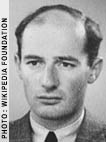
Spy archivist discusses fate of Swedish diplomat abducted by KGB

Raoul Wallenberg

Raoul Wallenberg

By JOSEPH FITSANAKIS | intelNews.org |
The fate of Swedish diplomat Raoul Wallenberg, who was abducted by Soviet intelligence officers in the closing stages of World War II, is one of the unsolved mysteries of 20th century espionage. The 33-year-old Wallenberg was a shrewd businessman who, in the summer of 1944, was posted as Sweden’s ambassador in Budapest, Hungary. During his time in Budapest, he was able to save over 20,000 Hungarian Jews from the Nazi concentration camps, by supplying them with Swedish travel documentation, or smuggling them out of the country through a network of safe houses. He is also reported to have managed to dissuade German military commanders from launching an all-out attack on Budapest’s Jewish ghetto. But Wallenberg was also an American intelligence asset, having been recruited by a US spy operating out of the War Refugee Board, an American government outfit with offices throughout Eastern Europe. In January of 1945, as Soviet forces descended on Axis ally Hungary, Moscow gave orders for Wallenberg’s arrest on charges of spying for Washington. The Swedish diplomat disappeared, never to be seen in public again. Some historians speculate that Joseph Stalin initially intended to exchange Wallenberg for a number of Soviet diplomats and intelligence officers who had defected to Sweden. But according to official Soviet government reports, Wallenberg died of a heart attack on July 17, 1947, while being interrogated at the Lubyanka, a KGB-affiliated prison complex in downtown Moscow. Despite the claims of the official Soviet record, historians have cited periodic reports that Wallenberg may have managed to survive in the Soviet concentration camp system until as late as the 1980s. Earlier this week, Lt. Gen. Vasily Khristoforov, Chief Archivist for the Russian Federal Security Service (FSB), one of two successor agencies to the old Soviet KGB, gave an interview about Wallenberg to the Associated Press. Read more of this post

News you may have missed #591

David Irvine

David Irvine

►►UK Prime Minister criticizes Russia over murdered spy. British Prime Minister David Cameron criticized Russia on Monday over its refusal to hand over Andrei Lugovoy, a former KGB agent suspected in the 2006 poisoning death of former Russian spy Alexander Litvinenko in London. He also rejected a call from Russia for the restoration of links between the two countries’ intelligence agencies. But the two sides did “set aside their political differences […] to sign multi-million dollar business deals”. Oh, well.
►►Aussie spy agency investigating more terror threats than ever. The Australian Security Intelligence Organization has trebled in size over the past decade and now has unprecedented powers. In a rare interview, ASIO Director General David Irvine says he is worried about the potential of an attack similar to the recent shootings and bombings in Norway.
►►‘Cuban Five’ spy member seeks return home after prison. Rene Gonzalez, a former Cuban intelligence officer convicted of spying in the US, wants a federal judge to permit his return to Cuba after his release from prison next month. But US government prosecutors say Gonzalez never showed remorse for his crimes and that there’s no justification for him to go to Cuba.