French government acknowledges it has special forces, spies, in Libya
July 21, 2016 Leave a comment
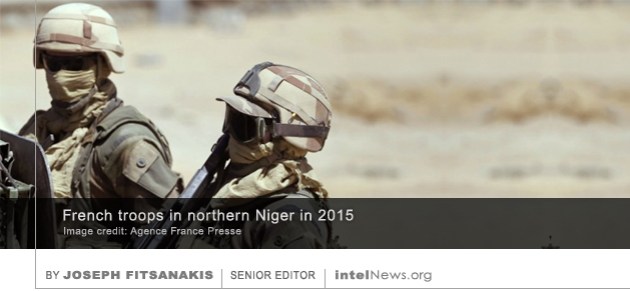 The death of three French Special Forces soldiers in Libya has prompted the first public acknowledgement by France that its troops are involved in “dangerous intelligence operations” in the North African country. The acknowledgement was made on Wednesday in an official statement issued by Jean-Yves Le Drian, France’s Minister of Defense. In the statement, Le Drian said he “regretted the loss of three French officers who expired while on mission in Libya”. The acknowledgement came less than 24 hours after the Associated Press news agency claimed that a helicopter carrying French troops had been shot down in Libya. The report quoted unnamed Libyan officials as saying that the helicopter had been shot down by an Islamist militia in the outskirts of the city of Benghazi, in eastern Libya.
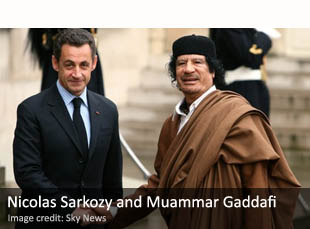
Paris has previously acknowledged the presence of French warplanes in Libya, which it says are only involved in reconnaissance operations. It is also known that France has set up a forward operating base in Niger, close to the southern Libyan border. But the French government has never before acknowledged the presence of French troops or intelligence operatives on Libyan soil. During the uprising that deposed longtime Libyan dictator Muammar Gaddafi, there were persistent rumors of daring operations by French commandos and intelligence operatives, which were never confirmed. In February of this year, French newspaper Le Monde claimed that French troops and spies were active in Libya. In a leading article titled “France’s Secret War in Libya”, the French daily said that President François Hollande had secretly authorized operations by elite special forces and officers of the DGSE, France’s General Directorate for External Security. But France’s Defense Ministry refused to comment on Le Monde’s allegations, while Laurent Fabius, who was then France’s Minister of Foreign Affairs, denied the newspaper’s claims, saying that France did not have the means to intervene militarily in Libya.
Speaking shortly after Wednesday’s disclosure by the Defense Ministry, President Hollande said the three special forces soldiers had died while “carrying out perilous intelligence operations” in Libya. In a subsequent interview on the Paris-based France Info Radio, French government spokesman Stephane Le Foll admitted that French operatives are indeed active in Libya. Asked whether the Defense Ministry’s statement offered such an acknowledgement, Le Foll responded: “French special forces are [in Libya], naturally, to offer assistance and to ensure that France has a presence wherever the struggle against international terrorism is taking place”.
► Author: Joseph Fitsanakis | Date: 21 July 2016 | Permalink
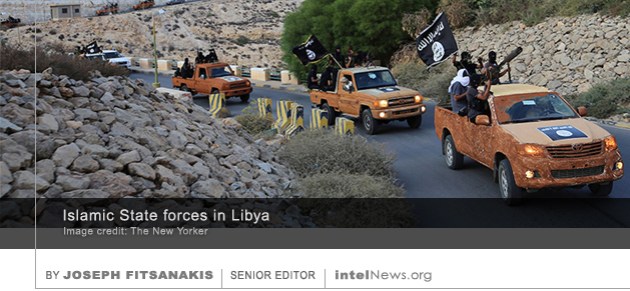 Senior members of the Islamic State are moving from Syria and Iraq to Libya, according to a Libyan intelligence official who spoke to the BBC. Since 2014 and the outbreak of the Second Libyan Civil War, the North African country has been engulfed in a multipolar struggle for dominance between rival armed groups and alliances. Among them is Libya Dawn, a loose coalition of former al-Qaeda-linked militants, ethnic Berbers, members of the pro-Egypt Muslim Brotherhood, as well as the al-Shorooq Force, an Islamist militia from Libya’s northwestern coastal city of Misrata. Libya Dawn troops have been engaged in ground-combat against Islamic State forces, which currently control Libya’s north-central coastal region.
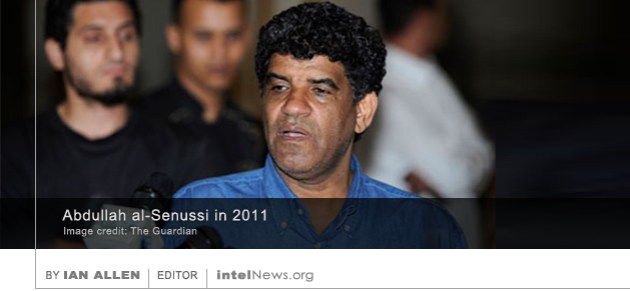 A group of American, British and Irish citizens are pressuring their respective governments to prevent the impending execution of Libya’s former intelligence strongman. Abdullah al-Senussi, 65, led Libya’s intelligence services during the regime of the country’s late dictator Muammar al-Gaddafi. Last week, however, he was sentenced to death by a court in Tripoli for his role in “inciting genocide” during the 2011 civil war that toppled Gaddafi’s regime. American, British and Irish officials are being urged to intervene to stop Senussi’s execution, so that he can help shed light on Libya’s role in international terrorist plots in the 1980s and 1990s.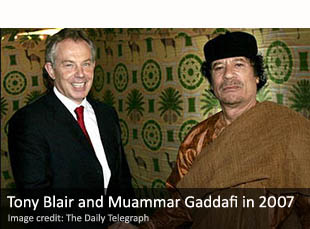







 intelNews.org
Monitoring continues as Libya’s chemical weapons are shipped to Germany
September 1, 2016 by intelNews Leave a comment
Islamic State forces acquiring CBRN from Africa or producing it while in the region has been a continuous concern. Islamic State and other militant organizations are expanding throughout Africa’s 11.67 million mi². These groups can be very innovative and resourceful. As the Egyptian delegation highlighted in a UN Security Council debate on the proliferation of weapons of mass destruction last week, the Islamic State and other groups have already caused destruction in Iraq, and possibly also in Syria by using chemical weapons. The Egyptians and other African countries see a real possibility of these weapons spreading further in Libya and from there to the Horn of Africa or elsewhere on the continent. The final departure of Gaddafi’s stockpile is welcome news, but Islamist militants know how to acquire such weapons, are trying to produce them and know how to cross borders.
African intelligence and law enforcement agencies are alert to these and other new threats. Intelligence reports have indicated groups such as al-Qaeda in the Maghreb (AQIM) have made multiple attempts to manufacture poison, gas, biological and radioactive agents. Training camps, particularly in the Sahel area, specialized in biological and chemical weapons are known to exist. Many African nations have put their national interests aside to counter cross border Islamist or criminal threats. In late September 2010, Algeria set up a regional intelligence center in Algiers, bringing together the countries of the region to fight against militant groups, including CBRN trafficking. Similar centers around the continent exist like Kenya’s common intelligence centre in Nairobi used for joint training on investigation skills and on ways to protect borders. The center also is used to monitor and address threats posed by militant groups in Kenya, Uganda, Rwanda and South Sudan. A more recent regional intelligence center, similar to Kenya’s, was established in Kampla, Uganda, which is supported by the African Union and seeks to prevent possible attacks by militant groups.
Another concern the Centers and domestic African intelligence agencies are investigating is the recruitment of African youth by Islamist groups. “[The Islamic State] has attracted about 5,000 Africans to join them in Iraq and Syria. Some of them are from the East Africa Community and IGAD regions”, proclaimed the African Union Commissioner for Peace Security Smail Chergui in July 2015.
► Author: Scott Firsing is an adjunct professor at the University of North Carolina Wilmington
Filed under Expert news and commentary on intelligence, espionage, spies and spying Tagged with Africa, chemical weapons, Islamic State, Libya, Scott Firsing