CIA Helped Gaddafi Torture Libyan Dissidents, Documents Show

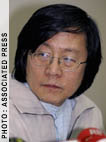
Abdel Hakim Belhaj

Abdel Belhaj

By JOSEPH FITSANAKIS | intelNews.org |
Back in February, when Libyan leader Muammar al-Gaddafi blamed the popular revolt against him on al-Qaeda, he was ridiculed in the international media. But documents discovered at an abandoned Libyan government office complex show that the Libyan rebels’ supreme military commander was abducted in 2004 by the CIA, which suspected him of links to al-Qaeda. Abdel Hakim Belhaj, also known as Abdullah al-Sadiq, was snatched by a CIA team in Malaysia, and secretly transported to Thailand, where he says he was “directly tortured by CIA agents”. The CIA then renditioned him to Libya, where he says he was tortured routinely until his release from prison, in 2010. In the 1980s, Belhaj was a member of the foreign Mujahedeen summoned by Osama bin Laden’s al-Qaeda to fight the Russians in Afghanistan. Upon returning to Libya in the early 1990s, he led the Libyan Islamic Fighting Group, an al-Qaeda-inspired armed organization that unsuccessfully sought to assassinate Colonel Gaddafi. Ironically, Belhaj is now the Tripoli-based military commander of the Libyan National Transitional Council, and says that he wants a full apology from the United States and Britain “for the way he was transported to prison in Libya in 2004”. But the former Mujahedeen is one of several terrorism suspects delivered to Libya by Western intelligence agencies in the years after 9/11, according to Libyan government documents discovered by Human Rights Watch (HRW) workers at the office of Libyan former intelligence chief and foreign minister Moussa Koussa. The documents show that Libya’s External Security Organization maintained extremely close relations with German, Canadian, British, and American intelligence services. Read more of this post

News you may have missed #583

Chiou I-jen

Chiou I-jen

►►Ex-Akamai worker pleads guilty to spy charge. Elliot Doxer, an American employee of Massachusetts-based Akamai Technologies, is charged with providing inside company information to an FBI agent posing as an Israeli spy. Ironically, Israel may have helped the Bureau nab Doxer.
►►Taiwan ex-spy cleared of corruption charge. Chiou I-jen, Taiwan’s ex-spy chief and right-hand man of jailed former president Chen Shui-bian, was cleared Tuesday of embezzling diplomatic funds during Chen’s term in office. The former head of the National Security Bureau, was acquitted of pocketing $500,000 –earmarked for expanding Taiwan’s participation in international affairs– in 2005, due to a lack of evidence.
►►Wiretaps seen as key in hunt for Gaddafi. “There are some groups who are looking for him and also trying to listen to his calls. Of course he doesn’t use the phone, but we know the people around him who use the phones”. This is according to Hisham Buhagiar, a senior military official in Libya’s National Transitional Council, who is coordinating efforts to find Muammar al-Gaddafi.
News you may have missed #582

John Yoo

John Yoo

►►US government conceals Bush surveillance memos. The Justice Department is refusing to release legal memos by lawyer John Yoo, which the George W. Bush administration used to justify its warrantless surveillance program, one of the most contentious civil liberties issues during the Republican president’s time in office.
►►Ex-CIA bin Laden Unit boss wants rendition back. Michael Scheuer, a former insider and vocal critic of the US intelligence establishment, has described the Arab revolutions as “an intelligence disaster for the US and for Britain, and other European services”. Speaking from Scotland, he also urged for a return to the Bush administration’s rendition program, in order to gather new intelligence on Middle Eastern and North African groups.
►►French firm helped Gaddafi spy on opposition. We have written before about technical intelligence support provided by Western firms to some of the world’s most brutal regimes, including Iran and Bahrain. We can no add Libya to the long list. The Wall Street Journal reports that Amesys, a subsidiary of French telecommunications firm Bull helped the Gaddafi regime spy on the emails and chat messages of its opponents.

Ex-Bush official advised Gaddafi until early August, documents show

Libya

Libya

By JOSEPH FITSANAKIS | intelNews.org |
Intelligence documents found at the headquarters of Libya’s abandoned spy agency appear to show that the regime of Muammar al-Gaddafi enjoyed the support of an American diplomat who served in the Bush administration. Al Jazeera reports that David Welch, who was Assistant Secretary of State for Near Eastern Affairs in the US Department of State between 2005 and 2008, met on August 2 with Gaddafi officials in the Four Seasons Hotel in Cairo, Egypt. According to a Libyan intelligence memo from the meeting, Welch, who now works for Bechtel Corporation, gave the Gaddafi officials tips on how “to win the propaganda war” against the rebel National Transitional Council (NTC). He also instructed them to undermine Libya’s rebel movement by relying on several “confidence-building measures”, including controlled intelligence leaks aimed at manipulating the news output of Arab and Western media. The documents also reveal that Gaddafi maintained spies at the highest echelons of the rebel council, and that at least one of these spies offered to assassinate rebel leaders by “poisoning their food and water”. However, despite maintaining an ample amount of informants inside the NTC, the Gaddafi regime found it difficult to collect reliable and actionable intelligence during the civil war. Characteristically, many of the names of NTC’s central figures are misspelled in intelligence field reports, and one intelligence analyst complained recently that “the majority of those currently working for the intelligence administration are ill-prepared to carry out intelligence duties”. Despite these shortcomings, however, Gaddafi’s spies inside the NTC appear to have managed to intercept a large number of telephone messages and confidential emails between the NTC and foreign diplomats. Read more of this post

Was French mercenary a ‘spy for Gaddafi’?

Pierre Marziali

Pierre Marziali

By JOSEPH FITSANAKIS | intelNews.org |
Back in May of 2011, The New York Times reported that the co-founder of one of France’s largest private security firms had been shot dead in rebel-held Benghazi. His name was Pierre Marziali, a former paratrooper, who in 2003 co-founded Secopex, described as France’s leading private security company. At first, the rebels blamed his death on “gangs that the old regime used”. But a few days later, a press release by the rebel National Transitional Council alleged that the dead Frenchman had been shot because he was among several French “spies hired by the Gaddafi regime”. The story gets murkier when one considers that, according to the Times, Marziali had gone to Libya “on a mission which, I believe, had been ordered by France”. This should not surprise anyone. As intelNews reported on August 23, Western governments have instructed Libya’s rebel authority to use Western-supplied funds to hire Western-based mercenary companies; this ensures plausible deniability on the part of the rebels’ Western allies, while allowing them to engage with boots on the ground outside the NATO command structure. But why would members of a private security firm based in France —a country that supports the Libyan opposition— be spying for Muammar al-Gaddafi? The case of Marziali’s death shows that not everything is what it seems in Libya. Nobody seems to have information about Secopex’s precise operational mission in the North African nation. But, according to Wired magazine’s Danger Room blog, it appears that the Libyan rebels tried to apprehend Marziali and four other Frenchmen employees of Secopex, after noticing that their passports had Libyan entry stamps from Tripoli —an indication that they had entered the country with the blessings of the Gaddafi regime. Read more of this post

News you may have missed #576 (Libya edition)

Libya

Libya

►►Rebels seize Libyan intelligence service HQ. Rebel forces of the National Transitional Council have occupied the Tripoli headquarters of Libya’s intelligence service. Al Jazeera, which was given access to the building by the rebels, says that it is “full of confidential documents that could provide a valuable insight into what was one of the world’s most secretive regimes. But”, adds the report, “it will take weeks to sift through”.
►►Gadhafi’s loose weapons could number a ‘thousand times’ Saddam’s. This is the alarming assessment of Peter Bouckaert, emergencies director at Human Rights Watch, who spent time on the ground in Libya during the uprising. He told Wired magazine’s Danger Room blog that “weapon proliferation out of Libya is potentially one of the largest we have ever documented —2003 Iraq pales in comparison— and so the risks are equally much more significant”.
►►The bewildering dance between Gaddafi and MI6. A well-researched article in The Independent newspaper, written by one of Britain’s most esteemed diplomatic correspondents, Gordon Corera. He argues that Britain and the Gaddafi regime “were not always the enemies they are now”.

Why Are Armed Groups Storming Foreign Embassies in Tripoli?

The new Libyan flag

New Libyan flag

By JOSEPH FITSANAKIS | intelNews.org |
It is perhaps understandable that fighters of the National Transitional Council, Libya’s rebel umbrella group, have stormed locations in Tripoli that are associated with the regime of deposed Libyan leader Muammar al-Gaddafi. Strategic sites such as  Bab al-Aziziya, Gaddafi’s compound, government ministries, or even houses belonging to Gaddafi’s large and powerful family, may be deemed legitimate targets. But why are the rebels also selectively attacking foreign embassies in the Libyan capital? According to Yonhap, South Korea’s state-run news agency, the South Korean embassy in Tripoli was “attacked […] by an armed gang” of about 30 people late on Tuesday. The report, which could not be immediately confirmed by the Republic’s Ministry of Foreign Affairs, cited anonymous sources, who said that embassy staff were “threatened at gunpoint”. At roughly the same period, another group of “armed persons” stormed the building of the Bulgarian embassy, according to the Bulgarian Ministry of Foreign Affairs, which said that it had yet to clarify “the circumstances around the incident”. On Wednesday, Venezuelan President Hugo Chavez said that armed groups had “assaulted and totally looted” the Venezuelan embassy. A few hours later, the Venezuelan Ambassador to Libya, Afif Tajeldine, clarified that the attack took place at his official residence, which is located about 9 miles from the Venezuelan embassy. He told El Universal that armed groups broke into the ambassadorial residence and “searched the house asking for me”. They then “ransacked the house completely” and “left nothing in the house”. Read more of this post

Western spies, security contractors, won Libyan war for rebels

Libya

Libya

By JOSEPH FITSANAKIS | intelNews.org |
As I write these lines, celebratory gunfire is being heard all across Tripoli and the rebel National Transitional Council is appointing civilians to replace the crumbling administration of longtime Libyan leader Muammar al-Gaddafi. But a handful of news outlets discreetly remind us that the rebels’ claim to victory rests on vital covert assistance provided by several Western intelligence services. British daily The Independent notes that the victorious rebels were assisted on all levels by “an army of [British] diplomats, spooks, military advisers and former members of the special forces”, all of whom allowed “London to influence events in Libya beyond the activities of warplanes and naval vessels”. Early indications of Britain’s substantial covert involvement in the Libyan civil war emerged in March, when a secret operation involving a team of 20 Special Air Service (SAS) personnel was disrupted by a group of Libyan rebels, who thought the foreigners were employed by the Libyan government. Eight captured SAS members were soon released by the red-faced rebels, but not before the botched operation had made headlines all over the world. That experience prompted British intelligence planners to rethink their methodology. Eventually, notes The Independent, the British government decided to prompt the rebel National Transitional Council to use British funds to hire teams of former special forces operatives working for private security firms. This, according to the paper, accounts for the “small groups of […] Caucasian males, many with British accents [and] equipped with sunglasses, 4×4 vehicles and locally acquired weaponry, who [were] seen regularly by reporters in the vanguard of the rebels’ haphazard journey […] towards Tripoli”. Read more of this post

News you may have missed #574

CIA documents

CIA documents

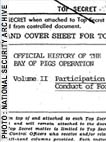
►►CIA told Kennedy Cuba invasion was ‘unachievable’. [Never mind. It turns out that the original article on Foreign Policy has been corrected to state that the meeting was not with Kennedy after all — see reader’s comment below]. More revelations from the newly declassified CIA Official History of the Bay of Pigs Invasion. According to the multi-volume history (pictured), a CIA team told President-Elect John F. Kennedy during a meeting in 1960 that toppling the Cuban government of Fidel Castro would not be feasible, considering the small invasion force that Kennedy insisted upon for the Bay of Pigs operation, in order to maintain plausible deniability.
►►NATO bombs home of Libyan intel chief. A compound in Tripoli destroyed overnight by NATO air strikes was the home of Abdullah Al-Senussi, former head of Libyan intelligence. This information allegedly comes from al-Senussi’s neighbor, oil engineer Omar Masood, who said he has lived across the street for 35 years. Meanwhile, several news outlets report that Abdel Salam Ahmed Jalloud, prime minister of Libya between 1972 and 1977, has defected to Italy.
►►Palestinian attacks took Israeli intel by surprise. The triple attacks, attributed by Israel to a Palestinian splinter group from the Gaza Strip, took Israel’s intelligence and security services by surprise, judging by the ensuing confusion and inaccuracy of initial reports. Between 15 and 20 Arab gunmen, some wearing Egyptian army fatigues, are believed to have taken part in the operation.

News you may have missed #570

Nassr al-Mabrouk Abdullah

Abdullah Nassr

►►Libya internal security chief defects. Egyptian airport officials said Nassr al-Mabrouk Abdullah, Muammar al-Gaddafi’s interior minister, landed in a private plane in Cairo with nine family members traveling on tourist visas. Nassr was the minister responsible for police, civil defense, domestic intelligence, and some border security units.
►►S. Korea admits 1962 death occurred in spy training camp. A special committee is reviewing whether the family of a South Korean man who died half a century ago while being trained as a spy for elite missions into North Korea is eligible for compensation. South Korea’s military intelligence command admitted in a July 14 letter that “Mr. Jeon Gwang-su died during training on Sept. 30 of 1962 ahead of being dispatched for a mission in the North”.
►►NSA announces ‘hiring blitz’. The National Security Agency, America’s largest cryptologic intelligence agency, has announced its intention to hire as many as 3,000 people over the next two years, many of them cybersecurity experts. In fact, NSA recruiters even took a trip to Las Vegas in the last few weeks to look for potential hires at DefCon, a high-profile hacker conference there.

News you may have missed #567

Thuraya satellite telephone

Thuraya phone

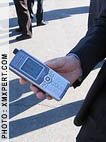
►►Libya bans unauthorized cell phone use. The government of Libya warned Thursday that any of its citizens found using a Thuraya satellite phone without a permit will be treated as spies for NATO, and may face the death penalty. The reason, according to an official statement, is that “spies [of] NATO use the Thuraya telephones to give crusaders the coordinates of some locations to be bombed, which has caused the deaths of a large number of civilians”. Thuraya is a popular satellite phone provider based in the United Arab Emirates, with over a quarter of a million subscribers in the Middle East and Africa.
►►Uzbekistan jails senior mining scientist for spying. A court in Uzbekistan has convicted Said Ashurov, who worked as chief metallurgist for British mining company Oxus Gold, to 12 years in prison on charges of industrial espionage. Ashurov was arrested in March as he tried to cross the border into Tajikistan. A lawyer for the mining company described Ashurov’s case as a fabrication and said that the Uzbek government was using him as a pawn in their battle to take control of the Amantaytau Goldfields project, which is developing “some of the world’s most promising gold fields”.
►►Ex-White House official claims CIA tried to recruit 9/11 hijackers. Richard Clarke, who served in two US administrations as a White House counterterrorism adviser, says he now suspects the CIA hid its knowledge that two of the September 11 hijackers had entered the United States Read more of this post

News you may have missed #558

Amrullah Saleh

Amrullah Saleh

►► US government says Iran aids al-Qaeda. The US Treasury Department has accused the Iranian authorities of aiding al-Qaeda, saying Tehran had entered into financial agreements with six people believed to be al-Qaeda operatives in Iran, Kuwait, Qatar and Pakistan. According to Treasury officials, one of the six “is believed to have recently ascended to the No. 2 position in Al Qaeda, reporting directly to the organization’s new leader, Ayman al-Zawahri”.
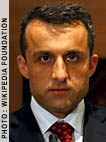
►►Interview with Afghan spy chief. CNN has an exclusive interview with Amrullah Saleh, the –usually media-shy– former head of Afghanistan’s National Directorate for Security. The interview is essentially one long attack on Pakistan, which Saleh blames for destabilizing Afghanistan, hiding and sheltering al-Qaeda members, and providing funding and arms to the Taliban.
►►Sudan’s spy chief secretly visited France in June. The director of Sudan’s National Security and Intelligence Services (NISS), Mohamed Atta al-Moula Abbas, secretly traveled to Paris last June. He held talks there with Read more of this post

News you may have missed #526

  • Russia convicts colonel of exposing US spy ring. Colonel Alexander Poteyev has received a (relatively lenient) 25-year sentence for exposing a Russian ‘sleeper cell’ network in the United States. The sentence was delivered in absentia, as Poteyev is believed to have defected to the US, where he probably lives under an assumed identity. As he was fleeing Russia in June 2010, he texted his wife: “try to take this calmly: I am leaving not for a short time but forever. I am starting a new life. I shall try to help the children”. Here is the most detailed recent account the Poteyev’s case in English.
  • Libyan defector holed up in luxury hotel. Moussa Koussa, Libya’s former intelligence chief and foreign minister, faced calls last night to return to Britain for prosecution after he was tracked down to a penthouse suite at the Four Seasons Hotel in Doha, the capital of Qatar, where he has been living under the protection of the Qatari security services.
  • New NZ SIGINT spy agency boss named. The government of New Zealand has appointed Simon Murdoch as the acting chief executive and director of the Government Communications Security Bureau (GCSB) intelligence agency.

Analysis: Arab revolutions cause blind spot for US spies

Christopher Dickey

Dickey

By JOSEPH FITSANAKIS | intelNews.org
An unusually blunt piece published in Newsweek magazine describes the Arab democratic revolutions in Egypt, Tunisia, Libya and elsewhere as serious detriments to US intelligence collection in the Muslim world. Written by Newsweek’s Middle East Regional Editor Christopher Dickey, the lengthy article argues that the ongoing political changes in several Arab countries make US counterterrorism professionals long for the days “when thuggish tyrants, however ugly, were at least predictable”. It even quotes an unnamed senior intelligence officer who denounces the celebration of democracy in the Arab world as “just bullshit”, and sees “disaster […] lurking” in the region. The reason for such vehement reaction is plain: US intelligence professionals are witnessing an elaborate network of informants across the Arab world, which they painstakingly built and cultivated since the late 1960s, crumble before their very eyes. These informants, who had senior government positions in secularist Arab dictatorships, “are either gone or going”, says Christopher Boucek, of the Carnegie Endowment for International Peace. Read more of this post