News you may have missed #875 (CIA edition)
April 7, 2014 Leave a comment
 By IAN ALLEN | intelNews.org
►►Ex-CIA head criticizes Pollard release rumors. General Michael Hayden, the former Director of the CIA, said Sunday that he doesn’t think releasing Jonathan Pollard to save the Israeli-Palestinian peace talks is a good idea. Hayden, a Bush administration appointee, told Fox News Sunday that “it’s almost a sign of desperation that you would throw this into the pot in order to keep the Israelis talking with the Palestinians”.
►►CIA official dies in apparent suicide. An unnamed senior CIA official has died in an apparent suicide this week from injuries sustained after jumping off a building in northern Virginia. A source close to the agency said the man who died was a middle manager and the incident occurred after the man jumped from the fifth floor a building in Fairfax County. CIA spokesman Christopher White confirmed the death and said the incident did not take place at CIA headquarters in McLean, Va.
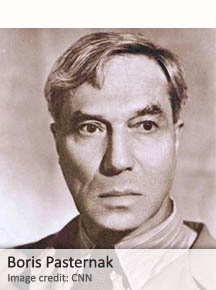
►►How the CIA turned Doctor Zhivago into a Cold War weapon. Newly disclosed documents indicate that the operation to publish Boris Pasternak’s Doctor Zhivago in several Eastern European languages was run by the CIA’s Soviet Russia Division, monitored by CIA director Allen Dulles and sanctioned by President Dwight Eisenhower’s Operations Coordinating Board, which reported to the National Security Council at the White House. The board, which oversaw covert activities, gave the CIA exclusive control over the novel’s “exploitation”. The “hand of the United States government” was “not to be shown in any manner”, according to CIA records. IntelNews has reported previously on allegations that the CIA may have influenced teh Swedish Academy’s decision to award the 1958 Nobel Prize for Literature to Pasternak.









 intelNews.org
‘Day of the Jackal’ author reveals he was MI6 agent for 20 years
August 31, 2015 by Joseph Fitsanakis 1 Comment
But Forsyth had never commented on these rumors until last weekend, when was interviewed on the BBC’s main evening news program. He spoke to the station on the occasion of the upcoming publication of his autobiography, The Outsider: My Life, which will be in stores in October. He told the BBC that he was first recruited by the Secret Intelligence Service (MI6) in the late 1960s while covering the Nigerian Civil War. The bloody conflict, which is also known as the Biafran War, pitted the separatist Igbo people against the Nigerian federal government. Like other military conflicts in postcolonial Africa, it attracted the attention of the world’s powers, including France, the Soviet Union, the United States, and Britain. London was firmly on the side of the government in Lagos, but MI6 had reservations, believing that the Nigerian military forces were committing mass atrocities in Biafra. Forsyth said he was recruited by an MI6 officer who wanted to know if children were dying in Biafra as a result of the Nigerian government’s military policies against the Igbo separatists. The intelligence service were apparently hoping that they could use this information to change London’s stance on the brutal civil war. The author told the BBC that he spent the rest of the war “sending both journalistic reports to the media and other reports to my new friend”, referring to his MI6 handler.
When asked if he was paid for his services, he said his assistance to MI6 was provided on a strictly voluntary basis. “The attitude, the spirit of the age, was different back then”, he said, adding that “the Cold War was very much on” and when the British government asked a reporter for a favor it was “very hard to say no”. He did say, however, that MI6 promised to approve passages of some of his novels by way of payment. The author of The Day of the Jackal said he was given a number to call and told to send MI6 his manuscripts for vetting. “If they are too sensitive, we will ask you not to continue”, Forsyth told the BBC.
► Author: Joseph Fitsanakis | Date: 31 August 2015 | Permalink
Filed under Expert news and commentary on intelligence, espionage, spies and spying Tagged with Cold War, Frederick Forsyth, history, informants, journalism, literature, MI6, News, Nigeria, Nigerian Civil War, UK