Did MI6, not CIA, kill Congolese Prime Minister Patrice Lumumba?

Patrice LumumbaBy JOSEPH FITSANAKIS | intelNews.org |
The 1961 abduction and murder of iconic Congolese Prime Minister Patrice Lumumba was organized by British, not American, intelligence, according to a claim made this week by a British Labour politician and Life peer. Lord Lea of Crondall said in a letter published in the current edition of The London Review of Books that he was told so by Baroness Park of Monmouth, who at the time headed the Leopoldville station of MI6, Britain’s primary external intelligence service. Lumumba was a pan-Africanist activist who in 1958 helped found the Mouvement National Congolais, later becoming the organization’s leader. In 1960, he became Congo’s first democratically elected Prime Minister. However, his government soon became embroiled in the Cold-War rivalry between the United States and the Soviet Union. Many believe that Washington, fearing that Lumumba would attach uranium-rich Congo to the Soviet sphere of influence, tasked the Central Intelligence Agency with organize a coup d’état against him. It was carried out by Congolese Colonel Joseph Mobutu Sese Seko, who then ruled Congo with an iron fist until his death in 1997. In January 1961, pro-Mobutu soldiers, assisted by Belgian troops, abducted Lumumba and executed him following several days of beatings and torture. But according to Lord Lea, Baroness Park told him shortly before she died, in 2010, that she had orchestrated Lumumba’s killing on behalf of MI6. Known as Daphne Park until she entered the peerage, Park was often referred to as “the queen of spies” due to her four decades in the service of MI6. As one of the top female British intelligence officers, Park served as Second Secretary at the British Embassy in Moscow between 1954 and 1956, before being transferred to Congo in 1959. While there, she served as Consul and First Secretary at the British embassy in Leopoldville —renamed Kinshasa following Congo’s independence. Read more of this post

Spy claims against diplomat cast shadow over Anglo-Russian relations

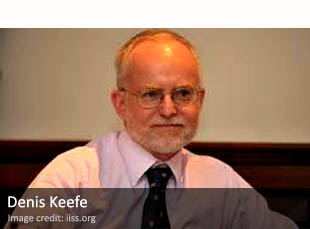
Denis KeefeBy JOSEPH FITSANAKIS | intelNews.org |
Widespread allegations of espionage against Britain’s deputy ambassador to Russia threaten to derail the ongoing diplomatic rapprochement between Russia and the United Kingdom, according to a leading British newspaper. Painstaking efforts to rebuild Anglo-Russian relations, which crumbled after the 2006 assassination of Russian defector Alexander Litvinenko in London, are scheduled to culminate later this week, when senior Russian cabinet officials will be visiting London for a “strategic dialogue” with their British counterparts. But British newspaper The Sunday Telegraph reports that Whitehall is increasingly annoyed by persistent attacks in the Russian media against Denis Keefe, the UK’s deputy ambassador to Moscow. Keefe, a career diplomat with over 30 years in the Foreign Office, much of it during the Cold War, is a Cambridge University graduate who speaks six languages, including fluent Russian. Prior to arriving in Moscow, he served as British ambassador to Georgia, where he was stationed during the 2008 Russia-Georgia war. Almost as soon as he arrived in Russia, Keefe found himself at the center of persistent allegations in the Russian media that he is “an undercover spy, with his diplomatic position serving as a smokescreen”. Several Russian news reports have indirectly accused him of contacting dissident groups inside Russia in an effort to undermine the government of Russian President Vladimir Putin. The Telegraph, which published for the first time an account of the Russian media claims in the West, said that Russian reporters appear to hound Keefe every time he makes a public appearance in the country. In one recent instance, two journalists asked him whether he was “a spy for MI6”, Britain’s primary external intelligence agency, insisting that he give a “straightforward answer to this question”. Keefe reportedly responded that this was “not a serious question” and had “nothing to do” with him. Read more of this post
British journalists worked for MI6 during the Cold War: investigation

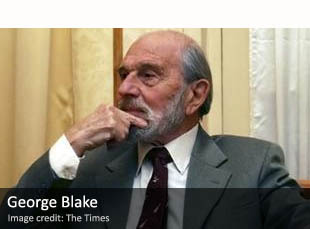
George BlakeBy JOSEPH FITSANAKIS | intelNews.org |
Numerous notable journalists working for some of Britain’s most prestigious publications routinely collaborated with British intelligence during the Cold War, according to a BBC investigation. In 1968, Soviet newspaper Izvestia published the contents of an alleged British government memorandum entitled “Liaison Between the BBC and SIS”. SIS, which stands for Secret Intelligence Service, also known as MI6, is Britain’s foremost external intelligence agency. The paper, which was the official organ of the Presidium of the Supreme Soviet of the USSR, claimed that the foreign correspondents of most leading British newspapers secretly collaborated with the British intelligence community. It also alleged that the BBC’s world radio service had agreed with MI6 to broadcast preselected sentences or songs at prearranged times. These signals were used by British intelligence officers to demonstrate to foreign recruits in the Eastern Bloc that they were operating on behalf of the UK. At the time, the BBC virulently rejected the Izvestia’s claims, calling them “black propaganda” aimed at distracting world opinion from the invasion of Czechoslovakia by Warsaw Pact troops, which had taken place some months earlier. But an investigation aired this week by the BBC Radio 4’s investigative Document program suggests that the memo published by the Soviet newspaper was probably genuine. The program says it discovered a memorandum in the BBC’s archives, which laments the embarrassment caused to MI6 by the Soviet claims. The memorandum, dated April 24, 1969, describes MI6 as “our friends”. The BBC program, which is available to listen to here, discusses the Soviets’ claims that several notable British journalists were MI6 agents. Read more of this post

British government tries to block probe into ex-KGB officer’s murder

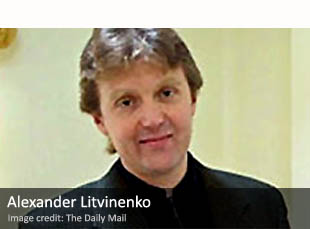
Alexander LitvinenkoBy JOSEPH FITSANAKIS | intelNews.org |
The family of a Russian spy, who died of poisoning after defecting to Britain, has accused the British government of trying to cover up the affair in order to avoid embarrassing Russia. Alexander Litvinenko was an employee of the Soviet KGB and one of its successor organizations, the FSB, until 2000, when he defected with his family to the United Kingdom. He soon became widely known as a vocal critic of the administration of Russian President Vladimir Putin. In 2006, Litvinenko came down with radioactive poisoning soon after meeting a former KGB/FSB colleague, Andrey Lugovoy, at a London restaurant. He died in hospital three days later. A public inquest into Litvinenko’s murder had been scheduled for May, 2013. On Tuesday, however, it was revealed that the British government had filed a written petition to limit the information disclosed in the inquest. According to The London Times, British Foreign Secretary William Hague filed a Public Interest Immunity Certificate (PIIC), which, if allowed to stand, would limit the scope of the inquest on national security grounds. It is believed that the government wishes to block information linking Litvinenko to the Secret Intelligence Service —also known as MI6— Britain’s primary external spy agency. Last December, Ben Emmerson, the lawyer representing Litvinenko’s widow, claimed that the late Russian spy was a “registered and paid” agent of MI6 and Spanish intelligence at the time of his death. Read more of this post

Philby’s son, widow, speak on 50th anniversary of his defection

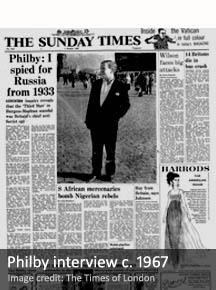
Philby interview c.1967 By IAN ALLEN | intelNews.org |
For most of us, January 23, 2013, was a day like any other. But for intelligence history aficionados it marked the 50th anniversary of the escape to Moscow of notorious double spy Harold Adrian Russell Philby. Known as ‘Kim’ to his friends, Philby secretly defected to the USSR from his home in Beirut, Lebanon, in 1963. He is widely considered history’s most successful double spy. While working as a senior member of British intelligence, he spied on behalf of the Soviet NKVD and KGB from the early 1930s until his defection. In 1965, he was awarded the Order of the Red Banner. When he died, in 1988, he was buried with honors by the Soviet authorities. Philby’s defection sent ripples of shock across Western intelligence and is often described as one of the most dramatic moments of the Cold War. On the 50th anniversary of Philby’s defection to Moscow, British newspaper The Daily Telegraph carried an article with excerpts of interviews with one of Philby’s sons, Dudley Thomas Philby, and his Russian widow, Rufina Pukhova Philby. Born in 1946, Dudley ‘Tommy’ Philby is the third of Kim’s five children with his second of four wives, Aileen Furse Philby. Aileen died in 1957, when Tommy was just 11 years old; his contact with his father was cut off as soon as the double spy defected to the USSR in January 1963. But it was resumed a few months later, when he received a letter from his father in Moscow. Eventually, Tommy visited Kim five times in Moscow in the 1970s. Speaking on the anniversary of his late father’s defection, he described him as “a very kind man” and “a very good father”, who “had his belief [in] communism [and] carried it out”. He told The Telegraph that he personally did not agree with his father’s political views, but added: “he was what he was, what could I do?”. He told the paper that Kim eventually came to think that “it was all wrong”, implying that Philby grew disillusioned with the Soviet system. Read more of this post

News you may have missed #820

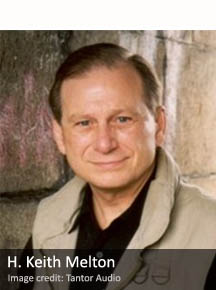
H. Keith MeltonBy IAN ALLEN | intelNews.org |
►►World’s best known spy collector displays his home. And now for something completely different. Most intelNews readers will be aware of H. Keith Melton, the author of more than 25 nonfiction works on espionage (including The Ultimate Spy Book) and the world’s largest private collector of spy memorabilia. The question is, where does he keep all this stuff? The 68-year-old author invited Forbes magazine to his Boca Raton house, which includes his two-story private spy museum. The article is here, a photo gallery here, and a video of the house (but not the museum) is here.
►►Acting CIA director criticizes ‘Zero Dark Thirty’. IntelNews has ignored the commentary that has flooded the Web about Zero Dark Thirty, the feature film fictional account of the assassination of al-Qaeda founder Osama bin Laden. But when the Director of CIA, the agency behind the real-life operation to kill bin Laden, publicly comments, it is time to pay attention. Michael J. Morell, who took over as CIA Director from General David Petraeus last month, has criticized the film, saying it exaggerates the role of coercive interrogations in producing clues to bin Laden’s whereabouts.
►►British police says MI6 expert ‘killed himself’. British police say MI6 cryptology expert Gareth Williams, who was found dead inside a sports bag in August 2010, probably locked himself into the sports bag, where his naked body was found, and was not the victim of a hit by the security services. Williams, 31, worked for Britain’s secret eavesdropping service GCHQ but was attached to MI6 when his remains were found inside the bag in a bathtub at his London apartment.

Litvinenko was working for UK, Spanish intelligence when he was killed

Alexander LitvinenkoBy JOSEPH FITSANAKIS | intelNews.org |
A lawyer representing the family of a KGB defector to Britain, who died of poisoning in 2006, has told a court hearing in London that the late spy was working for British and Spanish intelligence at the time of his death. Alexander Litvinenko was an employee of the Soviet KGB and one of its successor organizations, the FSB, until 2000, when he defected with his family to the United Kingdom. He soon became known as a vocal critic of the administration of Russian President Vladimir Putin. In 2006, Litvinenko came down with radioactive poisoning soon after meeting a former KGB/FSB colleague, Andrey Lugovoy, at a London restaurant. Speaking at a preliminary court hearing on Thursday, in light of an upcoming British government inquiry into Litvinenko’s death, Ben Emmerson, QC, said that the late Russian spy was a “registered and paid” asset of the Secret Intelligence Service. This is not the first time that Litvinenko has been linked to the SIS —known informally as MI6— Britain’s external spy agency. Litvinenko’s widow, Marina, made similar claims to the British press in January of this year. But yesterday’s testimony by her legal team provided the public record with further revelations about her husband’s connections with British intelligence. The court heard that Litvinenko received a regular stipend from MI6 either in cash or via electronic transfer and that he had been provided with an encrypted telephone, which MI6 used to contact him on a routine basis. The night before his poisoning, said Emmerson, Litvinenko had met his MI6 handler, who went by the operational alias MARTIN. Read more of this post

Swiss intelligence employee stole ‘millions’ of classified pages

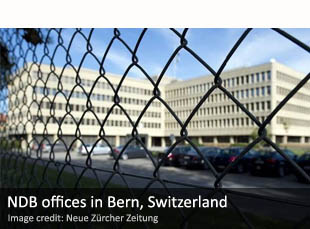
NDB offices in Bern, Switzerland

By JOSEPH FITSANAKIS | intelNews.org |
Swiss authorities have warned Western intelligence agencies that their secrets may have been compromised by a disgruntled intelligence employee who stole “thousands or even millions of pages of classified material”. Citing “European national security sources”, Reuters said the employee at the center of the case worked for the NDB, Switzerland’s Federal Intelligence Service. He had been employed by NDB for eight years as a network technician with “full administrator rights” and had unrestricted access to the NDB’s computers, as well as to those of Switzerland’s Federal Department of Defense, under which the NDB operates. About a year ago, however, the unnamed technician apparently became disgruntled after his views on how to structure the NDB’s databases were allegedly sidelined or ignored. He eventually decided to use several portable hard drives to download countless classified documents from Swiss government servers and managed to carry them out of the office building where he worked, using a backpack. According to Swiss authorities, he intended to sell the classified information to foreign governments or black-market operatives. He was apprehended, however, after he tried to set up a numbered bank account with Swiss-based UBS bank, using what bank security officials described as “suspicious identification documentation”. Read more of this post

Murdered British businessman ‘was MI6 operative’ (we told you so)

Neil HeywoodBy JOSEPH FITSANAKIS | intelNews.org |
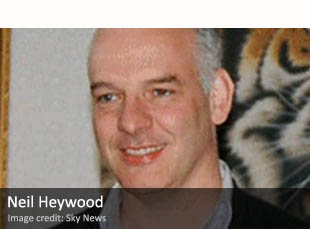
An investigation by The Wall Street Journal has concluded that Neil Heywood, the British businessman who was murdered in China last November, was an active informant for British intelligence at the time of his death. The news appears to confirm intelNews’ assessment of April 2012 that Heywood was in fact connected with British intelligence. A highly successful financial consultant and fluent Chinese speaker who had lived in China for over a decade, Heywood was found dead on November 14, 2011, in his room at the Nanshan Lijing Holiday Hotel in Chongqing. His death led to the dramatic downfall of Bo Xilai and Gu Kailai, a husband-and-wife team of political celebrities who were found guilty in a Chinese court of killing the British businessman. Immediately after Heywood’s death, there was widespread speculation that he may have been a spy for MI6, Britain’s external intelligence service. On April 27, 2012, I argued that I was not aware of anyone “with serious knowledge of intelligence issues who was not completely certain, or did not deeply suspect, that Heywood had indeed collaborated with British intelligence at some stage during the past decade”. I wrote this in the face of an official denial by British Foreign Secretary William Hague, who had said earlier in the week that “Heywood was not an employee of the British government in any capacity”. Now an extensive investigation by The Wall Street Journal has concluded that the dead British businessman had been an MI6 operative “for more than a year” prior to his death. Read more of this post

News you may have missed #800

MI6 headquartersBy IAN ALLEN | intelNews.org |
►►British MI6 spy agency feeling shaken not stirred. Analysis on Salon.com about the current state of MI6, Britain’s external intelligence agency, featuring comments by intelNews‘ own Joseph Fitsanakis. The article, written by former CNN and BBC correspondent Barry Neild, argues that MI6 is feeling the heat caused by a series of recent allegations which threaten to disrupt its clandestine operations. The agency, he suggests, is thus undergoing one of the most troubling periods of its hundred-year existence.
►►Germany charges couple with spying for Russia. German government prosecutors say the couple, who called themselves Andreas and Heidrun Anschlag, worked in Germany for Russia’s foreign intelligence service for more than 20 years, gathering information on European Union and NATO strategy. The pair entered Germany in 1988 and 1990, claiming to be Austrian citizens of South American origin. They were arrested in October 2011. German media said it is the first such case in Germany since the end of the Cold War.
►►US allegedly widens covert operations in North Africa. The Associated Press quotes “three US counterterror[ism] officials and a former intelligence official” as saying that the United States is in the process of building “a new military task force” in the North African region. But by the time the US consulate in the east Libyan city of Benghazi was attacked last month, the new task force consisted only of “liaison officers who were assigned to establish relationships with local governments and US officials in the region”.

MI6 chief paid ‘extremely rare’ secret visit to Israel: newspaper

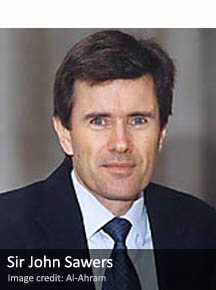
Sir John SawersBy JOSEPH FITSANAKIS | intelNews.org |
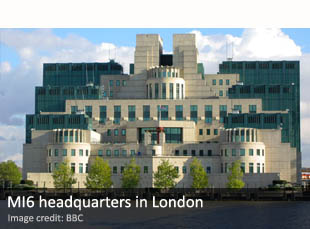
The Director of Britain’s Secret Intelligence Service, widely known as MI6, visited Israel in secret in late August in an effort to convince the Israelis not to launch military strikes on Iran, according to a British newspaper. In an article published on Tuesday, The Daily Mail said Sir John Sawers, who leads Britain’s foremost external spy agency, held private meetings with leading Israeli officials, among them Prime Minister Benjamin Netanyahu and Defense Minister Ehud Barak. His message, according to the paper, was that London wanted more time so that the economic and diplomatic sanctions imposed on Iran by the international community to bear fruit. Sanctions are considered by some in the West a viable alternative to calls by Israeli officials for direct military attacks on Iran, aimed at stopping the country’s nuclear program. If confirmed, Sir John’s visit to Israel would represent a near-unprecedented move; this is because, unlike his counterpart at the United States Central Intelligence Agency, the Director of MI6, known informally as ‘C’, does not routinely travel to foreign countries as a diplomatic messenger of the British government. Many, therefore, will see Sawers’ alleged trip to Israel as yet another sign that the Jewish state is beginning to lean heavily in favor of attacking Iran using overt military means. In a possibly related development, Israel’s Minister for Intelligence and Atomic Energy said on Wednesday that he supported international sanctions on Iran. Read more of this post

Missing section of Cold War spy tunnel unearthed in Germany

Part of the unearthed tunnelBy JOSEPH FITSANAKIS | intelNews.org |

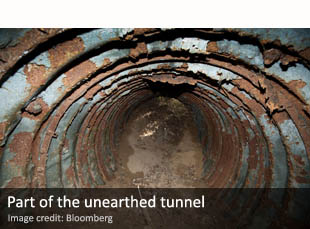
A missing section of a secret tunnel, constructed by British and American intelligence agencies to spy on Soviet and East German government communications during the Cold War has been unearthed in Germany. The tunnel, believed to be nearly half a kilometer (1/3 mile) long, was part of the Central Intelligence Agency’s Operation GOLD, also known as Operation STOPWATCH in Britain. It was based on an idea initially suggested to the Americans in the early 1950s by Britain’s Secret Intelligence Service (MI6), which had carried out a similar scheme in Soviet-occupied Austria. The CIA adopted and funded the program at the cost of nearly $7 million. At its completion, the underground tunnel connected a secret entry-point in Rudow, West Berlin, to a location beneath Alt-Glienicke in East Berlin. The aim behind the project was to tap into underground telephone cables facilitating Soviet and East German military and civilian government communications. But the KGB, the Soviet Union’s foremost intelligence agency during the Cold War, was aware of the project almost from its infancy, thanks to George Blake, a British informant who was later convicted to 42 years in prison, but managed to escape to Moscow in 1966. Interestingly, the KGB did not reveal the tunnel’s existence to the Soviet and East German militaries, fearing that a sudden rerouting of communications cables would expose Blake as a Soviet mole. Instead, they allowed the tunnel to operate for nearly a year before publicly exposing its existence in 1956. At that time, Soviet and East German authorities dug up the eastern section of the tunnel and bussed in hundreds of international reporters, as well as tens of thousands of East Germans, to view the tunnel, in a massive propaganda campaign. In 1997, part of the tunnel that crossed West Berlin was excavated and transported to the Allied Museum in Berlin. Read more of this post

News you may have missed #765

Hillary ClintonBy TIMOTHY W. COLEMAN | intelNews.org |
►►MI6 chief says Iran will get nukes in 2 years. Sir John Sawers, the head of Britain’s Secret Intelligence Service, has been quoted as publicly forecasting that Iranian nuclear weapons efforts will likely come to fruition by 2014. Sawers is quoted in The Daily Telegraph as saying: “The Iranians are determinedly going down a path to master all aspects of nuclear weapons; all the technologies they need”, adding “it’s equally clear that Israel and the United States would face huge dangers if Iran were to become a nuclear weapon state”. He went on to assert that Iran would have achieved nuclear statehood in 2008 had it not been for clandestine efforts to thwart such ends. He did not elaborate on what he meant by his comments, for which he was criticized in Parliament earlier this week.
►►MI6 chief claims US interrogators were ‘obsessed’. In the same Telegraph interview, Sir John claimed that British interrogators, following the attacks of September 11, 2001, came “close to the line” of illegality. He went on to say that US interrogators straddled the line between legal and illegal, insinuating that US personnel may have crossed the line during interrogations. Sir John is quoted as explaining: “They [US interrogators] got so obsessed with getting a right answer that they drifted into an area that kind of amounted to torture”. He went on to claim that British personnel involved in interrogations never crossed the line, observing: “We’ve never been there, we’ve never been involved in that, and I think our accountability, our disciplines, have helped us keep on the right side of these lines”.
►►Clinton says Israeli spy Pollard unlikely to be freed. US Secretary of State Hillary Clinton has reaffirmed Washington’s position that Jonathan Pollard was unlikely to receive clemency or see freedom anytime soon. During a press conference in Jerusalem on July 16, Secretary Clinton stated unequivocally: “He [Jonathan Pollard] was sentenced to life in prison, he is serving that sentence, and I do not have any expectations that that is going to change”. Pollard, a former US naval intelligence analyst, was suspected of trying to provide classified information to South Africa, Pakistan, and Australia. He was arrested and convicted of espionage for providing classified information to the State of Israel. He is serving a life sentence for his crimes.

News you may have missed #764

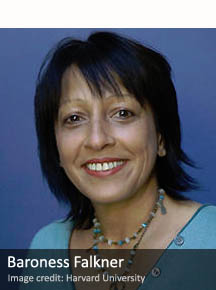
Baroness FalknerBy IAN ALLEN | intelNews.org |
►►US government agency spied on whistleblower scientists. The US Food and Drug Administration has been found operating a massive surveillance campaign targeting its own scientists for writing letters to journalists, members of Congress and President Barack Obama. The scientists were expressing their concern over the FDA’s approval of medical imaging devices for colonoscopies and mammograms that could endanger patients with high levels of radiation. The covert spying operation, which is most likely illegal, led the agency to monitor the scientists’ computers at work and at home, copying emails and thumb drives and even monitoring individual messages line by line as they were being composed in real time.
►►UK lawmaker tells MI6 chief to ‘stop bragging’. The head of Britain’s Secret Intelligence Service (MI6), Sir John Sawers, has been accused by Liberal Democrat parliamentarian Baroness Falkner of Margravine of demonstrating a “lack of judgment” for “bragging” about MI6’s role in slowing Iran’s nuclear program. Earlier this month, Sir John said in an interview that covert operations by British spies had prevented Iran from developing nuclear weapons as early as 2008. But Lady Falkner said in a speech at the House of Lords that “Sir John’s comments could almost be construed as bragging. In my view”, she continued, “it would be best for the veneer of silence to descend on the Secret Intelligence Service once again. There is such a thing as too much information”.
►►German domestic intel agency gets new director. The German government has appointed terrorism expert Hans-Georg Maassen to head the country’s domestic intelligence body, known as the “Verfassungschutz. Maassen’s appointment comes after several turbulent weeks for the agency that have resulted in three of its top officials stepping down amid a scandal connected to a series of murders by a Neo-Nazi group calling itself the National Socialist Underground.

Western spy agencies ‘sharing intelligence’ with Syrian rebels

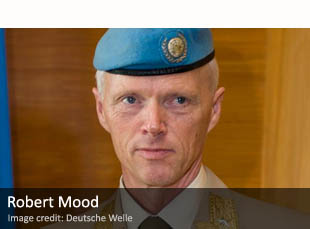
Robert MoodBy JOSEPH FITSANAKIS | intelNews.org |
A British newspaper has cited defense sources claiming that British and American intelligence agencies are passing vital information to Syrian rebels fighting to overthrow the country’s government. British tabloid The Daily Star quoted “a British defense source” who said that most of the raw intelligence on Syria is picked up by sophisticated British and American satellites monitoring Syrian communications. Once gathered and assessed by intelligence analysts in Washington and London, the information is passed on to operatives of the United States Central Intelligence Agency and Britain’s MI6, who are allegedly operating on the ground in Syria. They in turn communicate actionable intelligence to rebel leaders in Syria, who are fighting the government of Syrian President Bashar al-Assad. According to the British tabloid, information passed on to rebel leaders includes detailed satellite imagery of Syrian pro-government troop movements around the country, as well as the contents of intercepted communications between senior Syrian military commanders and their subordinates in the field. The Star quotes one unnamed British government source who claims that the satellites are so sophisticated that they allow British and American eavesdroppers to identify the individuals whose voices are heard in the intercepted communications, with the aid of advanced voice recognition systems. The intelligence has reportedly enabled rebel commanders to evacuate locations targeted by government forces, and may also have allowed the rebels to organize successful counterstrikes in response to offensives conducted by troops loyal to Damascus. Washington-based publication The Hill contacted the CIA and the White House but their spokespersons refused to comment on what they called “an ongoing intelligence operation” in Syria. A spokesman from the British Foreign and Commonwealth Office would only tell The Star that “all actions remain on the table”.   Read more of this post