Maltese government secretly helped British spy operations in Libya

Libya and MaltaBy JOSEPH FITSANAKIS | intelNews.org |
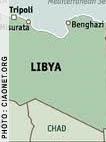
In the 1980s, Malta was one of the world’s closest allies with the Libyan regime of Colonel Muammar al-Gaddafi. For this reason, during the recent Libyan civil war, it was generally presumed that the island nation’s strong cultural and strategic links with Tripoli would prevent it from joining other European nations in actively supporting the Libyan opposition. But internal British government documents, which have been acquired by the BBC, show that Malta was secretly supportive of Western efforts to undermine the regime of Colonel Gaddafi, and went so far as to help smuggle British intelligence operatives into Libya. According to a recent exposé aired by the BBC’s flagship factual program Newsnight, the Maltese government took advantage of its active role as a hub for distributing United Nations humanitarian and logistical assistance to Libyan civilians during the war. In one specific case, Malta offered to work with British external intelligence agency MI6, to fly a group of British intelligence officers to an unspecified location in Libya. The British operatives’ ultimate goal was to meet up with leading members of the opposition Libyan National Transitional Council (NTC), at a predetermined location near Libya’s second-largest city of Benghazi. According to the BBC, the Maltese government secretly authorized the transportation of the MI6 officers into Libya, using a Chinook helicopter, which took off in the middle of the night from Maltese territory. Unfortunately for the British, the mission was intercepted by NTC forces at the Benina International Airport, near Benghazi. Read more of this post

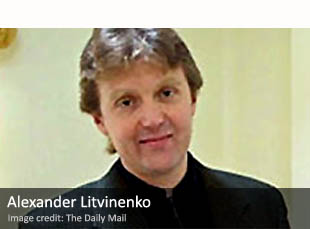
Ex-KGB spy Litvinenko was working for MI6 when he died

Alexander LitvinenkoBy JOSEPH FITSANAKIS | intelNews.org |
Confidential documents leaked to the British press show that a leading medical examiner wants to reinspect the 2006 death of a former Soviet intelligence officer, in light of new revelations. Alexander Litvinenko was an employee of the Soviet KGB and its successor organization, the FSB, who in 2000 defected with his family to the United Kingdom. He soon became known as an increasingly vocal critic of the administration of Russian President Vladimir Putin. In 2006, Litvinenko came down with radioactive poisoning soon after meeting a former colleague, Andrey Lugovoy, in a London restaurant. The latter is believed by British authorities to have assassinated Litvinenko “with the backing of the Russian state”. Although much of the case remains shrouded in mystery, an important new clue was added to the equation in October, when Litvinenko’s widow publicly admitted that her husband had been a paid employee of British intelligence services MI5 and MI6. Marina Litvinenko told British tabloid newspaper The Mail on Sunday that Alexander had advised both agencies on “combat[ing] Russian organized crime in Europe”. She had previously denied rumors that her husband had been working for British intelligence when he was killed —ostensibly by the Russian government. The revelation appears to have prompted a British coroner to request that the medical investigation into Litvinenko’s death be reopened. Documents leaked to The Mail on Sunday appear to show that Andrew Reid, a coroner at St Pankras Hospital in London, has formally requested that both MI5 and MI6 release all of their internal files on Litvinenko, in the context of a new investigation. Read more of this post
News you may have missed #671

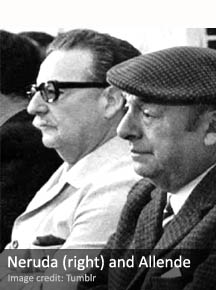
Pablo Neruda (right) and Salvador AllendeBy IAN ALLEN | intelNews.org |
►►German ‘spies’ detained in Pakistan. Three alleged German spies have been detained in Pakistan by police and released to German diplomats, according to reports. The men were detained last Saturday in the northeastern city of Peshawar by officers who accused them of belonging to “an unauthorized liaison office of the German embassy”. A Pakistani official said counterintelligence authorities had been observing the three Germans “for months”.
►►Was poet Pablo Neruda murdered? Pablo Neruda, Chile’s Nobel Prize-winning poet, died exactly 12 days after the brutal coup that ended the life of his close friend, socialist President Salvador Allende. The official version was that he died of natural causes brought on by the trauma of witnessing the coup and the lethal persecution of many of his friends. But now Neruda’s body might be exhumed for testing to address long-simmering suspicions that the poet was poisoned.
►►Britain’s secret mission to beat Gaddafi. British efforts to help Libyan rebels topple Colonel Gaddafi were not limited to air strikes. On the ground –and on the quiet– British special forces soldiers were blending in with rebel fighters. The BBC’s Newsnight program has produced a report on the subject. The report includes information on E Squadron, which has not hitherto been discussed publicly. It was formed in 2007 to work closely with MI6, and is mainly involved in missions “where maximum discretion is required”.

News you may have missed #665

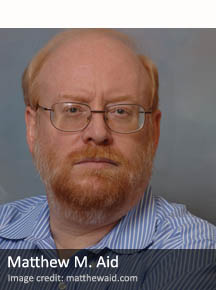
Matthew M. AidBy IAN ALLEN | intelNews.org |

►►Joseph Fitsanakis interviewed on ABC Radio National. IntelNews‘ own Dr Joseph Fitsanakis was interviewed on Friday by reporter Suzanne Hill, for ABC Radio National’s flagship evening news program ‘PM‘. In the interview, which was about the assassination of Iranian nuclear scientist Mostafa Ahmadi-Roshan, Fitsanakis points the finger at the Mossad, and explains why he doesn’t believe the United States had anything to do with the killing. You can listen to the interview here. The transcript is here.
►►India releases diplomat jailed for spying. Last April, Madhuri Gupta, second secretary at the Indian high commission in Islamabad, Pakistan, was arrested for working for Pakistan’s ISI spy agency. She apparently had a “relationship of personal affection” with an aide of her Pakistani handler. On Tuesday, she was granted bail by an Indian court, after 21 months in prison.
►►Matthew Aid interviewed about his new book. Matthew M. Aid, author of The Secret Sentry, has written a new book, Intel Wars: The Secret History of the Fight Against Terror. You can listen to an extensive interview he gave on January 11 on NPR’s Fresh Air, in which Aid outlined his view that “overlapping jurisdictions, bureaucratic policies and a glut of data have crippled the intelligence community in its war against would-be terrorists”.
►►British spies to be cleared on torture allegations. The British government, including Scotland Yard and the Crown Prosecution Service, has just finished a four-year inquiry into the country’s security and intelligence services, sparked by allegations by terrorist suspects released from Guantanamo Bay, that they were severely tortured. The results have not yet been announced. But British media report that, according to information from trusted sources, the inquiry has concluded that (…drumroll…) there is no evidence that officers from either MI5 or MI6 were aware of the mistreatment of prisoners.

News you may have missed #660

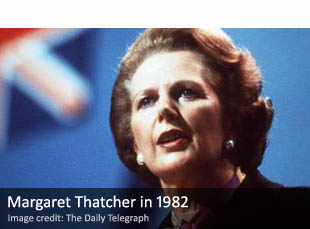
Margaret ThatcherBy IAN ALLEN | intelNews.org |
►►Taiwan President accused of spying on political opponents. Taiwan’s opposition challenger for the presidency, Tsai Ing-wen, has accused intelligence services under the control of incumbent President Ma Ying-jeou of tracking her campaign events for political advantage. The allegations – unproven and denied by Ma – conjure up memories of Taiwan’s one-party past when Ma’s party, the Nationalists, used their total control of the state apparatus to persecute opponents.
►►Analysis: Has Israeli-Australian spy relationship been restored? Intelligence sharing between Israel and Australia was halted this time last year, when a Mossad hit squad with forged Australian passports assassinated senior Hamas official Mahmoud al-Mabhouh in in Dubai. But Australian newspaper The Age reports that “the flow of top secret intelligence between the two countries has now been restored”, in a move apparently initiated by the Australian side.
►►Thatcher threatened to ban BBC program on MI5 and MI6. The Conservative government of British Prime Minister Margaret Thatcher threatened to “veto” a BBC investigative program about British intelligence services MI5 and MI6, because it would reveal details about how they operated and question their public accountability. In a letter marked “top secret and personal”, cabinet secretary Sir Robert Armstrong, recommended that Margaret Thatcher consider invoking the rarely used power, saying that “the government has the power to ban any program”. Thatcher wrote on the note: “I would be prepared to use the veto”.

New book on British double spy Kim Philby published in Russia

Kim Philby

Kim Philby

By JOSEPH FITSANAKIS | intelNews.org |
An important new biography of H.A.R. “Kim” Philby, the British MI6 officer who defected to Russia during the Cold War, has been published in Moscow. It is based on candid interviews with his surviving fourth wife, Rufina Pukhova-Philby, as well as on an array of declassified documents from Russian state archives. The book, titled just Kim Philby, is authored by Nikolai Dolgopolov, editor of Moscow-based daily Rossiiskaya Gazeta, which acts as the official organ of the Russian state. Aside from Pukhova-Philby, the book, whose publication is set to coincide with the 100th anniversary of Kim Philby’s birth, on January 1, enjoyes the official blessing of Russia’s Foreign Intelligence Service (SVR), the successor organization to the KGB’s external intelligence directorate. The SVR allowed Dolgopolov access to previously secret documents on Philby, including a newly declassified Russian translation of the British double spy’s personal account of the events that led to his 1963 defection, as well as a description of his escape to Russia through Lebanon. Dolgopolov’s books describes Philby as “one of the greatest Soviet spies”, thus siding with the mainstream view in intelligence research literature, which recognizes Philby as one of the most successful double spies in history. While working as a senior member of British intelligence, Philby spied on behalf of the Soviet NKVD and its successor, the KGB, from the early 1930s until his 1963 defection. Two years later, he was awarded the Order of the Red Banner. The Soviet authorities buried him with honors when he died in 1988. Read more of this post

News you may have missed #636

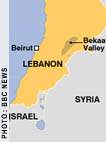
Lebanon

Lebanon

►►Careless codeword may have cost CIA its Lebanon network. Hezbollah have reportedly just rolled up the CIA’s network of spies in Lebanon. If so, it’s because of one of the stupidest, least secure code words in history. According to ABC News, Hezbollah operatives figured out that CIA informants, who had infiltrated the Iranian proxy group, were meeting with their agency handlers at a Beirut Pizza Hut. How could Hezbollah deduce that location? “The CIA used the codeword ‘PIZZA’ when discussing where to meet with the agents,” ABC reports.
►►UK spy chiefs to be publicly questioned for first time. The heads of British intelligence agencies are set to be questioned for the first time in public, under plans to make spies more accountable. The directors of MI5, MI6 and GCHQ will face Parliamentarians on the Intelligence and Security Committee. Although, they have recently begun to make rare public appearances, and deliver speeches, it will be the first time the intelligence agency heads will face public cross-examination over their activities.
►►Documents reveal largest domestic spy operation in Canadian history. Police organizations across Canada co-operated to spy on community organizations and activists in what the Royal Canadian Mounted Police called one of the largest domestic intelligence operations in Canadian history, documents reveal. Information about the extensive police surveillance in advance of last year’s G8 and G20 meetings in southern Ontario comes from evidence presented in the case of 17 people accused of orchestrating street turmoil during the summits.

News you may have missed #635

Vitaly Shlykov

Vitaly Shlykov

►►UK to support Colombia’s new intelligence agency. The UK has announced that it will provide help and advice on the implementation of Colombia’s new national intelligence agency. Colombian President, Juan Manuel Santos, along with National Security Adviser, Sergio Jaramillo, met with the director of Britain’s secret service MI6 to exchange experiences in intelligence to implement the new National Intelligence Agency of Colombia (ANIC). ANIC is supposed to replace the DAS, Colombia’s disgraced intelligence agency, which has been stigmatized by colluding with paramilitary groups and spying on union leaders, journalists and opposition politicians.
►►US intelligence to train analysts with videogames. The US intelligence community’s research group, the Intelligence Advanced Research Projects Agency (IARPA), has handed over $10.5 million to Raytheon BBN Technologies to start work on the Sirius program. The initiative aims to create a series of so-called “serious games” that would help intelligence analysts improve their objectivity and reasoned judgment when confronted with complex or culturally foreign scenarios.
►►Soviet spy who spent years in Swiss prison dies at 77. Vitaly Shlykov served for 30 years in the Main Intelligence Directorate of the Russian General Staff, known as GRU. During his career, he made frequent trips to the West on a false American passport. One of his duties was to maintain contacts with Dieter Felix Gerhardt, a senior officer of the South African Navy who was working as a Soviet spy. In 1983, Shlykov was arrested in Zurich while carrying about $100,000 in cash to hand over to Gerhardt’s wife. Soviet intelligence was unaware that Gerhardt and his wife had been arrested a few weeks earlier and had told interrogators about the meeting in Switzerland.

News you may have missed #630

Riad Al Assad

Riad al-Assad

►►Senior Syrian military defector in Turkey denies training troops. Colonel Riad al-Assad, who acts as head of Syria’s military defectors, has denied a news report that he crossed the border from Turkey to Syria to command troops loyal to the opposition force called the Free Syrian Army. “News reports that appeared on a number of Internet sites that I had crossed into Syria to command troops there are false. I am in Turkey at the moment, in a safe place,” he told the Turkey’s Anadolu Agency on Tuesday.
►►Iran says missile base blast was not caused by Mossad. Iran has insisted that last weekend’s huge blast at the Alghadir missile base at Bid Ganeh, 30 miles to the west of Tehran, was not carried out by Israel or the US, despite widespread reports that it was the work of the Israeli secret service, the Mossad. The explosion killed 17 of the country’s elite revolutionary guards, including Major General Hassan Moqqadam, a senior commander described as the pioneer of the regime’s missile programme.
►►British official says MI6 foiled Libyan assassination plan. British intelligence foiled a plot by Colonel Muammar al-Gaddafi’s forces to assassinate Western diplomats and Libya’s revolutionary leadership, Britain’s Foreign Secretary has disclosed. In a rare speech about the secret services, William Hague said the Libyan intelligence service launched a “sustained effort” to conduct suicide and car bomb attacks against the National Transitional Council, but that “the attacks were prevented”.

News you may have missed #629

William Hague

William Hague

►►CIA urged to be more open about climate change. America’s intelligence establishment has come out with a bold new suggestion: maybe it’s time the CIA stopped treating climate change as a secret. A new report from the Defense Science Board –a US government agency– urges the CIA to step outside its traditional culture of secrecy and begin sharing the intelligence it has been gathering on climate change.
►►Three Czechs to be tried for spying in Zambia. The fate of three Czech nationals, who are awaiting trial in Zambia on suspicion of spying, remains highly uncertain. The three face 25 years in prison for having taken photographs of an old plane displayed outside a military base in Lusaka. The Czech Foreign Ministry has tried in vain to intervene on their behalf and is now sending a special envoy to the country to present the case in person.
►►First-ever speech on MI6 by a UK Foreign Secretary. In the first speech given by a British Foreign Secretary on the activities of MI6, William Hague (pictured) called today for a line to be drawn under the controversy over the involvement of its agents in the abuse of terror suspects, and argued that the spy agency thwarts terrorists and foreign agents hundreds of times a year.

Secret MI6 documents warn about al-Qaeda-linked Libyan rebels

Abdel Hakim Belhaj

Abdel Belhaj

By JOSEPH FITSANAKIS | intelNews.org |
A secret intelligence report, found in the British ambassador’s abandoned residence in Tripoli, warns that some of Libya’s most active anti-Gaddafi rebels have direct links with al-Qaeda and other Islamist groups. The 58-page document, authored by MI6, Britain’s external intelligence agency, includes complete profiles of a dozen senior members of the Libyan Islamic Fighting Group (LIFG) based in Britain. It is widely believed that, in 2007, LIFG merged with al-Qaeda; but at least two of its members, Sami al-Saadi and Abdul Hakim Belhaj, currently hold leading positions in Libya’s National Transitional Council —the group that rules the country following the Muammar Gaddafi’s demise. Belhaj, also known as Abdullah al-Sadiq, revealed in September this year that in 2004 he was snatched by a CIA team in Malaysia and secretly transported to Thailand, where he says he was “directly tortured by CIA agents”. The CIA then renditioned him to Libya, where he says he was systematically tortured until his release from prison, in 2010. The documents discovered in the British ambassador’s Tripoli residence reveal that MI6 helped the CIA target several LFIG members after 2003; they also reveal that thee British intelligence agency  concluded that the kidnapping and torture of Belhaj and others was both tactically and strategically counterproductive. The report, which is marked “UK/Libya eyes only – Secret”, mentions that the abduction of senior LFIG members allowed even more extremist members to rise to the top of the group, and galvanized its fighters in Libya, Algeria, Iraq, and elsewhere. Read more of this post

News you may have missed #587 (Libya edition)

Abdel Hakim Belhaj

Abdel Belhaj

►►Inside Libyan spy overlord’s low-tech HQ. “Handwritten notes prepared for officials over the past months show that Libya’s spooks had a good grasp of who was sending weapons to the rebels. However, its contacts with MI6 and the CIA had clearly disintegrated, as a series of despairing pleadings reveal”.
►►UK government to investigate Libyan rendition claims. British Prime Minister David Cameron said yesterday that an independent inquiry should investigate evidence that British intelligence agencies were complicit in the rendition of terrorist suspects to Libya, where they were tortured by the Gaddafi regime.
►►Libyan rebel says female MI6 spy ignored his pleas for help. Abdel Hakim Belhaj, who is commander of Libya’s rebel military, says a female MI6 spy was among the Britons who flew to Tripoli to interrogate him, after the CIA abducted him in Malaysia, and delivered him to the hands of the Libyan regime.

News you may have missed #585 [updated]

GCHQ

GCHQ

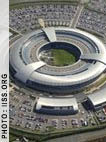
►►GCHQ recovers £300m worth of stolen information. Details stolen from more than a million credit cards across Europe, worth an estimated £300 million, have been recovered by Britain’s GCHQ signals intelligence spy agency, according to The Daily Telegraph.
►►Kuwait arrests alleged Iraqi spy. Kuwait security forces have arrested a man of Iraqi origin for alleged intelligence links with Iraq, a Kuwaiti daily said on Sunday. The man, who was arrested on Friday, and is referred to by the media as “Abu Ahmad”, was staying illegally in the country and allegedly provided Iraq with sensitive information about vital facilities in Kuwait. This is the third time in recent months that the government of Kuwait has pressed espionage charges against a spy suspect. [Update: Kuwait denies reports of spy’s arrest]
►►Hackers steal CIA and Mossad SSL certificates. The tally of digital certificates stolen from a Dutch company in July has exploded to more than 500, including ones for intelligence services like the CIA, the UK’s MI6, and Israel’s Mossad, a Mozilla developer said Sunday. According to some sources, the hackers were Iranian.

CIA Helped Gaddafi Torture Libyan Dissidents, Documents Show

Abdel Hakim Belhaj

Abdel Belhaj

By JOSEPH FITSANAKIS | intelNews.org |
Back in February, when Libyan leader Muammar al-Gaddafi blamed the popular revolt against him on al-Qaeda, he was ridiculed in the international media. But documents discovered at an abandoned Libyan government office complex show that the Libyan rebels’ supreme military commander was abducted in 2004 by the CIA, which suspected him of links to al-Qaeda. Abdel Hakim Belhaj, also known as Abdullah al-Sadiq, was snatched by a CIA team in Malaysia, and secretly transported to Thailand, where he says he was “directly tortured by CIA agents”. The CIA then renditioned him to Libya, where he says he was tortured routinely until his release from prison, in 2010. In the 1980s, Belhaj was a member of the foreign Mujahedeen summoned by Osama bin Laden’s al-Qaeda to fight the Russians in Afghanistan. Upon returning to Libya in the early 1990s, he led the Libyan Islamic Fighting Group, an al-Qaeda-inspired armed organization that unsuccessfully sought to assassinate Colonel Gaddafi. Ironically, Belhaj is now the Tripoli-based military commander of the Libyan National Transitional Council, and says that he wants a full apology from the United States and Britain “for the way he was transported to prison in Libya in 2004”. But the former Mujahedeen is one of several terrorism suspects delivered to Libya by Western intelligence agencies in the years after 9/11, according to Libyan government documents discovered by Human Rights Watch (HRW) workers at the office of Libyan former intelligence chief and foreign minister Moussa Koussa. The documents show that Libya’s External Security Organization maintained extremely close relations with German, Canadian, British, and American intelligence services. Read more of this post

News you may have missed #576 (Libya edition)

Libya

Libya

►►Rebels seize Libyan intelligence service HQ. Rebel forces of the National Transitional Council have occupied the Tripoli headquarters of Libya’s intelligence service. Al Jazeera, which was given access to the building by the rebels, says that it is “full of confidential documents that could provide a valuable insight into what was one of the world’s most secretive regimes. But”, adds the report, “it will take weeks to sift through”.
►►Gadhafi’s loose weapons could number a ‘thousand times’ Saddam’s. This is the alarming assessment of Peter Bouckaert, emergencies director at Human Rights Watch, who spent time on the ground in Libya during the uprising. He told Wired magazine’s Danger Room blog that “weapon proliferation out of Libya is potentially one of the largest we have ever documented —2003 Iraq pales in comparison— and so the risks are equally much more significant”.
►►The bewildering dance between Gaddafi and MI6. A well-researched article in The Independent newspaper, written by one of Britain’s most esteemed diplomatic correspondents, Gordon Corera. He argues that Britain and the Gaddafi regime “were not always the enemies they are now”.