What the Seychelles Trump-Russia story reveals about Emirati intelligence
April 11, 2017 1 Comment
 Emirati intelligence has to be seen in two disparate tiers: actual home-grown intelligence efforts, which usually revolve within the small policing and military forces of the United Arab Emirates (UAE); and more elaborate, highly secretive, outsourced activities that use the UAE as a facilitating conduit or go-between with a clear advantage to Emirati interests.
The first tier is relatively modest and somewhat easy to describe: each emirate within the country has its own police force that takes responsibility to gather and act upon any intelligence, usually encompassing security, crime, and drug-trafficking. Additionally, the police forces of the two main cosmopolitan areas, Dubai and Abu Dhabi, each have their own departments to investigate, arrest, and prosecute transgressors. The capitol police in Abu Dhabi prides itself on  ultra-modern intelligence capabilities, and cooperates with international organizations, other countries, and policing agencies. In addition, the UAE leadership has taken initiatives recently to create a domestic level of intelligence scholarship and professionalization, namely in the form of the National Defense College in Abu Dhabi. But those long-term aims are still just that: long-term and far from being fully developed and realized.
That leaves the aforementioned Tier Two, which involves plots worthy of Hollywood. The first aspect of Tier Two Emirati intelligence involves the outsourcing of performance to private companies. This is best exemplified by the agreement announced at the end of February with the Harris Corporation, following a $189 million two-year contract that was granted to provide a battle management system to the UAE Armed Forces. The BMS system de facto means Harris will be responsible in the UAE for initial operational capabilities, as the country tries to develop advanced contemporary battlefield management solutions. These types of agreements are very much a foundation for the actual realization and enactment of Emirati intelligence capabilities, in that they rely on the expertise and technological materiel of professional corporations (almost never Emirati themselves). It is indeed a basic ‘dollar for defense’ purchasing scheme. This strategy provides the nuts and bolts of Tier One Emirati intelligence, while simultaneously creating an intelligence dependency that works at cross-purposes with the institutional mission of the aforementioned National Defense College.
 Recently uncovered documents shed further light on an ultra-secret plan, devised by the British and American governments, to destroy oil facilities in the Middle East in the event the region was invaded by Soviet troops. The
 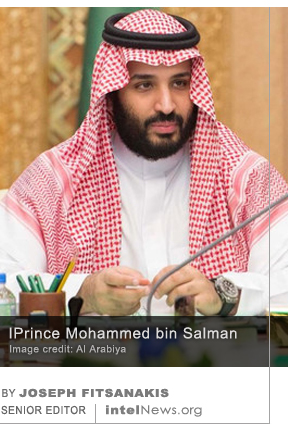 A report by Germany’s primary intelligence agency warns that internal power struggles and broader geopolitical changes are turning the Kingdom of Saudi Arabia into a major source of regional instability. The
 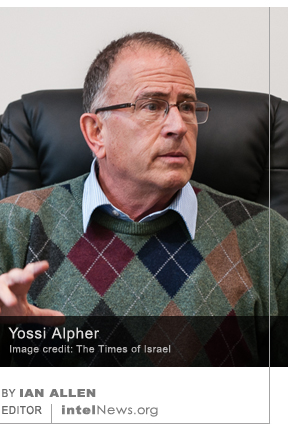 Yossi Alpher, a former Israeli intelligence officer, who was directly involved in numerous top-secret operations during his spy career, has published a new book that analyzes the overarching strategy behind Israel’s spy operations. Alpher served in Israeli Military Intelligence before joining the Mossad, where he served until 1980. Upon retiring from the Mossad, he joined Tel Aviv University’s Jaffee Center for Strategic Studies, which he eventually directed. Throughout his career in intelligence, Alpher worked or liaised with every Israeli spy agency, including the Shin Bet –the country’s internal security service.
 By JOSEPH FITSANAKIS | intelNews.org |
 By JOSEPH FITSANAKIS | intelNews.org |









 intelNews.org
US spies confirm Qatar’s claims that its media were hacked by Emirates to spark crisis
July 18, 2017 by Joseph Fitsanakis Leave a comment
The Qatari government has dismissed the embargo as unjust and has claimed that Sheikh al-Thani’s controversial interview was fake, and was placed on the country’s state-owned news agency and social media as a result of a computer hack. It has also claimed to have evidence of a number of iPhones that were used from locations in Saudi Arabia and the Emirates to launch the hacks on its networks. Qatari officials have also said that an investigation into the incident is underway, but their claims have been criticized as outlandish by Qatar’s regional rivals.
Now, however, a report by The Washington Post claims that American officials have uncovered evidence that Qatar’s allegations of a computer hack are true. The paper cited “US intelligence and other officials” who spoke “on the condition of anonymity”. The officials said that US intelligence agencies recently became aware of a meeting of senior UAE state administrators that took place on May 23 in Abu Dhabi. At the meeting, the officials discussed a plan to hack Qatari news websites and social media, in order to post incendiary messages that could be used to spark a row between Qatar, the Saudi government and its allies. The alleged computer hacks is reported to have taken place on the following day. According to The Post, the only thing that US intelligence is unsure about is “whether the UAE carried out the hacks itself or contracted to have them done” by a third party.
The Post said that several US intelligence agencies, including the Central Intelligence Agency and the Federal Bureau of Investigation, refused to comment on its report. The paper received a response from the UAE embassy in Washington, DC, which said that the Emirates had “no role whatsoever in the alleged hacking described in the article”.
► Author: Joseph Fitsanakis | Date: 18 July 2017 | Permalink
Filed under Expert news and commentary on intelligence, espionage, spies and spying Tagged with computer hacking, diplomacy, Middle East, News, Qatar, Saudi Arabia, United Arab Emirates