S. Korean spy agency admits error, says ‘executed’ N. Korean general is alive

NIS South KoreaThe intelligence agency of South Korea has admitted it made an error when it claimed earlier this year that North Korean authorities had executed one of the regime’s most prominent military figures. On February 10, South Korean newspapers printed a series of articles suggesting that Pyongyang had executed General Ri Yong-gil, who led the Korean People’s Army (KPA), holding post that was equivalent to the United States’ chairman of the Joint Chiefs of Staff. The articles said at the time that the information about General Ri’s execution came directly from the National Intelligence Service (NIS), South Korea’s primary external spy agency. The general had allegedly been executed after being found guilty of “factionalism, abuse of power and corruption”. The reports added that General Ri had turned into an alcoholic and was in poor health as a result. Speculation as to the reason for General Ri’s alleged execution brought up the possibility that he had led an opposition faction within the KPA. This, in turn, led some analysts to speculate that the administration of Kim Jong-un was close to collapse.

However, after the seventh congress of the Workers’ Party of Korea (WPK), which concluded on Monday, not only has the view of Kim’s rule as weak been overturned, but General Ri appears to have come back from the dead. On May 10, the Rodong Sinmun, the official newspaper of the Central Committee of the WPK, announced that General Ri had been appointed member of the WPK’s Central Military Commission. The announcement also said that the General would also be a candidate member of the Political Bureau of the WPK Central Committee, in accordance with the Committee’s wishes. It appears, therefore, that, not only is General Ri alive and well, but that he also features prominently the inner sanctum of the WPK’s political leadership.

Soon after Rodong Sinmun’s announcement, Hong Yong-pyo, South Korea’s Minister of Unification, told reporters in Seoul that the government would have to “check the details” of General Ri’s fate. An anonymous South Korean government official told newspapers that the NIS had assumed General Ri had been purged because he “hadn’t been seen for some time”. But critics of the government in Seoul accused the conservative administration of President Park Geun-hye of using “skewed perceptions” of the regime in Pyongyang in order to block negotiations with North Korea, and urged “some serious soul-searching” regarding the dependability of the NIS. IntelNews regulars will recall that Won Sei-hoon, who headed the NIS from 2008 to 2013, was jailed last year for interfering with national elections in order to further Park’s electoral power.

Author: Ian Allen | Date: 13 May 2016 | Permalink

Senior South Korean officials’ cell phones hacked by North: report

NIS South KoreaDozens of cell phones belonging to senior government officials in South Korea were compromised by North Korean hackers who systematically targeted them with texts containing malicious codes, according to reports. The National Intelligence Service (NIS), South Korea’s primary intelligence agency, said the cell phone penetrations were part of a concerted campaign by North Korea to target smart phones belonging to South Korean senior government officials. Once they managed to compromise a cell phone, the hackers were able to access the call history stored on the device, the content of text messages exchanged with other users and, in some cases, the content of telephone calls placed on the compromised device. Moreover, according to the NIS, the hackers were able to access the contact lists stored on compromised cell phones, which means that more attacks may be taking place against cell phones belonging to South Korean government officials.

The breach was considered critical enough for the NIS to host an emergency executive meeting with the security heads of 14 government ministries on Tuesday, in order to update them on the situation and to discuss ways of responding to the crisis. According to Korean media, the emergency meeting took place on Tuesday and lasted for over three hours. During the meeting the NIS told ministry representatives that the North Korean operation was launched in late February and was ongoing as of early this week. It specifically targeted government officials and appeared to concentrate on their cell phones, instead of their office phones –probably because the latter are known to be equipped with advanced anti-hacking features. The government employees’ cell phones were reportedly attacked using text messages and emails containing links to web sites that downloaded malicious codes on the users’ phones.

The NIS did not specify the precise purpose of the hacking operation, nor did it explain whether the attacks were informed by an overarching strategic goal. The officials targeted work for a variety of government ministries, but there is no clarification as to whether any operational or administrative links between them exist. The NIS did say, however, that approximately a fifth of all attacks against cell phones were successful in compromising the targeted devices.

Author: Joseph Fitsanakis | Date: 10 March 2016 | Permalink
South Korean spy’s suicide reportedly linked to wiretap controversy

NIS South KoreaA suicide note found next to the body of a South Korean intelligence officer mentions a phone hacking scandal that has caused controversy in the country. The 45-year-old man, identified only as “Lim” by South Korean authorities, worked for the country’s primary intelligence organization, the National Intelligence Service (NIS). He was found dead late on Saturday morning inside his car, which had been parked on a deserted rural road on the outskirts of South Korean capital Seoul. According to local reports, authorities found a metal plate with burnt-out coal inside his car, which had been locked from the inside. Finding no apparent marks on his body, the police have ruled his death a suicide.

The man reportedly left a three-page handwritten note on the passenger seat of his car, which is said to contain his will and a list of the reasons that drove him to kill himself. South Korean media cited a “senior government insider” who said that among the reasons mentioned in the suicide note is a controversial phone tapping scandal that has made national news in recent days. According to the insider, the program is identified in the letter as a wiretapping scheme “of national importance”.

The program appears to refer to the the disclosure made this month by a group of unidentified hackers that exposed the dealings of a surveillance software manufacturer with a markedly poor civil-liberties record. The disclosure, made by British newspaper The Guardian, shows that the Italian company, Hacking Team Ltd, is believed to have sold powerful surveillance software to governments with a history of civil-rights violations, including Nigeria, Ethiopia, Saudi Arabia, Azerbaijan and Uzbekistan. Among the customers, however, are a number of countries with stronger civil-rights protections, including South Korea and Cyprus, which is a member of the European Union. Cyprus’ intelligence chief resigned earlier this month as a result of the disclosure. According to technical experts, the software sold by Hacking Team can intercept data exchanged via cellular phones and other wireless devices. It can also spy on all communications devices connected to the Internet using malware that is undetectable by commonly used antivirus software. Moreover, software supplied by Hacking Team cannot be removed from a compromised cellular device unless it is reset at the factory.

NIS authorities in Seoul issued a press statement last week, claiming that the phone hacking software had been used only against North Korean targets abroad, including agents of Pyongyang operating around the world. But human rights organizations, as well as opposition parties in South Korea, said they believed the software had been used to monitor domestic dissent. Earlier this year, a former director of NIS was jailed for organizing an online propaganda campaign to dissuade citizens to vote for the liberal opposition. The NIS issued a statement last week saying that it would be willing to share the operational details and records of the controversial software with lawmakers in order to dispel rumors that it was used against domestic political activity.

Author: Ian Allen | Date: 20 July 2015 | Permalink: https://intelnews.org/2015/07/20/01-1738/

South Korea’s ex-spy chief jailed for interfering in elections

Won Sei-hoonBy IAN ALLEN | intelNews.org
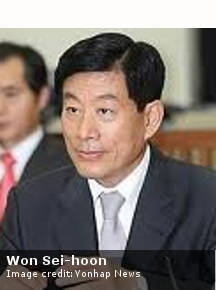
The former director of South Korea’s intelligence agency has been jailed for directing intelligence officers to post online criticisms of liberal politicians during a recent presidential election campaign. Won Sei-hoon headed South Korea’s National Intelligence Service (NIS) from 2008 to 2013, during the administration of conservative President Lee Myung-bak. Since his replacement in the leadership of NIS, Won has faced charges of having ordered a group of NIS officers to “flood the Internet” with messages accusing liberal political candidates of being “North Korean sympathizers”.

Prosecutors alleged that Won initiated the Internet-based psychological operation because he was convinced that “leftist adherents of North Korea” were on their way to “regaining power” in the South. The illegal operation took place during the 2012 presidential election campaign, which was principally fought by Moon Jae-in, of the liberal-left Democratic Party, and Park Geun-hye, of the conservative Saenuri party. Park eventually won the election and is currently serving South Korea’s eleventh President. The court heard that a secret team of NIS officers had posted nearly 1.5 million messages on social networking sites, such as Twitter and Facebook, in an effort to garner support for the Saenuri party candidate in the election.

Last September, a court in Seoul had sentenced Won to two and a half years in prison, which was much shorter than the maximum five-year penalty he was facing if found guilty. But the judge had suspended the sentence, arguing that there was no direct proof that Won directly sought to alter the outcome of the presidential election. On Monday, however, the Seoul High Court overruled the earlier decision, saying that Won had directly breached election laws and that the violation was sufficient for a prison sentence. In reading out its decision, the judge said that “direct interference [by the NIS] with the free expression of ideas by the people with the aim of creating a certain public opinion cannot be tolerated under any pretext”. Won was transferred directly from the court to prison, where he will serve his sentence.

South Korean court convicts ex-spy director of interfering in elections

Won Sei-hoonBy IAN ALLEN | intelNews.org
A former director of South Korea’s intelligence agency has been convicted in court of directing intelligence officers to post online criticisms of liberal politicians during a presidential election campaign. Won Sei-hoon headed South Korea’s National Intelligence Service (NIS) from 2008 to 2013, during the administration of conservative President Lee Myung-bak. Since his replacement in the leadership of NIS, Won has faced charges of having ordered a group of NIS officers to “flood the Internet” with messages accusing liberal political candidates of being “North Korean sympathizers”. Prosecutors alleged that Won initiated the Internet-based psychological operation because he was convinced that “leftist adherents of North Korea” were on their way to “regaining power” in the South. The illegal operation took place during the 2012 presidential election campaign, which was principally fought by Moon Jae-in, of the liberal-left Democratic Party, and Park Geun-hye, of the conservative Saenuri party. Park eventually won the election and is currently serving South Korea’s eleventh President. The court heard that a secret team of NIS officers had posted nearly 1.5 million messages on social networking sites, such as Twitter and Facebook, in an effort to garner support for the Saenuri party candidate in the election. On Thursday, a court in Seoul sentenced Won to two and a half years in prison, which was much shorter than the maximum five-year penalty he was facing if found guilty. In reading out its decision, the court said on Thursday that “direct interference [by the NIS] with the free expression of ideas by the people with the aim of creating a certain public opinion cannot be tolerated under any pretext”. The new jail conviction comes right after the defendant completed a 14-month sentence stemming from charges of accepting bribes in return for helping a private company acquire government contracts. Read more of this post

Korean spy charged with forging Chinese files attempts suicide

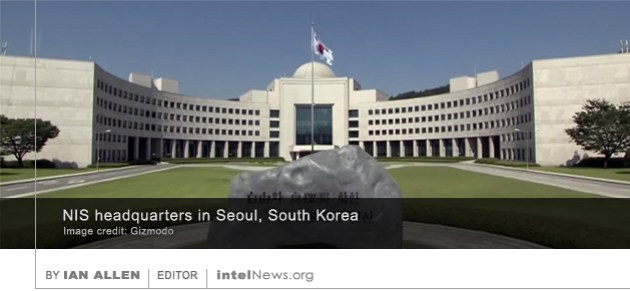
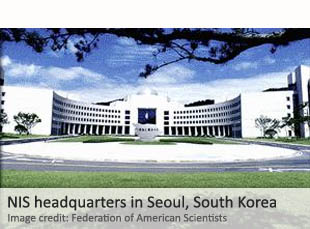
NIS headquarters in Seoul, South KoreaBy I. ALLEN and J. FITSANAKIS | intelNews.org
A South Korean intelligence officer, who was charged earlier this month with deliberately forging Chinese government documents, tried to kill himself inside a car on Sunday, according to local media. The officer, identified in reports only by his last name, Kwon, was fingered last week by South Korean media as the source of a set of documents used in a court case against a man accused of spying for North Korea. Yoo Woo-sung, a prominent North Korean defector living in the South, was arrested last year on charges of espionage. Government prosecutors accused Yoo of collecting information on at least 200 North Korean defectors living in the South while working for the Seoul city government. The prosecution produced a number of Chinese transit documents showing that Yoo had entered North Korea repeatedly from China, ostensibly in order to transport information to his handlers in Pyongyang. However, in a dramatic turn of events, the case against Yoo collapsed in August of 2013; this was followed by allegations that some of the documents presented to the court by the prosecutors had been forged. It now appears that the forged documents, which were travel records allegedly issued by the Chinese government, had been given to the prosecution by South Korea’s National Intelligence Service (NIS). Court documents surfaced last week identifying Kwon (named initially as ‘Kim’) as one of the sources of the forged documents. Kwon fervently denied the accusations, claiming that he too had been duped by a Chinese asset who gave him the forms. He also argued that that the asset was probably working for Chinese intelligence. On Sunday, however, Kwon apparently tried to kill himself at his home in a suburb of Seoul. Read more of this post

South Korean spy charged with forging Chinese government records

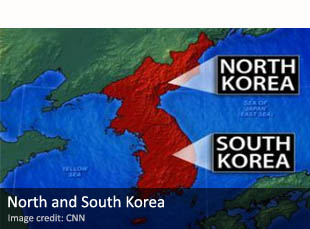
North and South KoreaBy IAN ALLEN | intelNews.org
Authorities in South Korea have charged an intelligence officer with forging Chinese government documents that were used in a court case against a man accused of spying for North Korea. IntelNews readers will remember the case of Yoo Woo-sung, a prominent North Korean defector living in the South, was arrested last year on charges of espionage. In May of that year, court documents revealed that Yoo had been arrested following testimony from his own sister, also a North Korean defector. She had apparently been sent to the South by the North Korean intelligence services, and tasked with collecting information on North Korean defectors living across the border. Prosecutors accused Yoo of collecting information on at least 200 North Korean defectors living in the South, while he worked for the Seoul city government. Yoo maintained his innocence throughout his trial. However, his protestations appeared untenable once the South Korean prosecution produced a number of Chinese transit documents showing that he had entered North Korea repeatedly from China, ostensibly in order to transport information to his handlers in Pyongyang. However, in a dramatic turn of events, the case against Yoo collapsed in August of 2013 amidst allegations that some of the documents presented to the court by the prosecutors had been forged. It now appears that the forged documents, which were travel records allegedly issued by the Chinese government, had been given to the prosecution by South Korea’s National Intelligence Service (NIS). Read more of this post

South Korean ex-spy chief jailed for accepting bribes

Won Sei-hoonBy IAN ALLEN | intelNews.org
One of the most powerful figures in South Korea’s intelligence establishment has been sentenced to prison for accepting bribes in return for helping a private company acquire government contracts. Won Sei-hoon headed South Korea’s National Intelligence Service (NIS) from 2008 to 2013, during the administration of President Lee Myung-bak. The once supremely powerful organization, founded in 1961 as the Korean Central Intelligence Agency, was intimately involved in the murky South Korean politics of the Cold War era, during which the country’s political life was dominated by bloody military coups and political repression. In the late 1980s, a process of democratization began in the NIS, and in recent years many intelligence observers believed that the agency had managed to shed its controversial reputation. On Wednesday, however, a court in South Korean capital Seoul sentenced Won to two years in prison for receiving kickbacks from the private sector while heading the NIS. Won was accused of having taken over $150,000 from Hwang Bo-yeon, former director of Hwangbo Construction, in exchange for lobbying the government to award construction contracts to the company. Regular readers of this blog will recall that Won is also standing accused of having meddled in the 2012 Presidential Election. According to the official indictment in the case, Won is said to have ordered a group of NIS officers to “flood the Internet” with messages accusing liberal political candidates of being “North Korean sympathizers”. Prosecutors allege that Won initiated the Internet-based psychological operation because he was convinced that “leftist adherents of North Korea” were on their way to “regaining power” in the South. Read more of this post

News you may have missed #852

North and South KoreaBy IAN ALLEN | intelNews.org
►►Did US deny entry to German author because he criticized the NSA? Questions have arisen after the German author Ilija Trojanow was denied entry to the United States, apparently without reason. Trojanow had been invited to a German language convention in the US city of Denver. However, he was left stranded at Salvador da Bahia airport, in Brazil. A colleague of the writer claims his call for clarity about US spying activity is the answer. A spokeswoman for Trojanow’s publisher said he was on his way back to Germany on Tuesday.
►►Analysts stress ‘sophisticated tradecraft’ after Iranian spy arrested in Israel. Israeli officials over the weekend released details regarding the arrest of an Iranian-Belgian citizen accused of conducting extensive espionage against Israeli and American targets inside the Jewish state, deepening concerns regarding the scope and sophistication of Iranian intelligence tradecraft. Ali Mansouri, in his mid-50s, was arrested on September 11 at Tel Aviv’s Ben-Gurion Airport by the Shin Bet intelligence service. One Israeli military correspondent observed that, in the case of Mansouri, “Iran followed the playbooks of the most advanced intelligence agencies in the world”.
►►Northern spy lifts cloak on Koreas’ deadly rivalry. Kim Dong-sik is a North Korean agent captured in the South in 1995. He underwent four years of interrogations before joining the South Korean military counterintelligence command. He is now an analyst at the Institute for National Security Strategy, a research organization affiliated with the National Intelligence Service. His tale, detailed in a new memoir, provides a rare, firsthand look at the often lethal spy war that the rival Koreas waged for decades and that many fear may persist today.

Australian civil servant accused of spying denied access to evidence

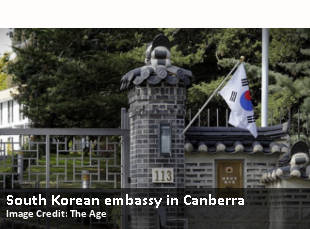
Embassy of South Korea in AustraliaBy IAN ALLEN | intelNews.org |
Australia’s Federal Court has rejected a bid by a senior civil servant to view the evidence the government is using to accuse him of espionage. Until September of 2011, Dr. Yeon Kim was a career civil servant with the Australian Bureau of Agricultural and Resource Economics and Sciences (ABARES). His specialization in international trade policy required a security clearance, which Kim had possessed since 2001. But in 2011, he was sacked and had his security clearance revoked for allegedly holding clandestine meetings with officers of South Korea’s National Intelligence Service (NIS). The Australian government accuses Kim of meeting repeatedly with Hoo-Young Park, an employee of the South Korean embassy in Canberra, who had been declared to the Australian government as an NIS liaison officer. According to court documents, three other NIS officers serving under diplomatic cover in Australia, Bum-Yeon Lee, Sa-Yong Hong, and a third man named Kim, were involved in collecting intelligence on Australian trade secrets. The Australian Security Intelligence Organisation (ASIO), which detained Kim, said that he willingly participated in the “foreign interference” operation by the NIS. For several months now, Kim has been contesting the Australian government’s legal case against him in the Federal Court. His legal team recently requested that the Court annul two certificates issued by the Australian attorney general, designed to bar the defense from accessing evidence against Kim. The certificates were originally submitted by government prosecutors during an earlier Administrative Appeals Tribunal hearing. But the Court declined the request, saying the defense waited too long to challenge the certificates. In issuing the ruling, Justice Lindsay Foster said Kim’s legal team should have requested that the certificates be declined during the original hearing. The judge censured Kim’s defense lawyers for “stand[ing] by and watch[ing] while the certificates were [originally] deployed”, adding that it would undermine the integrity of the legal process to allow the certificates to be challenged at this late stage. Read more of this post

S. Korea parliament probes spy agency’s elections meddling

Won Sei-hoonBy JOSEPH FITSANAKIS | intelNews.org |
A parliamentary probe began last week into whether South Korea’s main intelligence agency tried to steer voters away from the liberal candidate during the 2012 presidential election. The country’s National Intelligence Service (NIS) is accused of having deliberately leaked a classified document in order to embarrass the late South Korean President Roh Moo-hyun, who was also a member of the liberal Uri Party (now Democratic Party) of South Korea. IntelNews readers will recall that Won Sei-hoon, who headed NIS from 2008 to 2013, was recently indicted for meddling in the 2012 Presidential Election. According to the indictment, Won ordered a group of NIS officers to “flood the Internet” with messages accusing DP candidates of being “North Korean sympathizers”. Prosecutors allege that Won initiated the Internet-based psychological operation because he was convinced that “leftist adherents of North Korea” were on their way to “regaining power” in the South. The NIS affair has gripped South Korea’s media headlines for months, but fuel was added to the fire in June, when the NIS “mistakenly” declassified an internal document describing a series of secret North-South Korean negotiations. The document, from 2007, shows that the then-President of Korea, Roh Moo-hyun, from the Uri Party, had proposed to North Korean officials the establishment of a “maritime peace zone” along the disputed border between the two nations. Liberal politicians allege that, according to South Korean declassification laws, the document should have remained secret for many decades, and accuse the NIS of deliberately leaking it in order to promote the image of South Korean liberals as “North Korean sympathizers”. Meanwhile, another senior South Korean security official, former Seoul metropolitan police chief Kim Yong-pan, has also been indicted for allegedly hampering a police investigation into Won’s internet campaign. This series of apparently interlinked events is now at center stage in the parliamentary probe, as rival parties prepare to clash over the allegations. Read more of this post

S. Korea’s spy agency accused of politicization, ‘dividing country’

Won Sei-hoonBy JOSEPH FITSANAKIS | intelNews.org |
South Korea’s main opposition party has accused the country’s intelligence agency of acting as a “political provocateur”, “championing conservative causes” and promoting partisanship among the electorate. Lawmakers from the liberal Democratic Party (DP) of South Korea were reacting to allegations last week that the country’s National Intelligence Service (NIS) deliberately leaked a classified document in order to embarrass former South Korean President Roh Moo-hyun. IntelNews readers will recall that, earlier this year, Won Sei-hoon, who headed NIS from 2008 to 2013, was indicted for meddling in the 2012 Presidential Election. According to the indictment, Won ordered a group of NIS officers to “flood the Internet” with messages accusing DP candidates of being “North Korean sympathizers”. Prosecutors allege that Won initiated the Internet-based psychological operation because he was convinced that “leftist adherents of North Korea” were on their way to “regaining power” in the South. If Won, who has since resigned from his NIS post, is found guilty, he faces sentencing of up to five years in prison. Won’s indictment has increased tensions between the DP and the conservative Saenuri Party, which is currently in power in Seoul, and is believed to have strong ties with NIS executive circles. The NIS is supposed to be politically nonpartisan, though its history is highly controversial. Democratization within the NIS only began in the late 1980s, as South Korean politics gradually emerged from a Cold War period dominated by bloody rightwing military coups. This past June, as the country continued to deliberate the 2012 Internet postings affair, the NIS “mistakenly” declassified an internal document describing a series of secret North-South Korean negotiations. Read more of this post

News you may have missed #840

John KiriakouBy IAN ALLEN | intelNews.org |
►►S. Korea prosecutors might seek ex-spy chief’s arrest. Prosecutors said Monday they will decide sometime this week whether to seek an arrest warrant against Won Sei-hoon, who headed South Korea’s National Intelligence Service (NIS) for about four years until early this year. He is suspected of ordering agents to post a slew of politically sensitive comments on the Internet in order to sway public opinion in favor of the ruling party candidate prior to the December 19 national election. Won, who headed the NIS under former President Lee Myung-bak, has been barred from leaving the country pending investigation.
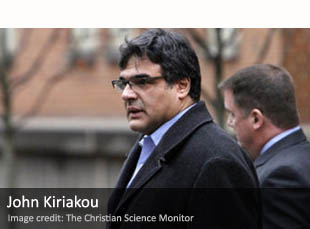
►►CIA self-described whistleblower writes about life in prison. In 2012, former CIA officer John Kiriakou pleaded guilty to violating the Intelligence Identities Protection Act. In January of this year, he was sentenced to 30 months in a low security prison in Loretto, Pennsylvania. In a letter released by his lawyer, Kiriakou describes his day-to-day life behind bars, from his own tiny cell to an almost anthropological study of the lunchroom and the relatively rare prison fights.
►►Comment: End the spy budget secrecy in Israel. Since the establishment of the Israeli state, the security establishment has enjoyed confidentiality with regard to the details of its budget, justified by the need to keep secrets from enemy intelligence services. This lack of transparency has impaired public scrutiny of security expenditure, which represents a large chunk of the Israeli economy. When the watchful eye is distant, the temptation is great to inflate job slots, exaggerate salary increments and hike up pension conditions.

Revealed: South Korean intel officers caught spying on Australia

Embassy of South Korea in AustraliaBy JOSEPH FITSANAKIS | intelNews.org |
A court in Australia has released information about “inappropriate activities” allegedly conducted by South Korean intelligence officers targeting trade negotiations between Seoul and Canberra. The 2011 case involved operatives of South Korea’s National Intelligence Service (NIS), who purportedly tried “to obtain sensitive information” from Australian civil servants. The documents, released Tuesday by Australia’s Federal Court, reveal that an Australian government official, Dr. Yeon Kim, was sacked and had his security clearance revoked, for allegedly holding clandestine meetings with South Korean NIS officers. The Australian government accused Kim, who worked for the Bureau of Agricultural and Resource Economics and Sciences, of meeting repeatedly with Hoo-Young Park, an employee of the South Korean embassy in Canberra, who had been declared to the Australian government as an NIS liaison officer. According to the court documents, three other NIS officers serving under diplomatic cover in Australia, Bum-Yeon Lee, Sa-Yong Hong, and a man named Kim, were involved in collecting intelligence on Australian trade secrets. According to the Australian Security Intelligence Organisation (ASIO), which detained Kim, he willingly participated in the “foreign interference” operation by the NIS. It is worth noting, however, that there were no expulsions of South Korean intelligence officers or diplomats following Kim’s detention. On the contrary, ASIO appears to have gone to great lengths to prevent disclosure of the spy affair and even protect the identities of the NIS officers involved. In a move interpreted by some as an attempt by Canberra to safeguard its good relations with Seoul, the Australian government warned in a memo that any disclosure of the South Korean intelligence operation would have “a detrimental impact” on bilateral relations between the two nations. Read more of this post

News you may have missed #833

Dawn MeyerriecksBy IAN ALLEN | intelNews.org |
►►Report states Switzerland increasingly targeted by spies. Cyber attacks and abductions of Swiss abroad were two of the main security challenges faced by Switzerland last year, according to report released on Tuesday by the alpine country’s Federal Intelligence Service (FIS). “Switzerland continues to be no priority for jihadist motivated attacks,” the report said. However, presenting the report, FIS head Markus Seiler said an Islamist attack on Swiss soil could not be ruled out. And Swiss nationals abroad were “more threatened than in the past by politically and terrorist motivated abductions”, he said.
►►Prosecutors raid South Korean spy agency. State prosecutors raided the headquarters of the National Intelligence Service of South Korea on Tuesday to investigate accusations that the spy agency used its agents and hired bloggers to influence the presidential election in December. The raid, which started in the morning and continued into the evening, was highly unusual, dealing a blow to the reputation of the spy agency. Such a raid would have been unthinkable decades ago when the agency had served as the main tool of political control for South Korea’s military dictators.
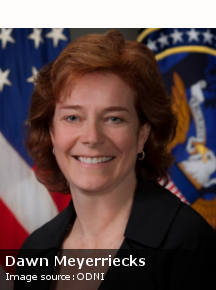
►►Former AOL VP to lead CIA tech and science division. The CIA has appointed Dawn Meyerriecks, former AOL Senior Vice President for Product Technology, as its new Chief of Science and Technology. According to Wired, Meyerriecks is the first internet executive to ever take a top-tiered position in the CIA. Some of the things Meyerriecks has done in the past include working as a Jet Propulsion Lab engineer for NASA, working as a Assistant Director of National Intelligence for Acquisitions and Technology, working as a Chief Technology Officer and Technical Director for the Joint Interoperabillity and Engineering Organization (JIEO), establishing an in-house app market for both spies and analysts, encouraging the US government to use open source software, and much more.