News you may have missed #776

Alexei NavalnyBy I. ALLEN and T.W. COLEMAN | intelNews.org |
►►US Army critiques its own intel collection system. An intelligence gathering system, known as the Distributed Common Ground System (DCGS), widely used by the US Army in Afghanistan to detect roadside bombs and predict insurgent activity, has severe limitations and is “not suitable”. This is according to a memo sent on August 1 by the Army’s senior equipment tester, General Genaro J. Dellarocco, to the Army’s chief of staff, General Raymond Odierno. The memo hammers the DCGS system for its “poor reliability” and “significant limitations” during operational testing and evaluation earlier this year.
►►Russian lawyer exposes wiretap find on Tweeter. Russian lawyer and political activist Alexei Navalny, who discovered a wiretapping device at his workplace, allegedly installed by the Russian government, has used YouTube and Tweeter to publicize his discovery. The wiretap was allegedly found attached to a set of wires hidden inside the wall molding of Navalny’s office at the Moscow-based organization Anti-Corruption Fund. It was reportedly discovered with the help of a bug detector. The same wires seem to also be attached to a hidden camera.
►►Volkswagen victim of Chinese industrial espionage? A recent article by Agence France Presse claims that German-based Volkswagen has become a victim of industrial espionage. While operating under a joint partnership agreement with the Chinese automobile company First Automobile Works, to build and manufacture cars for China’s burgeoning domestic market, designs and technical specifications for Volkswagen engines were apparently stolen. An unnamed Volkswagen manager stated that the loss was “quite simply a catastrophe”. It’s worth noting, however, that a similar accusation leveled against China in 2011 by French automaker Renault, turned out to be a criminal hoax.

News you may have missed #775

Ramstein Air Base, GermanyBy IAN ALLEN | intelNews.org |
►►Israel arrests man for allegedly spying for Syria. Israeli prosecutors have charged Iyad Jamil Assad al-Johari, a Druze resident of the occupied Golan Heights, with spying for Syria. The Shin Bet internal security service said in a statement that Johari, who is from the border village of Majdal Shams, was charged with “having contact with a foreign agent” and “passing information to the enemy”. The Shin Bet said Johari was arrested last month “on suspicion of maintaining contact with Syrian intelligence and passed information on Israeli army deployment on the Golan Heights”. The man’s family has denied the accusations.
►►German NATO employee charged with spying. Markus Koehler, a spokesman for German federal prosecutors, said in a statement that the suspect –identified only as Manfred K. in accordance with German privacy rules– was arrested Monday on charges of obtaining state secrets with the intent to provide them to an unidentified third party. The civilian NATO employee, who works at the US air base at Ramstein, is alleged to have obtained the data and then transferred it to his private computer.
►►Aussie spy agency looking for locksmith. In a new notice on its careers webpage, ASIS, Australia’s foreign intelligence agency, is looking for a “corporate locksmith”. “This is a unique role for a highly motivated and dedicated locksmith to provide complex locksmith services and advice across our organisation”, the notice states. “The position involves interstate and overseas travel, often at short notice”. The job notice says the successful applicant would have to manage the purchasing of all locks, safes and other secure containers for the service.
News you may have missed #774 (lawsuit edition)

NSA headquartersBy IAN ALLEN | intelNews.org |
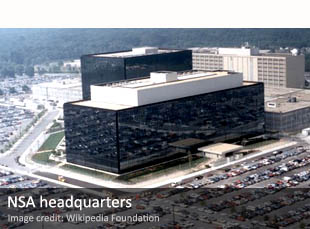
►►NSA whistleblower sues over property seized in leak raid. Diane Roark, a former staffer for the US House of Representatives Permanent Select Committee on Intelligence, has filed a lawsuit to seek return of computers, electronic devices and papers seized from her home in 2007. Roark, who handled the House’s oversight of the National Security Agency from 1997 to 2002, was suspected by the FBI of being a source for The New York Times‘ disclosure of the NSA’s warrantless wiretapping program STELLAR WIND, which she denies.
►►Lawsuit forces US agency to disclose CIA files. The US Veterans Administration has been ordered to disclose documents relating to the CIA’s Cold War-era experimentation on American soldiers. Beginning in the 1950s, the military and CIA utilized former Nazi scientists to test the effects of 400 types of drugs and chemicals, including mescaline, LSD, amphetamines, mustard gas, and nerve agents, on US soldiers, according to a lawsuit brought by the Vietnam Veterans of America and individual soldiers. Under the lawsuit, a judge in California has ruled the VA must hand over documents pertaining to the use of at least 7,800 service personnel as “human guinea pigs” by the US Army and the CIA.
►►Syrian spy tried to infiltrate German intelligence. A suspected Syrian spy who was arrested in Germany earlier this year and has now been charged with espionage, once tried to infiltrate the country’s intelligence services, according to German officials. The man, identified only as Akram O., was employed by Syria’s embassy in Berlin, and tasked with keeping tabs on Syrian opposition activists living in Germany. His application to work for the German federal government was made “at the behest of his intelligence agency handlers”, according to prosecutors. His application was turned down, however. The Syrian national applied for German citizenship in 2009, which was also denied.

News you may have missed #773

Tamir PardoBy IAN ALLEN | intelNews.org |
►►Conflicting reports on CIA-ISI meeting. Lieutenant General Zahir ul-Islam, who heads Pakistan’s premier intelligence agency, the ISI, held talks in Washington with his CIA counterpart General David Petraeus, between August 1 and 3. It was the first time in a year that the chief of the ISI made the trip to the US, signaling a possible thaw in relations. Depending on the source, the meeting was either “substantive, professional and productive”, or “made no big strides on the main issues”.
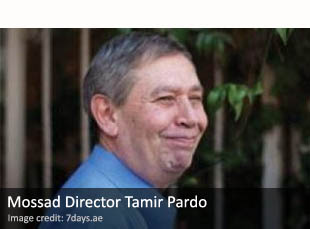
►►Senior Mossad official suspected of financial misconduct. A senior Mossad official is suspected of financial misconduct and has been forced to take a leave of absence until Israeli police complete an investigation into his alleged deeds, Israeli media reported on Sunday. The official, a department head in Israel’s spy organization, has reportedly denied any wrongdoing, but sources said he would likely not be reinstated in light of investigation findings and is effectively being forced to retire. The nature of the official’s alleged misconduct has not been reported, but it is said that the official in question has close ties to Mossad Director Tamir Pardo, who appointed him to his position last year.
►►Ex-NSA official disputes DefCon claims by NSA chief. William Binney, a former technical director at the NSA, has accused NSA director General Keith Alexander of deceiving the public during a speech he gave at the DefCon hacker conference last week. In his speech, Alexander asserted that the NSA does not collect files on Americans. But Binney accused Alexander of playing a “word game” and said the NSA was indeed collecting and indexing e-mails, Twitter writings, Internet searches and other data belonging to Americans. “The reason I left the NSA was because they started spying on everybody in the country. That’s the reason I left”, said Binney, who resigned from the agency in late 2001.

News you may have missed #772

Israeli team at the 1972 Munich OlympicsBy TIMOTHY W. COLEMAN | intelNews.org |
►►India restricts agency-to-agency contacts with CIA. According to The Deccan Herald, Indian intelligence officials are growing increasingly wary of the frequent interactions between their own intelligence personnel and the CIA. Cooperation between the US intelligence organizations and Indian government agencies has been increasing under the guise of counter-terrorism efforts. Calcutta News reports that a book published by author Prem Mahadevan, called The Politics of Counterterrorism in India, identifies at least two CIA penetrations of Indian intelligence officials since 2001.
►►Canadian spy revealed classified information in “massive leak”. As was previously reported on this blog, former Sub-Lieutenant Jeffrey Paul Delisle, a navy intelligence officer, is accused of spying for Russia. According to The New Zealand Herald, the accused Canadian spy provided the Russian government with classified information on the US, Britain, Canada, New Zealand and Australia in what is being termed a “massive leak”.
►►Germany had advance warning of 1972 Olympics massacre. Israel-based English-language newspaper The Jerusalem Post is reporting that an article in the German newsmagazine Der Spiegel, stated Germany had advance warning about a potential terrorist attack on Israeli athletes at the 1972 Olympic games. Previously classified documents accessed by Der Spiegel show that not only were there indications of a terror plot, but that there were explicit warnings and details. Perhaps more damaging are the lengths and extremes that German intelligence officials went to in order to cover up blatant mistakes in the case.

News you may have missed #771

Shawn HenryBy IAN ALLEN | intelNews.org |
►►Analysis: Ex FBI official says foreign spies biggest online threat. Former FBI executive assistant director Shawn Henry has warned that the biggest threat online comes not from terrorists or hackers, but from foreign intelligence organizations looking to steal intellectual property. “The threat from computer attack is the most significant threat we face as a society, other than a weapon of mass destruction”, he said in his opening keynote at the Black Hat 2012 conference in Las Vegas. “Everything we do —R&D, intellectual property, and corporate strategies— is stored or transmitted electronically. The DNA of companies is available to bad guys”.
►►Taiwanese officials jailed for espionage. Two Taiwanese former officials have been sent to prison by the Taiwan High Court for leaking state secrets to China. Presidential Office official Wang Ren-bing was jailed for two years after being found guilty of passing confidential information about President Ma Ying-jeou’s May 2008 inauguration to Chinese intelligence operatives. Chen Pin-jen, a former aide of Chinese Nationalist Party (KMT) Legislator Liao Kuo-tung, was sentenced to eight months in prison for delivering the confidential information Wang gave him to China. The two were arrested in 2009.
►►Germany charges suspected Syrian spy. A spokeswoman for federal prosecutors in Germany said Sunday that they have filed charges against suspected Syrian spy Akram O., one of two men arrested on suspicion of having spied on Syrian opposition activists in Germany for several years. The two were arrested in February during a sting operation involving over 70 German counterintelligence operatives, who searched the suspects’ apartments. The spokeswoman said she could not give further details before an official confirmation is issued that the suspect and the defense team have received the indictment.

News you may have missed #770

Horn of Africa mapBy TIMOTHY W. COLEMAN | intelNews.org |
►►Kaspersky Lab is ‘thwarting US cyber spies’. According to an article in Wired magazine, Eugene Kaspersky, the CEO of Russia-based Kaspersky Labs has been working to support Russian allies in the Kremlin and the FSB. Kasperksy’s firm first discovered the cyber attack weapon known as Stuxnet. As the profile piece notes, “Kaspersky’s rise is particularly notable —and to some, downright troubling— given his KGB-sponsored training, his tenure as a Soviet intelligence officer, his alliance with Vladimir Putin’s regime, and his deep and ongoing relationship with Russia’s Federal Security Service, or FSB”.
►►Al-Shabaab executes alleged CIA and MI6 assets. Somalia’s largest and most deadly armed Islamist group, al-Shabaab, announced that it had captured and executed at least three informants who were allegedly passing intelligence to the CIA and to MI6. The Associated Press stated that Al-Shabaab’s official Twitter feed stated that the individuals, who were summarily interrogated and then executed by firing squad, “were part of a wide network of spies deployed by the British and American intelligence agencies”.
►►Australian intelligence briefed on Canadian spy. The espionage case against accused Canadian spy, former Sub-Lieutenant Jeffrey Paul Delisle, continues to garner intrigue. As was previously reported on this blog, Delisle, a former navy intelligence officer is accused of spying for Russia. But a report in The National Post states that representatives of Canada’s intelligence service briefed members of Australia’s intelligence services on the Delisle’s case and that information exchanges appear ongoing. The particulars of Australia’s involvement in the case are explained here.

News you may have missed #769 (analysis edition)

John McLaughlinBy IAN ALLEN | intelNews.org |
►►Is S. Korea’s spy agency losing its capabilities? The National Intelligence Service, South Korea’s primary external intelligence agency, is presumed to spend around US $1 billion a year, most of which it uses to spy on its northern neighbor. But when asked about the identity of the young woman who frequently accompanies new North Korean leader Kim Jong Un in his public appearances, the state intelligence agency offers no clear answer. Although it was seven months ago, at the time of Kim Jong-il’s funeral, that the woman was first spotted, the agency still does not know who she is. In the past 20 years, NIS has undergone a process of transformation to rid it of political functions. But the lingering question is: have the changes compromised the overall capabilities of the giant organization?
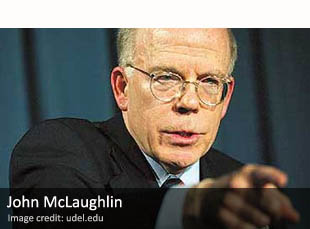
►►How 10 years of war has changed US spies. John McLaughlin, who was a CIA officer for 32 years and served as Deputy Director and Acting Director from 2000-2004, says he is often asked how American intelligence has changed in the 11 years since 9/11. His answer is that the changes are profound and have been transformative. Perhaps the most important thing to realize about American intelligence officers in 2012, he says, is that this is the first generation since Vietnam to have been “socialized” –that is hired, trained, and initiated– in wartime. And to a greater degree than even the Vietnam generation, their experience approximates that of their World War II forbears in the Office of Strategic Services (OSS) –the organization to which most American intelligence officers trace their professional roots.
►►Assessing the Social Media Battlefield in Syria. While the numerous insurgent factions and the Syrian security forces engage each other in combat in towns and cities to secure tangible battlefield gains, the warring parties are also waging a contentious information war in cyberspace, specifically within the virtual arena of online social media. The various strands of the opposition in Syria —political and violent— have taken to social media since the earliest stages of the uprising to advance their agendas. Analogous to their role in facilitating communication and information exchange during the wave of revolts that have been sweeping the Arab world since 2011, new media platforms such as the array of social media websites and related technologies that are available to the public at virtually little or no cost have become crucial to shaping how the crisis in Syria is portrayed and perceived.

News you may have missed #768

CIA headquartersBy IAN ALLEN | intelNews.org |
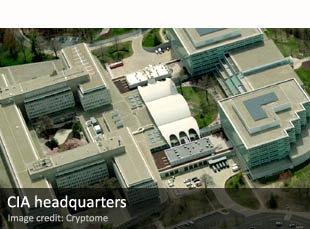
►►‘CIA could get bin Laden but can’t get a gym’. As CIA Director, General David Petraeus is credited by some as having helped turn the tide in the Iraq War, flush the Taliban from southern strongholds in Afghanistan, and infiltrated al-Qaeda in Yemen. But his campaign to improve the Agency’s fitness gyms has been a marathon effort –one that defeated other CIA directors over a course of some 16 years. Petraeus arrived at the CIA in 2011 to find two basement gyms at the Langley, Va., headquarters, one with original flooring dating to 1964. One gym is so small it can’t contain the punching bags and medicine balls that spill into the hall, where people stretch out and do mat exercises.
►►Israel convinced Hezbollah behind Bulgaria bombing. Israeli Prime Minister Benjamin Netanyahu said Sunday that his government has gathered “unquestionable intelligence” showing that the Lebanese militant group Hezbollah, backed by Iran, was behind a suicide bombing in Bulgaria last week that killed five Israeli nationals. The Israeli leader said the Mossad had drawn close parallels between the attack in Bulgaria and a foiled operation in Cyprus earlier this month, involving an alleged Hezbollah operative.
►►Hezbollah silent on reports of Israel spy arrests. Hezbollah would not comment on a local newspaper report on Wednesday, which said the Lebanese Shiite party had detained three men, including two of its own members, for spying for Israel. Lebanese daily newspaper An-Nahar said Hezbollah’s security apparatus had detained two Hezbollah members and a member of a Bekaa village municipal council on the suspicion that they have been collaborating with Israel.

News you may have missed #767

Omar SuleimanBy IAN ALLEN | intelNews.org |
►►Aussie spy chief warns of ‘digital footprints’. For the first time in the 60-year history of the Australian Secret Intelligence Service (ASIS), Australia’s main external spy agency, its Director has spoken publicly. Nick Warner used this unprecedented opportunity to reflect on where ASIS has come in the last 60 years, and the challenges it faces into the future. Among them, he said, are “developments in the cyber-realm”, which “are a two-edged sword for an agency like ASIS; they offer new ways of collecting new information, but the digital fingerprints and footprints which we all now leave behind complicate the task of operating covertly”.
►►India arrests alleged Pakistani spy. Indian authorities have announced the arrest of Zubair Khan, 37, of Uttar Pradesh, who was allegedly caught with several Indian Army documents in his possession. He had been reportedly asked to gather information on Air India pilots, military bases in the country, journalists who frequently visit Pakistan, and relatives of officials working in the Indian High Commission in Pakistan. Maps of cantonment boards and details of many battalions have been recovered from him, according to Indian media reports. Investigators are also said to have identified one of Khan’s handlers, a man named “Talib”, who works at Pakistan’s High Commission in New Delhi.
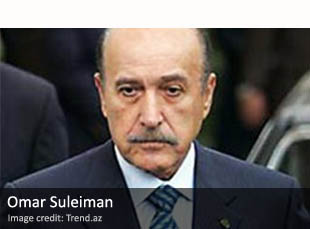
►►Egypt spies try to repair image as ex-Director dies. Egypt’s top spy agency, the General Intelligence Service —known as the “Mukhabarat” in Arabic— is taking a small but unprecedented step out of the shadows, in an apparent attempt to win the public’s support in the new Egypt. In an unusual move, the agency released a 41-minute-long documentary boasting of its achievements, presenting itself as the defender of the nation and vowing to continue to protect the country. The effort comes as the Mukhabarat’s former Director, the notorious Omar Suleiman, has died in the United States.

News you may have missed #766 (Arab world edition)

David SheddBy IAN ALLEN | intelNews.org |
►►Yemen busts alleged Iranian spy ring. Yemeni president Abd-Rabbu Mansour Hadi called on Tehran to stay out of Yemen’s internal affairs last week, after security officials in Sana’a, Yemen’s capital, announced they had uncovered an Iranian spy ring there. Yemen’s government-run SABA news agency said the spy cell, which was allegedly led by a former commander of Iran’s Islamic Revolutionary Guard corps, had operated in Yemen as well as in the Horn of Africa,  and that it had kept an operations center in Sana’a. An interior ministry official said all those detained were Yemenis.
►►CIA sued for killing US citizens in Yemen. Survivors of three Americans killed by targeted drone attacks in Yemen last year have sued top-ranking members of the United States government, alleging they illegally killed the three, including a 16 year-old boy, in violation of international human rights law and the US Constitution. The suit (.pdf), the first of its kind, alleges the United States was not engaged in an armed conflict with or within Yemen, prohibiting the use of lethal force unless “at the time it is applied, lethal force is a last resort to protect against a concrete, specific, and imminent threat of death or serious physical injury”. The case directly challenges the government’s decision to kill Americans without judicial scrutiny.
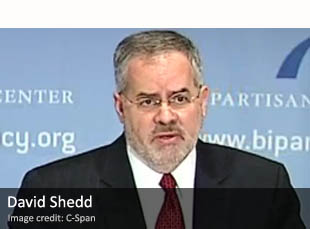
►►US intel official acknowledges missed Arab Spring signs. David Shedd, deputy director of the US Defense Intelligence Agency, the Pentagon’s intelligence arm, said analysts failed to note signs of the unrest across the Middle East and North Africa that exploded into the Arab Spring. Shedd’s comments were posted Thursday by the American Forces Press Service, a Pentagon information wire. They constitute a rare public acknowledgment of the US intelligence failure regarding the turmoil that has redrawn the Middle East’s political landscape, toppling autocratic rulers in Tunisia, Egypt, Yemen and Libya and now engulfing Syria.

News you may have missed #765

Hillary ClintonBy TIMOTHY W. COLEMAN | intelNews.org |
►►MI6 chief says Iran will get nukes in 2 years. Sir John Sawers, the head of Britain’s Secret Intelligence Service, has been quoted as publicly forecasting that Iranian nuclear weapons efforts will likely come to fruition by 2014. Sawers is quoted in The Daily Telegraph as saying: “The Iranians are determinedly going down a path to master all aspects of nuclear weapons; all the technologies they need”, adding “it’s equally clear that Israel and the United States would face huge dangers if Iran were to become a nuclear weapon state”. He went on to assert that Iran would have achieved nuclear statehood in 2008 had it not been for clandestine efforts to thwart such ends. He did not elaborate on what he meant by his comments, for which he was criticized in Parliament earlier this week.
►►MI6 chief claims US interrogators were ‘obsessed’. In the same Telegraph interview, Sir John claimed that British interrogators, following the attacks of September 11, 2001, came “close to the line” of illegality. He went on to say that US interrogators straddled the line between legal and illegal, insinuating that US personnel may have crossed the line during interrogations. Sir John is quoted as explaining: “They [US interrogators] got so obsessed with getting a right answer that they drifted into an area that kind of amounted to torture”. He went on to claim that British personnel involved in interrogations never crossed the line, observing: “We’ve never been there, we’ve never been involved in that, and I think our accountability, our disciplines, have helped us keep on the right side of these lines”.
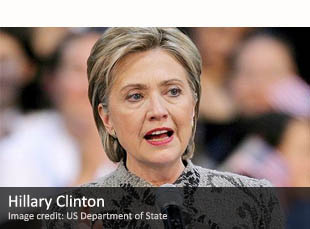
►►Clinton says Israeli spy Pollard unlikely to be freed. US Secretary of State Hillary Clinton has reaffirmed Washington’s position that Jonathan Pollard was unlikely to receive clemency or see freedom anytime soon. During a press conference in Jerusalem on July 16, Secretary Clinton stated unequivocally: “He [Jonathan Pollard] was sentenced to life in prison, he is serving that sentence, and I do not have any expectations that that is going to change”. Pollard, a former US naval intelligence analyst, was suspected of trying to provide classified information to South Africa, Pakistan, and Australia. He was arrested and convicted of espionage for providing classified information to the State of Israel. He is serving a life sentence for his crimes.

News you may have missed #764

Baroness FalknerBy IAN ALLEN | intelNews.org |
►►US government agency spied on whistleblower scientists. The US Food and Drug Administration has been found operating a massive surveillance campaign targeting its own scientists for writing letters to journalists, members of Congress and President Barack Obama. The scientists were expressing their concern over the FDA’s approval of medical imaging devices for colonoscopies and mammograms that could endanger patients with high levels of radiation. The covert spying operation, which is most likely illegal, led the agency to monitor the scientists’ computers at work and at home, copying emails and thumb drives and even monitoring individual messages line by line as they were being composed in real time.
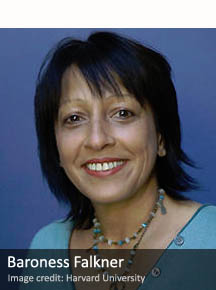
►►UK lawmaker tells MI6 chief to ‘stop bragging’. The head of Britain’s Secret Intelligence Service (MI6), Sir John Sawers, has been accused by Liberal Democrat parliamentarian Baroness Falkner of Margravine of demonstrating a “lack of judgment” for “bragging” about MI6’s role in slowing Iran’s nuclear program. Earlier this month, Sir John said in an interview that covert operations by British spies had prevented Iran from developing nuclear weapons as early as 2008. But Lady Falkner said in a speech at the House of Lords that “Sir John’s comments could almost be construed as bragging. In my view”, she continued, “it would be best for the veneer of silence to descend on the Secret Intelligence Service once again. There is such a thing as too much information”.
►►German domestic intel agency gets new director. The German government has appointed terrorism expert Hans-Georg Maassen to head the country’s domestic intelligence body, known as the “Verfassungschutz. Maassen’s appointment comes after several turbulent weeks for the agency that have resulted in three of its top officials stepping down amid a scandal connected to a series of murders by a Neo-Nazi group calling itself the National Socialist Underground.

News you may have missed #763

RedHack posterBy IAN ALLEN | intelNews.org |
►►Taiwan ex-colonel nabbed for spying for China. Cheng Lin-feng, a retired Lieutenant Colonel in the Taiwanese army, and civilian Tsai Teng-han, were taken in by Taiwanese police last week on suspicion of spying for China. Cheng was allegedly recruited by Chinese intelligence when he travelled to the mainland to do business, Taiwan’s Ministry of National Defense said in a statement, adding that he had been investigated ever since a tip-off in 2009. A court spokesman said that details of case will be held until the investigation is completed.
Russian law brands foreign-funded NGOs ‘foreign agents’. Russia’s Lower House of Parliament has approved a bill that brands non-governmental organizations receiving funding from abroad as “foreign agents”, a law that activists fear the Kremlin will use to target critics. The bill is almost certain to be approved by the Upper House before being signed into law by President Vladimir Putin, who last year accused the US State Department of funding protests against him. The bill is seen by many analysts as setting up a legal infrastructure for a crackdown on the opposition. Meanwhile, official statistics show that wiretapping in the Russian Federation has nearly doubled over the past five years. The main driver of the rise, analysts say, involves the myriad of Russia’s rival security services spying on each other.
►►Turkish hackers release names of police informants. Members of Turkey’s Marxist cyberactivist group RedHack have dumped online a 75-megabyte text file with thousands of emails from Turkish police informants. The group said it released the information in retaliation against ultra-nationalist hackers who have been threatening opposition academics and journalists. RedHack, which has been using ‘defacement hacking’ to promote a Marxist political agenda since its founding, in 1997, is included on the Turkish government’s list of terrorist organizations. In March of this year, RedHack stole data from the Turkish police’s network, forcing the police to shut down all its servers.

News you may have missed #762

Danni YatomBy IAN ALLEN | intelNews.org |
►►Italy postpones court decision on wanted CIA operatives. The Washington Post has published a useful update on Sabrina De Sousa, one of nearly two-dozen CIA operatives who were convicted in Italy in 2007 for the kidnapping four years earlier of Egyptian cleric Hassan Mustafa Osama Nasr. The Americans kidnapped Nasr, known as Abu Omar, from the streets of Milan without the consent of Italian authorities. The Italians, who were themselves carefully monitoring Nasr, responded by convicting all members of the CIA team in absentia, and notifying INTERPOL. But last Friday, the Supreme Court of Cassation in Rome postponed its verdict after a two-day hearing aimed at deciding whether to uphold or overturn the Americans’ convictions.
►►Ex-Mossad chief urges Israel to prepare for military action in Syria. In an interview with British news network Sky News, former Mossad Chief Danni Yatom said last week that Israel must be prepared for the possibility of military attacks on Syria, which may deteriorate into war.  He said his warning stems from the fear that Syria’s hundreds of tons of chemical weapons will fall into the hands of terrorists. “We would have to pre-empt in order to prevent it. We need to be prepared to launch even military attacks […] and military attacks mean maybe a deterioration to war”, said the former Mossad Director.
►►British spy agencies failed to predict Arab Spring. The Intelligence and Security Committee of the British Houses of Parliament has said in its annual report that British spy agencies had been surprised by the spread of unrest during the Arab Spring and failed to predict the dramatic uprisings that swept the region. The report also noted that the Arab Spring had exposed Britain’s decision to scale back intelligence assets in much of the Arab world, in favor of monitoring Iran and al-Qaeda. We at intelNews wrote about this in 2011.