News you may have missed #643 (Israel edition)

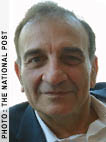
Mosab Hassan Yousef

Yousef/Joseph

►►Hezbollah uncovers more Israeli spy devices. Lebanese media reported on Friday that two people were wounded in a blast that occurred in the south of the country, between the towns of Srifa and Deir Kifa. According to some of the reports, the blast targeted espionage devices which were destroyed by Israel after being exposed by Hezbollah. This is not the first time such devices have been discovered in Lebanon: see here and here for previous such incidents.
►►PLO subpoenas Palestinian who spied for Israel. The Palestine Liberation Organization served Mosab Hassan Yousef, who says he is a former spy for Israeli domestic intelligence agency Shin Bet, with a subpoena in the United States last month. The Palestinian group says it wants his notes and details of his spy work for the Israeli government.
►►Analysis: The complex relationship between the Mossad and Israeli media. “Former Mossad chief Meir Dagan’s crusade this week against an Israeli strike on Iran took on a new dimension with his several media interviews. His campaign also reflects the Mossad’s attitude toward journalists, something along the lines of respect them, suspect them and use them. The degree shifts from one Mossad head to the next”. An enlightening analysis by veteran Israeli intelligence correspondent Yossi Melman.

News you may have missed #642

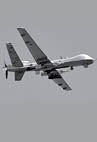
Predator drone

Predator drone

►►Australia concerned China using civilian satellites to spy. Concerns that China may use civilian satellite tracking stations to monitor Australian military operations have been dismissed by the Swedish Space Corporation. The company owns and operates two satellite tracking stations 400 km north of the West Australian capital, Perth. One was used by the China Satellite Launch Company last month in China’s first space docking operation.
►►Did Iran capture US stealth drone intact? For the second time this year, the Iranian government is claiming it forced down a stealthy US Air Force spy drone. Only this time, it says it bagged the RQ-170 “with little damage” by jamming its control signal —a potentially worrying development for American forces heavily reliant on remote-controlled aircraft. A US official, who asked not to be named, told Reuters that “there is absolutely no indication up to this point that Iranians shot down this drone”.
►►Canadian Mounties spied on native protest groups. Canada’s federal government created a vast surveillance network in early 2007 to monitor protests by First Nations, including those that would attract national attention or target “critical infrastructure” like highways, railways and pipelines, according to RCMP documents. The RCMP intelligence unit reported weekly to approximately 450 recipients in law enforcement, government, and unnamed “industry partners” in the energy and private sector. The news follows revelations last month of the RCMP’s largest-ever domestic intelligence operation, aimed against G8 and G20 protesters.
News you may have missed #641 (US edition)

Dennis Blair

Dennis Blair

►► US Navy memo had warned Roosevelt of 1941 attack. Three days before the December 7, 1941, Japanese attack on Pearl Harbor, US President F.D. Roosevelt was warned in a memo from US naval intelligence that Tokyo’s military and spy network was focused on Hawaii. The 20-page memo has been published in the new book December 1941: 31 Days that Changed America and Saved the World, by Craig Shirley.
►►US spy agencies cut their holiday parties. Holiday gatherings have provided rare opportunities for US congressional staff, embassy aides, government officials, and the media to mix it up —off the record— with the spy set. But this year, agency budget Scrooges have taken aim at high-priced holiday merriment. The Director of National Intelligence has canceled holiday parties altogether, and the Central Intelligence Agency has drastically downsized its guest list and lavish spread by more than 50%.
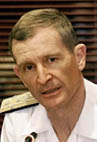
►►Ex-DNI Blair wants Pentagon in charge of drone strikes. The United States’ former Director of National Intelligence Dennis Blair, who previously proposed scaling back the armed drone operation run in Pakistan by the CIA, is now urging that the program be publicly acknowledged and placed in the hands of the US military.

News you may have missed #640

Amos Yadlin

Amos Yadlin

►►Chinese defector says Canada right to worry about spying. Li Fengzhi, a former intelligence officer for China’s Ministry of State Security, who defected to Canada in 2003, has told a conference that Canada should be concerned about relationships between senior politicians and journalists from China, saying Beijing is targeting lawmakers everywhere. He was referring to the case of senior Conservative MP Bob Dechert, who was enveloped by controversy in September over amorous e-mails he sent to Shi Rong, a Chinese government journalist based in Toronto. After the Dechert controversy broke, the journalist recalled to Beijing to meet with her superiors and has not returned to her Canadian posting.
►►More intel officials warn against airstrikes on Iran. Meir Dagan, the former head of Israeli spy agency Mossad, is not alone in warning against the possibility of Israeli attacks against Iran’s nuclear program. He has now been joined by Major General Amos Yadlin, who until recently headed Israel’s Military Intelligence directorate. Speaking at Israel’s Institute for National Security Studies, Yadlin doubted that airstrikes could threaten Iran’s numerous, distant and well-defended nuclear facilities. Another intelligence official, Saudi Arabia’s Prince Turki al-Faisal, also cautioned last week against any attacks on Iran, saying that “there are other non- military policy alternatives, as yet unexplored, that could have the desired result without the unwanted consequences”.
►►GCHQ challenges code breakers via social networks. Britain’s signals intelligence agency, the General Communications Headquarters, has launched a code cracking competition to help attract new talent. The organization has invited potential applicants to solve a visual code posted at an unbranded standalone website. The challenge will also be ‘seeded’ to social media sites, blogs and forums. A spokesman said the campaign aimed to raise the profile of GCHQ to an audience that would otherwise be difficult to reach.

News you may have missed #639 (Katia Zatuliveter edition)

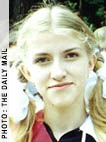
Katia Zatuliveter

Katia Zatuliveter

►►Russian woman accused of spying wins right to stay in UK. Katia Zatuliveter, 26, who was accused by British counterintelligence service MI5 of being a spy for Russia, has won a court appeal against her planned deportation. A panel of the UK’s Special Immigration Appeals Commission, which included the former MI5 director general Sir Stephen Lander, ruled that MI5’s suspicions about Zatuliveter had been reasonably held, but were wrong.
►►Zatuliveter espionage case reveals MI5 fears. MI5, the security service, will be hugely disappointed that the Special Immigration Appeals Commission has overturned the government’s attempt to deport Katia Zatuliveter on allegations that she spied for Russia. But senior figures at the domestic intelligence service will have no regrets about undertaking their yearlong attempt to secure the expulsion of an individual who has given them ample grounds for suspicion.
►►How big is the threat from Russian spies? There may well be Russian spies operating in Britain today, but Katia Zatuliveter –who has won an appeal against deportation– is not one of them, and the failure of the case against her is an embarrassing blow to a security service for whom the Russians were once the top target.

News you may have missed #639

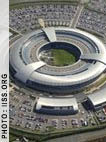
GCHQ

GCHQ

►►GCHQ will sell cyberdefense tech to private firms. The GCHQ, Britain’s signals intelligence agency, is to market some of its security technologies to companies in the private sector, in an attempt to bolster defenses against the foreboding threat of cyberwarfare. The UK government’s “cyber security strategy”, which was unveiled this month, has earmarked £650 million in public funding to set up a four-year National Cyber Security Program, a percentage of which will be used to collaborate with private companies. Click here for an excellent analysis on the public-private cybersecurity collaboration in Britain.
►►Was there a coup attempt in Trinidad? Many in Trinidad and Tobago were expressing skepticism yesterday about an alleged assassination plot, which Prime Minister Kamla Persad-Bissessar said had been uncovered against her and several of her ministers. Police said nearly a dozen people had been arrested, including members of the army and police, but authorities have not given more details, citing the need to maintain security in operations to dismantle the plot.
►►US Senators resist $7 Billion in spending cuts for spy satellites. The Obama Administration wants to stop incessant spending by Defense Department contractors, especially those who have wasted billions of US taxpayers’ money in failed spy satellite projects. But the contractors’ friends in Congress, including lawmakers on the US Senate Intelligence Committee, are trying to stop the White House from cutting a $7 billion commercial satellite program being developed by GeoEye Inc. and DigitalGlobe Inc. What else is new?

News you may have missed #638 (analysis edition)

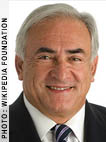
Dominique Strauss-Kahn

Strauss-Kahn

►►What really happened to Strauss-Kahn? Earlier this year, Dominique Strauss-Kahn lost his political career and his job as head of the International Monetary Fund after he was indicted in New York on sexual assault charges, which were later dropped. But investigative journalist Edward J. Epstein alleges that the French politician may have been the target of a deliberate attempt to destroy him as a political force. His allegations relate to a missing BlackBerry phone which is said to have been hacked by Strauss-Kahn’s political rivals.
►►Spy game revs up with Arab Spring. A broad –perhaps too broad– primer on espionage and intelligence operations in the Middle East, with quotes by several academics and former intelligence operatives. Parts of it are probably too basic for intelNews regulars, but worth a look nonetheless.
►►Why is UK police not investigating Climategate? The UK police force tasked with investigating the hacking of emails and documents from the Climatic Research Unit at the University of East Anglia (the debunked “Climategate“), seems to have quietly de-prioritized its investigation. According to documents released under the UK Freedom of Information Act, the amount spent on attempts to identify the hacker in the last year was just £5,649.09 (less than $8,000), suggesting police work on the investigation has ground to a halt.

News you may have missed #637

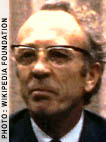
Dmitri Bystrolyotov

D.A. Bystrolyotov

►►South African spy boss to quit. Director General of the State Security Agency Jeff Maqetuka, who has been entangled in a never-ending war with Minister Siyabonga Cwele, is expected to step down this week, according to South Africa’s Sunday Independent. The paper claims that that plans are afoot to expedite Maqetuka’s departure from the country’s intelligence infrastructure by placing him on summer leave and then making sure he would not return to work in 2012.
►►Slovakian defense minister resigns over wiretap scandal. The interception of journalists’ telephone calls by the Slovakian Defense Ministry’s counterintelligence arm has cost the country’s Defense Minister, Lubomír Galko, his job. The scandal involved Slovakia’s Military Defense Intelligence (VOS). It has also emerged that the VOS operation involved wiretapping of the head of TV news channel TA3 and two senior Defense Ministry employees, according to leaked documents obtained by Slovak media outlets.
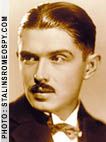
►►Book on Soviet spy Dmitri Bystrolyotov. Excerpt from Emil Draitser’s book Stalin’s Romeo Spy: The Remarkable Rise and Fall of the KGB Most Daring Operative (Northwestern University Press, 2010), about one of the 20th century’s most outstanding undercover operatives. Bystrolyotov acted in Western Europe in the interwar period, recruiting and running several important agents in Great Britain, France, Germany, and Italy.

News you may have missed #636

Lebanon

Lebanon

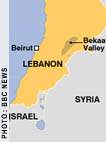
►►Careless codeword may have cost CIA its Lebanon network. Hezbollah have reportedly just rolled up the CIA’s network of spies in Lebanon. If so, it’s because of one of the stupidest, least secure code words in history. According to ABC News, Hezbollah operatives figured out that CIA informants, who had infiltrated the Iranian proxy group, were meeting with their agency handlers at a Beirut Pizza Hut. How could Hezbollah deduce that location? “The CIA used the codeword ‘PIZZA’ when discussing where to meet with the agents,” ABC reports.
►►UK spy chiefs to be publicly questioned for first time. The heads of British intelligence agencies are set to be questioned for the first time in public, under plans to make spies more accountable. The directors of MI5, MI6 and GCHQ will face Parliamentarians on the Intelligence and Security Committee. Although, they have recently begun to make rare public appearances, and deliver speeches, it will be the first time the intelligence agency heads will face public cross-examination over their activities.
►►Documents reveal largest domestic spy operation in Canadian history. Police organizations across Canada co-operated to spy on community organizations and activists in what the Royal Canadian Mounted Police called one of the largest domestic intelligence operations in Canadian history, documents reveal. Information about the extensive police surveillance in advance of last year’s G8 and G20 meetings in southern Ontario comes from evidence presented in the case of 17 people accused of orchestrating street turmoil during the summits.

News you may have missed #635

Vitaly Shlykov

Vitaly Shlykov

►►UK to support Colombia’s new intelligence agency. The UK has announced that it will provide help and advice on the implementation of Colombia’s new national intelligence agency. Colombian President, Juan Manuel Santos, along with National Security Adviser, Sergio Jaramillo, met with the director of Britain’s secret service MI6 to exchange experiences in intelligence to implement the new National Intelligence Agency of Colombia (ANIC). ANIC is supposed to replace the DAS, Colombia’s disgraced intelligence agency, which has been stigmatized by colluding with paramilitary groups and spying on union leaders, journalists and opposition politicians.
►►US intelligence to train analysts with videogames. The US intelligence community’s research group, the Intelligence Advanced Research Projects Agency (IARPA), has handed over $10.5 million to Raytheon BBN Technologies to start work on the Sirius program. The initiative aims to create a series of so-called “serious games” that would help intelligence analysts improve their objectivity and reasoned judgment when confronted with complex or culturally foreign scenarios.
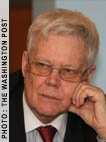
►►Soviet spy who spent years in Swiss prison dies at 77. Vitaly Shlykov served for 30 years in the Main Intelligence Directorate of the Russian General Staff, known as GRU. During his career, he made frequent trips to the West on a false American passport. One of his duties was to maintain contacts with Dieter Felix Gerhardt, a senior officer of the South African Navy who was working as a Soviet spy. In 1983, Shlykov was arrested in Zurich while carrying about $100,000 in cash to hand over to Gerhardt’s wife. Soviet intelligence was unaware that Gerhardt and his wife had been arrested a few weeks earlier and had told interrogators about the meeting in Switzerland.

News you may have missed #634

Husain Haqqani

Husain Haqqani

►►Korean ex-soldier investigated for spying. Police suspect that a former South Korean Army soldier, Kim, 34, whose full name was undisclosed to the media, crossed through Shenyang, northeastern China, into the North and handed over information gathered during and after his military service. This is the second case involving alleged North Korean spying on the South in as many days.
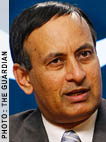
►►Pakistan ambassador to US resigns over spy memo row. Islamabad’s ambassador to Washington, Husain Haqqani, has resigned after a confrontation between Pakistan’s military and the civilian government of President Asif Ali Zardari. His resignation follows reports of an offer by the Pakistani government to the United States to rein in the army and its spy agency, Inter-Services Intelligence. Zardari’s government was accused of treachery over the proposal, which was made in a memo delivered to the US military chief, Admiral Mike Mullen.
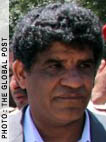
►►US says ‘no proof’ of Libyan ex-spy chief’s capture. It emerged earlier this week that former Libyan intelligence chief Abdullah al-Senussi had been captured. But the United States now says there is no proof he is in custody. According to Susan Rice, the US envoy to the United Nations, Libyan authorities “were not able to confirm that Senussi was in anybody’s custody”.

News you may have missed #633

Abdullah al-Senussi

Al-Senussi

►►Is Britain secretly assisting the CIA’s drone campaign? In the latest casualties from America’s hidden war in Pakistan, two British nationals, Ibrahim Adam and Mohammed Azmir, have reportedly been killed by drone missiles. The death of two men already known to UK authorities raises serious questions about the role that the British intelligence services are playing in the CIA’s unmanned drone war.
►►Gaddafi’s intelligence chief captured. Libya’s interim authorities have captured the last totem of the Gaddafi regime, seizing former intelligence chief Abdullah al-Senussi in the country’s southern desert. The arrest means that all leading figures from the Gaddafi regime have now been killed, captured or driven into exile.
►►South Korea says it caught North spy. A North Korean spy has been arrested after arriving in South Korea posing as a refugee, according to South Korean authorities. The latter claim to have found during a routine background check that the man, surnamed Kim, was assigned to the North’s military intelligence command and had received espionage training.

News you may have missed #632 (Israel edition)

Ari Ben-Menashe

Ari Ben-Menashe

►►What are Mossad ex-chief’s business ties to Uganda? Former director of operations in the Israeli spy agency Mossad, Rafi Eitan, is now a private businessman. Yet he helped organize Ugandan President Yoweri Museveni’s recent visit to Israel. He is said to have been trying to establish business operations in Uganda and to set up a cattle ranch in the country.
►►Israel FM meets Mossad chief in bid to end row. Israel’s Foreign Minister Avigdor Lieberman met on Sunday with Mossad chief Tamir Pardo, in a bid to end the crisis between the two men, which culminated last week, when Lieberman ordered the foreign ministry to boycott the Mossad, to stop sharing information and to refrain from inviting Mossad officials to discussions and meetings.
►►Canada’s spy watchdog’s in shady deal with Israeli businessman. Arthur Porter, the federally appointed chairman of Canada’s Security and Intelligence Review Committee (SIRC), wired $200,000 in personal funds to Ari Ben-Menashe. A former Israeli government employee, Ben-Menashe was charged in the United States with illegally attempting to sell military planes to Iran. He said that he acted on orders from Israel. He then wrote a memoir called Profits of War, filled with accounts of international espionage and conspiracies he says he either participated in or was privy to.

News you may have missed #631

Tommy Douglas

Tommy Douglas

►►Some spy files on Canadian prominent politician released. Newly declassified records from the early 1960s show that the Royal Canadian Mounted Police spied on Saskatchewan Premier Tommy Douglas (pictured), suspecting him of communist sympathies. Douglas, a popular leftwing politician, led the first social democratic government in North America.
►►Aussie diplomats urged to welcome defectors in 1980s. The Australian government urged its spies and diplomats to encourage foreign officials to defect to Australia and welcome intelligence they might bring with them, according to internal documents from the 1980s, released this week. The directives noted that applications from defectors were not expected to be numerous “but failure on our part to handle them deftly could result in the loss of intelligence relevant to Australia’s security and other interests”. One observer notes that the 1980s policy towards defectors still applies today in Australia’s diplomatic community.
►►Iran arrests two Kuwaitis on suspicion of espionage. Iran’s semiofficial Fars news agency says Iranian security has detained two Kuwaiti citizens in southwestern Iran for suspected espionage activities. Fars quoted Bahram Ilkhaszadeh, governor of Abadan, a town close to Kuwait, as saying that Iran’s security agents detained the two on possession of “spying equipment”. Kuwait has denied the charges.

News you may have missed #630

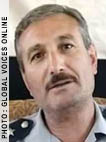
Riad Al Assad

Riad al-Assad

►►Senior Syrian military defector in Turkey denies training troops. Colonel Riad al-Assad, who acts as head of Syria’s military defectors, has denied a news report that he crossed the border from Turkey to Syria to command troops loyal to the opposition force called the Free Syrian Army. “News reports that appeared on a number of Internet sites that I had crossed into Syria to command troops there are false. I am in Turkey at the moment, in a safe place,” he told the Turkey’s Anadolu Agency on Tuesday.
►►Iran says missile base blast was not caused by Mossad. Iran has insisted that last weekend’s huge blast at the Alghadir missile base at Bid Ganeh, 30 miles to the west of Tehran, was not carried out by Israel or the US, despite widespread reports that it was the work of the Israeli secret service, the Mossad. The explosion killed 17 of the country’s elite revolutionary guards, including Major General Hassan Moqqadam, a senior commander described as the pioneer of the regime’s missile programme.
►►British official says MI6 foiled Libyan assassination plan. British intelligence foiled a plot by Colonel Muammar al-Gaddafi’s forces to assassinate Western diplomats and Libya’s revolutionary leadership, Britain’s Foreign Secretary has disclosed. In a rare speech about the secret services, William Hague said the Libyan intelligence service launched a “sustained effort” to conduct suicide and car bomb attacks against the National Transitional Council, but that “the attacks were prevented”.