News you may have missed #614

James Clapper

James Clapper

►►US spy chief proposes double-digit budget cuts. Director of National Intelligence James Clapper on Monday said he has proposed double-digit budget cuts in intelligence programs to the White House because “we’re all going to have to give at the office”. Clapper, in a speech at the GEOINT conference in Texas, said his office had “handed in our homework assignment” to the Office of Management and Budget, “and it calls for cuts in the double-digit range, with a B (for billion), over 10 years”.
►►French spy chief charged with snooping on reporter. France’s opposition on Tuesday called for the resignation of Bernard Squarcini, head of the country’s domestic intelligence agency, the DCRI, after he was charged over spying on a journalist with the daily Le Monde.
►►Researcher forecasts new virus similar to Stuxnet. The discovery of an espionage computer virus in Europe similar to the virus that attacked Iran’s nuclear plants last year suggests that a new, similar cyberattack is about to launch, computer virus researcher Mikko Hypponen says. The new virus, Duqu, was first reported by security company Symantec on its blog Tuesday. Its code is very similar to that of Stuxnet, the virus detected last year that was designed to sabotage equipment at Iranian nuclear plants.

News you may have missed #613 (court case edition)

Katia Zatuliveter

Katia Zatuliveter

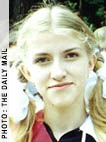
►►Russian accused spy admits affair with British MP. Katia Zatuliveter, 26, who is accused by British counterintelligence service MI5 of being a spy for Russia, has admitted having a four-year affair with Liberal Democrat MP Mike Hancock, 66, while she worked as his parliamentary researcher. She also admitted that before meeting Mr Hancock she had affairs with a NATO official and a Dutch diplomat. However, she has denied working as a spy or targeting Mr Hancock in a honey trap operation.
►►Trial for ex-CIA officer accused of leaking secrets delayed. The trial for Jeffrey Sterling, a former CIA officer charged with leaking classified defense information has been delayed. Opening arguments were expected to begin this week, but the trial was postponed on Monday after prosecutors said they intended to appeal the judge’s decision to strike two witnesses.
►►UK justice secreary plans closed-door terrorism trials. Intelligence gathered by British intelligence agencies MI5 and MI6, even if obtained by torture, will never be disclosed in court proceedings, under proposals announced by British justice secretary Kenneth Clarke. The proposals have been welcomed by the security and intelligence agencies, but criticized by civil rights groups for promoting “secret justice”.

News you may have missed #612 (analysis edition)

Cevat Ones

Cevat Ones

►►What is a senior CIA clandestine officer doing at NYPD? Three months ago, one of the CIA’s most experienced clandestine operatives started work inside the New York Police Department. His title is special assistant to the deputy commissioner of intelligence. On that much, everyone agrees. Exactly what he’s doing there, however, is much less clear.
►►Iranian plot shows even super spies have bad days. The alleged Iranian plot to assassinate the Saudi ambassador to the United States may have revealed the biggest secret of all –intelligence agencies mess up and do not always live up to the James Bond ideal.
►►Former spy makes plea for peace in Turkey. Cevat Ones, former deputy chief of MİT, Turkey’s leading spy agency, speaks candidly to Canada’s Globe & Mail newspaper about the state of Turkey’s internal security and foreign policy.

News you may have missed #611

Kalevi Sorsa

Kalevi Sorsa

►►Diplomat says Finland’s ex-prime minister was Stasi agent. Finnish former diplomat Alpo Rusi said last week that Kalevi Sorsa, Finland’s longest serving prime minister, who led the country in the 1970s and 1980s, is on a secret list of 18 high-profile Finns with links to the Stasi, East Germany’s Cold-War security service. West German intelligence handed the file to its Finnish counterpart in 1990, but the Finnish Supreme Court ruled last year that the list would not be made public.
►►Nazi criminal spied for West Germany. A wiretap operation conducted in the early 1960s by the CIA against the BND, West Germany’s foreign intelligence service, revealed that the BND employed a senior Nazi war criminal, Franz Rademacher, to spy for it in Syria, CIA records show.
►►US government aims to build ‘data eye in the sky’. Social scientists are trying to mine the vast resources of the Internet — Web searches and Twitter messages, Facebook and blog posts, the digital location trails generated by billions of cell phones to “predict the future”.

News you may have missed #610

Charles S. Faddis

Charles S. Faddis

►►Australian agency warns spy cells ‘lie in wait’. In its annual report, Australia’s intelligence service, the ASIO, warns that foreign powers may be recruiting sleeper agents in Australia to carry out sabotage in future conflicts. The report further notes that, despite the rise of cyberespionage, there has not been a marked reduction in the intensity of more traditional forms of espionage.
►►US frees convicted Cuban spy but debate rages on. Few topics illustrate the gulf in perception between the governments of Cuba and the United States like the case of the Cuban Five. The five Cuban agents were arrested in Florida in the 1990s and convicted on espionage charges. US federal prosecutors said the men were trying to spy on military installations. But Cuba’s government has long maintained the men were trying to monitor Miami-based exile groups that were planning attacks on the island nation.
►►Analysis: It’s time for the Pakistanis to pick a side. Former CIA operations officer Charles Faddis (pictured) argues that the US government needs to immediately designate Pakistan’s proxy army, the Haqqani network, as a terrorist organization. It has avoided taking that action for far too long and only because of crass political concerns, says Faddis, but the time has come to change course.

News you may have missed #609

Ilan Grapel

Ilan Grapel

►►Questions over Chinese spy hang over Putin visit. The arrest of a Chinese spy in Moscow has cast a cloud over Vladimir Putin’s two-day visit to Beijing. Tong Shengyong was arrested last October for allegedly trying to buy plans to the Russian S-300 anti-aircraft missile system. But perplexingly, the news of his arrest only emerged last week, in what appears to have been a deliberate leak by Russia’s Federal Security Service (FSB).
►►Egypt steps up charges against suspected Israel spy. Egypt’s State Security Prosecutor has added additional criminal offenses against alleged Israeli spy Ilan Grapel. Meanwhile, there are indications that Egypt seeks the release of 78 Egyptian prisoners held in Israeli jails in return for Grapel. Israel may agree with the proposal.
►►CIA to be last out of Afghanistan. US Special Forces and the CIA are girding for the moment when Afghanistan’s security rests once again with them, working together with Afghan forces against the Taliban. Recent remarks from the White House suggest the CIA and special operations forces will be hunting al-Qaida and working with local forces long after most US troops have left.

News you may have missed #608 (analysis edition)

Anwar al-Aulaki

Anwar al-Aulaqi

►►Spying on the United Nations. “Here is one of the well-known but seldom spoken truths about the United Nations: The international organization, which was founded in the name of peace and security, is also a hotbed of spying and clandestine operations, where someone might very well be listening to your conversations and monitoring your emails —-or perhaps reading your speeches in advance […]. The CIA is prohibited from domestic intelligence-gathering but, since the United Nations is considered foreign soil, it is authorized to run covert actions there”.
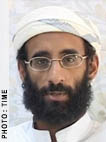
►►Secret panel can put Americans on ‘kill list’. American militants like Anwar al-Aulaqi, who was killed by a CIA drone strike in Yemen late last month, are placed on a kill or capture list by a secretive panel of senior US government officials, which then informs the President of its decisions, according to officials. There is no public record of the operations or decisions of the panel, which is a subset of the White House’s National Security Council.
►►Blowback from CIA’s bin Laden vaccination ruse gets worse. If it wasn’t clear before, it is now: the fake vaccination program that the CIA set up before the Osama bin Laden raid really went awry. Not only did this plan not work –no bin Laden family DNA was obtained– but it also hobbled polio immunization drives and forced Save the Children to evacuate staffers from Pakistan out of fear of a backlash.

News you may have missed #607

Shakil Afridi

Shakil Afridi

►►Ex-worker sues US spy agency for anti-Islamic bias. Mahmoud Hegab, a former employee of the super-secretive US National Geospatial-Intelligence Agency, says he lost his security clearance because his wife attended an Islamic school and worked for a Muslim charity, Alexandria-based Islamic Relief USA.
►►Russia says China still spies the old-fashioned way. Russia’s Federal Security Service (FSB), issued a rare statement last week, claiming it had arrested Tong Shengyong, a Chinese citizen who, posing as a translator for official delegations, was working under the direction of the Chinese government in an attempt to buy state secrets from Russians about Russia’s S-300 missile system. It now says that the Tong case shows that China continues to employ an old standby in the tradecraft playbook: outright bribery.
►►Pakistan panel says doctor who aided CIA should face charges. Pakistani doctor Shakil Afridi, who ran a vaccination program for the CIA to help track down Osama bin Laden, should be put on trial for high treason, a Paksitani government commission said Thursday.

News you may have missed #606

Gaza Freedom Flotilla raid

2010 Flotilla raid

►►N. Korea planned to trade nukes for full ties with US. North Korea in 2008 indicated it would retain its nuclear bombs until the end of the six-party talks as a final bargaining chip for attaining full diplomatic relations with the United States, according to US diplomatic cables leaked recently by the anti-secrecy group WikiLeaks.
►►Judge refuses to sanction CIA for destroying torture tapes. A federal judge won’t hold the CIA in contempt for destroying videotapes of detainee interrogations that included the use of a torture technique known as waterboarding, ruling instead that the spy agency merely committed “transgressions” for its failure to abide by his court order. The Obama administration has kept its promise to the CIA.
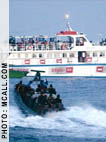
►►Turkey says NATO members will not share intelligence with Israel. Turkey has says it is certain that NATO member states will keep their promise of not sharing the Alliance’s intelligence within with Israel. Turkish-Israeli relations badly damaged last year, after Israeli naval commandos stormed a Turkish ship carrying humanitarian aid to Gaza to breach the naval blockade, killing nine Turkish civilians.

South Korea charges North Korean agent caught carrying ‘poison-tipped needle’

Park Sang-hak

Park Sang-hak

By JOSEPH FITSANAKIS | intelNews.org |
The South Korean government has formally pressed charges against a North Korean defector, whom it accuses of trying to kill an outspoken anti-Pyongyang activist living in the South, with the use of a poison-tipped needle. As intelNews reported last month, a man identified only as ‘Ahn’ was arrested at a subway station in southern Seoul, as he tried to assassinate Park Sang-Hak. The alleged target of the assassination is a high-profile North Korean defector known for spearheading an imaginative —and often controversial— propaganda campaign directed against the government of North Korea. In one recent case, Park, along with his wife and children, employed dozens of inflatable helium balloons to smuggle thousands of leaflets, dollar bills, solar-powered radios, and DVDs into North Korea. According to the Korean Central Prosecutor’s Office in Seoul, Park’s activities prompted Pyongyang to employ ‘Ahn’, a North Korean former Special Forces commando, to try to kill the anti-communist propagandist. According to South Korean officials, ‘Ahn’, has operated as a North Korean sleeper agent ever since his relocation to Seoul, in the late 1990s. In the summer of 2011, ‘Ahn’ contacted Park and eventually managed to arrange a meeting with him at a suburban subway station in the South Korean capital for September 3. However, several days prior to the arranged rendezvous, Park received notice from South Korea’s National Intelligence Service (NIS) that ‘Ahn’ was out to either kidnap or kill him. The alleged North Korean agent was arrested at the subway station at the time of his meeting with Park. South Korean government prosecutors claim that NIS agents found a poison-tipped needle in ‘Ahn’s’ possession, which they plan to use as evidence at his upcoming closed-door trial. Read more of this post

News you may have missed #605

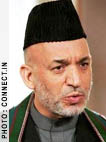
Hamid Karzai

Hamid Karzai

►►French intelligence ‘spied on Socialist politician’. Hand-picked” French intelligence agents allegedly spied on the private life of François Hollande, the Socialist whom polls predict is best-placed to beat Nicolas Sarkozy in next year’s presidential elections. They are also said to have spied on Hollande’s partner, Valérie Trierweiler –-potentially France’s future first lady.
►►US to release Cuban spy under supervision. Rene Gonzalez, the first of five Cubans imprisoned in the United States as spies since 1998 will regain his freedom Friday but won’t be able to go home for three more years because of a court order requiring he remain under US supervision.
►►Afghan intelligence says it stopped plot to kill Karzai. A plot to kill Afghan President Hamid Karzai has been foiled by Afghan intelligence agents in Kabul who arrested six men with links to al-Qaeda and the Haqqani network. The discovery of the plot comes just two days before the 10th anniversary of the invasion of Afghanistan in retaliation for the September 11 attacks in the US and, had it been successful, would have plunged the country further into chaos.

News you may have missed #604 (CIA edition)

Raymond Allen Davis

Raymond Davis

►►Aid agency leaves Pakistan following CIA vaccination scheme. Fears that a fake CIA vaccination scheme, created to hunt Osama bin Laden, has compromised the operations of aid agencies in Pakistan have intensified, after it emerged that Save the Children, a major NGO, was forced to evacuate its staff following warnings about their security.
►►CIA contractor arrested in car park brawl. A CIA contractor Raymond Davis, who was freed by Pakistani authorities after the families of two men he killed in a shootout agreed to accept more than $2.34 million in blood money, has been arrested after a brawl over a car parking space, according to police in the US state of Colorado.
►►Judge approves secret evidence for CIA leak trial. A federal judge has ruled that prosecutors pursuing a leak case against former CIA officer Jeffrey Sterling may use a controversial procedure known as the “silent witness rule” to present evidence to the jury that will not be seen by the public. Sterling is accused of leaking CIA secrets to New York Times journalist James Risen.

News you may have missed #603

Syed Ghulam Nabi Fai

Syed Fai

►►Turkey has names of Israeli soldiers who attacked Gaza Flotilla. According to Turkish media, government officials succeeded in amassing the list of 174 names of officers and soldiers involved in the 2010 MV Mavi Marmara attack, by planting intelligence agents inside Israel. Turkish government officials have denied the reports.
►►Ex-MI5 chief to hear deportation case of alleged spy. A British judge has ruled that Sir Stephen Lander, former director of MI5, Britain’s domestic intelligence service, can help to decide whether Katia Zatuliveter should be deported from the UK for allegedly spying for Russia. Zatuliveter, a Russian citizen who worked as an assistant to former British Member of Parliament Mike Hancock, may be deported on the basis of espionage evidence gathered by MI5.
►►Analysis: Pakistan’s spy plot to influence Washington. Syed Ghulam Nabi Fai came to the US on Saudi money with hopes of helping people in the disputed Indian territory of Kashmir. But he found himself spending millions on behalf of Pakistan’s notorious Inter-Services Intelligence and, now, under arrest. An excellent article by The Atlantic‘s Kim Barker, Habiba Nosheen, and Raheel Khursheed.

News you may have missed #602 (Israel edition)

Ahmed Jamal Daif

Ahmed Jamal Daif

►►Lebanon arrests three suspected of spying for Israel. Lebanon has arrested three people suspected of spying for Israel and trespassing, the London-based Al-Hayat newspaper reported Tuesday. According to the report, an Egyptian citizen and his wife were arrested on suspicion of spying, and an Arab-Israeli man was arrested on suspicion of trespassing. The Israeli, Ahmed Jamal Daif (pictured), was found on Monday in a diving suit on a beach in the southern Lebanese border town of Naqoura, a Lebanese army source said.
►►Egypt may release alleged Israel spy. Agence France Presse is reporting that Cairo is considering the release of alleged Israeli spy Ilan Grapel, in exchange for “political and economic incentives” offered by the United States. Grapel was arrested by Egyptian state security officers in June, on charges of spying for Israel. According to one source, former CIA Director and current US Defense Secretary Leon Panetta is set to visit Egypt today and is supposed to “take Grapel with him at the end of his visit”.
►►Jordanian accused of spying for Israel pleads not guilty. A Jordanian telecommunications engineer, who is on trial in Egypt on charges of spying for Israel, pleaded not guilty on Sunday. Bashar Ibrahim Abu Zeid was detained in Egypt last April after intelligence information allegedly showed he was spying for the Mossad, with Ofir Herari, an alleged Mossad agent, being tried in absentia.

News you may have missed #601 (CIA edition)

Tony Mendez

Tony Mendez in 1990

►►CIA invests in information technology. In-Q-Tel, the CIA’s technology investment group, is backing NetBase, which develops semantic search technology, as well as Connectify, which develops VPN software. In-Q-Tel’s role is to back commercial technologies that have the potential to aid intelligence and national security operations if developed further.
►►Interview with CIA disguise experts. The Washington Times has an interesting, lengthy interview with Tony and Joanna Mendez, both retired CIA disguise specialists. The two worked in the CIA’s Office of Technical Services, helping develop and deploy espionage gadgets –including a low-light camera that was used during the first moon landing and miniature lithium batteries that were the predecessors of the batteries used in modern portable electronics.
►►US government fights to keep Osama bin Laden death photos secret. Photographs and videos of al-Qaeda founder Osama bin Laden after he was killed in May in a US military/Central Intelligence Agency raid in Pakistan should not be released publicly. The reason, according ot the Obama administration, is because they would reveal military and intelligence secrets and could lead to violence against US personnel. This was argued by the administration’s lawyers in federal court in Washington on Monday.