Russia to reopen electronic listening command post in Cuba

Raúl Castro and Vladimir PutinBy JOSEPH FITSANAKIS | intelNews.org
The government of the Russian Federation has reached an agreement with the authorities in Cuba to reopen an electronic communications listening base that was built by the Soviets during the Cold War. Russian newspaper Kommersant said on Wednesday that the agreement between the two nations was struck late last week during a visit to the communist-run island by Russian President Vladimir Putin. The agreement centers on the Lourdes signals intelligence (SIGINT) facility, located just outside Cuban capital Havana. Situated approximately 100 miles from the United States mainland, the facility was used throughout the last two decades of the Cold War to provide intelligence for Soviet military and civilian spy agencies, while also operating as an overseas communications hub for the Soviet Navy. It was regarded at the time as the most formidable Soviet electronic listening post located anywhere outside Soviet territory. Cuban authorities once bragged that Lourdes provided Moscow with 75 percent of its actionable intelligence on its American adversary —though some experts consider the statement an exaggeration. At its peak, in the late 1970s, Lourdes hosted approximately 3,000 technical specialists and support personnel, over half of whom were Soviet. Initially, the Cuban government permitted Moscow to make use of Lourdes free of charge. However, in 1992 Havana introduced an annual rental fee, which by 2001 had risen to $200 million. Under the bilateral agreement, Russia was paying the rental fee in kind, by supplying the Cuban government with food products and fuel, as well as military equipment. But in 2001, the administration of President Putin withdrew from the agreement, citing the high cost of maintaining the base. Moscow said at the time that it was financially impossible to keep up a SIGINT complex located 6 thousand miles away from Moscow. Read more of this post

Up to 20 US spies inside German government: media reports

US embassy in BerlinBy JOSEPH FITSANAKIS | intelNews.org
German counterintelligence has intensified its surveillance of “certain employees of the United States embassy” in Berlin, after internal reports suggested that “up to 20” agents of the American government are operating inside the German federal bureaucracy. Citing information “from American security circles”, German newspaper Bild am Sonntag said on Sunday that the agents are German citizens who are secretly employed by a variety of American civilian and military intelligence agencies in return for money. The Berlin-based tabloid noted that at least a dozen such agents have infiltrated four departments of the German federal government, namely the Ministries of Defense, Finance, Interior, as well as the Ministry for Economic Cooperation and Development. The paper said that the latter has been targeted by the US Central Intelligence Agency because it is routinely employed by the BND, Germany’s main external intelligence organization, as a cover for clandestine activities. Last week, Germany ordered the immediate removal from the country of the CIA station chief, after it caught two German citizens, one working for the BND, and one for the country’s Ministry of Defense, secretly spying for Washington. It also instructed its intelligence agencies to limit their cooperation with their American counterparts “to the bare essentials” until further notice. According to Bild am Sonntag, the “growing pressure” against American intelligence operations inside Germany has prompted American spy agencies to transfer their recruitment activities of German citizens to nearby European capitals, such as Prague of Warsaw. Meanwhile, in an interview aired Sunday on Germany’s public-service television broadcaster, ZDF, German Chancellor Angela Merkel appeared pessimistic about the possibility that American intelligence agencies will stop recruiting German citizens. She said that Washington and Berlin had “fundamentally different views” on the nature and operational character of intelligence, and that it would be difficult to bridge the gap of perception between the two countries. The German leader added, however, that she favored continued cooperation between German and American intelligence agencies, as both countries “profit from the cooperation concerning counterterrorism and other things”. Read more of this post


‘Diplomatic earthquake’ as Germany halts spy cooperation with US

Angela Merkel and Barack ObamaBy JOSEPH FITSANAKIS | intelNews.org
The German government has instructed its intelligence agencies to limit their cooperation with their American counterparts “to the bare essentials” until further notice, according to media reports. The move follows news that Berlin requested on Thursday the immediate removal from Germany of the United States Central Intelligence Agency chief of station —essentially the top American intelligence official in the country. The request came after two German citizens, one working for the BND, Germany’s main external intelligence organization, and one working for the country’s Federal Ministry of Defense, were allegedly found to have been secretly spying for the US. German media reported on Thursday that the temporary halt in Berlin’s intelligence collaboration with Washington applies across the spectrum, with the exception of areas directly affecting tactical security concerns for Germany, such as the protection of its troops in Afghanistan, or defending against immediate terrorist threats. Sources in the German capital claimed that the removal of the CIA station chief was technically a “recommendation for his departure”, and did not constitute an official diplomatic expulsion. However, German observers described the incident as a “diplomatic earthquake”, which would have been unthinkable as a policy option for the German government, barring actions against “pariah states like North Korea or Iran”. This is not the first time an American intelligence officer has been asked to leave Germany. Berlin expelled another CIA officer in the 1990s, after it emerged that the American intelligence Agency had tried to recruit a German official at the Federal Ministry for Economic Affairs. However, unlike the current imbroglio, the previous spy affair was handled discretely and with almost no media fanfare, as is customary among allies. The decision to recommend the CIA station chief’s removal was reportedly made at a senior governmental level, following a “fruitless” telephone exchange between CIA Director John Brennan and Klaus-Dieter Fritsche, the coordinator between the German Chancellery and the BND. According to German newsmagazine Der Spiegel, Brennan offered Fritsche no apology and had “nothing to contribute other than clichés about transatlantic ties”, as well as his expressed irritation about the way the media were handling the incident. Read more of this post

Germany probes second case of intelligence officer who spied for US

Germany’s Federal Ministry of DefenseBy JOSEPH FITSANAKIS | intelNews.org
Just days after announcing the arrest of an intelligence officer on charges of spying for the United States, German authorities say they are investigating a second individual on suspicion of espionage. Federal prosecutors said yesterday that the individual in question is a German citizen and is under “initial suspicion of activity for an intelligence agency” of a foreign country. They refused to provide further information and added that an arrest had not yet been made. But German newspaper Süddeutsche Zeitung said on Wednesday that the subject of the investigation is suspected of spying for the United States. The news comes less than a week after an officer of the BND, Germany’s main external intelligence organization, was found to have allegedly spied for the US Central Intelligence Agency for over two years. According to Süddeutsche’s sources, the second suspect works for Germany’s Federal Ministry of Defense. German newsmagazine Der Spiegel reported that the unnamed individual specializes in “global security policy” and that he came under the suspicion of Germany’s military counterintelligence agency because of his “close proximity to alleged American intelligence operatives”. Later on Wednesday, German federal government spokesman Steffen Seibert confirmed that Berlin had opened “investigations in two cases of suspected espionage, on very serious suspicions”. Seibert refused to elaborate, but added that police had raided a number of properties in the German capital. Meanwhile, Germany’s Minister for Foreign Affairs, Frank-Walter Steinmeier, told the Saarbrücker Zeitung that he failed to understand why Washington would want to spy on his country. “We talk to each other all the time, and no side keeps its views secret”, he told the Saarland-based newspaper. “The attempt to use conspiratorial tactics to find out about Germany’s position is not simply unseemly, it is unnecessary”. But an unnamed former senior intelligence official, who has liaised extensively with the BND, protested to The Washington Post that “the Germans do lots and lots of stuff and don’t tell us everything they do”. Read more of this post

Germany ‘might scrap’ no-spy treaty with US, UK, France

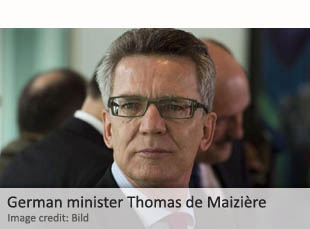
Thomas de MaizièreBy JOSEPH FITSANAKIS | intelNews.org
The German government is considering scrapping a decades-old no-spy agreement with the three Allied victors of World War II, following the arrest of a German intelligence officer who was caught spying for the United States. The treaty was signed in 1945 between the German state and the governments of the United States, France and Britain. Their intelligence services are defined in the treaty as allied with Germany’s and are seen as working with Germany’s national interest in mind. Consequently, Berlin pledges not to direct counterespionage operations against French, American and British intelligence activities inside Germany. Implicit in the agreement is the understanding that these three countries can spy on German soil only when targeting non-German operatives in the country. However, in an interview with German tabloid newspaper Bild, Germany’s Minister of the Interior, Thomas de Maizière, said that Berlin is now seriously considering scrapping the postwar treaty, in response to the recent revelations about alleged espionage activities against Germany by the US Central Intelligence Agency. He was referring to news, aired last week, that an officer of the BND, Germany’s main external intelligence organization, was found to have spied for the CIA for over two years. On Monday, the Reuters news agency said it had confirmed that the alleged double spy had indeed been recruited by the CIA, and that the Agency’s Director, John Brennan, had asked to brief senior members of Congressional intelligence committees about the issue. Also on Monday, White House Press Secretary Josh Earnest told reporters in Washington that the US government would “work with the Germans to resolve this situation appropriately”. But these assurances seem to have done little to quell Berlin’s irritation. Another senior German politician, Stephan Mayer, who is close to German Chancellor Angela Merkel, told Bild that it was time for German intelligence to “focus more strongly on our so-called allies”. Read more of this post

Germany summons US ambassador following arrest of CIA spy

BND headquarters in BerlinBy JOSEPH FITSANAKIS | intelNews.org
Authorities in Germany have summoned the American ambassador to Berlin following the arrest of a German intelligence officer who was apprehended last week on suspicion of spying for the United States. The man, who has not been named, is suspected of passing classified government information to American intelligence operatives on a variety of subjects. His most recent undertakings are said to have targeted activities of a German parliamentary committee investigating US espionage against Germany. The episode is expected to further strain relations between the two allies, which were damaged by revelations last year that the National Security Agency, America’s signals intelligence organization, had bugged the telephone of German Chancellor Angela Merkel. The revelation, which was made public by Edward Snowden, an American defector to Russia who had previously worked for the NSA, showed that Chancellor Merkel had been targeted as part of a wider US spy operation against Germany. The revelations sparked the establishment of a nine-member parliamentary committee that is tasked with evaluating Snowden’s revelations and proposing Germany’s response. It appears that the man arrested, who is believed to have been secretly employed by the Central Intelligence Agency, tried to spy on the activities of the committee on behalf of his American handlers. According to German media reports, the man, who is said to be 31 years old, is a “low-level clerk” at the Bundesnachrichtendienst, or BND, Germany’s external intelligence agency. According to Der Spiegel newsmagazine, he is believed to have spied for the CIA for approximately two years, and to have supplied the American spy agency with around 200 classified German government documents in exchange for around €25,000 —approximately $30,000. Read more of this post

UK spy agency sued by Internet providers over malware attacks

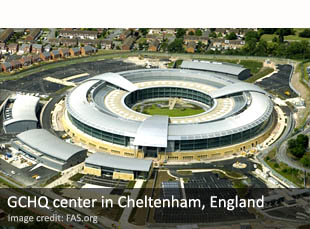
GCHQ center in Cheltenham, EnglandBy JOSEPH FITSANAKIS | intelNews.org
A group of Internet service providers from North America, Europe, Asia and Africa have filed a lawsuit against Britain’s foremost signals intelligence agency, accusing it of hurting their business by spying on them. The legal complaint was filed against the Government Communications Headquarters (GCHQ), the British government agency tasked with communications interception, which also provides information assurance to both civilian and military components of the British state. Service providers from the United States, United Kingdom, Germany, Netherlands, South Korea and Zimbabwe are listed as plaintiffs in the complaint, which was filed on Wednesday in a court in London. The legal action against the spy agency is based on articles that surfaced in the international press last year. They alleged that GCHQ targeted Belgium’s largest telecommunications service provider Belgacom. The revelations surfaced first in September of 2013 in Flemish newspaper De Standaard. The paper claimed that Belgacom’s mainframe computers had been deliberately infected by an “unidentified virus”, which had specifically targeted telecommunications traffic carried by Belgacom’s international subsidiaries. De Standaard further claimed that the scope and technical sophistication of the operation pointed to a state-sponsored agency as the culprit. Further revelations about the Belgacom malware attacks were made in German newsmagazine Der Spiegel in November of last year, pointing to GCHQ as the agency behind the operation. The allegations originated in information provided by Edward Snowden, an American defector to Russia who used to work for GCHQ’s American equivalent, the National Security Agency. In their lawsuit, the Internet service providers allege that, regardless of whether they were themselves targeted by GCHQ in a manner similar to that of Belgacom, the British spy agency effectively compromised the integrity of their industry. It did so, they argue, by allegedly targeting employees of telecommunications service providers, by infecting telecommunications networks with malware, by Read more of this post

News you may have missed #880

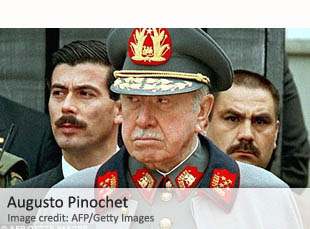
Augusto PinochetBy IAN ALLEN | intelNews.org
►►Chinese military establishes cyberintelligence research center. The Chinese People’s Liberation Army (PLA) has announced the creation of a Cyberspace Strategic Intelligence Research Center. Experts say the Center will “provide support in obtaining high-quality intelligence research findings and help China gain advantage in national information security”. Its staff reportedly specialize in such fields as strategic theory research, intelligence studies, and technology management, among others.
►►Chile court says US had role in 1973 killings of Americans. A court ruling released late Monday said the commander of the US Military Mission in Chile at the time of the 1973 military coup gave information to Chilean officials about journalist Charles Horman and student Frank Teruggi that led to their arrest and execution just days after the coup, which brought General Augusto Pinochet to power. The case remained practically ignored in Chile until 2000, when Horman’s widow, Joyce, came and filed a lawsuit against Pinochet.
►►Opinion: Cyber tools are no substitute for human intelligence. A colonel in the Israel Defense Forces critiques “the increasing use of cyber tools as a central and sometimes exclusive role in the work of many intelligence agencies throughout the world”. He argues that “the documents exposed by Edward Snowden show how willing the Americans are to invest in technological systems to collect information and gather as much intelligence as they can using cyber tools”. But he warns that “this almost exclusive reliance on the collection and analysis of intelligence using technology comes at the expense of the human element as a basic component of intelligence-gathering”.

Panama tries to block extradition of Colombia’s former spy chief

Ana BelfonBy IAN ALLEN | intelNews.org
Senior government officials in Panama continue to shelter one of Colombia’s notorious former spy chiefs, who is wanted in Colombia for spying on opposition figures. María del Pilar Hurtado directed the highly disreputable Administrative Department for Security (DAS) from 2007 to 2009. But on October 31, 2010, she left Colombia, apparently unobstructed, despite being a chief subject in a high-level investigation into political spying by DAS. Hours later, she surfaced in Panama, where she formally requested political asylum. The latter was granted to her on November 19, 2010, causing the amazement of public prosecutors in Bogota, who have accused the Panamanian government of subverting Colombian justice. Hurtado is among 18 senior officials in the administration of Colombia’s former President Alvaro Uribe. Critics of DAS accuse him of authorizing a massive program of political surveillance, which targeted the former Presidents, Supreme Court judges, prominent journalists, union leaders, human rights campaigners, and even European politicians. Finally, after years of diplomatic pressure by Uribe’s successor, Panama’s supreme court ruled last week that Hurtado’s asylum had been granted to her in violation of the Panamanian constitution. It consequently ordered that her residence permit, which was granted to her under the personal authorization of Panama’s heavy-handed President, Ricardo Martinelli, would become invalid after three working days. The three working-day deadline was set to expire at 5:00 p.m. local time on Tuesday. However, shortly before the cut-off time, Panama’s Attorney General, Ana Belfon (pictured), stepped in and effectively extended Hurtado’s residence permit deadline. In a dramatic move, Belfon filed an appeal on behalf of the government, asking the Supreme Court to clarify the conditions of the former spy chief’s deportation back to Colombia. In accordance with Panamanian legal procedure, the Supreme Court’s decision to cancel Hurtado’s residence permit is now suspended and the Colombian former spymaster will continue to enjoy the Panamanian government’s protection until the Supreme Court responds to the Attorney General’s appeal. Read more of this post

CIA ‘stripped of spies’ in embattled Iraq, say sources

US embassy compound, IraqBy JOSEPH FITSANAKIS | intelNews.org
The Sunni uprising in Iraq, in combination with the Shiite domination of the government in Baghdad, has drastically limited the ability of the United States Central Intelligence Agency to collect dependable intelligence, according to sources. Newsweek’s veteran intelligence correspondent, Jeff Stein, said on Friday that the Agency had been “stripped of its spies” in the embattled country and was struggling to rebuild its network of assets. Stein cited “knowledgeable intelligence sources” as saying that the CIA had lost many of its sources inside the government in Baghdad, which is now firmly in Shiite hands. Since assuming power in 2006, Iraq’s Shiite Prime Minister, Nouri al-Maliki, gradually purged most Sunnis from senior government positions, thus shutting down the CIA’s eyes and ears in Baghdad. The intelligence-collection problem for the Agency has worsened since the breakout of the Sunni uprising in the west of the country, which has prompted mass defections of senior tribal leaders to al-Qaeda-inspired rebel groups. Many of these leaders were previously valuable sources of information for the CIA, which has traditionally had far more contacts with Iraqi Sunnis than Shiites. To make things worse, says Stein, CIA operatives in Iraq are unable to travel outside of Baghdad due to the worsening security situation in the country. Instead, they remain “holed up” in the American embassy compound and rely almost exclusively on “technical means” of intelligence collection (and, one presumes, a variety of open sources). Inevitably, the Agency is now much more reliant than usual on information provided by regional intelligence services, such as Turkey’s and Jordan’s, who still have agents on the ground in Iraq. Read more of this post

White man allegedly led Kenya Islamist attack that killed 60

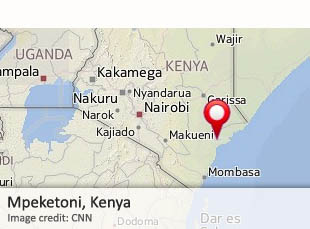
Mpeketoni, KenyaBy IAN ALLEN | intelNews.org
Survivors of a militant Islamist attack on a Kenyan coastal town said they witnessed a white man speaking in English and Arabic coordinating the operation that left 60 people dead. The bloody attack took place on Sunday in Mpeketoni, a small town located near the Kenya’s Lamu archipelago on the Indian Ocean. Witnesses said a group of 40 heavily armed men stormed the town in small teams and took it over last Sunday morning. Once they had established control, they visited almost every house asking residents if they were Muslim. If they failed to pass a simple test, they were executed on the spot. The attack is believed to have been carried out by al-Shabaab, a Somali-based Islamist group that has links to al-Qaeda. But survivors of the horrific raid have told British newspaper The Daily Telegraph that the leader of the attackers was “pale-skinned” and “spoke English and Arabic”. The paper quoted Mpeketoni schoolteacher Mary Gachoki, who said she saw “a white man who was speaking in fluent British English commanding the rest of the attackers”. The Telegraph report cited the accounts of several more witnesses, including a woman who saw “a white man” among the attackers, who “was commanding them and was shooting now and then”. She added that “at one point he spoke in Arabic but most of the time in English”, with a British accent. One witness said the pale skinned man “was either white or an Arab”. These accounts are believed to strengthen the view that the attack was indeed carried over by al-Shabaab. The group has strong links with foreign Arab or European-born Islamists who routinely travel to Somalia to join the group’s ranks. But the claims also bring to mind similar allegations made following last September’s attack at the upscale Westgate shopping mall in Kenyan capital Nairobi, which killed nearly 70 people. Read more of this post

Hidden spy software found in Chinese-made smartphones

Star N9500By JOSEPH FITSANAKIS | intelNews.org
A popular brand of Chinese-made smartphones, which are sold internationally by several major retailers, has been found to contain pre-installed monitoring software, according to a German security firm. The revelation was made on Tuesday by G Data Software, which is based in Bochum, Germany, and has a subsidiary in the United States. The firm, which was founded in 1985, said it discovered the spy software hidden deep inside the proprietary software found on the Chinese-made Star N9500. The product in question is a cheap smartphone based on the popular Samsung Galaxy S4, and can be purchased from numerous Internet retailers, including online outlets such as Amazon.com. A G Data spokesperson, Thorsten Urbanski, told reporters in Germany that his company purchased several Star N9500 telephones from an online retailer after receiving multiple messages from users of the telephone in Germany, who said the device’s operating system appeared to contain malicious software. The security firm said the Star N9500’s operating system contains hidden software applications that could allow a third party to access and steal the telephone user’s personal information. There are also secret applications that could permit a hacker to place calls from the telephone, or utilize the device’s microphone and camera without the consent of its owner. What is more, the stolen data was sent to a server based in China. G Data investigators added that their team of experts sought for “over a week” to track down the manufacturer of the Star N9500 but were unable to do so. German media reported that journalists from The Associated Press also tried to locate the manufacturer of the smartphone, by contacting several companies located in China’s southern province of Shenzhen, known as the center of the country’s telecommunications industry. Read more of this post

News you may have missed #879

Mossad sealBy IAN ALLEN | intelNews.org
►►Israeli spy budget close to $2 billion. According to reports in the Israeli media, the 2014 budget for Israel’s secret services is 6.88 billion shekels, which amounts to US$1.97 billion). This figure represents an approximate increase of 4 percent compared to last year. The funds cover the operations of the Shin Bet, Israel’s domestic security service, and the Mossad, which is the country’s external covert-action agency.
►►Australia and France sign intelligence accord. Australia has struck a second intelligence-sharing agreement in less than a week, this time with France, as fears rise about the Syrian civil war becoming a hub for home-grown terrorism. The two countries have agreed, among other things, to share intelligence on their respective citizens who have gone to Syria to fight in that country’s civil war. A week earlier, Canberra had signed a similar intelligence-sharing agreement with the government of Indonesia.
►►Nazi spy could have changed course of D-Day. Days before the Normandy landings, the Lisbon-based Nazi spy Paul Fidrmuc got wind of the final details of Operation Overlord and sent an urgent message to Berlin. The Allies were not planning to land in Calais, as the Nazis thought and where they had massed 200,000 soldiers. Instead, he wrote, “the preferred plan is around La Manche”. But his dispatch was ignored by his Berlin handlers.

CIA resumes drone strikes in Pakistan after six-month hiatus

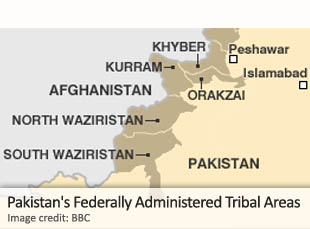
Pakistan's Federally Administered Tribal AreasBy IAN ALLEN | intelNews.org
The United States Central Intelligence Agency appears to have resumed its targeted assassinations using unmanned aerial drones in Pakistan, following a nearly six-moth hiatus. The Agency launched its lethal drone program in Afghanistan and Pakistan in 2004, and intensified it in 2008 under the supervision of US President George Bush, who then passed it on to his successor, Barack Obama. Nearly 400 strikes on Pakistani soil have been attributed to the CIA in the past decade, which have killed in excess of 3,000 militants and civilians by some estimates. But, in an unprecedented move, Washington completely seized carrying out airstrikes on Pakistani soil after December 25 of last year. That changed on Wednesday, June 11, when several powerful missiles landed outside a house located a few miles outside of Miramshah, in Pakistan’s North Wazieristan Province. The area is an operational stronghold of Pakistan’s most powerful armed militant group, the Pakistani Talban, and its close affiliate, the Haqqani Network. The air strikes took out a number of vehicles that were allegedly filled with explosives and killed at least 16 people, including alleged Taliban and Haqqani commanders, as well as, reportedly, members of the Islamic Movement of Uzbekistan (IMU). Washington said that those targeted were on their way to conduct cross-border raids in Afghanistan when they were killed. As it always does in these instances, Pakistan’s Ministry of Foreign Affairs condemned the strikes as violations of the country’s sovereignty. But reports in the Pakistani media claimed that Washington had sought and received Islamabad’s approval prior to launching last week’s attacks. What prompted the change in policy? According to one local observer, the CIA had agreed to stop its aerial attacks after it was asked to do so by the government of Pakistan, which has been engaged in peace talks with the Taliban for several months. But these talks collapsed following the June 6 suicide attack on Karachi’s Jinnah International Airport by the Taliban and the IMU, which killed 36 people, including all 10 attackers. Read more of this post

News you may have missed #878 (ISIS edition)

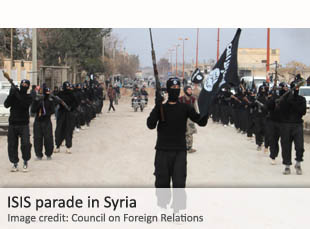
ISIS parade in SyriaBy IAN ALLEN | intelNews.org
►►Backgrounder on Islamic State in Iraq and Greater Syria. The Islamic State in Iraq and Greater Syria (ISIS), a predominantly Sunni jihadist group, seeks to sow civil unrest in Iraq and the Levant with the aim of establishing a caliphate —a single, transnational Islamic state based on sharia. The group emerged in the ashes of the US-led invasion to oust Saddam Hussein as al-Qaeda in Iraq, and the insurgency that followed provided it with fertile ground to wage a guerrilla war against coalition forces and their domestic allies.
►►ISIS stole $425m and became world’s richest terrorist group. The most stunning revelation to emerge out of the wreckage of Mosul this week is that ISIS just got extremely rich. Several ISIS insurgents stopped at Mosul’s central bank, where an incredible amount of cash was reportedly on hand, and the group made off with 500 billion Iraqi dinars —approximately US$425 million.
►►The Battle for Iraq Is a Saudi War on Iran. Currently on vacation in Morocco, Saudi Arabia’s King Abdullah has so far been silent on the developments in Iraq. But the situation there could well prompt him to cut short his stay and return home. This is because the ISIS advance represents a setback for Iraqi Prime Minister Nouri al-Maliki, which has been the dream of Saudi Arabia’s King Abdullah for years. He has regarded Maliki as little more than an Iranian stooge, refusing to send an ambassador to Baghdad and instead encouraging his fellow rulers of the Gulf Cooperation Council to take a similar standoff-ish approach.
►►Iran deploys Revolutionary Guard forces to fight Iraq militants. The threat of Sunni extremists eclipsing the power of its Shiite-dominated Arab ally presents Iran with the biggest security and strategic challenge it has faced since the US-led invasion of Iraq in 2003. With ISIS, an offshoot of al Qaeda, rapidly gaining territory, Iran deployed Revolutionary Guards units to Iraq, according to Iranian security officials.
►►Jihadist gains in Iraq blindside American spies. United States intelligence agencies were caught by surprise when fighters from ISIS seized two major Iraqi cities this week and sent Iraqi defense forces fleeing, current and former US officials said Thursday. With US troops long gone from the country, Washington didn’t have the spies on the ground or the surveillance gear in the skies necessary to predict when and where the jihadist group would strike.