Ex-director of Danish spy agency charged with treason in ‘unprecedented’ case

Lars FindsenIN A CASE THAT observers have described as “unprecedented”, the recently dismissed director of Denmark’s external intelligence agency has been charged with committing acts of treason against the state. Lars Findsen directed the Danish Defense Intelligence Service (FE, or DDIS in English) from 2015 until his sudden dismissal in 2020. Prior to that, he directed the DDIS’ domestic counterpart, namely the Danish Security and Intelligence Service, or DSIS. As intelNews reported at the time, Findsen was dismissed from his DDIS post in August of 2020. His dismissal was announced with a brief statement by the Danish Ministry of Defense, which said simply that Findsen had been “relieved of duty for the time being”, pending an investigation.
Now it has been revealed that Findsen was among four current and former members of the DDIS and the DSIS, who were arrested last month. The Danish government made use of an obscure secrecy clause to bar the nation’s media from reporting the arrests. As a result, Findsen’s whereabouts were not known until Monday, when a court lifted the reporting ban after an early-morning closed-door hearing. Shortly afterwards, the Danish Broadcasting Corporation, Denmark’s public broadcaster, reported that Findsen was arrested on the morning of December 8, 2021, at the Copenhagen Airport.

According to the report, Findsen has been charged with acts of treason related to disclosing state secrets to Danish journalists. Back in 2020, intelNews reported that Findsen’s dismissal was likely related to a damning assessment that had been issued by the Danish Oversight Board, known as TET, which is responsible for overseeing the work of Denmark’s spy agencies. The assessment had blasted the DDIS for effectively lying about its intelligence-collection practices while in full knowledge that they were in violation of Danish privacy law. Later that year, however, Danish intelligence agencies were severely criticized, after reports surfaced that they had secretly helped the United States spy on Western countries, including France, Sweden, Germany and Holland.

The above revelation have prompted strong criticism of the Danish spy services all over Europe. But it is not known whether Findsen’s arrest is connected with any of them. Reports said last night that the other three current and former intelligence personnel who were arrested alongside Findsen had been released on bail. Findsen, however, remains in detention, and faces charges that carry a 12-year prison sentence. Speaking to reporters following his court arraignment, Findsen said he looked forward to the opportunity to dispute the charges against him, which he described as “absolutely insane”.

Author: Joseph Fitsanakis | Date: 12 January 2022 | Permalink

Sweden becomes the latest Western country to create an anti-disinformation agency

Swedish Psychological Defence AgencyA FEW MONTHS AFTER France’s establishment of an agency to combat foreign disinformation, Sweden has announced the creation of a new government authority, whose mission is to defend against disinformation by foreign actors. Based in Karlstad, a city 200 miles west of Stockholm, the Swedish Psychological Defense Agency (PDA) was formally established on January 1. Its stated mission is to “safeguard [Sweden’s] open and democratic society, the free information of opinion and Sweden’s freedom and independence”.
The agency says it plans to carry out its mission by working “both preventively and operationally and [by pursing] its tasks in peacetime and in war”. In addition to “identifying, analysing and responding to inappropriate influences and other misleading information directed at Sweden or Swedish interests”, the PDA vows to target disinformation by foreign actors that  aim to weaken “the country’s resilience and the population’s will to defend itself”. Moreover, the new authority aims to provide support against disinformation by foreign actors to various national agencies, local authorities, media organizations, voluntary groups and the population at large. Its ultimate goal is to “develop and strengthen society’s overall capacity of psychological defence”.

The establishment of this new government authority comes several months ahead of the Sweden’s general election, which has been scheduled for September 11 of this year. According to the Swedish government, there is no evidence that foreign actors carried out systematic psychological operations against the Swedish state and its population in the run-up to the most recent general election, which was held in 2018. However, according to the Swedish Security Service (SAPO), “foreign powers [plan to exert] influence on Sweden in the long term”.

Sweden’s announcement of the establishment of the PDA comes six months after the creation of a similarly tasked government agency in France. Established in June of last year, France’s Secretariat-General for National Defense and Security (SGDSN) aims to combat foreign disinformation campaigns that attempt to “undermine the state”. The SGDSN is reported to employ 60 officers at the present time. Other countries, such as the United States and Britain, have set up units within agencies whose mission is to combat foreign disinformation. But France and Sweden appear to be the only Western countries so far that have created independent agencies tasked with such a mission.

Author: Joseph Fitsanakis | Date: 11 January 2022 | Permalink

Kazakhstan arrests spy chief for treason as rift inside government widens

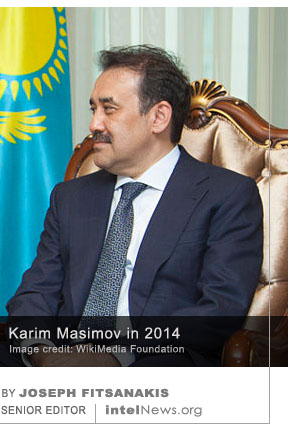
Karim MasimovIN A SIGN OF WIDENING disagreements within the government of Kazakhstan, the once supremely powerful head of the country’s internal intelligence agency has been fired. He was subsequently arrested by his own agency for alleged treasonable acts. Karim Masimov (or Massimov) served twice as prime minister of Kazakhstan under his political mentor, former President Nursultan Nazarbayev. Nazarbayev, who is traditionally referred to as the “father of the nation” kept Masimov in his inner circle of confidants throughout his nearly 30-year rule.
Masimov also served as director of Kazakhstan’s all-powerful National Security Committee (NSC). Founded in 1992, the NSC is one of several successor agencies to the Soviet-era Committee for State Security (KGB). The agency performs a wide array of counterintelligence functions, while also commanding a sizeable border guard force and having responsibility for counter-terrorism and covert action operations. It works closely with the Foreign Intelligence Service (also known as Syrbar, or KNB), which is Kazakhstan’s primary external intelligence agency.

In a surprise move, the government of Kazakh President Kassym-Jomart Tokayev, Nazarbayev’s hand-picked successor, fired Masimov from his NSC post on Wednesday. Masimov was reportedly replaced with his chief bodyguard. Less than 24 hours later, the NSC announced it had arrested Masimov, along with several other current and former government officials. In a statement posted on its website, the NSC said Masimov had been arrested as part of a “pre-trial investigation into high treason”. It is not currently known if this move is linked to the ongoing nationwide protests, which have resulted in the deaths of over 160 and the arrests of nearly 5,000 people.

In a report published on Friday, The New York Times, which was able to access the NSC statement about Masimov’s arrest, suggests that Masimov firmly belongs to the pro-Nazarbayev faction of the Kazakh government. This faction is now coming under increasing pressure by the pro-Tokayev faction, which wants to be seen as taking action against the corruption and nepotism associated with the Nazarbayev years. In doing so, President Tokayev is hoping to draw attention away from the shortcomings of his own rule, according to The Times.

Author: Joseph Fitsanakis | Date: 10 January 2022 | Permalink

United States charges New York man with spying for Egyptian government

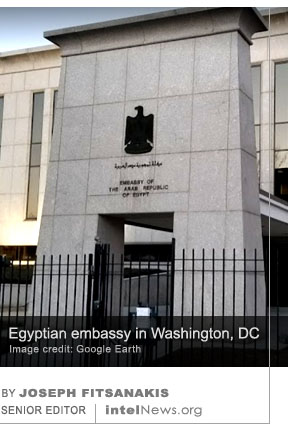
Egyptian embassy in WashingtonA RESIDENT OF NEW York has been charged by the United States Federal Bureau of Investigation with engaging in espionage operations on behalf of the government of Egypt, according to court documents unsealed on Thursday. The FBI claims that the spy “tracked and obtained information regarding political opponents” of Egypt’s ultra-authoritarian president, retired General Abdel Fattah el-Sisi. El-Sisi took power in Egypt in a military coup d’etat in 2013, which was followed by heavily staged election in 2014. With most of the opposition refusing to participate, the election resulted in a victory for the Egyptian strongman with 97% of the vote.
The alleged spy is 39-year-old Pierre Girgis. He is charged with conspiracy and acting as an agent of a foreign state without notifying the government of the United States —which is standard legal terminology used to convey acts of espionage. According to the FBI, Girgis’s Egyptian handlers tasked him with spying on US-based critics of President el-Sisi. The documents suggest that Girgis attempted to “covertly gather non-public intelligence” about Egyptian expatriates, and sought to secure access to law enforcement-only training sessions in Manhattan for Egyptian government officials.

In doing the above, Girgis operated “at the direction and control of multiple employees of the Egyptian government”, according to the FBI. One of those employees is alleged to have sent Girgis an encrypted message in 2018, praising him for doing “a lot of good things” and for having “become an important source [of] information collection” for the Egyptian government. The method by which the FBI was able to gain access to the contents of this encrypted communication exchange is not known.

Girgis reportedly surrendered to US authorities on the morning of Thursday, and appeared before a Manhattan federal court later on the same day. The embassy of Egypt in Washington, DC, declined to comment on the case. A spokesperson for the US Department of State said simply that Girgis’ case was “an active law enforcement matter”, which prevented the Department from commenting on it.

Author: Joseph Fitsanakis | Date: 07 January 2022 | Permalink

Israel likely behind 1981 bombings of German, Swiss engineering firms, expert claims

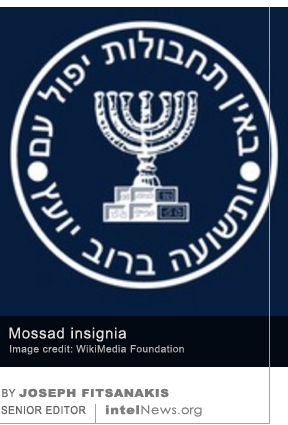
MossadISRAEL’S PRIMARY EXTERNAL INTELLIGENCE agency, the Mossad, was likely behind a series of mysterious bombings in 1981, which targeted German and Swiss engineering firms believed to be aiding the Pakistani nuclear program, according to new exposé by a leading Swiss newspaper. Several bomb attacks targeted a number of engineering firms in Switzerland and what was then West Germany in 1981. Alongside these attacks, there were threatening telephone calls that targeted West German and Swiss engineers.
A previously unknown militant group calling itself the Organization for the Non-Proliferation of Nuclear Weapons in South Asia took responsibility for these actions. Its members mailed a number of political manifestos to the German and Swiss press, and repeatedly issue proclamations via telephone in broken German or English, according to contemporary accounts. Interestingly, the Organization for the Non-Proliferation of Nuclear Weapons in South Asia has never been heard of since.

Now, however, one of Switzerland’s leading newspapers, the Neue Zürcher Zeitung (NZZ), claims in a new report that the violent actions against German and Swiss scientists and engineering firms were likely undertaken by the Israeli Mossad. In a leading article published on Saturday, the Swiss daily cited “new, previously unseen documents from archives” in Switzerland and the United States, which allegedly shed light on these mysterious attacks.

The report rests partly on the work of Swiss historian Adrian Hänni, who argues that Israeli intelligence was eager to prevent Pakistan from acquiring access to nuclear energy. The prospect of Pakistan becoming the first Muslim-majority nuclear state was viewed by Israel as an “existential threat”, according to Hänni. Additionally, the Mossad had credible information that senior officials in Islamabad worked closely with the Islamic Republic of Iran, one of Israel’s mortal regional enemies. These factors convinced the Israeli leadership of the time to authorize a covert operation against a number of European firms and scientists who were allegedly aiding Islamabad’s pursuit of a nuclear arsenal, according to the NZZ.

Author: Joseph Fitsanakis | Date: 05 January 2022 | Permalink

Declassified documents show extent of Libyan support for Provisional IRA

Muammar GaddafiDOCUMENTS RELEASED LAST WEEK by the National Archives of Ireland show the extraordinary support given by the government of Libya to Irish republican separatists in Britain during the 1970s and 1980s. The previously classified documents were released last Tuesday by Ireland’s National Archives, which is the country’s official repository of state records. According to reports, the documents were released to the public in accordance with Ireland’s National Archives Act, which enables the declassification of certain state records 30 years after their production.
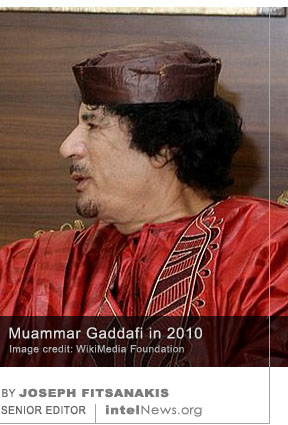
The documents contain details about the covert support given by the Libyan government of Colonel Muammar Gaddafi (pictured) to the Provisional Irish Republican Army (PIRA). The PIRA was a separatist militant organization that operated in British-ruled Northern Ireland and the Republic of Ireland for over 30 years, beginning in 1969. According to reports, the information in the documents came directly from the Libyan government in 1992, as part of a broader effort by the Libyans to mend relations with London following the Lockerbie bombing of 1988.

The documents outline the amount of armaments that the Libyans gave to the PIRA in several covert shipments from 1973 until late 1987. Collectively, the shipments consisted of 1,450 Kalashnikov automatic rifles, 66 machine guns, 180 semi-automatic pistols, 26 rocket-propelled-grenade launchers, 10 surface-to-air missiles, 765 grenades, nearly 6,000kg of Semtex explosive, over a thousand detonators, nearly 1.5 million rounds of ammunition, as well as several flame-throwers. The secret arms shipments came to an end in October 1987, when French military intelligence was able to intercept large quantities of weapons and war materiel that had been hidden aboard the ship MV Eksund by its Irish crew.

But the Libyans continued to secretly fund the PIRA, according to the documents released last week. By 1992, when the information contained in the documents was provided to the British by the Libyan government, Tripoli had given the PIRA “over $12.6 million in cash, the equivalent of roughly $45 million in today’s money”. British intelligence quickly shared this information with the Irish government, which is how these documents ended up in the National Archives of Ireland. The documents also include a list of PIRA volunteers who traveled to Libya and were trained in guerrilla warfare and sabotage. However, the names appear to be fake, and were probably used by the PIRA members “to disguise their travel to Libya”, according to reports.

Author: Joseph Fitsanakis | Date: 03 January 2022 | Permalink

Cell phones of leading Polish opposition figures hacked by government, group claims

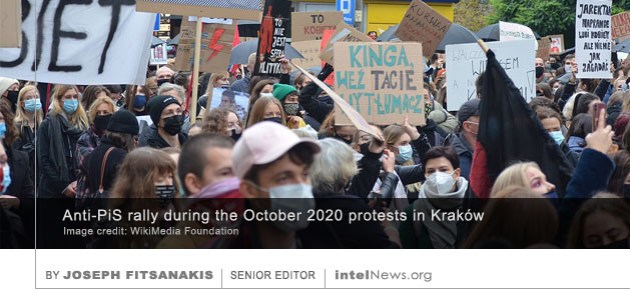
Civic Coalition PolandCENTRAL FIGURES OF POLAND’S opposition coalition, which narrowly lost the 2019 parliamentary election, had their cell phones hacked with a surveillance software used by the country’s spy services, according to a new report. A major target of the hacks was Krzysztof Brejza, a member of the lower chamber of the Polish parliament and campaign director of the Civic Coalition, a centrist-liberal alliance. In the parliamentary election of 2019, the Civic Coalition challenged the all-powerful Law and Justice Party (PiS), which has ruled Poland for much of the past decade.
The PiS is a populist pro-Russian party that opposes many of the core policies of the European Union, of which Poland is a member. In contrast, the Civil Coalition is pro-Western and supports Poland’s integration into the European Union. In 2019, while the two parties were competing in a feverish electoral campaign, Poland’s state-owned television aired a number of texts acquired from Brejza’s phone, in what the opposition decried as a “smear campaign”. Eventually, the PiS won the election with a narrow majority.

The information about Brejza’s cell phone hack was revealed last week by Citizen Lab, a research unit of the University of Toronto’s Munk School of Global Affairs and Public Policy, which focuses on information technology, international security and human rights. According to the report, at least three senior figures in the Civil Coalition were under telephonic surveillance throughout the election campaign. Brejza’s cell phone was breached over 30 times between April and October of 2019, according to Citizen Lab. The other two victims of the surveillance operation were Ewa Wrzosek, a public prosecutor and leading critic of the PiS, as well as Roman Giertych, an attorney who represents leading members of the Civic Coalition.

The report claims that the surveillance against the Civil Coalition members was facilitated by Pegasus, a controversial spyware that is sold to governments around the world by NSO Group Technologies, an Israeli digital surveillance company based near Tel Aviv. Earlier this year, the United States government blacklisted NSO Group Technologies, in a move that surprised many in Israel and beyond. Meanwhile, on December 24, the Polish government denied it had any role in the phone hacking affair. Poland’s Prime Minister, Mateusz Morawiecki, dismissed the Citizen Lab revelations as “fake news”.

Author: Joseph Fitsanakis | Date: 27 December 2021 | Permalink

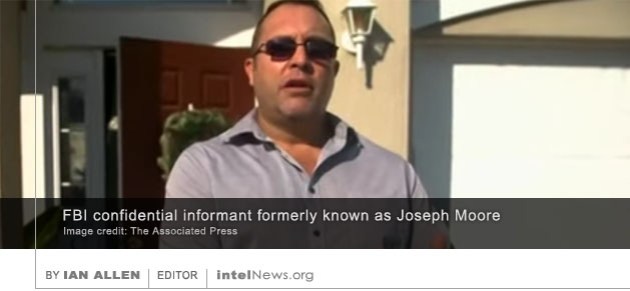
FBI confidential informant who infiltrated the KKK speaks publicly for the first time

Joseph MooreA UNITED STATES ARMY veteran and government informant, who infiltrated the white supremacist organization known as the Ku Klux Klan for over a decade, has spoken publicly about his work for the first time. The informant’s birth name is Joseph Moore, but in 2018 he changed it in order to evade detection by KKK members who might be tempted to track him down. Today the 50-year-old former Army sniper lives with his wife and four children somewhere in Florida, according to the Associated Press.

The news agency said Moore reached out to one of its reporters who had authored a series of exposés about white supremacists working in Florida’s penitentiary system. The reports relied on evidence uncovered by Moore. The former FBI informant told the Associated Press that he has never discussed his undercover work in public, until now. He added that he was not a member of the KKK before “the government approached him, and asked for his help”. That took place in 2007, according to the report.

Moore’s primary mission as an informant for the FBI was to provide evidence of active law enforcement personnel who were active in KKK groups based in Florida and Georgia. After joining the Englewood, Florida-headquartered United Northern & Southern Knights of the KKK, Moore began to regularly attend the group’s meetings wearing hidden surveillance devices. According to the Associated Press, he was able to identify “dozens of police officers, prison guards, sheriff deputies and other law enforcement officers who were involved with the Klan and outlaw motorcycle clubs”.

After a brief respite, the FBI re-established contact with Moore in 2013 and asked him to infiltrate another white supremacist group, known as the Traditionalist American Knights of the Ku Klux Klan. Within a year, Moore had gained the group’s trust and was operating as its director of security, with tasks that included safeguarding the group’s internal communications. During that time, Moore reportedly helped the FBI “foil at least two murder plots” by KKK members, and assisted the government in identifying Klan members who were also working as law enforcement officers throughout Florida.

Moore told the Associated Press that he and his family adopted new names in 2018, in an effort to prevent the men he helped put in prison from finding him once they complete their sentences. But he fears for his and his family’s safety, which is why he chose to go public with his story, in the hope that the exposure will make it harder for the KKK to hurt him. He also said that a number of people associated with the KKK had “appeared at his house” in recent months, prompting him to contact the FBI and his local sheriff’s office. The Associated Press said it reached out to the FBI about Moore’s work as an informant, but received no response.

Author: Ian Allen | Date: 24 December 2021 | Permalink

Turkey arrests American diplomat, claims he sold fake passport to Syrian refugee

Istanbul airport arrestTURKISH POLICE ARRESTED A man reported to be an American diplomat, allegedly for selling a forged passport to a Syrian refugee who then attempted to use it in order to travel from Turkey to Germany. The incident was reported on Wednesday by Turkey’s state-run news service, Anadolu Agency. The news story was soon picked up by Hürriyet, Turkey’s leading pro-government newspaper. According to the reports, the alleged American diplomat was arrested on November 11, and he remains in prison today. He is identified only as “D.J.K.” in media reports. According to Turkish sources he works at the United States embassy in Beirut, Lebanon.

The arrest took place at the Istanbul International Airport, Turkey’s busiest air-travel hub. Turkish media aired security camera footage, which shows D.J.K. approaching the Syrian man, identified as R.S., inside the airport’s departures hall. The two men then appear to casually swap jackets before separating. The Syrian man then goes to the departures lounge, where he presents an immigration police officer with a passport. He is arrested by police soon thereafter, as is D.J.K.

Some reports claim that D.J.K. gave R.S. his own passport, while other reports suggest that it was in actually a forged passport that bore D.J.K.’s name. Allegedly R.S. gave D.J.K. $10,000 in exchange for the passport. According to Turkish police, the cash was found inside an envelope that was in D.J.K.’s possession at the time of his arrest. The Syrian man is now facing charges of forging an official document and has reportedly been released on bail. Unlike R.S., D.J.K. remains in prison in Istanbul.

No comment has been issued by the United States embassy in Beirut. Initially, the United States Department of State refused to comment on the case. Late on Wednesday, however, the Reuters news agency cited a source in the Department of State who said D.J.K. was not an American diplomat. The footage of D.J.K. and R.S.’s arrest can be watched here.

Author: Joseph Fitsanakis | Date: 23 December 2021 | Permalink

Israeli ex-intelligence chief claims Israel had role in top Iranian general’s killing

Qasem SoleimaniTHE RECENTLY RETIRED DIRECTOR of Israel’s military intelligence agency has claimed in an interview that Israel had a role in the assassination of Qassem Soleimani, who led Iran’s Islamic Revolutionary Guard Corps (IRGC). Soleimani was arguably Iran’s most revered military official. He was killed by an American targeted drone strike on January 3, 2020, in Baghdad, Iraq. The same missile strike also killed Abu Mahdi al-Muhandis, who commanded the Popular Mobilization Committee, an umbrella organization composed of around 40 pro-Iranian militias in Iraq. The then-American president, Donald Trump, claimed responsibility for the attack.

In the months that followed Soleimani’s assassination, Iranian state media claimed that the operation that targeted the IRGC had been aided with intelligence and logistical support by the governments of several countries, including Germany, the United Kingdom, Qatar, Kuwait and Lebanon. Meanwhile, reports by Western media alleged that “[i]ntelligence from Israel helped confirm the details” of Soleimani’s whereabouts shortly before he was assassinated. There has been no independent confirmation of these claims.

Now, however, it appears that a recently retired Israeli general, who headed the country’s military intelligence agency during Soleimani’s assassination, has claimed partial responsibility for his killing. According to the Associated Press, Major General Tamir Heyman, who until October of this year headed the Israel Defense Forces’ Military Intelligence Directorate, has become “the first official to confirm Israel’s involvement” in the controversial assassination.

Heyman is believed to have given an interview in late September to Mabalat Malam, the Hebrew-language magazine of the Israeli Intelligence Heritage Center, which is seen as closely affiliated with the Israeli intelligence community. In the interview, which is available in the current issue of the magazine, Heyman says that “Assassinating Soleimani was an achievement, since our main enemy, in my eyes, are the Iranians”. He adds that Soleimani’s killing was one of “two significant and important assassinations during my term” as head of army intelligence.

The Associated Press is among a number of news agencies that reached out to the IDF for clarification about Heyman’s comments. As of Tuesday night, the IDF had not responded to several requests for comment.

Author: Joseph Fitsanakis | Date: 22 December 2021 | Permalink

US, British spy agencies preparing Ukraine to withstand Russian invasion – reports

Ukraine Russia borderBRITISH, AMERICAN AND OTHER Western intelligence agencies are quietly preparing Ukrainian military and security experts to withstand a possible Russian attack, according to a number of media reports. The New York Times reported on Monday that cyberwarfare units from the United States and the United Kingdom have been dispatched to Ukraine. Their mission is believed to be helping the former Soviet republic in confronting possible large-scale cyberattacks from Moscow.

According to The Times, Ukraine has been undergoing a widespread series of cyberattacks from Russia almost without stop during the past several years. The attacks have consisted of multiple sabotage and espionage campaigns, which have targeted nearly every Ukrainian government agency, as well as the country’s energy infrastructure. These attacks have historically been low in number and intensity. This has changed in recent months, however, according to American officials.

Some observers are concerned that a series of large-scale cyberattacks may precede a military invasion by the nearly 200,000 Russian troops that are currently present along the Russian-Ukrainian border. Were they to materialize, these cyberattacks will probably attempt to sabotage core functions of Ukraine’s economy and government, including the banking and air-traffic systems. Moscow’s broader goal, according to The Times, would be to subvert the ability of President Volodymyr Zelensky’s government to govern Ukraine. This, in turn, could lead to its fall and replacement by a pro-Russian administration. If a pro-Russian government is threatened by a pro-Western revolt —something that Ukraine has seen in the past— it could potentially request military assistance from Moscow, which would provide a political pretext for an invasion.

Meanwhile, British newspaper The Daily Mirror said on Monday that American intelligence agencies have “secretly agreed to arm and train Ukrainian troops on how to fight a guerrilla war against Russian forces if they invade”. The paper said that meetings to discuss these plans have been taking place between officials from the Central Intelligence Agency and the Defense Intelligence Agency. The goal of such an effort, the report claims, would be to mirror the American help given to Afghan fighters by the CIA during the Soviet-Afghan war of the 1980s.

Author: Joseph Fitsanakis | Date: 21 December 2021 | Permalink

Israeli television channel to air details of ex-Mossad chief’s alleged affair

Yossi Cohen and Benjamin NetnayahuAN ISRAELI TELEVISION CHANNEL has said it will be airing details about an alleged extramarital affair involving the former director of the Mossad intelligence agency, Yossi Cohen. Cohen, 59, who has four children, served as director of the Mossad from 2015 until earlier this year. Last summer, the privately owned Channel 13 television reported that Cohen had “a close relationship” for the past two years with a woman who was not his wife, and who was believed to be a flight attendant. The report added that a complaint about the affair had been handed over to Israel’s Attorney General, Avichai Mandelblit, who was reviewing it.

At the time Cohen denied he had an extramarital affair, saying: “there is no flight attendant [and] there is no close relationship”. The former Mossad chief added that he had not been contacted by Attorney General Mandelblit about the complaint, or for any other reason. In its report back in the summer, the television station gave no further information about the alleged complaint, the identity of the flight attendant, or the state of the Attorney General Mandelblit’s investigation.

Now, however, Channel 13 says it will be airing a detailed report about the alleged extramarital affair, on Tuesday, December 21. According to preview clips, the channel’s investigative program, HaMakor, will claim that the affair began in 2018, while Cohen was director of the Mossad. What is more, the program will feature an interview with Guy Shiker, a well-known Israeli financier, who is allegedly the husband of the flight attendant.

In his interview, Shiker tells HaMakor that Cohen bragged to him and his wife about Mossad operations, and shared with them details of spy programs that were almost certainly classified. In a written response, Cohen told the television channel that he never shared any classified information with the couple or with anyone else, and that he did not divulge any operational details that he was not authorized to disclose during his tenure in the Mossad.

Author: Joseph Fitsanakis | Date: 20 December 2021 | Permalink

German chancellor warns of threat to democracy from anti-vaccine militants

BfV GermanyGERMANY’S NEW CHANCELLOR, OLAF Scholz, warned that democracy “stands ready to defend itself”, after a special police unit uncovered an alleged assassination plot by anti-vaccine extremists in the city of Dresden. Dresden is located in the state of Saxony, which is considered a stronghold of anti-vaccine sentiment in Germany. It has one of the country’s highest COVID-19 infection rates and one of the lowest rates of vaccination among the local population.

On Wednesday morning, police raided at least five different properties in Dresden and a property in the nearby town of Heidenau, in connection with an alleged assassination plot against local government officials. According to a police statement, the searches were connected with an investigation of six German nationals, five men and one woman, who range in age from 32 to 64. All six are reportedly members of an online group calling itself “Dresden Offlinevernetzung” (“Dresden Offline Network”), which describes itself as an anti-vaccination and anti-government entity.

According to media reports, the group brings together conspiracy theorists, far-right extremists and anti-government militants, who frequently issue online calls to oppose mitigation measures against COVID-19 “with armed resistance, if necessary”. Police officials claim that members of Dresden Offlinevernetzung were planning to assassinate the prime minister of the state of Saxony, Michael Kretschmer, 47, as well as other local government officials.

Assassination plans had allegedly been discussed by members of the group through online messaging platforms, such as Telegram, as well as in face-to-face meetings. Additionally, a number of group members had posted messages indicating they had access to working firearms, machetes or hunting-style crossbows. Several members of Dresden Offlinevernetzung are now in detention and are waiting to be arraigned. A few hours after the raids and arrests, Germany’s new Chancellor, Olaf Scholz, said that German democracy was “ready to defend itself” against “this tiny minority of uninhibited extremists trying to impose their will on our entire society”. He added that he had authorized the Federal Office for the Protection of the Constitution (BfV), Germany’s federal domestic intelligence agency, to prioritize operations against violent anti-vaccine militants.

Last week, a group of anti-vaccine extremists held a Nazi-style torchlit rally in front of the home of Saxony’s Minister of Health, Petra Köpping.

► Author: Joseph Fitsanakis | Date: 16 December 2021 | Permalink

Spain’s former prime minister denies knowledge of high-level spy operation

Mariano RajoySPAIN’S FORMER PRIME MINISTER, Mariano Rajoy, has denied knowledge of an alleged spy operation that prosecutors say is connected to one of the most extensive corruption scandals in Spanish political history. The alleged spy scandal relates to what is known in Spain as the Gürtel case, which centers on an extensive network of tax evasion, bribery and money laundering. The Gürtel case brought together leading business executives, criminal kingpins, and senior politicians from Rajoy’s conservative Partido Popular (PP).

In May of 2018, Spain’s highest criminal court, the Audiencia Nacional, ruled that senior PP officials had enriched themselves with kickbacks and bribes, and had laundered large sums of money with assistance from the criminal underworld. The scandal effectively brought an end to the government of Prime Minister Rajoy later that year, and has virtually annihilated the once robust electoral popularity of the PP.

In 2020, another side of the Gürtel case emerged, which became known as Operation KITCHEN. This refers to an espionage effort that targeted senator Luis Bárcenas, who also served as treasurer of the PP. It was discovered that Bárcenas had in his possession bookkeeping documents that shed light on a secret system for recording illicit bribes paid to PP administrators and senior party figures. For his implication in the Gürtel case, Bárcenas was eventually given a 33-year prison sentence, which he is currently serving.

It appears that, once senior PP executives realized that Bárcenas had these documents in his possession, and that he may share them with the authorities so as to secure a lighter prison sentence for himself, they allegedly set up an espionage operation aimed at preventing Bárcenas’ documents from ending up in the hands of the authorities.

On Monday, however, Rajoy, who served as prime minister from 2011 to 2018, claimed he had no knowledge of any espionage efforts undertaken against Bárcenas. Speaking before a parliamentary committee that is investigating Operation KITCHEN, Rajoy said he had nothing to do with the spy affair. He later told reporters: “I never had any knowledge of the existence of this operation […], so I gave instructions on something I knew nothing about? I don’t know what they [the committee] were looking for”. Rajoy also told the parliamentary committee: “I really don’t care what Mr. Bárcenas [and others implicated in the Gürtel case] might have said about me”.

The investigation into Operation KITCHEN continues.

Author: Ian Allen | Date: 14 December 2021 | Permalink

Denmark arrests four intelligence officers for disclosing ‘highly classified’ information

DDIS DenmarkFOUR CURRENT AND FORMER employees of Denmark’s intelligence community were arrested last week, as part of what Danish authorities described as a “lengthy and ongoing” counterintelligence investigation. News of the arrests came on Thursday in a brief press statement posted online by the Danish Security and Intelligence Service (PET). Known in Denmark as the Police Intelligence Service, the PET is tasked with domestic counterterrorism and counterintelligence.

In its statement on Thursday, the PET said that four individuals had been arrested the day before during “searches at various addresses” in Denmark. It did not disclose the identities of the four suspects, but said they were all current or former members of Danish intelligence agencies. At least one of them is believed to be a current or former employee of the PET itself. Denmark’s external intelligence agency, the Danish Defense Intelligence Service (FE, or DDIS in English), is also involved, according to reports.

The four suspects are accused of having disclosed “highly classified information from the intelligence services”, according to the information made available by the PET on Thursday. However, PET officials declined requests to discuss further details about the case, stating only that the arrests came after a lengthy counterintelligence investigation, which continues at this time. All four suspects have now been charged with violating Section 109(1) of the Danish Criminal Code, which is the standard law used by Danish prosecutors in espionage cases.

The last major counterintelligence case in Denmark was in 2012, when a Finnish professor at the University of Copenhagen, Timo Kivimäki, was convicted and sentenced to a short prison sentence for spying for Russia. Kivimäki, who today continues to work as an academic, claims that he carried out contractual consulting work for the Ministry of Foreign Affairs of the Russian Federation, but denies that he knowingly contacted Russian intelligence operatives in the course of his consulting duties.

Author: Joseph Fitsanakis | Date: 13 December 2021 | Permalink