DR Congo military intelligence chief found dead hours before court appearance

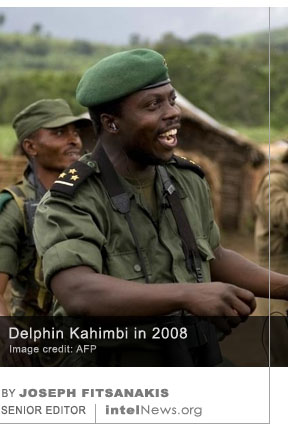
Delphin KahimbiThe head of military intelligence of the Democratic Republic of the Congo was found dead on Friday, just hours before he was due to testify before the country’s National Security Council. General Delphin Kahimbi, Deputy Chief of Staff of the DRC Armed Forces, and director of its military intelligence wing, was facing accusations of involvement in an alleged plot to depose the country’s new President, Félix Tshisekedi.

Tshisekedi took over from Joseph Kabila in January of 2019, in what was hailed at the time as the first peaceful transition of power in the DRC since the 1960s. Kabila, who headed the country from 2001 until 2019, has remained a powerful figure in Congolese politics, and participates in a governing coalition with Tshisekedi. But many of Kabila’s supporters want to see Tshisekedi removed from power, and accuse him of assuming the presidency after a fraudulent election. General Kahimbi was among Kabila’s supporters who voiced disagreements against Tshisekedi’s presidency.

Kahimbi rose through the ranks of the military in the 1990s and became a popular military figure after leading a bloody counterinsurgency campaign against secessionist rebels in the eastern DRC. But many accused him of carrying out human rights violations and subverting democratic politics in Africa’s second-largest country. Earlier this year, the European Union placed General Kahimbi in its sanctions list for alleged violations of human rights. Around the same time the United States began pressuring the Tshisekedi government to bring Kahimbi to justice for his role in alleged human rights abuses under the Kabila regime.

On Wednesday, General Kahimbi was briefly arrested by police and was subsequently released on bail. He was summarily suspended from duty and was due to appear before the DRC’s National Security Council on Friday morning. But local reports said he was found dead at his home in the Congolese capital Kinshasa, just hours before he was due to appear before the Council. His wife, Brenda Kahimbi, told the Reuters news agency that he had suffered a heart attack and was pronounced dead in hospital. There are rumors in Kinshasa that he committed suicide, but this is disputed by his family and supporters.

The DRC Armed Forces Council confirmed General Kahimbi’s death, but refused to comment on the cause of his death, or on the precise accusations that he was facing. Late on Friday, the Council released a statement praising General Kahimbi’s contribution to the national security of the DRC. It also announced the launch of an investigation into the general’s death.

Author: Joseph Fitsanakis | Date: 02 March 2020 | Permalink

US intelligence agencies using ‘wide range’ of spy tools to monitor coronavirus

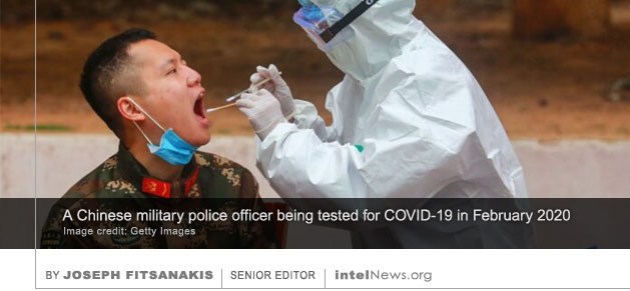
CDC AtlantaUnited States intelligence agencies are using “a wide range” of tools, ranging from open-source collection to communications interception and human intelligence, to collect desperately needed data about the spread of the coronavirus, according to sources. As of late last week, some of the most dependable data on the spread of the virus, known as COVID-19, came from military channels of information, according to Yahoo News’ National Security and Investigations Reporter Jenna McLaughlin.
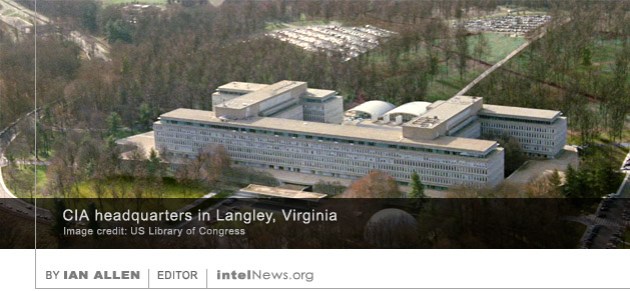
Writing last Friday, McLaughlin cited “two sources familiar with the matter”, who said that the Office of the Director of National Intelligence and the Central Intelligence Agency’s Global Issues Mission Center were collecting and analyzing real-time data on the coronavirus. The spread of the disease was also being monitored by the National Center for Medical Intelligence, which assesses the impact of disease outbreaks on American and foreign military personnel, said McLaughlin. She added that the intelligence generated by these agencies was being channeled to the Centers for Disease Control and Prevention and the Department of Health and Human Services, which lead the White House’s Task Force on COVID-19.

A major concern of the US Intelligence Community is that the Chinese, Iranian and other governments around the world may not be sharing comprehensive data on the spread of the virus and its impact. “No data means spying”, one unnamed source told McLaughlin. According to Reuters’ Mark Hosenball, US intelligence agencies have been using “a wide range of intelligence tools”, including human intelligence and electronic communications interception to track the spread of COVID-19. A major question that US intelligence agencies are trying to answer is whether governments like China’s or Iran’s have effective “continuity operations” plans in place, which relate to preserving the main functions of government during a major national disaster.

According to Hosenball, there is pessimism among US intelligence experts about the ability of developing countries around the world to respond to a massive COVID-19 outbreak. One example is India, whose dense population and rudimentary public-health infrastructure raises serious concerns about the government’s ability to protect the country’s population from a major pandemic. The report adds that there “deep concern” in US government circles about the possibility that Iran may be covering up the details about the spread of COVID-19.

Author: Joseph Fitsanakis | Date: 28 February 2020 | Permalink

US-Taliban peace deal will empower ISIS in Afghanistan, say insiders

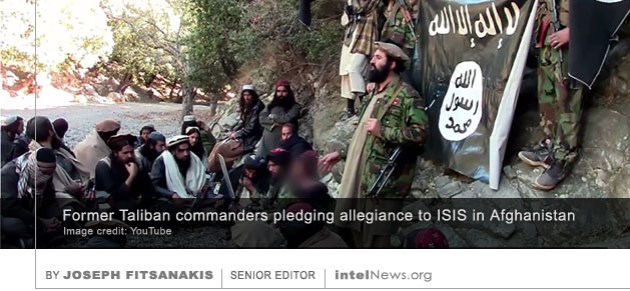
ISIS Islamic State AfghanistanAn imminent peace agreement between the United States government and the Taliban will inadvertently empower the Islamic State in Afghanistan, according to a number of insiders, who warn that the soon-to-be-announced deal may have grave unintended consequences for the war-ravaged country.
After nearly two decades or war, the United States is close to concluding a peace agreement with the Taliban, the Pashtun-based Sunni group that has waged an Islamist insurgency against the American-supported government of Afghanistan since 2001. The two sides have said that they will be signing a peace settlement on February 29, providing that an ongoing agreement for a week-long reduction in armed violence holds. If the current reduction in violence continues unabated, the United States has agreed to remove most of its troops from the country, while the Taliban have agreed to initiate peace negotiations with the Afghan government.

But a team of journalists with the American television program Frontline, who are working on the ground in Afghanistan, report that the impending peace deal may bear unintended consequences. They report that numerous sources in Afghanistan are warning that the peace deal will result in an increase in membership for the Islamic State forces in the country. This will happen, they say, because Taliban fighters who object to a peace treaty with Washington will abandon the Taliban and join the Islamic State. Some Frontline sources claim that the majority of the Taliban’s foot soldiers are preparing to join the Islamic State if a deal is struck between Washington and the Taliban.

The Frontline team quotes one Islamic State commander in Afghanistan, who claims that the peace deal will “make the caliphate rise”, as “Taliban fighters have promised to join us”. The United States is trying to pre-empt this expected trend, according to reports. The Pentagon expects that, as soon as the peace treaty with the Taliban is signed, it will need to redirect its remaining troops in the country to focus their attention to the forces of the Islamic State.

Author: Joseph Fitsanakis | Date: 27 February 2020 | Permalink

Russian spy who tried to kill Bulgarian arms dealer is now a diplomat, report claims

Emilian GebrevA Russian intelligence officer, who was allegedly involved in an attempt to kill a Bulgarian arms dealer in Sofia in 2015, is now a diplomat, according to report published on Tuesday by the investigative website Bellingcat. The website also claimed that there is a possible connection between the intelligence officer and the attempted assassination of Russian intelligence defector Sergei Skripal in England in 2018.

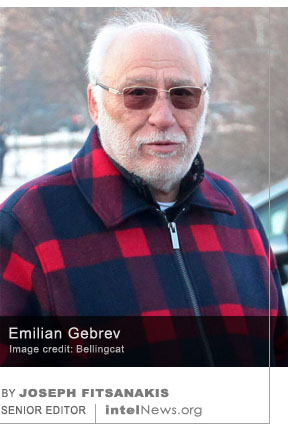
In January, prosecutors in Bulgaria charged three Russian men with attempted murder. The men were identified as Sergei Fedotov, Sergei Pavlov and Georgy Gorshkov, all of them residents of Moscow, according to Bulgarian prosecutors. They were charged with attempting to kill Emilian Gebrev (pictured), a wealthy Bulgarian defense industry entrepreneur and trader. Gebrev was hospitalized for several days for signs of poisoning, along with his son and one of his company’s executives. All of them eventually made a full recovery. Gebrev’s lawyers claim that he suffered from “intoxication with an unidentified organophosphorus substance”.

The case had been shelved for several years, but the Bulgarian state revived it following the attempted assassination of Skripal, which British officials blamed on the Russian state. British authorities charged two men, Anatoly Chepiga and Alexander Miskin —both of them allegedly Russian military intelligence officers— with attempting to kill Skripal. In February of 2019, Bulgarian officials claimed that there might have been a link between the attacks on Skripal and Gebrev. Last December, Bulgaria’s chief prosecutor announced that his office was investigating the alleged link between the two cases.

Now Bellingcat has said that it has discovered the real name of one of the three Russian men who were allegedly involved in the attempted killing of Gebrev. According to Bellingcat, the man, identified by Bulgarian authorities as Georgy Gorshkov, is in fact Yegor Gordienko, who is currently posted under diplomatic in Switzerland. According to the investigative website, Gordienko, 41, is currently serving as third secretary at the Russian Federation’s mission to the World Trade Organization in Geneva. State prosecutors in Bulgaria and the United Kingdom are investigating reports that Gordienko/Gorshkov was present in those countries when the attacks against Gebrev and Skripal took place, said Bellingcat.

Author: Joseph Fitsanakis | Date: 26 February 2020 | Permalink

More spies today in Australia than at the height of the Cold War, says intel chief

ASIO AustraliaThere are more foreign spies and their proxies operating today in Australia than during the height of the Cold War, according to the director of the Australian Security Intelligence Organisation (ASIO). This claim was made on Monday by Mike Burgess, who in 2019 was appointed director of the ASIO —Australia’s primary domestic security agency. Burgess added that the level of threat Australia faces from foreign espionage and other foreign interference activities is “currently unprecedented”.
Burgess made these comments during the AFIO’s Annual Threat Assessment, a new project that aims to inform Australians about counterintelligence activities against their country and highlight AFIO’s response. The agency’s director said that Australia is being targeted by “sophisticated and persistent espionage and foreign interference activities” from “a range of nations”, which “are affecting parts of the community that they did not touch during the Cold War”.

Additionally, the instigators of espionage operations against Australia have “the requisite level of capability, the intent and the persistence to cause significant harm” to Australia’s national security, said Burgess. The country is being targeted due to its strategic position and its close alliances with the leading Western countries, he said, and added that Australia’s advanced science and technology posture also attracts foreign espionage.

Burgess illustrated his presentation using the example of an unnamed “foreign intelligence service” that allegedly sent what he described as “a sleeper agent” to Australia. The agent, said Burgess, remained dormant for a number of years, quietly building links with the business community. During that time, the agent remained in contact with his foreign handlers and provided “on-the-ground logistical support” for foreign spies who visited Australia to carry out espionage.

The ASIO director did not identify the alleged “sleeper agent”, or the foreign countries that he alleged are spying against Australia. When asked about Burgess’ claims, Australian Prime Minister Scott Morrison said that the government would not name the countries behind the alleged espionage activities. Doing so, said Morrison, would not be in Australia’s national interest. Instead, “we’ll deal with this in Australia’s national interest, in the way we believe that’s best done”, he added.

Author: Joseph Fitsanakis | Date: 25 February 2020 | Permalink

US unable to trace $716 million worth of weapons given to Syrian rebels

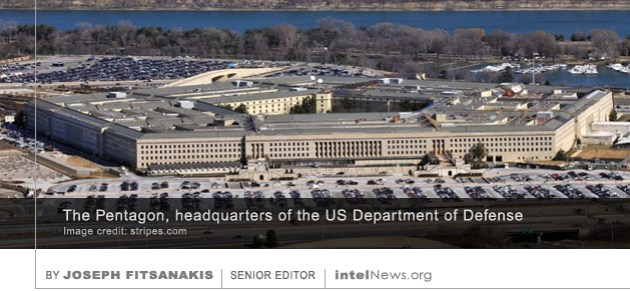
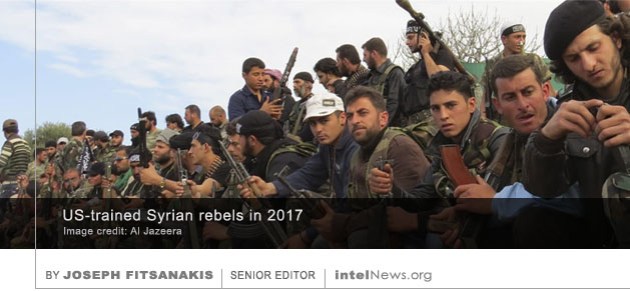
Syrian Civil War rebelsThe United States government is unable to account for nearly $716 million in weapons it gave to various Syrian groups during the war against the Islamic State, according to a Department of Defense audit. The weapons were procured under the Counter Islamic State of Iraq and Syria Train and Equip Funds (CTEF) program, which was administered by the US Pentagon in 2017 and 2018. The CTEF program cost the US taxpayer a total of $930 million.

But now an audit by the Pentagon’s Office of the Inspector General, which was released to the public on Tuesday, shows that most of the CTEF weaponry’s whereabouts cannot be verified. The reason, according to the audit, is that officials with the Special Operations Joint Task Force – Operation Inherent Resolve, failed to maintain detailed lists of all military equipment given to Washington’s allies in Syria between 2017 and 2018. Officials did not have a centralized depository facility for dispensing the equipment, and no documentation was kept during the operation, according to the audit. Consequently, thousands of weapons, weapons parts and other military hardware were exposed to “loss and theft”, says the Pentagon report.

There is no speculation in the report about where the missing weapons may have ended up, nor is there any indication that they may have fallen into the hands of the Syrian government, the Islamic State or Iranian-backed Shiite paramilitaries that are active in the region. However, the report notes that the Syrian battlefield is awash with American-manufactured weaponry. Much of the weaponry fell into the hands of pro-Syrian government militias, or the Islamic State, after US-trained rebel groups were defeated by them, joined them or simply surrendered.

Author: Joseph Fitsanakis | Date: 21 February 2020 | Permalink

US arrests Mexican man for spying for Russia in mystery case involving informant

FBI MiamiThe United States Federal Bureau of Investigation has arrested a Mexican man, who is accused of spying in the city of Miami on behalf of the Russian government. Local media reports suggest that the target of the man’s spying was a Russian defector who gave American authorities information about Russian espionage activities on US soil.
In a news release issued on Tuesday, the US Department of Justice identified the man as Hector Alejandro Cabrera Fuentes, a Mexican citizen residing in Singapore. The statement said that Fuentes was arrested on Monday and was charged with “conspiracy” and “acting within the United States on behalf of a foreign government”.

According to the statement, Fuentes was recruited in April of 2019 by an unnamed Russian government official. His first assignment was to rent an apartment in Miami-Dade County using fake identification. One he carried out the assignment, Fuentes allegedly traveled to Russia, where he briefed his handler. He was then asked to return to Miami and drive to an apartment complex, where he was to observe a vehicle belonging to an individual that the Department of Justice statement describes as a “US government source”. Fuentes was tasked with providing his Russian handler with the vehicle’s license plate number.

Having been given a detailed physical description of the vehicle by his Russian handler, Fuentes drove to the apartment complex in Miami, but was stopped at the entrance to the complex by a security guard. While Fuentes was speaking with the security guard, Fuentes’ wife allegedly exited the car and took a photograph of the vehicle in question. According to the FBI, she later shared the photograph with Fuentes’ Russian handler on the mobile phone application WhatsApp. The photograph was discovered by US Customs and Border Protection agents on the smartphone of Fuentes’ wife on Sunday, as the pair tried to board a flight to Mexico City.

The US Department of Justice news release does not identify Fuentes’ alleged espionage target. But an article in The Miami Herald claims that the target is an FBI informant who has provided the Bureau’s counterintelligence division with critical information about Russian espionage operations in the Miami area. Fuentes is scheduled to appear in court for a pretrial detention hearing this coming Friday. His arraignment has been scheduled for March 3. The press release does not explain why Fuentes’ wife was not arrested.

Author: Joseph Fitsanakis | Date: 20 February 2020 | Permalink

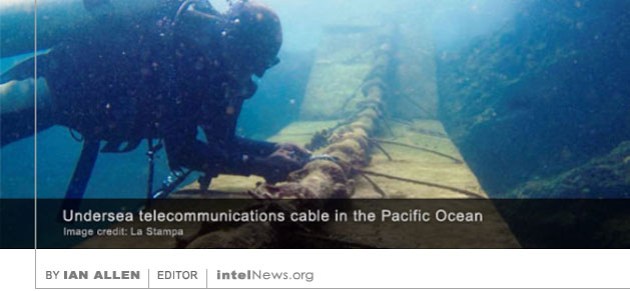
Russia sent spies to Ireland to check undersea fiber-optic cables: report

Undersea cableThe Russian government sent a team of spies to Ireland to monitor undersea fiber-optic cables, which enable communications traffic between North America and Western Europe, according to a new report. The spies were allegedly sent to Ireland by the Main Directorate of the General Staff of the Russian Armed Forces, which is known in Russia as GU, and formerly as GRU.
Due to its geographical proximity to both North America and Europe, Ireland constitutes a major hub for several of the more than 300 undersea cables that currently cross the world’s oceans. Totaling over 500,000 miles, these cables deliver Internet and telephone traffic across every continent. Nearly all transcontinental communications traffic is facilitated through these cables.

According to the London-based Sunday Times newspaper, the Irish security services believe that the GU spies were sent to Ireland to check the cables for weak points, in case Moscow decides to sabotage them in the future. Others claim that the Russian spies sought physical access to the cables in order to install wiretaps. The Times article also claims that Russian spies were detected by Irish security personnel monitoring the Dublin Port, which is Ireland’s primary seaport. This, said The Times, prompted a security alert in government facilities along the Irish coastline.

The same report claimed that the GU has been using Ireland as a base for operations in northwestern Europe, from where Russian spies can gather intelligence on European targets such as Belgium, the United Kingdom, Holland and France.

Author: Ian Allen | Date: 18 February 2020 | Permalink

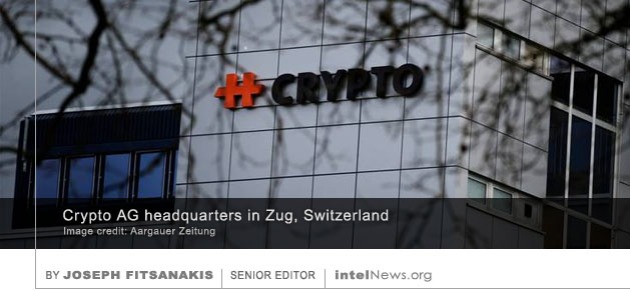
Swiss neutrality ‘shattered’ as leading cryptologic firm revealed to be CIA front

Crypto AGSwitzerland is reeling from the shock caused by revelations last week that Crypto AG, the world’s leading manufacturer or cryptologic equipment during the Cold War, whose clients included over 120 governments around the world, was a front company owned by the United States Central Intelligence Agency.


The revelation, published last Tuesday by The Washington Post and the German public broadcaster ZDF, confirmed rumors that had been circulating since the early 1980s, that Crypto AG had made a secret deal with the US government. It was believed that the Swiss-based company had allowed the US National Security Agency to read the classified messages of dozens of nations that purchased Crypto AG’s encoding equipment. These rumors were further-substantiated in 2015, when a BBC investigation unearthed evidence of a “gentleman’s agreement”, dating to 1955, between a leading NSA official and Boris Hagelin, the Norwegian-born founder and owner of Crypto AG.

But the reality of this alleged secret pact appears to have been even more controversial. According to last week’s revelations, the CIA and West Germany’s Federal Intelligence Service (BND) secretly purchased the Swiss company and paid off most of its senior executives in order to buy their silence. The secret deal allegedly allowed the US and West Germany to spy on the classified government communications of several of their adversaries —and even allies, including Italy, Spain and Greece, as well as Austria, Jordan, Saudi Arabia and the United Arab Emirates.

What is more, the secret CIA/BND partnership with Crypto AG was known to senior British and Israeli officials, and information derived from it was routinely shared with them. Government officials in Switzerland and even Sweden were aware that Crypto AG had been compromised, but remained silent.

American and German authorities have not commented on the revelations. But the story has monopolized Swiss media headlines for several days. Some news outlets have opined that the traditional Swiss concept of political neutrality has been “shattered”. Meanwhile, a Swiss federal judge has opened an investigation into the revelations, as the Swiss parliament is preparing to launch an official inquiry. Switzerland’s Prime Minister, Simonetta Sommaruga, said on Sunday that the government would discuss the issue “when we have the facts”.

Author: Joseph Fitsanakis | Date: 17 February 2020 | Permalink

Pakistani Taliban leaders found dead in Kabul hotel, culprits unknown

Inter-Continental Hotel KabulTwo senior members of the Pakistani Taliban, who were carrying fake identification documents, were reportedly assassinated earlier this month in the vicinity of a luxury hotel in the Afghan capital Kabul. The culprits remain unknown, although the leadership of the Pakistani Taliban has blamed the United States for their death.

According to the BBC, which reported on the incident on Friday, the bodies of the two men were found in or near the Inter-Continental, a five-star hotel located in western Kabul. According to Afghan government sources, the two men were carrying forged identification papers. In a statement issued on Thursday, the Pakistani Taliban identified the dead men as Sheikh Khalid Haqqani and Qari Saif Younis. Sheikh Haqqani had served as the group’s deputy leader, and was a member of its leadership council. Younis was among the group’s most powerful military commanders.

The Pakistani Taliban said that the two men had secretly traveled to Kabul from Paktika, a Taliban stronghold in the east-central region of Afghanistan, in order to attend a high-level meeting. The group did not say who the two men were meeting and why. But it is rare for leading figures of the Pakistani Taliban to leave the areas that the group controls, and even rarer for them to travel to Kabul or any other big city in the region.

The statement from the Pakistani Taliban claimed that the two men were killed “in a clash with American forces”. But the BBC quoted an unnamed “source within the group” who said that they could also have been targeted by militant groups linked to the Pakistani government, which is a sworn enemy of the Pakistani Taliban. United States officials have yet to comment on this developing story.

Author: Joseph Fitsanakis | Date: 10 February 2020 | Permalink

US threatens to de-fund Africa disease control program over Chinese influence

African UnionThe United States has threatened to pull its funding for an Africa-wide disease control program if the African Union decides to accept an offer from China to build the program’s new headquarters. The dispute accentuates a growing competition between Washington and Beijing to exert political control in Africa and places the African Union at the center of a difficult dilemma.

The quarrel concerns the Africa Centers for Disease Control and Prevention, or Africa CDC, a network of five biomedical research hubs that are located in Zambia, Kenya, Gabon, Nigeria and Egypt. The network was established in 2017 in response to the outbreak of the Ebola epidemic in western Africa. Its mission is to gather data that can help monitor and contain disease outbreaks and other health crises throughout the continent. The network’s central hub is located at the headquarters of the African Union in Addis Ababa, Ethiopia.

Africa CDC is an initiative of the African Union, but it is partly funded by outside countries and bodies, including China, the United States, and the World Bank. Washington supported the establishment of Africa CDC with a donation of $14 million, and an offer to pay the project director’s salary, as well as assign scientists to work there from the US CDC. But the United States has expressed concerns about a recent offer by China to double its funding of Africa CDC and to build a the organization’s new headquarters, at the cost of $80 million. Foreign affairs ministers from the African Union’s 55 states began discussing Beijing’s offer on Thursday during a meeting in Ethiopia.

There are some among them who question China’s intentions. They refer to news reports that surfaced in the French press in 2018, according to which the Chinese-built headquarters of the African Union was comprehensively ‘bugged’ by Beijing. According to the reports, the $200 million, 19-storey skyscraper in the Ethiopian capital was hardwired with computer servers that secretly communicate with Chinese government computers, without the consent of African Union network managers.

On Thursday The Wall Street Journal quoted an anonymous United States government official, who said that “if the Chinese build the headquarters [of Africa CDC], the US will have nothing to do with” the organization. The African Union has not commented on The Journal’s article.

Author: Joseph Fitsanakis | Date: 07 February 2020 | Permalink


United States quietly scraps joint anti-terrorist intelligence project with Turkey

Incirlik TurkeyThe United States has indefinitely suspended a longstanding military intelligence-sharing program with its North Atlantic Treaty Organization ally Turkey. The program, which targets a Kurdish separatist group, is believed to have been in place since 2007. According to the Reuters news agency, which published the story on Wednesday, it has never before been reported on by news media.

The joint intelligence-sharing program targets the Kurdistan Workers Party (PKK), a militant organization that campaigns for a separate homeland for Turkey’s Kurdish minority. Washington and Ankara have both designated the group a terrorist organization, and have been working jointly to combat it since at least 1997. According to Reuters, the United States military has been carrying out surveillance on the PKK using unmanned surveillance drones that fly out of Turkey’s Incirlik air base. Much of the surveillance focuses on the regions of Turkey that border with Iraq and Syria, where the PKK has a strong grassroots presence.

But Washington decided to suspend the program indefinitely last October, said Reuters. The decision was allegedly taken after Turkish troops invaded Syria in order to push back Kurdish rebels and establish a Kurdish-free buffer zone along the Turkish-Syrian border. The news agency cited four American officials, who did not wish to identify themselves, “due to the sensitivity of the matter”. It also cited an unnamed Turkish official, who confirmed that the intelligence-collection program had been terminated.

The American officials told Reuters that the suspension of the program would place strains on the ability of the Turkish military to respond to the challenges of its ongoing guerrilla war against Kurdish militants in northern Syria, as well as within Turkey. It will also make “the anti-PKK campaign more […] costly for Turkey”, one of the officials told the news agency.

Reuters said it contacted the United States Department of Defense, but was told by a spokeswoman that the Pentagon would “not provide details on operational matters”. A spokesperson from the United States Department of State told Reuters that its representatives could “not comment on intelligence matters”. The Turkish Ministry of Defense did not return requests for comment.

Author: Joseph Fitsanakis | Date: 06 February 2020 | Permalink

Denmark arrests three Iranian separatists for spying for Saudi Arabia

Finn Borch AndersenAuthorities in Denmark have announced the arrests of three Iranian Arab separatists, who are charged with carrying out espionage on behalf of the intelligence services of Saudi Arabia. The arrests were announced on Monday by the Danish Security and Intelligence Service, known as PET.

According to the PET, the three Iranians are members of a group calling itself the Arab Struggle Movement for the Liberation of Ahvaz (ASMLA). Known also as Al-Ahwaziya, the group was established in 1980. It calls for a separate state for ethnic Arabs who live the oil-rich province of Khuzestan, in Iran’s southwest.

PET director Finn Borch Andersen told reporters on Monday that the three Iranians were recruited in 2012 by the General Intelligence Presidency (GIP), Saudi Arabia’s primary intelligence agency. They allegedly spied on pro-Iranian groups and individuals in Denmark and other countries northern Europe on behalf of the GID. They reported regularly to their handler, who was an undercover intelligence officer at the Saudi embassy in Copenhagen, according to the PET.

In October 2018, one of the three Iranian men was targeted for assassination by Iranian intelligence, but Danish authorities managed to prevent it with an elaborate security operation. A Norwegian man of Iranian background was arrested during the operation and remains in detention in Denmark. Throughout that time, the PET continued to monitor the three Iranian separatists, and proceeded to arrest them this week.

Late on Monday, the Danish Ministry of Foreign Affairs summoned the Saudi ambassador to Copenhagen in order to file an official complaint about Saudi espionage activities on Danish soil. According to the Danish media, the ambassador of Denmark to Saudi Arabia contacted the oil kingdom’s government to protest about the incident.

Author: Joseph Fitsanakis | Date: 05 February 2020 | Permalink

ISIS is tenacious, well-funded and quickly reasserting itself, new UN report warns

Islamic State ISISThe Islamic State remains committed to its goals and continues to utilize ample funding sources, according to a new report by the United Nations. The report warns that the militant Sunni group, which was previously known as the Islamic State of Iraq and Syria (ISIS), is quickly reasserting itself in the Middle East.

The report (.pdf) was authored by a committee of the UN’s Security Council that monitors the impact of UN-imposed international sanctions designed to weaken the Islamic State, al-Qaeda, and groups aligned with them. It was completed on January 20 and submitted to the UN Security Council last week. Its authors state that the information used to compile it came from intelligence shared with the UN by its member states.

The report recognizes that the Islamic State has suffered significant defeats in the field of battle, which have shattered its once formidable military and logistical power. Despite these setbacks, however, the militant group remains “tenacious and well-funded”, with much of its financial income stemming from sound investing practices in business opportunities throughout the Middle East, says the report. Meanwhile, its armed units in Syria continue to sell protection and carry out extortion, now even during daylight hours, it adds. The group’s steady funding even allows it to continue to provide monthly pensions to close family members of its dead fighters.

Additionally, says the report, the Islamic State has learned to take advantage of the deficiencies of Syrian and Iraqi security forces, and is now carrying out progressively brazen armed attacks against a variety of military and civilian targets. Although it is operationally weak, it continues to aspire to launch attacks in Europe in the future. Additionally, its leaders continue to seek ways of freeing thousands of the group’s supporters from detention camps in Syria and Iraq.

The report concludes that the death of the group’s leader, Abu Bark al-Baghdadi, and his replacement by Amir al-Salbi (also known as Abdullah Qardash) is not expected to signal drastic changes in the Islamic State’s strategic direction. However, Qardash is not an Arab and may not stay at the group’s helm for long, as an Arab Emir would be more likely to be met with acceptance by the group’s wilayats, or provinces, the report adds.

Author: Joseph Fitsanakis | Date: 03 February 2020 | Permalink

Czech intelligence foiled North Korean plan to smuggle arms through Africa

Czech Security Information ServiceThe Czech intelligence services foiled a secret plan by North Korea to smuggle weapons parts and surveillance drones, leading to the expulsion of a North Korean diplomat from the country, according to a report. The report, published this week by the Czech daily Deník N, claims that the alleged plot was foiled by the Czech Security Information Service, known as BIS.

According to Deník N, the alleged plot took place in 2012 and 2013. It was initiated by a North Korean diplomat who was serving at the DPRK’s embassy in Berlin as an economic attaché. However, claims Deník N, the diplomat was in fact operating on behalf of the North Korean intelligence services. The unnamed diplomat allegedly traveled to Prague and contacted a local businessman, seeking to purchase spare parts for use in Soviet-built T-54 and T-55 tanks, as well as spare parts for armored vehicles and jet airplanes. The diplomat also sought to purchase surveillance drones, according to the newspaper.

The buyers reportedly planned to smuggle the acquired weapons parts and drones to North Korea through ports in Africa and China, said Deník N. Such an act would have violated the international embargo that has been in place against the DPRK since 2006. However, the plot was foiled by the BIS, which informed the Czech Ministry of Foreign Affairs. The Czech government eventually detained the diplomat and expelled him from the country, said Deník N.

Following the newspaper article, BIS spokesperson Ladislav Šticha said that he “could not comment on the details” of the case, but could confirm that “in the past BIS has indeed managed to prevent trade in weapons from the Czech Republic to the DPRK”. Hours later, the BIS posted on its Twitter account that it could not comment “on the details of this case”, but added that “its outcome was very successful”.

IntelNews regulars will remember a similar report in the German media in 2018, according to which North Korea used its embassy in Berlin to acquire technologies that were almost certainly used to advance its missile and nuclear weapons programs.

Author: Joseph Fitsanakis | Date: 31 January 2020 | Permalink