US sent troops to OPEC member Gabon just days before military coup

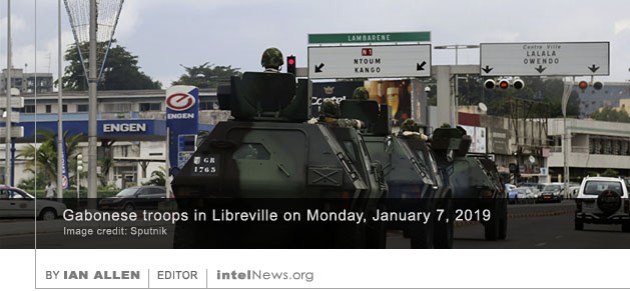
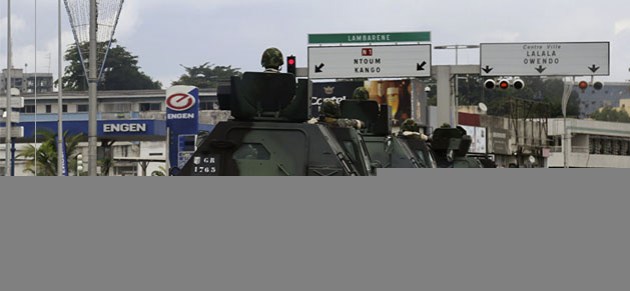
Libreville, GabonThe United States deployed troops to the Central African nation of Gabon just days before a group of military officers staged tried to take over power in the oil-rich nation on Monday. Situated on the Atlantic coastline of Central Africa, Gabon is a member of the Organization of Petroleum Exporting Countries (OPEC). However, despite producing of 176,000 barrels of oil per day, making it one of Africa’s most significant oil producers, over a third of its 2 million inhabitants live below the official poverty line. The country has been ruled by the Bongo family for over a century with its current President, Ali Bongo Ondimba, having led the country since his father’s death a decade ago. In October of last year, however, Bongo went to Saudi Arabia for medical treatment after suffering a stroke, and has yet to return. In a televised message aired on New Year’s Day, Bongo told the citizens of Gabon that he was recovering and would soon be returning to his duties.

But in the early hours of Monday gun shots were reported in the vicinity of the studios of Radio Télévision Gabonaise (RTG), the country’s state-owned national broadcaster in the capital city, Libreville. A few hours later, regular broadcasting was suspended. A message was transmitted on the national radio station frequency by troops claiming to be members of a group calling itself the Patriotic Movement of the Defense and Security Forces of Gabon. Its leader, a man identifying himself as Lieutenant Kelly Ondo Obiang, said that the armed forces had “doubts” about President Bongo’s “ability to perform the responsibilities of his office”. He also announced the formation of a “Council of National Restoration” that would “ensure the smooth operation of the state and guarantee a transition to democracy”. However, a few hours later a government spokesman told international media that the coup had been defeated and that Lieutenant Obiang was under arrest. Two of his co-conspirators had been killed, said the spokesman.

Interestingly, the US deployed 80 American soldiers to Gabon on January 2, less than a week before the coup unfolded. In a letter sent to Congress on January 4, US President Donald Trump said that the troops would be stationed in Libreville and would carry with them “appropriate combat equipment”. Their purpose, said President Trump, would be to provide security protection for US “citizens, personnel and diplomatic facilities” in Kinshasa, capital of the neighboring Democratic Republic of the Congo (DRC). Security analysts fear that the pending announcement of the delayed election results in the DRC may spark widespread riots in the country of 81 million people. On Monday, a spokesman for the United States Africa Command (AFRICOM) told reporters that there was “no change in the status of our forces in Gabon” and that they would not be involved in the domestic political situation. The US troops were “not currently tasked with securing [US] diplomatic assets [in Gabon]”, added the AFRICOM spokesman. However, AFRICOM said that additional US troops may deploy to Gabon, the DRC or the Republic of the Congo, should the need arise.

It is not known whether the coup plotters were aware of the presence of the 80 US troops in Libreville when they tried to take over power on Monday.

Author: Ian Allen | Date: 08 January 2019 | Permalink

American held on espionage charges in Russia has three other citizenships

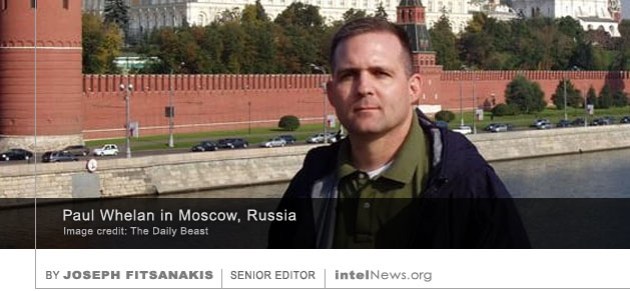
Paul WhelanAn American former Marine, who faces espionage charges in Russia, is a citizen of at least three other countries, namely Canada, Britain and the Republic of Ireland, according to reports. Paul Whelan, 48, was arrested by Russia’s Federal Security Service (FSB) on December 28 at the Metropol, a five-star hotel in downtown Moscow. News of Whelan’s arrest first emerged on January 3 in a report from Rosbalt, a Moscow-based news agency that known to be close to the Russian security services. He was reportedly indicted on Thursday and is now facing between 10 to 20 years in prison for espionage. His trial is not expected to take place until March.

According to Rosbalt, the FSB arrested Whelan in his hotel room while he was meeting with a Russian citizen who allegedly handed him a USB drive containing a list that included “the names of all employees of a [Russian] security agency”. However, Whelan’s family claim that the former Marine arrived in Moscow on December 22 to attend the wedding of an American friend who married a Russian woman. Whelan served two tours in Iraq with the United States Marines and was reportedly discharged for bad conduct. At the time of his arrest last month, he was the director of global security for BorgWarner, a Michigan-based manufacturer of spare parts for cars. He is believed to have visited Russia regularly since 2006, and is thought to have a basic command of the Russian language. He is currently being held in solitary confinement in Moscow’s Lefortovo detention center.

At the time of his arrest, Whelan was identified as an American citizen. On Friday, however, the Associated Press reported that he also has United Kingdom citizenship because he was born to British parents. Additionally, he is now believed to hold Canadian citizenship as well, because he was born in Canada. He then acquired American citizenship after arriving in the US with his parents as a child. It is not known how he acquired Irish citizenship, but the Irish government confirmed it on Friday. Also on Friday, the Washington-based National Public Radio said that embassies of at least four Western countries —the US, Britain, Ireland and Canada— were working to gain consular access to Whelan. On Thursday, the former Marine was visited in prison by Jon Huntsman, America’s ambassador to Russia. Meanwhile, Britain’s Foreign Secretary, Jeremy Hunt, said London was “extremely worried” about Whelan’s fate and warned Moscow “not to try to use [him] as a diplomatic pawn”, possibly by exchanging him with Russians arrested for espionage in the West.

Author: Joseph Fitsanakis | Date: 05 January 2019 | Permalink

North Korean ambassador to Rome missing since November, says Seoul

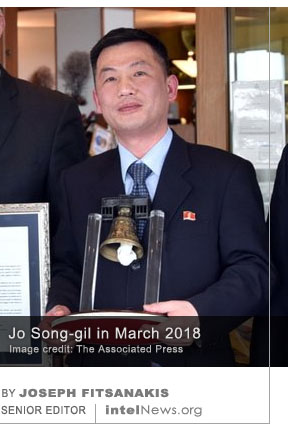
Jo Song-gilThe acting ambassador of North Korea to Italy has been missing for two months and there are reports that he may be under the protection of a Western country. Jo Song-gil (pictured), 48, a career diplomat who is fluent in Italian, French and English, presented his diplomatic credentials to the Italian government in May of 2015. In October 2017, he became his country’s acting ambassador after Italian authorities expelled Ambassador Mun Jong-nam from the country. The expulsion came in response to North Korea’s nuclear test in September of that year, when Pyongyang announced the detonation of a hydrogen bomb that could be loaded onto an intercontinental ballistic missile.

Jo is believed to be from a high-ranking family of officials and diplomats with a long history in the ruling Workers Party of Korea. His father is a retired diplomat and his wife’s father, Lee Do-seop, spent many years as Pyongyang’s envoy in Hong Kong and Thailand. It is believed that Jo had been permitted to take his wife and children with him to Rome, a privilege that is bestowed only to the most loyal of North Korean government official. Sources in the Italian government were quoted by British media on Thursday saying that Pyongyang had notified Italy’s Ministry of Foreign Affairs in October that Jo would be replaced in December. On Thursday, however, Kim Min-ki, a South Korean member of parliament, told reporters in Seoul that Jo had been missing since November. Kim added that he and a group of other parliamentarians had been briefed on the mater by officials from the National Intelligence Service, South Korean’s primary external intelligence agency. He went on to say that Jo’s wife and children were believed to have vanished with him and that South Korean authorities had not made contact with them since their disappearance.

Meanwhile, South Korean press reports stated on Thursday that Jo and his family “were in a safe place” under the protection of the Italian government, while they negotiated their defection. But Italian officials told the BBC that the Ministry of Foreign Affairs had “no record of an asylum request made by Jo” or other members of his family. Citing an anonymous “diplomatic source”, the Seoul-based JoongAng Ilbo said that the former ambassador and his wife were in the process of negotiating their defection to a Western country, along with an offer of political asylum. The paper did not name the country, but said that the missing family did not intend to remain in Italy. IntelNews regulars will recall the last defection of a senior North Korean diplomat in August 2016, when Thae Yong-ho, second-in-command at the North Korean embassy in London, defected to South Korea with his family.

Author: Joseph Fitsanakis | Date: 04 January 2019 | Permalink

General to head Brazilian spy agency in Bolsonaro’s military-dominated cabinet

Augusto HelenoA retired general, who rose through the military’s ranks during Brazil’s 20-year dictatorship, will head the country’s intelligence agency as one of several military men in the new cabinet of President Jair Bolsonaro. Augusto Heleno, 71, was sworn in on Tuesday as head of the Institutional Security Cabinet (GSI), which advises the president on security policy and oversees Brazil’s intelligence and counterterrorism services. Heleno is one of four retired generals who are included in Bolsonaro’s 22-member cabinet. The latter also includes an admiral, an Army lieutenant, an Army captain, and a former professor at the Brazilian Army Staff College. Bolsonaro himself is a former Army captain, who served 27 years as a member of Congress before winning last October’s elections and becoming Brazil’s 38th president.

The 2014-2016 economic recession, the worst in Brazil’s history, was instrumental in helping propel Bolsonaro to the presidency, as was the so-called “car wash” scandal, known in Portuguese as Lava Jato. The term refers to a money-laundering probe that began in 2014, following allegations of illicit financial practices by a number of private import-export companies in Brazil. The Lava Jato probe led to the exposure of large-scale corruption, nepotism and bribing practices at the core of Brazil’s state-owned oil company Petrobras. As of this year, the ongoing investigation into Lava Jato has implicated nearly 200 people, many of them well-known politicians. Among them is Luiz Inácio Lula da Silva, Brazil’s leftist former president, who is currently serving a 12-year prison sentence for corruption and money laundering.

During his inauguration ceremony on Tuesday, Bolsonaro pledged to “rid Brazil of socialism” and said that the country’s flag “would never turn red”. In previous speeches, some of them in Congress, Bolsonaro has expressed support for the military junta that ruled the country between 1964 and 1985. It is unsurprising, then, that nearly half his newly installed cabinet consists of members of the military with favorable views on the dictatorship. Bolsonaro’s choice for vice president, Hamilton Mourão, sparked controversy in recent weeks by saying that the military could suspend the Brazilian constitution if lawlessness and anarchy became endemic. In addition, several members of Bolsonaro’s cabinet have dismissed the phenomenon of global warming as a conspiracy and a few have called for a “holy Christian alliance” between Brazil, the United States and Russia.

Heleno, the new head of the GSI, served as a military attaché at the embassy of Brazil in Paris, before joining the country’s diplomatic mission in Brussels. His first post following his retirement was as commander of the United Nations Stabilization Mission in Haiti. Like Bolsanaro, Heleno has also expressed support for Brazil’s 20-year military junta. In 2011, he said that the country’s Armed Forces had “defended public order” and “prevented the Cubanization” of Brazil during the Cold War. In his first public address as GSI director on Tuesday, Heleno said that the intelligence functions of the GSI would be “rescued” from the “meltdown” that he claimed they had experienced under the previous government. He also accused Bolsonaro’s immediate predecessor, President Dilma Rousseff, of governing as a leader who “did not believe in the intelligence services”. Rousseff, a member of Loula’s Worker’s Party, was a Marxist militant who was captured, tortured and jailed from 1970 to 1972 by the military government.

Author: Joseph Fitsanakis | Date: 03 January 2019 | Permalink

Colombia says Venezuelans caught with submachine guns planned to kill president

Duque HolmesAuthorities in Colombia said that three Venezuelans, who were arrested in Colombia’s Caribbean coast with submachine guns and explosives, were planning to assassinate President Iván Duque. The claim was aired in a video posted on Twitter by Colombia’s Minister of Foreign Affairs, Carlos Holmes, on December 29. In the brief video, Holmes said that Colombian intelligence services had uncovered evidence of a “credible threat to the life” or President Duque. He went on to suggest that the investigation into the alleged assassination operation had gone on for “several months” with the cooperation of “foreign intelligence agencies”, which he did not name. He also urged Colombians to come forward with any information in their possession that could assist the ongoing investigation.

On December 30, several Colombian newspapers reported that Holmes’ Twitter warning had been triggered by the arrest on December 21 of two Venezuelans in Colombia’s northern city of Valledupar. The two men, identified in media reports as Pedro José Acosta and José Vicente Gómez, both 22, were found to be in possession of rifles. Guillermo Botero, Colombia’s Minister of Defense, said later that the rifles were “high-precision” and were “camouflaged”, though he did not explain what that meant. On December 26, a third Venezuelan, identified in media reports as Geiger Vásquez, 35, was arrested in the city of Barranquilla. He was reportedly carrying a bag containing an Uzi submachine gun, along with ammunition and several grenades.

Government officials said that the attempt to kill President Duque could have been sponsored by leftist rebel groups, such as the National Liberation Army (ELN), that are active in the Colombian-Venezuelan border. There were also accusations in some Colombian media that the government of Venezuela may have helped plan the alleged attempt on Duque’s life. Since assuming the Colombian presidency in August, Duque has spearheaded international efforts to impose sanctions on the leftwing Venezuelan government of President Nicolas Maduro, who is about to begin his second term in office. Relations between the two neighboring countries have thus sunk to new lows in recent months. On Monday, the Venezuelan government said it had requested more information about the alleged assassination plot from Colombian authorities and that it would provide Bogotá with “the necessary police and intelligence cooperation” to help investigate the allegations.

Author: Joseph Fitsanakis | Date: 02 January 2019 | Permalink

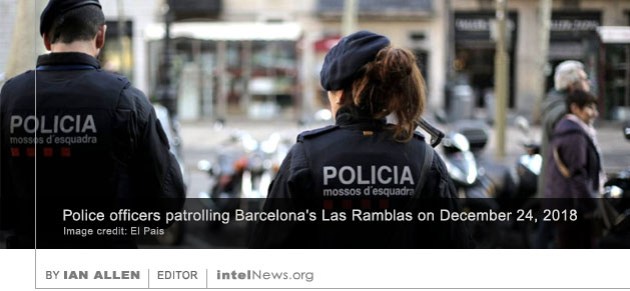
Barcelona on high alert after US State Department terrorism warning

Las Ramblas BarcelonaPolice in Barcelona have intensified security checks in some of the Spanish city’s most recognizable landmarks, following a security warning from the United States Department of State. The surprise warning came in the form of a post on the popular social networking site Twitter on Sunday, December 23. In the tweet, the Department of State advised travelers to “exercise heightened caution around areas of vehicle movement, including buses”. It added that terrorists could “attack with little or no warning, targeting tourist locations, transportation hubs, and other public areas”. It is rare for the Department of State to issue warnings for specific locations, unless the US government is in possession of critical intelligence pointing to the possibility of a terrorist attack.

Hours after the Department of State’s warning, Miquel Buch, Minister of the Interior for Spain’s Catalonia region, told a radio station in Barcelona that local authorities were “engaged in assessing the warning” by the US authorities. Local media reported that increased police presence was visible around bus, minibus, train and metro stations throughout the Catalonian capital. Heavily armed police presence was also notable in Barcelona’s most popular tourist landmarks, including the Sagrada Familia Cathedral, the Gothic Quarter, and the mile-long Las Ramblas pedestrian Boulevard at the city’s center. There was no information about the precise nature of the US warning, but there were reports in Catalonian media on Tuesday that the alert notice involved the possibility of a vehicular attack by Islamists during the Christmas holiday season.

In August of 2017, Younes Abouyaaqoub, a 22-year-old Moroccan-born Islamist drove a van into large crowds of tourists at Las Ramblas, killing 14 and injuring nearly 150 people. Abouyaaqoub’s attack was followed by another assault by five men in Cambrils, a small seaside town south of Barcelona, who drove a car into a crowd of pedestrians, killing one and injuring six more. All six men were members of the Islamic State. They were shot and killed by police and security forces.

Author: Ian Allen | Date: 26 December 2018 | Permalink

China seeks clarification over alleged spy equipment ordered by US embassies

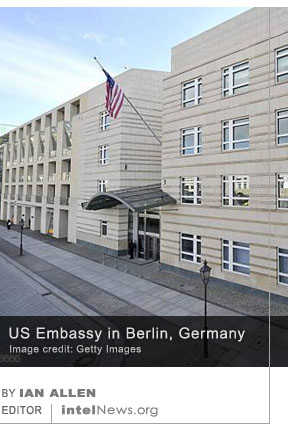
US embassy Berlin GermanyThe Chinese government says it is seeking explanations from Washington after a leaked procurement database showed that American embassies purchased data forensics software and various tactical spy equipment. The purported database was published on December 21 by the international anti-secrecy website WikiLeaks, founded by Julian Assange, who is accused by some in the United States of having violated its espionage laws. WikiLeaks has dubbed the database the “US Embassy Shopping List” and says that it contains over 16,000 procurement requests from officials at American embassies located all over the world.

Most procurement requests included in the WikiLeaks database appear to be for commonplace items or services, such as passenger transportation, heating oil, outdoor freezers, or garage gates maintenance and repair. But there are some requests for so-called “tactical spy equipment”, such as those ordered by the US embassies in Colombia and El Salvador. These appear to be for miniature surveillance cameras hidden into everyday objects, such as buttons, baseball caps, watches and ties. Nearly 100 such items were requested for procurement by the US embassy in San Salvador. Several embassies ordered hardware and software for forensic examination of mobile phones. For example, the US embassy in Yerevan, Armenia, ordered a “Cell Phone Analyzer”, which allows users to access data from cell phones while bypassing security measures such as passwords. Similar devices were ordered by the US embassies in Berlin (pictured), and Kiev, capital of Ukraine, where fears were expressed on Monday about a possible military action by Russian troops during the holidays.

On Monday, China’s Ministry of Foreign Affairs said it was seeking “clarifications” from Washington about the documents made public by WikiLeaks. Speaking to reporters in Beijing, Ministry spokesman Hua Chunying said that the US owed “the rest of the world an explanation […] for what has recently been revealed by WikiLeaks”. Chunying also spoke about prior WikiLeaks revelations, including the so-called “PRISM-gate” in 2013, which revealed extensive intelligence-collection activities by the US on numerous countries, including some if its allies, such as Germany and France. She went on to ask, “why do American embassies buy so much secret surveillance equipment?”. Authorities in Washington had made no comment on the WikiLeaks revelation as of Tuesday morning.

Author: Ian Allen | Date: 25 December 2018 | Permalink

Islamic State issues drone bomb warning following London airport chaos

Islamic State dronesOn the heels of chaotic scenes at Britain’s Gatwick Airport, which remained closed for three days due to reported sightings of drones, the Islamic State has released images on social media showing drones carrying packages to large Western cities. The images, which appear to be PhotoShopped, have reignited concerns that the group may be close to launching attacks on civilian targets around the world using drones. Known formally as unmanned aerial vehicles (UAVs), drones have become increasingly accessible to private consumers in recent years. They range from miniature toy models that can be controlled via smartphone applications to highly sophisticated models that can carry significant loads to high altitudes.

In recent years, it has been reported that several militant groups, such as Hezbollah in Lebanon and al-Qaeda-affiliated groups in Pakistan, have made use of drone technology for surveillance and combat purposes. But observers believe that the Islamic State may have the most advanced drone arsenal of any non-state group in the world. The militant Sunni-Muslim organization launched an experimental armed drone campaign in Iraq in 2016. A year earlier, Islamic State fighters had been seen making use of commercially purchased drones for surveillance purposes in the battlefields of Iraq and Syria. In 2016, the Islamic State built several workshops to modify commercially purchased drones, and eventually to build its own models. In January 2017, the group announced the establishment of a new unit called “Unmanned Aircraft of the Mujahideen”, which operated a sizeable fleet of modified combat drones. The following month, the Islamic State claimed to have killed with the use of drones nearly 40 Iraqi soldiers in a single week. The militant group said it did so by using drones to drop three-pound mortar shells on Iraqi troop positions.

Counterterrorism specialists are concerned about what they see as the Islamic State’s “growing ambition” to use drones in the battlefield. But they doubt that the use of drones can by itself affect the outcome of battles. A much larger concern is the possibility that the Islamic State could transfer its drone knowledge outside the battlefield. It has long been confirmed that Islamic State militants have systematically discussed the possibility of deploying drones in civilian areas to drop explosives or even weaponized chemical substances. In October of this year, Federal Bureau of Investigation director Christopher Wray told the United States Congress that the threat of the use of drones by a group like the Islamic State against American tarets was “steadily escalating”. Wray said that the FBI assessed drones “will be used to facilitate an attack in the United States against a vulnerable target, such as a mass gathering”. He added that his assessment was based on several factors, such as the retail availability of the devices, the “lack of verified identification requirement to procure” drones, their ease of use, as well as the experience in the use of drones that militant groups have been amassing abroad.

Author: Joseph Fitsanakis | Date: 24 December 2018 | Permalink

Saudi royal suspected of ordering Khashoggi murder leads spy reform body

King Salman with Crown Prince MohammedThe Saudi royal who is suspected by the international community of having ordered the state-sponsored murder of journalist Jamal Khashoggi is now leading a committee to reform the Kingdom’s spy services. Khashoggi, 59, was a Saudi government adviser who became critical of the Kingdom’s style of governance. He moved to the United States and began to criticize Saudi Arabia from the pages of The Washington Post. He was killed on October 2 by a 15-member Saudi hit-squad while visiting the Saudi consulate in Istanbul, Turkey, in order to be issued a document certifying his divorce from his former wife in Saudi Arabia. After several weeks of vehemently denying any role in Khashoggi’s killing, the Saudi government eventually admitted that he was killed while inside the Saudi consulate in Istanbul.

After conceding that Khashoggi was murdered inside its consulate in Istanbul, the Saudi monarchy pledged to punish those responsible and reform the Kingdom’s intelligence services. But reports in the international press have disclosed that nearly every major Western intelligence agency believes that Khashoggi’s murder was authorized by none other than Muhammad Bin Salman, Saudi Arabia’s Crown Prince and heir-presumptive to the Saudi throne. In late October it was disclosed that Britain’s intelligence services had prior knowledge of a plot to target Khashoggi at the highest echelons of the Saudi government, and allegedly warned Riyadh not to proceed with the plan. And earlier this month it was reported by The Wall Street Journal that, according to the United States Central Intelligence Agency, bin Salman had exchanged text messages with the head of the 15-member hit-team in the hours prior to and following Khashoggi’s brutal murder in Istanbul.

However, not only has the Kingdom’s ruler, King Salman, rejected reports about the crown prince’s alleged involvement in Khashoggi’s murder, but he has also appointed the controversial royal as the head of a ministerial committee to “restructure the General Intelligence Presidency”. The term refers to the primary intelligence agency of Saudi Arabia, which is also known as the General Intelligence Directorate (GID). The ministerial committee has reportedly met several times since October 19, when it was established by royal decree “in pursuit of achieving best international practices” in intelligence operations. On Thursday, Saudi media announced that the ministerial committee had drafted a document recommending “short-, medium-, and long-term development solutions” for restructuring the GID. Several measures were presented by the media as “urgent”. They center on creating a “department for strategy and development” whose task will be to ensure that intelligence operations are in line with the GID’s strategy and the Kingdom’s national security strategy. Another proposed measure involves creating a “general department for legal affairs” that will assess the compatibility of proposed intelligence operations with “international laws and charters and with human rights”. The committee also proposed the creation of a “general department for performance evaluation and internal review” to verify that intelligence operations have been carried out in a legal fashion.

Saudi media reports on Thursday made no mention of the controversy surrounding bin Salman’s presidency of the ministerial committee. For the past two months, the Kingdom has dismissed reports of the crown prince’s involvement in Khashoggi’s murder as “fake news” promoted by its rival Qatar. It has also warned that any social media posts that promote “fake news” about the Saudi government’s involvement in the murder will result in up to five years’ imprisonment. Last month, Prince Turki al-Faisal, the former director of the GID, rejected calls for an international inquiry into Khashoggi’s murder and said that Saudi Arabia would never agree to an international investigation into the case.

Author: Joseph Fitsanakis | Date: 21 December 2018 | Permalink

Cyber spies accessed thousands of European Union diplomatic cables

European Commission buildingA group of hackers, allegedly working for the Chinese military, accessed thousands of classified diplomatic cables from the European Union during a protracted cyber-espionage operation, a report has revealed. Over 100 organizations are believed to have been targeted in the multi-year cyber-espionage campaign, including the United Nations, international labor groups, as well as government ministries from dozens of countries. The operation was revealed on Tuesday by Area 1, a cyber-security company founded by former officials of the United States National Security Agency, and reported by The New York Times.

The compromised cables come primarily from the European Union’s COREU communication network, a Telex-based network that uses teleprinters to exchange text-based messages. The European Union uses the COREU network to transmit information that is classified “limited” or “restricted” between officials representing the executive governments of the European Union’s member states, members of the European Commission, foreign-ministry officials, and other approved parties. Top-secret information (“tres secret” in European Union parlance) is typically not shared on the COREU network. Consequently, the hacked cables contain mostly low-level information. That does not mean, however, that their access by at least one adversary power does not represent a serious security breach. Area 1 said that its forensic examination of the method used by the hackers reveals a set of cyber-espionage techniques that are closely associated with the Chinese People’s Liberation Army (PLA). These clues, in association with the PLA’s long history of attacking Western diplomatic targets, point to Beijing as a very likely culprit behind the attacks, according to Area 1.

The American cyber-security firm said it was able to access the compromised European Union cables and made over 1,100 of them available to The New York Times. The paper reported on Tuesday that the cables reflect increasing tension between Brussels and Washington, as European Union diplomats attempt to get a handle on the unpredictability of United States President Donald Trump. A series of diplomatic cables discusses the whether the European Union should bypass the White House and work directly with the Republican-controlled US Congress, which is viewed as more reliable and responsible. Another set of diplomatic exchanges describes the frustration of the Beijing’s leadership with Trump, which Chinese President Xi Jinping is said to have described to European Union officials as “a bully [engaged in a] no-rules freestyle boxing match”.

The Times said that it notified the European Union of the breach of its diplomatic cables and was told that officials were “aware of allegations regarding a potential leak of sensitive information and [were] actively investigating the issue”. The paper also contacted the White House National Security Council but did not get a response.

Author: Ian Allen | Date: 20 December 2018 | Permalink

Details of Albania’s clandestine operatives posted online due to admin error

Albanian State Intelligence Service Sensitive information about the identities and activities of Albania’s intelligence operatives appeared online, apparently due to an administrative blunder. The incident has reportedly alarmed officials at the North Atlantic Treaty Organization (NATO), of which Albania has been a member since 2009. British newspaper The Independent, which reported the incident earlier this month, described it as “a dangerous breach that could have international consequences”. The paper quoted a former officer in the United States Central Intelligence Agency who described the breach as “the type of bureaucratic catastrophe that could put lives at risk”.

Until the end of the Cold War, Albania was a communist state aligned with China. Since 1991, however, the former communist country has tried to align itself with the West. As part of this strategy, successive Albanian administrations have tried to combat widespread nepotism and government corruption. A significant aspect of this ongoing anti-corruption campaign involves the daily publication of the financial activities of Albanian government agencies. This information is available in searchable spreadsheets on the website of Albania’s Ministry of Finance and Economy. Recently, however, Vincent Triest, a researcher with British-based investigative website Bellingcat, noticed that the publicly available spreadsheets contained information about the State Intelligence Service, Albania’s spy agency, known as SHISH. In reading through the spreadsheets, Triest was able to find the names, official job titles, salaries and monthly expenses of at least eight senior members of SHISH. Most of them, said Triest, serve under official (diplomatic) cover at Albanian embassies and consulates in Greece, Italy, Belgium, Serbia, and elsewhere in Europe.

In a follow-up article posted yesterday on Bellingcat’s website, Triest said that the spreadsheets on the website of the Albanian Finance Ministry contain names and national identification records of SHISH officers, the agency field offices where they are serving, and even the make and model of the vehicles they drive along with their license plate numbers. A separate spreadsheet lists the construction contractors, plumbers and electricians used by various SHISH field offices, as well as the mechanics that are contracted to service the agency’s vehicles. Remarkably, at least two of the exposed SHISH officers are serving in “sensitive posts at NATO headquarters in Brussels”, writes Triest. This has raised alarms at NATO, as Albanian intelligence officers with access to NATO’s secrets could now become susceptible to possible recruitment by adversary spy agencies, said The Independent. The paper added that it notified the Albanian government of the security breach, and was told that the sensitive data would be promptly removed from government websites.

Author: Joseph Fitsanakis | Date: 19 December 2018 | Permalink

French security services investigate Russian role in yellow vests movement

yellow vests movementIntelligence and security services in France are investigating whether Russian involvement on social media and other platforms is playing a role in amplifying the so-called ‘yellow vests’ movement. Known in French as le mouvement des gilets jaunes, the campaign began online in May of this year as a popular protest against rising fuel prices and the high cost of living in France. In mid-November, the movement made its first public appearance with large demonstrations that have continued every weekend since then. Yellow vest protestors claim that tax increases are disproportionally affecting working- and middle-class people and that everyday life is becoming economically unsustainable in France. Some of the demonstrations have turned violent, and so far at least eight people have died as a result. The ensuing crisis has become the most significant threat to the government of Emmanuel Macron, as the protests are increasingly evolving into an anti-Macron rallies.

So far, the yellow vests campaign has been largely bipartisan, bringing together protestors from the entirety of the French political spectrum. Additionally, there are no identified leaders or coordinators of the movement. However, some suspect that Russian government operatives may be further-inflaming an already incensed protest movement. On Friday, The Wall Street Journal said that French security agencies were investigating potential involvement by the Kremlin in the yellow vests campaign. The paper quoted an unnamed French government cybersecurity official as saying that “there has been some suspect activity [and] we are in the process of looking at its impact”. The official was referring to the online activity of some leading social-media accounts involved with the yellow vests, which appear to also be “promoting Russian-backed coverage” of French politics. The Journal also cites Ryan Fox, a cybersecurity expert for the Texas-based firm New Knowledge, who claims that “several hundred accounts on Twitter and Facebook” that are involved in the yellow vests movement “are very likely controlled by Moscow”.

However, there is disagreement among cybersecurity experts about the extent of the Kremlin’s involvement in the yellow vests. Paris has previously accused Moscow of trying to influence the direction of French politics. In February of 2017, France’s Directorate-General for External Security warned that Russia had launched a secret operation to try to influence the outcome of that year’s French presidential election in favor of the far right. However, if such an effort existed, it failed to stop the rise to power of Emmanuel Macron. Since assuming the country’s presidency, Macron has been a leading international critic of Russia’s domestic and foreign policies. The Kremlin, therefore, has strong reasons to want to see a premature end to Macron’s presidency.

This does not necessarily mean that Moscow has been able to anticipate —let alone influence— the yellow vests movement, whose energy has surprised even the most experienced French political observers. The Journal notes that many leading Western cybersecurity bodies, including the Atlantic Council’s Digital Forensic Research Lab, have “not seen significant evidence of state-sponsored interference” in the yellow vests movement, whether by Russia or any other government. Facebook also said that its monitors have not uncovered any evidence of an organized campaign by Moscow to coax the yellow vests protests. The paper also cited Dimitri Peskov, a spokesman for the Kremlin, who categorically denied allegations that Russia was in any way involved in directing yellow vests activists.

Author: Joseph Fitsanakis | Date: 17 December 2018 | Permalink

Wave of bomb threats prompts hundreds of evacuations in four countries

Toronto subway evacuationAn unprecedented “flood of bomb threats” prompted hundreds of evacuations and closures of private buildings, transport hubs and offices in four countries on Thursday, causing confusion and in some cases panic. The threats —which numbered in the hundreds— were issued throughout the day Thursday against businesses, schools, hospitals and media companies in the United States, Canada, New Zealand and the United Kingdom. It is the first time in history that such a large wave of bomb threats was issued against so many targets internationally.

Police agencies in the United States and Canada said that most of the threats were emailed, but some were phoned in by unknown individuals. They warned that devices containing explosive compounds such as tetryl or trinitrotoluene would be detonated unless funds were deposited into an international account using the virtual currency bitcoin. The messages also warned that the alleged devices would be detonated if “any police activity or unusual behavior” were detected. A deadline of one business day was given to deposit the funds. Throughout the day, police agencies across three continents issued notices cautioning people to remain aware of their surroundings and report suspicious messages or behavior. It was eventually determined that virtually all bomb threats were not credible.

However, it was the sheer number and geographical extent of the threats that shocked law enforcement agencies across four countries. In the United States, threats were reported in cities such as Boston, Philadelphia, San Francisco and Oklahoma City, where over dozens of specific addresses were targeted. Nearly 30 schools were placed on lockout in the state of Colorado, while numerous buildings were evacuated in Los Angeles, Chicago, Washington, Cincinnati and Seattle. Smaller cities were also affected, including South Bend, Indiana, Grand Rapids, Iowa, Charlotte, North Carolina, Norfolk, Virginia, and Park City, Utah. In Canada dozens of bomb threats were issued in Montreal, Ottawa, Winnipeg, Calgary, and Toronto, where five of the city’s subway stations were shut down for several hours. Media reports late on Thursday said it was unclear how many —if any— of those targeted paid the bitcoin ransoms demanded by the hoaxers.

Author: Ian Allen | Date: 14 December 2018 | Permalink

Russian spies ‘launched major cyber attack on Ukraine’ prior to naval incident

Strait of KerchRussia “paved the way” for last November’s seizure of Ukrainian Navy ships by launching a major cyber attack and disinformation campaign aimed at Ukraine, according to a cyber security firm and the European Union. In what has become known as the Kerch Strait incident of November 25, border service coast guard vessels belonging to the Russian Federal Security Service (FSB) opened fire on three Ukrainian Navy ships that were attempting to enter the Sea of Azov through the Kerch Strait. All three Ukrainian vessels, along with crews totaling 24 sailors, were captured by the Russian force and remain in detention. Ukraine condemned Russia’s action as an act of war and declared martial law in its eastern and southern provinces. But Moscow said the incident had been caused by a provocation by the Ukrainian government, in a desperate effort to increase its popularity at home. Meanwhile, the three Ukrainian ships and their crews remain in Russia.

But now a private cyber security firm has said that Moscow launched a series of cyber attacks on Ukrainian government servers, which were aimed at gathering intelligence that could be used for the ships’ capture. In a separate development, the European Union’s security commissioner has alleged that the Kremlin launched an elaborate “disinformation campaign” aiming to “soften up public opinion” before seizing the Ukrainian ships.

The American-based cyber security firm Stealthcare said this week that the cyber attacks were carried out by Carbanak and the Gamaredon Group, two hacker entities that are believed to be sponsored by the Russian intelligence services. The first wave of attacks, which occurred in October of this year, centered on a phishing campaign that targeted government agencies in Ukraine and other Eastern European countries. Victims of these attacks had “important functions” of their computers taken over by remote actors who stole and exfiltrated data, according to Stealthcare. Another attack installed back doors on computer servers belonging to Ukrainian government agencies in November, just days prior to the Kerch Strait crisis. The two attacks, said the company, provided the hackers with “information that would have been very […] relevant in planning” the November 25 naval crisis, said Stealthcare. The company added that there was “no doubt that this was a Kremlin-led reconnaissance effort to prepare for the Kerch Strait crisis”.

Meanwhile on Monday Julian King, a British diplomat who is currently the European Commissioner for the Security Union, said that Russia “paved the way for the Kerch Strait crisis” through a systematic fake news campaign that “lasted for more than a year”. The campaign, said King, included the use of social media to spread false rumors, such as claims that the Ukrainian government had infected the Black Sea with bacteria that cause cholera. Another report by Russian media allegedly claimed that Kiev had tried to secretly transport a nuclear device to Russian-annexed Crimea through the Kerch Strait. The EU security commissioner added that social media platforms and online search engines like Google had a responsibility “to identify and close down fake accounts that were spreading disinformation”.

Author: Joseph Fitsanakis | Date: 12 December 2018 | Research credit: D.V. | Permalink

CIA names first woman to lead Directorate of Operations

CIAIn a surprising departure from established practice, the United States Central Intelligence Agency has publicized the name of its incoming head of operations. Beth Kimber, a 34-year veteran of the Agency, will become the first woman in the CIA’s 70-year history to lead the Directorate of Operations. Officers in the Directorate of Operations, formerly known as the National Clandestine Service, spend their careers recruiting foreign agents to spy for the United States, while also carrying out covert operations around the world. This is also the first time that the CIA has chosen to publicly identify its Deputy Director for Operations —Kimber’s official title, abbreviated as DDO. Previous DDO have been undercover officers whose namse have remained undisclosed. Kimber’s promotion was announced on December 7 by Brittany Bramell, the CIA’s Director of Public Affairs.

Little is known about Kimber, who spent much of her career as a case officer before joining the CIA’s senior intelligence staff. She is a graduate of Hamilton College, a private, liberal arts college situated in upstate New York, and spent much of her early career with the CIA as a case officer in Western Europe. She is also believed to have led the “Russia Group”, a network of intelligence planners in the CIA’s Directorate of Operations that manage a broad spectrum of espionage operations targeting the Russian spy services. She has also served as deputy director of the National Clandestine Service, before it was renamed to Directorate of Operations. Newsweek intelligence correspondent Jeff Stein wrote about Kimber in 2014, but did not name her, as she was still serving in an undercover capacity.

For a few months this year, Kimber served as the CIA’s acting deputy director while Congress considered President Donald Trump’s nomination of Gina Haspel’s for the Agency’s director position. Kimber’s most recent prior post in the CIA was head of the Agency’s Europe and Eurasia Mission Center. Kimber is the third woman to assume a central role in the CIA in the past six months. In May of this year, Gina Haspel, a 33-year veteran of the CIA, became the Agency’s first female director. In August, Haspel picked Sonya Holt, a 34-year CIA veteran, to serve as the Agency’s chief diversity and inclusion officer. On Friday, the American news network CBS cited “people familiar with the shift”, who said that the outgoing DDO “will take another role within the agency” and is expected to remain undercover.

Author: Joseph Fitsanakis | Date: 11 December 2018 | Permalink