Denmark arrests two for attempting to procure drones for ISIS
September 27, 2018 1 Comment
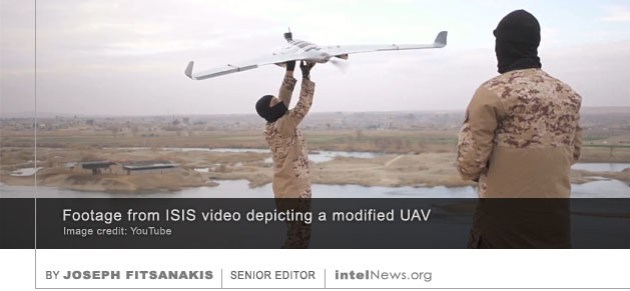 Danish Police have announced the arrest of two men who attempted to procure unmanned aerial vehicles (UAVs) —commonly known as drones— on behalf of the Islamic State in Syria. In a press statement issued on Wednesday, Denmark’s State Police said it worked closely with the Danish Security and Intelligence Service (PET) to arrest the two men, as part of “a long-term investigation” that continues to take place in the Greater Copenhagen area.
According to the press statement, the two men are members of Danish-based Islamist groups and were known to police prior to their arrest this week. They are also believed to be part of a larger network of Islamist activists in the Scandinavian country who support the Islamic State —also known as the Islamic State of Iraq and Syria (ISIS). A police spokesman said on Wednesday that the case involves the “procurement and facilitation” of unmanned aerial vehicle components, “including drones, from Denmark to the Islamic State in Syria and Iraq”. The components were procured with the purpose of being used in reconnaissance and combat operations abroad by the militant group, he added.
This is the second time that Danish authorities have arrested individuals for attempting to procure drones and drone equipment for the Islamic State. A year ago, a 28-year-old man was charged with shipping disassembled drone equipment and infrared cameras to an address in Turkey. The shipped material was collected up by a Turkish couple who were Islamic State members and were arrested following an international police operation. The Islamic State has been using drones [.pdf] since October of 2016, when it deployed a bomb-laden UAV to kill two Kurdish soldiers. In January of last year, the militant group aired propaganda footage showing several cases of dropping bombs on adversary troops and civilians using specially modified drones.
The two men arrested this week are expected to appear in court on Thursday. It is believed that state prosecutors will request a closed-door hearing, since the investigation against the network of ISIS supporters in Denmark is ongoing.
► Author: Joseph Fitsanakis | Date: 27 September 2018 | Permalink
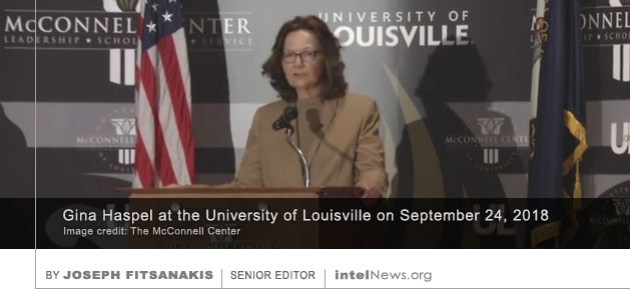 The United States Central Intelligence Agency will return to traditional espionage against foreign states and focus less on counterterrorism against non-state actors, said its new director in her first public appearance. Gina Haspel joined the CIA in 1985 as a reports officer and completed several undercover tours overseas before serving as chief of station. She rose through the ranks to become deputy director of the National Clandestine Service and was appointed deputy director of the CIA in 2017. In May of this year, she became the Agency’s first female director, despite some controversy that arose from her role as chief of a CIA undercover facility (so-called “black site”) in Thailand. Critics
 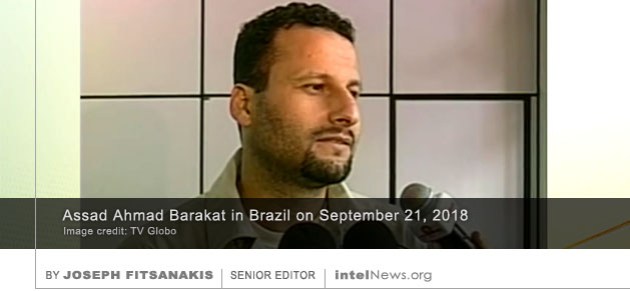 Brazilian police have announced the arrest of Assad Ahmad Barakat, a Lebanese national who is believed to be one of the most prolific international financiers for the Shiite group Hezbollah. Barakat was born in Lebanon but fled to Paraguay in the mid-1980s in the midst of Lebanon’s brutal civil war. He began an import-export business and eventually acquired Paraguayan citizenship. He gradually built a small business empire in Paraguay, which included engineering and construction, as well as transportation firms. Throughout that time, however, Barakat maintained strong connections with Hezbollah, the paramilitary group that has a strong following among Lebanon’s large Shiite Muslim community.
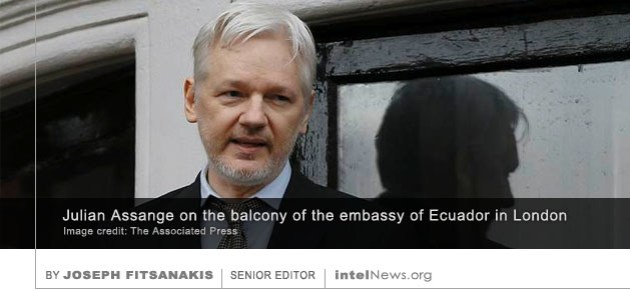 Russia and Ecuador canceled at the last minute a secret plan to smuggle WikiLeaks founder Julian Assange out of the Ecuadorean embassy in London after it was deemed “too risky”, according to a report. The Australian-born founder of the whistleblower website was granted political asylum by the government of Ecuador in June of 2012, after Swedish authorities charged him with rape. He claims that the charges are part of a multinational plot to extradite him to the United States, where he is wanted for having leaked hundreds of thousands of secret government documents. He has thus refused to leave Ecuador’s embassy in the British capital since June 2012.
 The leadership of the Labour Party in Britain has reacted with disdain after a new book by a leading author and columnist claimed that Michael Foot, who led the Party in the early 1980s was paid agent of the Soviet KGB. Foot, a staunch and vocal representative of the postwar British left, was a member of parliament for over 40 years, eventually serving as leader of the House of Commons. He rose to the post of deputy leader of the Labour Party and in 1980 succeeded Jim Callahan as head of the Party. But he stepped down in 1983 in the aftermath of Labour’s largest electoral defeat in over half a century.
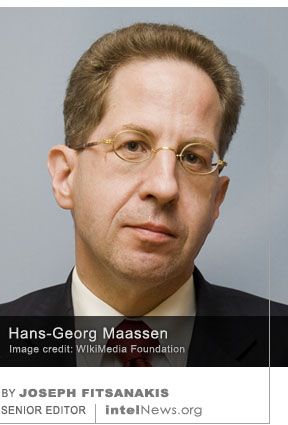 Germany’s fragile ruling coalition continues to face strong criticism two days after removing the country’s domestic intelligence chief over concerns that he may harbor far-right sympathies. Hans-Georg Maassen, a career civil servant, led Germany’s Federal Office for the Protection of the Constitution (BfV) from August 2012 until his removal on Thursday of this week. His hasty removal from the BfV was caused by the so-called
 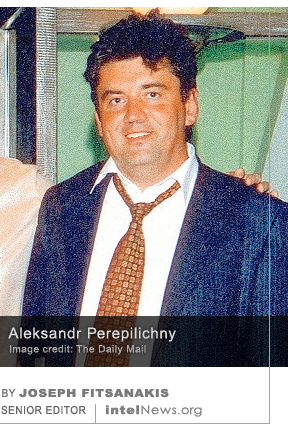 A judge has ruled that the British government has the right to withhold information relating to alleged links between British spy agencies and a Russian millionaire who died in mysterious circumstances in England. Aleksandr Perepilichny was a wealthy and influential investment banker living in Moscow. In 2009, however, he fled Russia saying that his life had been threatened following a business disagreement. He resettled in Surrey, south of London, and began cooperating with Swiss authorities who were investigating a multimillion dollar money-laundering scheme involving senior Russian government officials. Described by some as the biggest tax fraud in Russian history, the scheme is said to have defrauded the Russian Treasury of at least $240 million.
 Intelligence officials in the United States are feverishly reassessing the physical safety of dozens of Russian defectors, in light of the case of Russian double spy Sergei Skripal, who was poisoned in England last March. Skripal, a former military intelligence officer who spied for Britain, was resettled in the English town of Salisbury in 2010 by the British Secret Intelligence Service (MI6). But he and his daughter Yulia made international headlines in March, after they were
  Western intelligence agencies thwarted a plot involving two Russians intending to travel to a Swiss government laboratory that investigates nuclear, biological and chemical weapons, and hack its computer systems. According to two separate reports by Dutch newspaper
 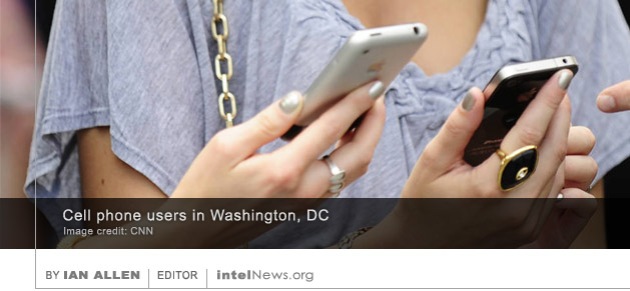 Supporters of the Islamic State, most of them Persian speakers, were spied on by the government of Iran after they downloaded a fake smartphone application with wallpaper images, according to an online security firm. Iran is a major adversary of the radical Sunni group Islamic State. The latter considers Shiism (Iran’s state religion) as an abomination. Not surprisingly, therefore, the Islamic State, which is also known as the Islamic State of Iraq and Syria (ISIS), relies largely on supporters from the Arabic-speaking regions of the Levant. But according to estimates, Sunnis constitute about 10 percent of Iran’s population, and ISIS has found some fertile ground among Iran’s 8 million-strong Sunni minority. As a result, the government in Tehran is highly mistrustful of Iranian Sunnis, many of whom are ethnic Kurds, Baluchis, Azeris or Turkomans, and systematically spies on them.
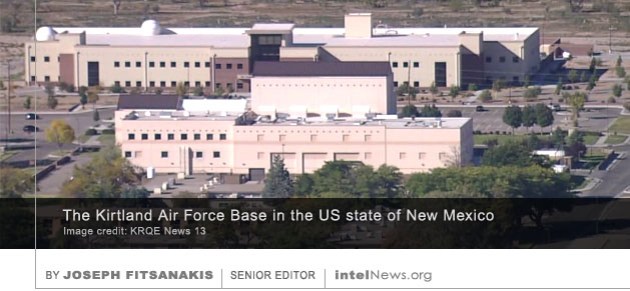 A Russian-made device caused the mystery ailments that affected more than two dozen American diplomats in Cuba and China, according to United States government officials who have been briefed on the matter. Since September of last year, Washington has recalled the majority of its personnel from its embassy in Havana and at least
 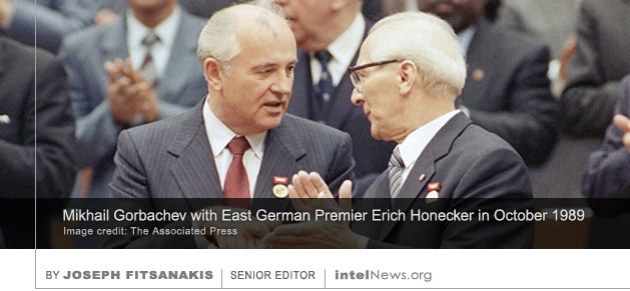 A group of German radicals planned to assassinate Soviet Premier Mikhail Gorbachev in East Germany in 1989, thus triggering a Soviet military invasion of the country, according to a new book written by a former British spy. The
 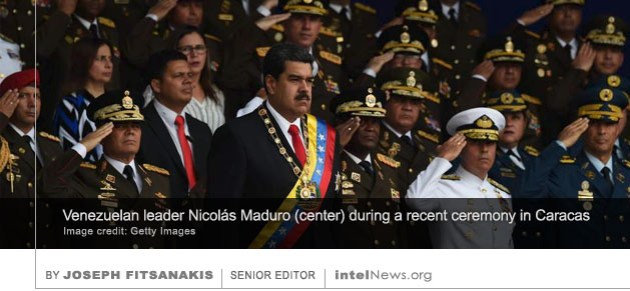 United States President Donald Trump authorized American officials to attend secret meetings held by Venezuelan military officers who conspired to launch a military coup against President Nicolás Maduro. The claim was made on Saturday by The New York Times, which
 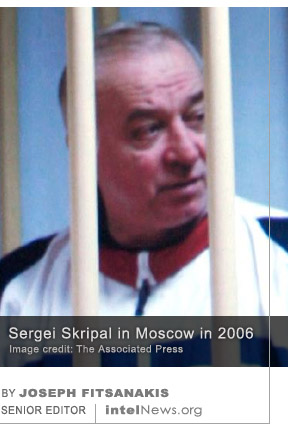 Sergei Skripal, the Russian double agent who was poisoned with a military-grade nerve agent in England earlier this year, worked with Spanish intelligence after his defection to the United Kingdom, according to sources. Skripal, a former military intelligence officer who spied for Britain in the early 2000s, had kept a low profile while living in the English town of Salisbury. He was resettled there in 2010 by the British Secret Intelligence Service (MI6), after he was released from a Russian prison. But he and his daughter Yulia made international headlines in March, after they were








Swiss police saw Russian oligarch Abramovich as threat to security, files reveal
September 28, 2018 by Joseph Fitsanakis 2 Comments
However, the attempted assassination of Russian former spy Sergei Skripal earlier this year prompted the British government to intensify its scrutiny of Britain’s sizeable Russian expatriate community. London introduced tighter regulations that require Russian citizens applying to live in the UK to declare the source of their income in a far greater detail than previously. Soon after the new regulations were put in place, Abramovich’s lawyers withdrew his application to renew his British residency visa. Then, in May of this year, the Russian oligarch acquired Israeli citizenship. He has made it clear, however, that he does not intend to live in Israel. Instead, his legal team focused on an application for Swiss residency, which Abramovich first filed in the summer of 2016. In the application papers, Abramovich wrote that he intended to reside full time in Verbier, an Alpine village in the canton of Valais that is a popular holiday destination for celebrities and royalty.
A year later, following resistance and increasingly persistent questioning from the Swiss government, Abramovich’s legal team withdrew his residency application. Last February, when the Swiss press attempted to investigate the reasons behind the Swiss government’s reluctance, Abramovich’s lawyers secured an injunction forbidding the publication of information regarding his application to live in Switzerland. But the injunction was overturned late last week, and on Tuesday the Swiss media conglomerate Tamedia published some of the relevant documents. They include a letter from the Swiss Federal Police that strongly cautions against allowing the Russian-Israeli oligarch to resettle in Switzerland. The letter remarks that Abramovich has been repeatedly implicated in “suspicion of money laundering” and that the billionaire is “presumed [to have] contacts with criminal organizations”. Additionally, the letter states that Abramovich’s “assets are at least in part of illegal origin”. The letter concludes by strongly cautioning against allowing the oligarch to move to Switzerland, and argues that doing so would pose a “threat to public security” and be detrimental to the country’s international reputation.
The letter has raised eyebrows since its publication, because Switzerland is known for being highly welcoming of foreign billionaires while displaying minimal curiosity about the sources of their fortunes. Moreover, there are no known court rulings against Abramovich for money laundering or connections to organized crime. It is therefore presumed that the Swiss police report is based mostly on confidential informants and other informal sources. On Wednesday, Abramovich’s Swiss lawyer, Daniel Glasl, issued a statement saying that the Russian-Israeli magnate has never been charged with involvement in money laundering. He also reminded readers that his client has a blank criminal record.
► Author: Joseph Fitsanakis | Date: 28 September 2018 | Permalink
Filed under Expert news and commentary on intelligence, espionage, spies and spying Tagged with freedom of the press, News, Newstex, organized crime, Roman Abramovich, Russia, Swiss Federal Police, Switzerland