Iran has clandestine missile factories in Lebanon, claims Israel’s ex-spy chief
October 22, 2018 Leave a comment
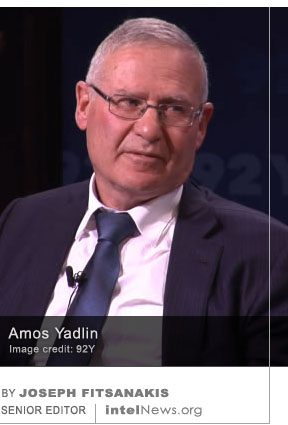 The government of Iran is smuggling parts for ballistic missiles to Lebanon, where they are secretly assembled in clandestine factories operated by the Shiite militant group Hezbollah, according to Israel’s former spy chief. For several months now, the international news agency Reuters has been claiming that Tehran has transported short-range ballistic missiles to secret bases controlled by pro-Iranian militias in Iraq. Iran’s move was aimed at “deterring attacks on [Iran’s] interests in the Middle East and to give it the means to it reginal foes”, said Reuters, citing “Iranian, Iraqi and Western sources”. Both Iran and Iraq denied the Reuters report.
In September, another report, citing “Western intelligence sources”, said that Iran had begun smuggling parts of short-range ballistic missiles to Hezbollah-controlled areas of Lebanon, using commercial flights. The report pointed to at least two flights that are suspected by Western intelligence agencies of having illegally transported precision weapon parts to Lebanon. Both flights were operated by Qeshm Fars Air, a company believed to be used by Iran’s Islamic Revolutionary Guard Corps (IRGC). Members of the IRGC, arguably the most loyal branch of the Iranian military, are selected on the basis of their ideological commitment to the defense of the 1979 Islamic Revolution. The two flights identified in the report departed from commercial and military airports in Tehran and landed in Lebanon after taking “uncharacteristic flight paths” through Syria, said Western intelligence sources.
On Sunday, Israel’s highest-circulation newspaper, Yedioth Ahronoth, carried an interview with the former director of the Jewish state’s Military Intelligence Directorate, Major General (ret.) Amos Yadlin. Yadlin, who also served as Israel’s military attaché in Washington, said that Iran used to hide ballistic missile parts in Syria, hoping to establish de facto missile bases there. However, Tehran’s plan suffered a major setback last May, said Yadlin, when Israel’s air force destroyed approximately 50 targets inside Syria, including —according to Yadlin— Iranian missile factories. Since then, he said, Tehran has been relocating its missile factories to Lebanon, believing that Israel will not attack its neighbor to the north. But Yadlin, who is a known supporter of left-of-center parties in Israel, and a proponent of the two-state solution to the Palestinian problem, argued that Israel should consider attacking Iran’s military factories in Lebanon. The Jewish state faces two choices, said Yadlin: “to strike [Lebanon], not necessarily by air”, or to allow Hezbollah to acquire precision missiles. “Israel will not accept this change”, he added.
► Author: Joseph Fitsanakis | Date: 22 October 2018 | Permalink
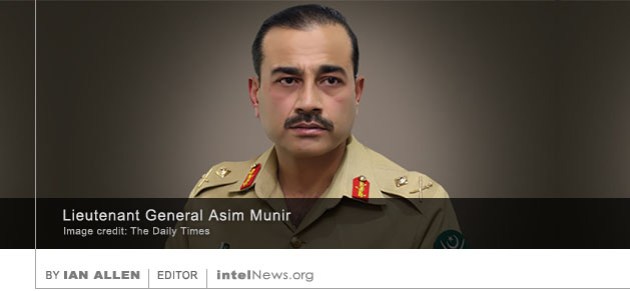 The hardline former director of Pakistan’s military intelligence agency is preparing to take the helm of the country’s powerful spy agency, the Inter-Services Intelligence directorate (ISI). Lieutenant General Asim Munir, who has spent more than two decades as a career military officer, has been officially appointed as director-general of ISI. In one of his first notable assignments, Munir served as a military attaché in Pakistan’s embassy in Saudi Arabia. After being promoted to a two-star general, he was appointed commander of Force Command Northern Areas in Gilgit-Baltistan, Pakistan’s northernmost region. The area borders Jammu and Kashmir, an autonomous Indian-administered region, which the Pakistanis claim belongs to them. Gilgit-Baltistan is also a strategic geopolitical corridor that connects Pakistan with one of its major regional allies, China.
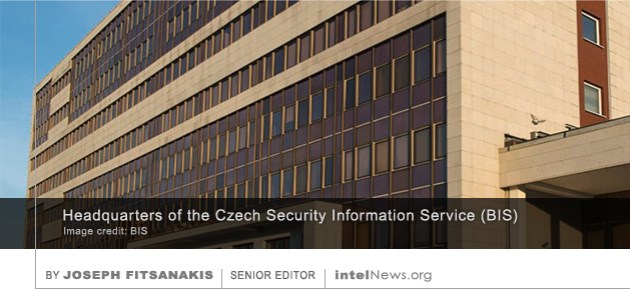 Officials in the Czech Republic have announced that the country’s spy agency headed an operation in several countries, aimed at neutralizing a cyberespionage network operated by the Lebanese militant group Hezbollah. Early last week, the Security Information Service (BIS), the primary domestic national intelligence agency of the Czech Republic, issued a short
 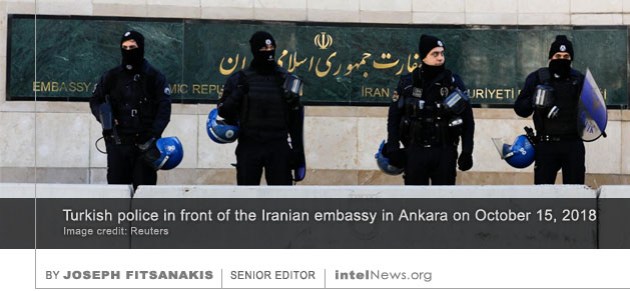 There were conflicting reports yesterday in Ankara of an alleged evacuation of Iran’s ambassador to Turkey, following credible reports of a suicide bomb attack, possibly by the Islamic State. Several Turkish media outlets reported on Monday afternoon that authorities in Ankara had communicated an urgent intelligence warning to the Iranian embassy there of a possible suicide bomb attack. According to the
 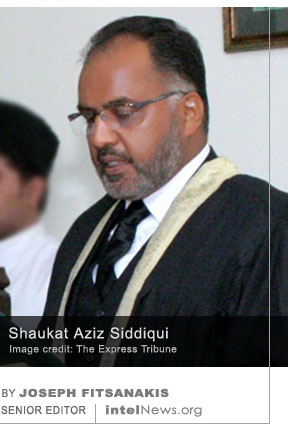 The government of Pakistan has dismissed a High Court judge who accused the country’s powerful intelligence agency of interfering with the judicial process in order to rig the outcome of last July’s general election. On July 25, the governing center-right Pakistan Muslim League – Nawaz (PML-N) was unseated by the conservative-centrist Pakistan Tehreek-e-Insaf, headed by former cricket star Imran Khan. The elections took place amidst a corruption scandal that saw Nawaz Sharif, former prime minister of Pakistan and leading member of PML-N, arrested on charges of fraud. Sharif was charged following the release of the so-called
 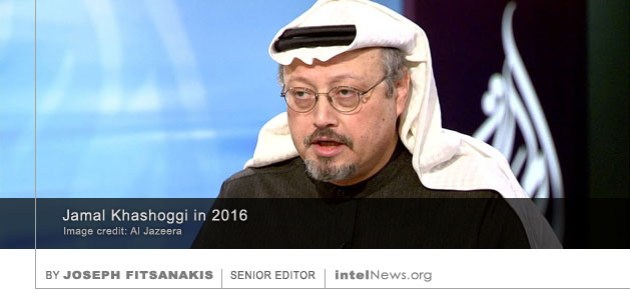 American intelligence agencies have evidence that the Saudi royal family tried to lure The Washington Post journalist Jamal Khashoggi back to Saudi Arabia, in order to capture him, according to sources. Khashoggi, 59, is a Saudi government adviser who in 2015 became a critic of the kingdom’s style of governance. He moved to the United States, from where he began to criticize Saudi Arabia’s involvement in the civil war in Yemen, its support for the repression of political freedoms in Egypt, and other issues. He also joined the staff of The Washington Post and penned columns in which he criticized Saudi policies. He has been missing since Tuesday, when he visited the Saudi consulate in Istanbul. He went there for a scheduled appointment in order to be issued a document certifying his divorce from his former wife in Saudi Arabia.
 A leading suspect in a failed attempt to kill Venezuelan President Nicolas Maduro using drones, has died in mysterious circumstances while being held by the country’s intelligence agency. The
 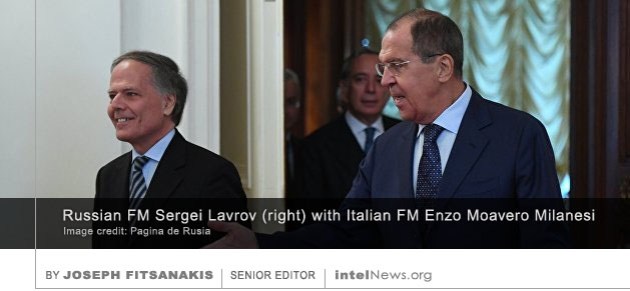 Russia’s minister of foreign affairs has downplayed the arrest and expulsion of four Russian military intelligence officers in Holland last April, saying that the incident was caused by a “misunderstanding”. Last Thursday, the US government named and indicted seven officers of the Main Directorate of the General Staff of Russia’s Armed Forces, known as GRU. The seven are
 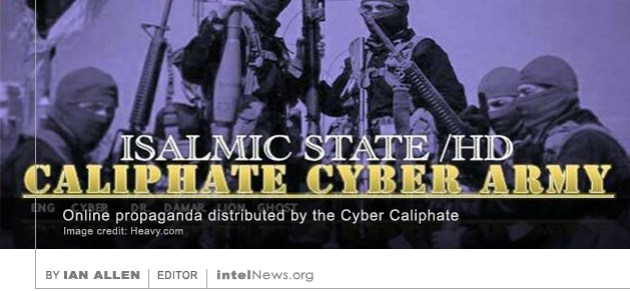 A new report by the British government alleges that the so-called ‘Cyber Caliphate’, the online hacker wing of the Islamic State, is one of several supposedly non-state groups that are in fact operated by the Russian state. The group calling itself Cyber Caliphate first appeared in early 2014, purporting to operate as the online wing of the Islamic State of Iraq and Syria (ISIS), which was later renamed Islamic State. Today the Cyber Caliphate boasts a virtual army of hackers from dozens of countries, who are ostensibly operating as the online arm of the Islamic State. Their known activities include a strong and often concentrated social media presence, as well as computer hacking, primarily in the form of cyber espionage and cyber sabotage.
 France has seized the financial assets of two Iranian spies and frozen all assets belonging to the Iranian Ministry of Intelligence, in response to a foiled bomb attack in Paris, which the French government has blamed on Tehran. The alleged bomb attack was
  An investigation was opened in the United States on Tuesday, after two envelopes containing the deadly poison ricin were intercepted at the Pentagon. The envelopes were
 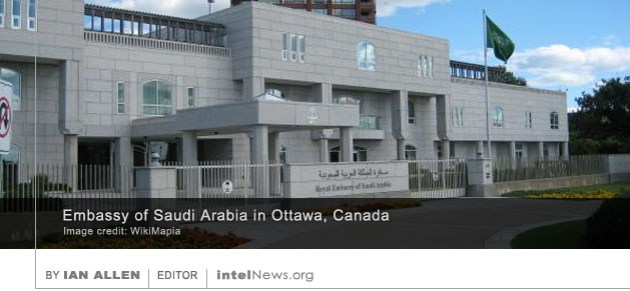 The government of Saudi Arabia is spying on expatriate dissidents in Canada using commercially available software designed by an Israeli company, according to researchers at the University of Toronto. This is alleged in a
 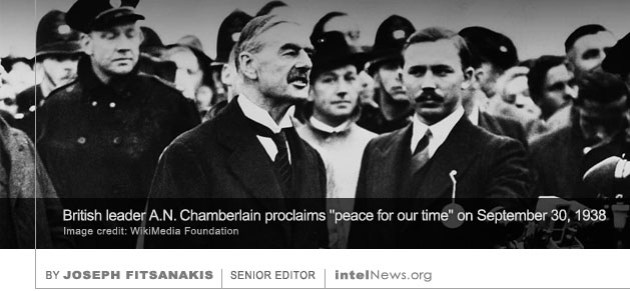 Nearly 2,000 missing British intelligence files relating to the so-called Munich Agreement, a failed attempt by Britain, France and Italy to appease Adolf Hitler in 1938, may not have been destroyed, according to historians. On September 30, 1938, the leaders of France, Britain and Italy signed a peace treaty with the Nazi government of German Chancellor Adolf Hitler. The treaty, which became known as the Munich Agreement, gave Hitler de facto control of Czechoslovakia’s German-speaking areas, in return for him promising to resign from territorial claims against other countries, such as Poland and Hungary. Hours after the treaty was formalized, British Prime Minister Neville Chamberlain arrived by airplane at an airport near London, and boldly proclaimed that he had secured “peace for our time” (pictured above). Contrary to Chamberlain’s expectations, however, the German government was emboldened by what it saw as attempts to appease it, and promptly proceeded to invade Poland, thus firing the opening shots of World War II in Europe.








Russian espionage reaching ‘intolerable levels’ say Swiss officials
October 23, 2018 by Joseph Fitsanakis 1 Comment
Gaudin, who assumed the post of NDB director three months ago, told Reuters that Russian espionage activities in Switzerland have been increasing steadily in recent years. He refused to provide details, but said that “it is clear we have more activities than before”. Additionally, Moscow had more active spies in Switzerland than in previous years, said Gaudin. He refused to provide numbers, saying that he would “share that with [his] colleagues elsewhere and not with the media”. The NDB chief noted that Switzerland had always been a target of Soviet and Russian espionage because it hosts the headquarters of a large number of international and non-governmental organizations. However, what is different today, he said, is that Moscow is targeting Switzerland’s “sensitive infrastructure”, which is “a red line”. He did not provide further information. Speaking alongside Gaudin, Defense Minister Parmelin said that Russian espionage activities against Swiss national infrastructure “has reached intolerable levels”.
These allegations by senior Swiss government officials come a little more than a month after reports that Swiss and other Western intelligence agencies thwarted a plot by two Russians who tried to hack the computer systems of a Swiss government laboratory that investigates nuclear, biological and chemical weapons. The laboratory, located in the western Swiss city of Spiez, had been commissioned by the Organization for the Prohibition of Chemical Weapons to carry out investigations related to the poisoning of Russian double agent //Sergei Skripal// and his daughter Yulia in March of this year. It has also carried out probes on the alleged use of chemical weapons by the Russian-backed government of President Bashar al-Assad in Syria.
The Russian embassy in Bern rejected the accusations of espionage and called the allegations made by Gaudin, and Parmelin “absurd”.
► Author: Joseph Fitsanakis | Date: 23 October 2018 | Permalink
Filed under Expert news and commentary on intelligence, espionage, spies and spying Tagged with espionage, Guy Parmelin, Jean-Philippe Gaudin, NDB (Switzerland), News, Russia, Swiss Federal Department of Defense, Switzerland