Austria arrests second spy for Russia in a week: media reports
November 13, 2018 Leave a comment
 Authorities in Austria have arrested a second alleged spy for Russia in a week, according to media reports. Several Austrian news outlets reported on Monday that police had arrested an Austrian counterintelligence officer on suspicion of passing classified information to Russian intelligence. The news follows reports late last week of the arrest of an unnamed retired colonel in the Austrian Army, who is believed to have spied for Russia since 1988. As intelNews reported on Monday, the unnamed man worked at the Austrian Armed Forces’ headquarters in Salzburg. He is believed to have been in regular contact with his Russian handler, known to him only as “Yuri”, who trained him in the use of “sophisticated equipment” for passing secret information to Moscow. He is thought to have given Russia information on a range of weapons systems used by the Austrian Army and Air Force, as well as the personal details of high-ranking officers in the Austrian Armed Forces.
On Monday, the Vienna-based newspaper Kronen Zeitung, said that a second Austrian man had been arrested on suspicion of carrying out espionage for Moscow. The man was identified in Austrian news reports only as “O.”, due to strict restrictions imposed on media in the country. But the Kronen Zeitung said that the Vienna Public Prosecutor’s Office and the Austrian Ministry of Foreign Affairs had confirmed the reports of the arrest of the second alleged spy. According to the Vienna Public Prosecutor’s Office, the second individual was an employee of the Austrian Office for Protection of the Constitution and Counterterrorism, known as BVT. He had been investigated on suspicion of espionage for more than a year prior to his arrest this week. The man’s arrest took place alongside simultaneous raids at two residential addresses associated with him, according to reports. No further details about this latest case have been made available.
No information is available about the kind of information that the suspect is believed to have shared with Moscow. Furthermore, statements from Austrian officials do not mention any connection between the arrest of “O.” and the arrest of the retired Army colonel that took place last week. The Kronen Zeitung notes that, if found guilty of espionage, “O.” will face a sentence of up to 10 years behind bars. The embassy of Russia in Vienna refused to respond to questions about the arrest of “O.” on Monday night.
► Author: Joseph Fitsanakis | Date: 13 November 2018 | Permalink
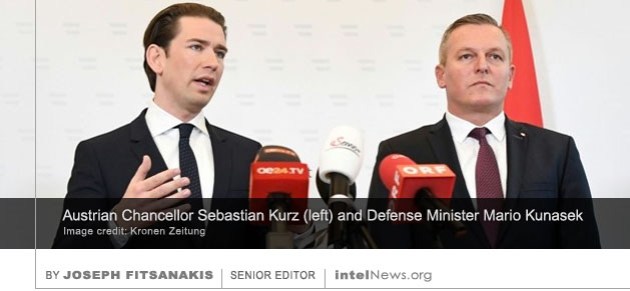 The Austrian Ministry of Foreign Affairs summoned the Russian ambassador to Vienna on Friday, following the arrest of a retired Austrian Army colonel who allegedly spied for Moscow for more than two decades. The news was announced on Friday by Austrian Chancellor Sebastian Kurz at an emergency news conference in Vienna. He did not reveal the alleged spy’s identity, but said that he had been taken into custody as Austrian counterintelligence were investigating the extent of the security breach he caused.
 In a sign of worsening relations between the United Kingdom and Russia, a busy intersection in Moscow has been named after Kim Philby, the British senior intelligence officer who secretly spied for the Soviet Union. While working as a senior member of British intelligence, Harold Adrian Russell Philby, known as ‘Kim’ to his friends, spied on behalf of the Soviet NKVD and KGB. His espionage activities lasted from about 1933 until 1963, when he secretly defected to the USSR from his home in Beirut, Lebanon. Philby’s defection sent ripples of shock across Western intelligence and is often seen as one of the most dramatic incidents of the Cold War. He was part of a wider ring of upper-class British spies, known collectively as ‘the Cambridge spies’ because they were recruited by Soviet intelligence during their student days at the University of Cambridge in England.
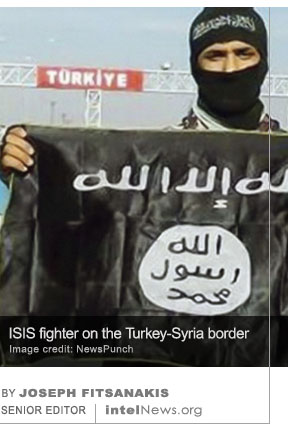 Islamic State cells are using Turkey as a strategic base in which to recuperate, rebuild, and plan an underground war in Europe, according to a new report by Dutch intelligence. This assessment is featured in a
 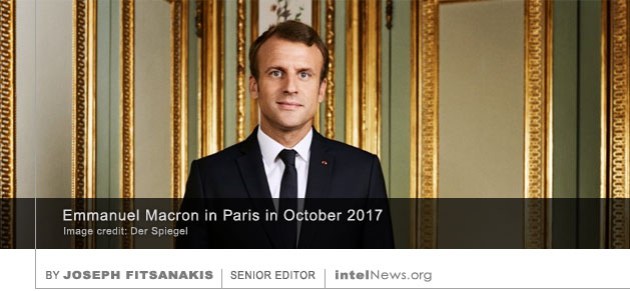 Authorities in France have announced the arrest of six individuals who were allegedly involved in a plot to kill French President Emmanuel Macron. Government prosecutors said on Tuesday that the six were arrested for planning “a violent action against the president of the Republic”. A former economy and industry minister, Macron resigned from the cabinet of left-of-center Prime Minister Manuel Valls in 2016 in order to lead a new right-of-center movement called En marche (Forward). In 2017 he won the presidential election with 66.1 percent, becoming the youngest president in the history of France.
 A new book reveals for the first time the name of a former intelligence officer of the Soviet KGB who helped American authorities arrest Robert Hanssen, an American spy for the Soviet Union and Russia. The son of a Chicago police officer, Hanssen joined the Federal Bureau of Investigation in 1976 and was eventually transferred to the Bureau’s Soviet analytical unit, where he held senior counterintelligence posts. It wasn’t until 2000, however, that the FBI realized Hanssen had spied for Moscow since 1979. Following Hanssen’s arrest in 2001, it emerged that he had betrayed the names of 50 FBI and CIA assets or informants, many of whom perished in the hands of the Russian intelligence services.
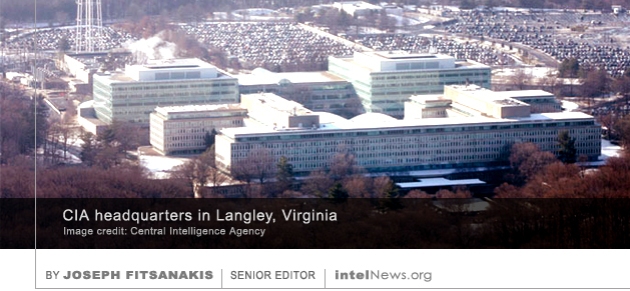 The United States Central Intelligence Agency suffered a “catastrophic” compromise of the system it uses to communicate with spies, which caused the death of “dozens of people around the world” according to sources. This is alleged in a
 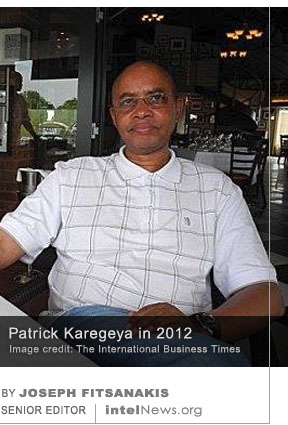 South Africa is preparing to launch an official inquest into the mysterious death of the former director of Rwanda’s external intelligence agency, who was
 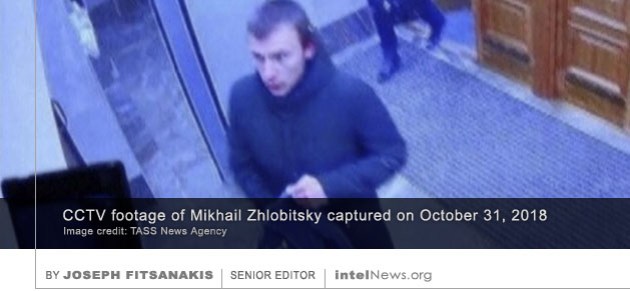 A teenager who killed himself with an improvised explosive device in the lobby of a regional office of Russia’s domestic intelligence agency appears to have identified himself as an “anarchist-communist” on social media. At 8:52 am local time on Wednesday, the 17-year-old entered the regional office of Russia’s Federal Security Service (FSB) in the city of Archangelsk, located 800 miles north of Moscow. On CCTV footage released by the Russian security services, he is seen reaching into his backpack and taking out an object, which soon
 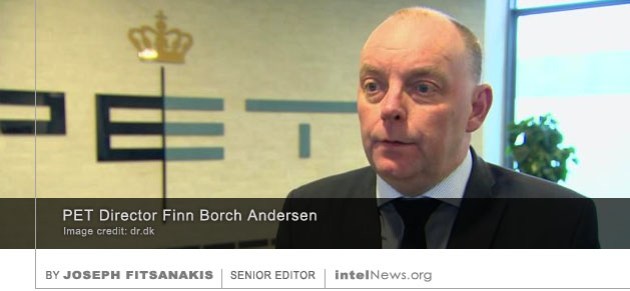 The Danish government has recalled its ambassador from Iran and has accused the intelligence services of the Islamic Republic of plotting an assassination operation on Danish soil. Danish government officials also said that Copenhagen would seek to impose further economic and diplomatic sanctions on Tehran, in coordination with the European Union. The accusations against Iran were leveled during an emergency news conference in the Danish capital on Tuesday, led by Anders Samuelsen, Denmark’s Minister of Foreign Affairs, and Finn Borch Andersen (pictured), Director of the Danish Security and Intelligence Service, known as PET.
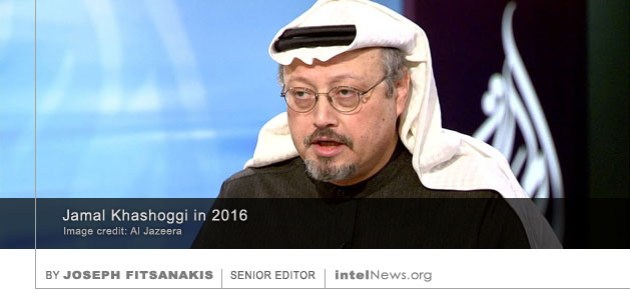 British intelligence had prior knowledge of a plot by the Saudi government to target Jamal Khashoggi, the dissident journalist who was killed in the hands of Saudi intelligence officers in Istanbul on October 2, and allegedly warned Riyadh not to proceed with the plan, according to a report. Khashoggi was a former Saudi government adviser who became critical of the kingdom’s style of governance. He is
  The online arm of the Islamic State, which was once one of the organization’s most noticeable trademarks, has declined markedly in 2018, according to expert observers in the United States and elsewhere. This is especially applicable to the militant group’s online propaganda and recruitment campaign, which appears to have effectively ceased, say experts.
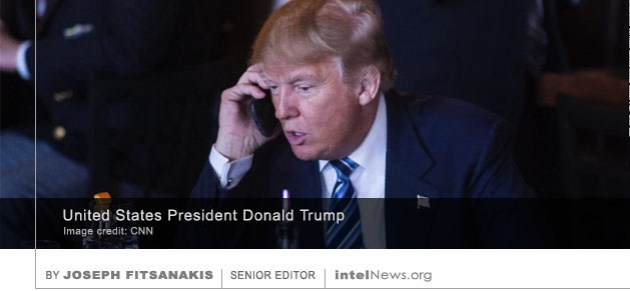 Officials in the White House are concerned about President Donald Trump’s insistence on using an unsecured iPhone to communicate with friends and associates, despite warnings that foreign spies may be listening in. Prior to being elected president, Trump used an Android phone, made by Google, which the NSA advised him to abandon due to security concerns. That is when he switched to using iPhones. Since his election to the presidency, Trump has routinely used three iPhone cell phones. He uses one of them to access a limited list of authorized applications, including Twitter. He uses the second iPhone for phone calls, but cannot use it to send texts, take pictures, or download and install applications. Both of these iPhones have been vetted and secured by the National Security Agency (NSA).
 A French government report warns of an “unprecedented threat” to security after nearly 4,000 leading French civil servants, scientists and senior executives were found to have been accosted by Chinese spies using the popular social media network LinkedIn. The report was authored by France’s main intelligence agencies, the General Directorate for Internal Security (DGSI) and the General Directorate for External Security (DGSE). According to the Paris-based Le Figaro newspaper, which








ISIS fighters might declare new caliphate in Philippines, experts warn
November 14, 2018 by Ian Allen Leave a comment
Such a declaration has been made before. Following the rise of the Islamic State of Iraq and Syria (ISIS, later renamed Islamic State) in 2014 in the Middle East, several Islamist groups in the Philippines declared allegiance to the Islamic State’s emir, Abu Bakr al-Baghdadi. They included fighters from Abu Sayyaf, Ansar al-Khilafah, the Maute Group, the Bangsamoro Islamic Freedom Fighters, and other smaller factions active in the southern Philippines’ island of Mindanao. In May 2017, these fighters launched a joint attack on Marawi, the capital city of Mindanao’s Lanao del Sur province. Within 48 hours, they had occupied the entire city of 200,000 people and declared it the capital of the “East Asia Wilayah”, an overseas province of the Islamic State. Among them were an estimated 80 foreign fighters from dozens of countries. Upon the declaration of the caliphate, the insurgents issued several calls on social media for foreign Islamists to join them. Many dozens from the Muslim world and from Western Europe attempted to do so, according to Philippines police.
The violent takeover of Marawi prompted a counter-attack by the Philippine Armed Forces, which launched a large-scale urban-warfare operation on May 23, 2017. Hostilities ended on October 17, 2017, when the Philippine government declared victory against the Islamic State. The military operation became known as “the battle of Marawi” and is believed to have been the longest urban battle in the post-World War II history of the Philippines. More than 1,200 people died in the five-month battle, most of them civilians. Hundreds of thousands remain displaced to this day as a result of the fighting.
According to The Guardian, intelligence gathered from local and foreign Islamist fighters in the country suggests that support for the Islamic State among local Muslims is growing, as a result of three factors: first, the arrival of dozens of battle-hardened foreign fighters who urge the locals to fight. Second, the disaffection of the local Muslim population as a result of the harsh economic conditions in the Philippines’ depressed southern regions. Third, widespread dissatisfaction with the increasing levels of corruption among government officials in the southern provinces. One expert, Zachary Abuza, south-east Asia analyst at the United States National War College, told The Guardian that southern Philippines is an important sanctuary for the Islamic State, because “there is enough ungoverned or very poorly governed space” there. In the next few months, another declaration of a caliphate may be issued, he added.
► Author: Ian Allen | Date: 14 November 2018 | Permalink
Filed under Expert news and commentary on intelligence, espionage, spies and spying Tagged with Abu Sayyaf Group, Battle of Marawi, Islamic State, Marawi (Philippines), Mindanao (Philippines), News, Philippines