At least four Russians released in prisoner exchange with West are verified ‘illegals’
August 5, 2024 2 Comments
 AT LEAST FOUR OF the eight Russians released by the United States and its allies last week, in exchange for 16 people held in Russian prisons, are verified ‘illegals’ —the term used to describe Russian non-official-cover intelligence personnel. All four operated using third country identity documents, including passports. In every case but one, these identity documents had been illegally acquired.
In intelligence parlance, the term ‘illegals’ emerged during the Cold War to describe Russian intelligence personnel who operated without any formal association with Russian diplomatic facilities. In many cases, these operatives used third country passports. This enabled them to operate with an unusual degree of flexibility and evade the attention of rival intelligence services. At the same time, however, the absence of diplomatic credentials prevented these operatives from claiming diplomatic immunity if caught. It thus exposed them to the possibility of lengthy prison terms upon discovery.
THE TWO GRU ILLEGALS
Among the prisoners exchanged last week was Pavel Alekseyevich Rubtsov. Rubtsov was born in the Soviet Union as the grandson of a Spanish evacuee, who had been taken to Moscow as a child by the leftist Spanish Republic during the Spanish Civil War. At the age of 9, Rubtsov moved with his mother to Spain, where he had his name legally changed to Pablo González Yagüe and grew up in Catalonia and the Basque Country. He was arrested in Poland in 2022 and charged with participating in foreign intelligence activities against Poland on behalf of the Main Directorate of the Russian Armed Forces’ General Staff, which is commonly known as GRU.
IntelNews has previously reported on the case of Mikhail Valeryevich Mikushin, who was also released and returned to Russia on Thursday. Mikushin lived for several years in Canada and Norway using a Brazilian passport under the name of José Assis Giammaria. When he was arrested by Norwegian authorities, Mikushin was working as a researcher on arctic security affairs for the Arctic University of Norway. Among other things, Mikushin was a volunteer researcher for a UiT GreyZone, a scholarly project that studies contemporary hybrid threats and grey zone warfare. Like Yagüe, Mikushin is also believed to have been employed by the GRU.
THE TWO SVR ILLEGALS
Arguably the most unusual case of illegals among those unveiled last week is that of Artem Dultsev and Anna Dultseva. The couple moved from Argentina to Ljubljana, the capital of Slovenia, in 2017. They brought with them their two young children, a boy and a girl, both of whom appear to have been born in Argentina. Artem Dultsev’s Argentinian passport bore the name Ludvig Gisch, born in 1984 in the West African country of Namibia. Dultsev posed as an information technology executive. His wife, Anna Dultseva, who operated an art gallery, used the cover name Maria Rosa Mayer Munos and went by Mayer. Read more of this post
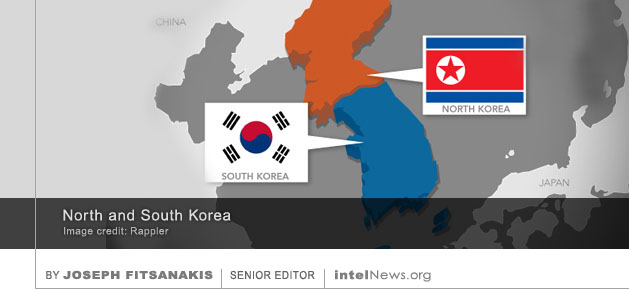 IN A HIGHLY UNUSUAL move, authorities in Seoul have
  A FORMER INTELLIGENCE ANALYST for the Central Intelligence Agency (CIA), who is married to a high-profile columnist for The Washington Post, remains under arrest for allegedly spying for South Korea. According to an

 THE UNITED STATES DEPARTMENT of Defense ran a secret psychological operation on multiple social media platforms, aimed at undermining Chinese-manufactured vaccines against COVID-19. The controversial campaign was met with objections by several U.S. government officials, but continued for over a year, spanning both the Trump and Biden administrations.
 A RUSSIAN WOMAN IS under arrest in Denmark, reportedly in connection with a surreptitious legal fund that is allegedly connected to intelligence operations conducted by the Kremlin. The Danish Security and Intelligence Service (PET)
 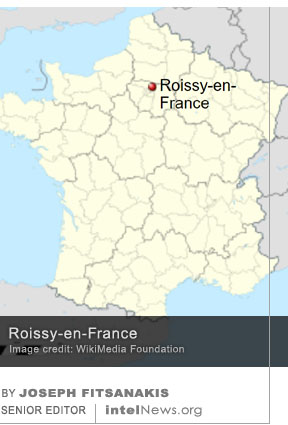 AN INVESTIGATION HAS BEEN launched in France after a Ukrainian-born Russian national reportedly detonated explosives in a hotel room near Paris, suffering severe burns in the process.
  FRENCH POLICE ARRESTED THREE foreign nationals on Monday, accusing them of having deposited five coffins draped in French flags at the foot of the Eiffel Tower. The flags bore the inscription “French Soldiers of Ukraine”, while the coffins were found to contain sacks of plaster, according to
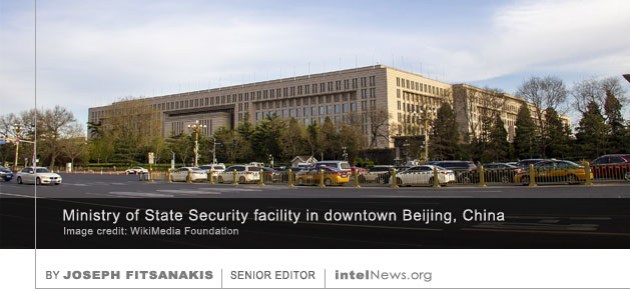
  THE SPY CONFLICT BETWEEN China and the United Kingdom escalated last week, as the Chinese government accused a married couple of carrying out espionage missions on behalf of British intelligence. In a rare statement to the press, China’s Ministry of State Security (MSS)
  THE 5TH SYMPOSIUM ON the Law of Intelligence Services (Symposium zum Recht der Nachrichtendienste) took place in Berlin, Germany, on March 21-22. In view of the
  AUTHORITIES IN GERMANY HAVE arrested a sixth person in less than a month, in connection with three separate cases of espionage orchestrated by Russian or Chinese intelligence. Last Tuesday, police in the east German city of Dresden arrested an assistant to a leading politician of the far-right Alternative für Deutschland party (AfD). The assistant, who is a dual German-Chinese citizen, is accused of spying for Chinese intelligence, while the far-right politician who employed him is also being investigated, according to reports.
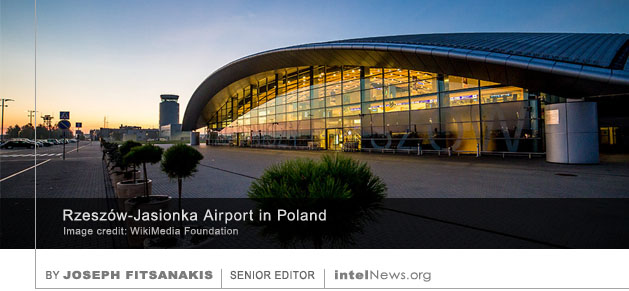 AUTHORITIES IN GERMANY and Poland have charged three individuals with working on behalf of Russian military intelligence in planning acts of sabotage and assassination on European soil. One of the plots allegedly involved an effort to assassinate Ukrainian President Volodymyr Zelenskyy. Another aimed to sabotage commercial airport facilities that are being managed by the United States military.
 ON MARCH 23, CHANNEL 12 of Israeli television aired a remarkable interview with Sassi Elya, the former director of technology at the Israel Security Agency (ISA). Better known by the acronyms Shin Bet or Shabak, the ISA is Israel’s domestic security service. The interview had initially been scheduled for broadcast as part of the evening news on October 7, 2023. However, its airing was canceled due to the attack on Israel by Hamas, which occurred that morning.








Israel releases findings of internal probe into October 7 intelligence disaster
August 12, 2024 by intelNews 17 Comments
To compline the report, the Intelligence Directorate of the IDF investigated how the most significant intelligence failure in the history of the State of Israel occurred, as well as how the MID analysts and other members of the intelligence community failed to notice the attack that Hamas had been planning.
According to the findings of the investigation, Hamas began planning its attack between seven and eight years ago, which means that Israeli intelligence should have been able to observe the relevant warnings as early as 2016. However, the IDF’s intelligence division missed the early signs.
It appears that the MID assumed Hamas had been deterred by Israel. There was also a prevailing assumption that the group’s military wing, led by Yahya Sinwar, had settled on improving the economic situation of Gaza Strip residents while securing its internal sovereign status in the Gaza Strip. The MID intelligence analysts were uniformly immersed in the concept that Hamas “did not want to and could not” go to war against Israel.
The main findings of the investigation are as follows: Read more of this post
Filed under Expert news and commentary on intelligence, espionage, spies and spying Tagged with 2023 Israel-Hamas War, Avner Barnea, Hamas, IDF, intelligence disasters, Israel, Israel Military Intelligence, News