Britain shared “unprecedented” intelligence details to secure expulsions of Russians
March 29, 2018 4 Comments
 Britain secured the largest expulsion of Russian diplomats in history by sharing “unprecedented degrees of intelligence” with dozens of foreign countries about the attempted killing of former spy Sergei Skripal. Nearly 30 countries and international organizations, including the European Union and the North Atlantic Treaty Organization, have expelled or refused to accredit over 150 Russian diplomats in the past 72 hours. The coordinated move came in response to the alleged attack on Skripal, a Russian former intelligence officer who has been living in England since 2010. Skripal left Russia after he was released from prison as part of a spy swap between Russia, the United Kingdom and the United States. He had previously been caught spying on Russia for Britain’s Secret Intelligence Service, known as MI6. Skripal, 66, and his daughter Yulia, 33, are currently in a comatose state in hospital.
The United States, Canada and Australia joined most European countries in expelling Russian spies, after Britain accused Moscow of using a Soviet-era nerve agent to attack the Skripals. But according to a senior British government official, the coordinated expulsions were not coincidental. The official, who refused to be named, told The Financial Times that the British government took the unprecedented decision to share “unprecedented degrees of intelligence” with dozens of countries in order to convince them to take action against the Kremlin. Shared information included complete intelligence assessments of Russian activities. Complete intelligence assessments are rarely —if ever— shared by nations. The latter typically share headline assessments —short snippets of longer analyses produced by their intelligence agencies— with allied nations. But in this case, British officials were authorized to share complete intelligence reports along with underlying data, which included a “detailed scientific analysis of the nerve agent used in the attack”, said The Financial Times.
Sharing complete intelligence reports runs the risk of revealing how much a nation knows about the secret activities of its adversaries, and may end up harming its intelligence-collection efforts. But the paper said that the complete intelligence shared with dozens of countries around the world convinced them that “there was no plausible alternative other than […] the Russian state” was behind the attack on the Skripals. Moreover, said the paper, London shared intelligence with foreign governments that pointed to the existence of an “explicit” state-backed assassination program run by the Kremlin. The program allegedly includes targets in numerous countries worldwide, said The Financial Times. The Russian government has vehemently rejected London’s assertions and has suggested that the attack on the Skripals was part of a British intelligence operation aimed at turning Russia into an international pariah.
► Author: Joseph Fitsanakis | Date: 29 March 2018 | Permalink
 Sergei Skripal, the Russian double agent who was poisoned with a military-grade nerve agent in England earlier this month, wrote to the Kremlin asking to return to Russia, according to one of his old school friends. Skripal, 66, and his daughter Yulia, 33, remain in critical condition in hospital, three weeks after being
 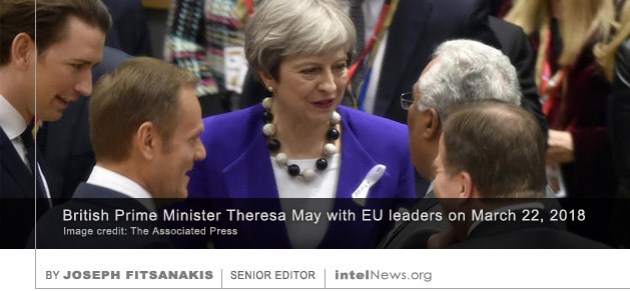 The European Union has recalled its ambassador to Moscow in an apparent response to the poisoning of Sergei Skripal, a Russian double agent, who was attacked with a nerve agent in England earlier this month. Skripal, 66, and his daughter Yulia, 33, remain in critical condition in hospital, nearly three weeks after being poisoned with a nerve agent that British scientists say belongs to Russia’s Cold-War-era chemical stockpiles. Moscow has angrily rejected claims that Skripal, who spied for Britain in the early 2000s, was on a Kremlin-approved hit-list of defectors. But British Prime Minister Theresa May traveled to Brussels on Thursday to brief European Union heads of state about the attack on Skripal.
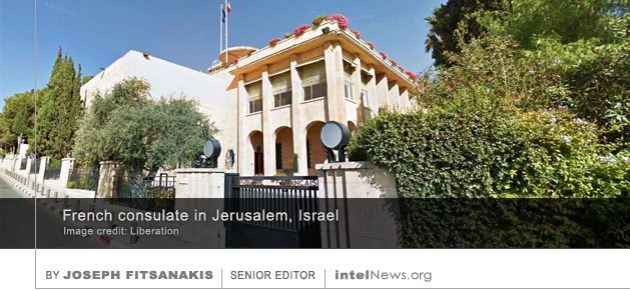 An employee of France’s consulate in Jerusalem is under arrest for allegedly smuggling weapons from the Gaza Strip to the West Bank, according to French media reports, which have been confirmed by Israel. The consular employee has been identified by the Shin Bet, Israel’s domestic security agency, as Romain Franck, 23. He reportedly worked as a driver at the consulate, a job he managed to secure through a prestigious “international volunteer” program sponsored by the French government. The elite program allows recent French college graduates to gain work experience in various countries around the world. Although he had a relatively junior post at the French consulate, Franck carried a diplomatic passport, which allowed him to move through international borders without being searched, due to his diplomatic immunity privileges.
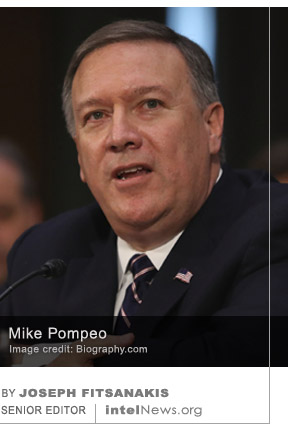 The Central Intelligence Agency has reportedly established back channels for negotiation between the United States and North Korea, which the Department of State is now using to communicate with Pyongyang. Rex Tillerson, who was summarily fired as US Secretary of State by President Donald Trump last week, was famously in favor of diplomatic negotiations between the US and North Korea. The White House had resisted and even publicly criticized Tillerson’s views. Ironically, Tillerson was fired just as his pro-diplomacy views on North Korea are being adopted by the White House.
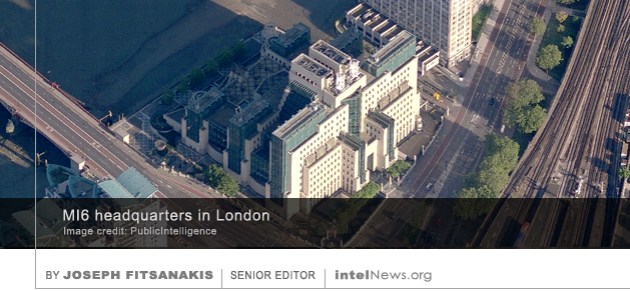 The British secret services have begun tightening the physical security of dozens of Russian defectors living in Britain, a week after the attempted murder of former KGB Colonel Sergei Skripal in southern England. The 66-year-old double spy and his daughter, Yulia, were found in a catatonic state in the town of Salisbury on March 4. It was later determined that they had been attacked with a nerve agent. Russian officials have vehemently denied that the Kremlin had any involvement with the brazen attempt to kill Skripal. But,
 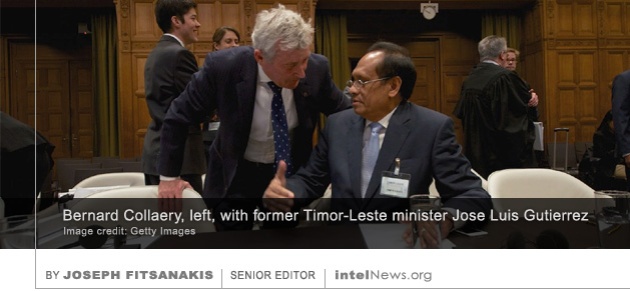 Australia continues to deny freedom of movement to a former intelligence officer who revealed that Canberra bugged government offices in the small island nation of Timor-Leste, in an effort to secure a lucrative oil deal. The former intelligence officer, known only as “Witness K.”, is believed to be a former director of technical operations in the Australian Secret Intelligence Service (ASIS), Australia’s foreign-intelligence agency. In 2013, he publicly objected to an intelligence-collection operation that targeted the impoverished Pacific island nation of Timor-Leste, known also as East Timor.
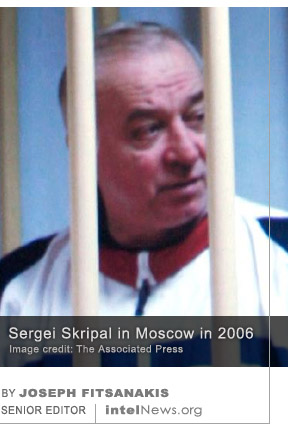 Britain’s counterintelligence service is nearing the conclusion that a foreign government, most likely Russia, tried to kill a Russian double spy and his daughter, who are now fighting for their lives in a British hospital. Sergei Skripal, 66, and his daughter Yulia Skripal, 33, are said to remain in critical condition, after falling violently ill on Sunday afternoon while walking in downtown Salisbury, a picturesque cathedral city in south-central England. Skripal arrived in England in 2010 as part of a large-scale
 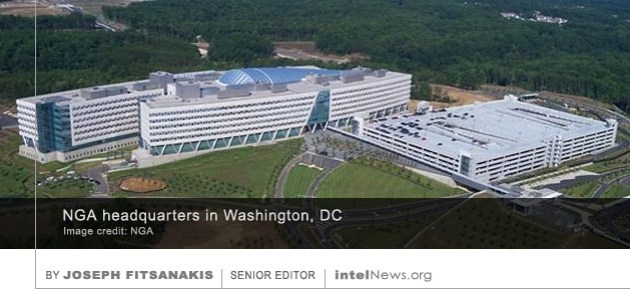 The National Geospatial-Intelligence Agency (NGA), one of America’s most secretive spy organizations, will work with a number of human-rights groups to monitor human rights in North Korea, according to a senior NGA official. Formed in 1996 as the National Imagery and Mapping Agency, the NGA operates under the supervision of the US Department of Defense. It is tasked with supporting US national security by collecting, analyzing and distributing geospatial intelligence. It also performs a combat-support mission for the Pentagon. The agency collects most of its data from satellites, surveillance aircraft and unmanned surveillance drones. Headquartered in a vast 2.3 million square foot building in Washington, the NGA is known for its secretive nature and rarely makes headlines.
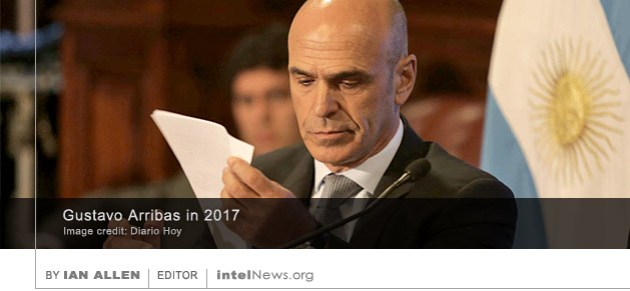 The director of Argentina’s spy agency has been accused by security officials in Brazil of being implicated in a multi-million dollar money-laundering scandal that involves dozens of senior officials across Latin America. The allegations were made in the context of the so-called “operation car wash”, known in Portuguese as Operação Lava Jato. The term refers to a money-laundering probe that began in 2014, following allegations of illegal financial practices by a number of private import-export companies in Brazil. Soon, however, Lava Jato led to the exposure of large-scale corruption, nepotism and bribing practices at the core of Brazil’s state-owned oil company Petrobras. Today, four years later, the constantly expanding investigation has implicated nearly 200 people —many of them well-known politicians— in numerous Latin American countries, including Mexico, Peru and Venezuela.
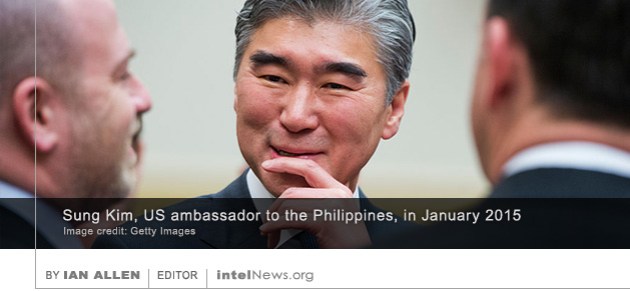 The United States ambassador to the Philippines has been summoned by Manila in response to the publication of an American intelligence report that described President Rodrigo Duterte as a threat to democracy. The report, published on February 13, represents a joint assessment of worldwide challenges to the interests of the United States. It is compiled annually by all 16 member agencies that make up the US Intelligence Community.
 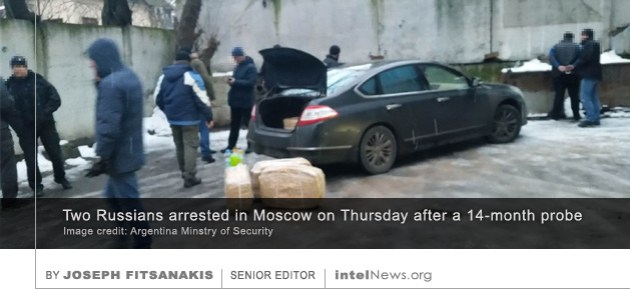 A Russian former diplomatic employee and an Argentine police officer are among six people arrested following the discovery of nearly 1000 pounds of cocaine inside the Russian diplomatic compound in Buenos Aires. The arrests took place last Thursday and were announced in Argentina by the country’s Security Minister Patricia Bullrich. She told reporters that the arrests came after a 14-month investigation in Argentina, Russia and Germany. She added that the investigation unveiled “one of the most complex and extravagant drug-dealing operations” in Argentina’s history.
 Latvian defense officials have hinted that Russia is trying to destabilize Latvia’s economy, as a Western-backed anti-corruption probe at the highest levels of the Baltic country’s banking sector deepens. Developments have progressed at a high speed since Monday of last week, when Latvia’s Corruption Prevention and Combating Bureau
 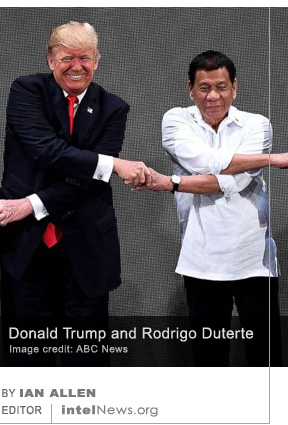 A wide-ranging assessment by the United States Intelligence Community views the President of the Philippines, Rodrigo Duterte, as a major threat to democracy and human rights in Southeast Asia. The report, published on February 13, represents a joint assessment of worldwide challenges to the interests of the United States. It is compiled annually by all 16 member agencies that make up the US Intelligence Community. This year’s report warns that democratic governance and human rights would continue to be “fragile” in 2018, because of the autocratic governing style of several national administrations. Many Southeast Asian governments were also corrupt and displayed nepotistic tendencies, says the report. It singles out the government of Myanmar, which has been widely criticized for its inhuman treatment of the country’s Muslim Rohingya minority. It also mentions the autocratic government of Thailand, which recently changed the country’s constitution, giving increased legislative powers to the country’s armed forces.






 intelNews.org
Surge in Russian spy activity prompts US agencies to bring back retired officers
April 2, 2018 by Joseph Fitsanakis Leave a comment
Soviet spy agencies have a long history of assassinating defectors, called ‘wet operations’ in Russian spy parlance. But such activities were considerably scaled back after the 1970s. However, many claim that the rise of Vladimir Putin to power brought back these tactics, and that Moscow may now be investing more time and money in ‘wet operations’ training. Stein quoted one anonymous Russian defector living in the US as saying that it would be “easy [for Russian spy services] to find us if they are really determined”. It usually takes an email, text or phone call to friends or relatives back in Russia for Moscow to start tracking the physical whereabouts of defectors. In other cases, family members of defectors may be followed by Russian intelligence personnel while visiting the US to reunite with relatives, said the US-based defector.
The same source told Stein that suspected Russian intelligence personnel had been spotted by US counterintelligence teams surveilling the neighborhoods where Russian defectors reside. To address what they see as an “uptick in Russian activity […] over the past two years”, the FBI and the Central Intelligence Agency “have been bringing people out of retirement” with expertise on Russian intelligence operations, Stein reports. The veteran intelligence correspondent also spoke to retired CIA officers, who did not rule out an attempt by Russian intelligence to carry out a ‘wet operation’ on American soil. Stein contacted the CIA and the FBI, asking them to respond to these concerns. He said the CIA declined to comment, while the FBI did not return his messages.
► Author: Joseph Fitsanakis | Date: 01 April 2018 | Permalink
Filed under Expert news and commentary on intelligence, espionage, spies and spying Tagged with assassinations, counterintelligence, Jeff Stein, News, Russia, United States