Ex-CIA contractor says Pakistan’s leaders helped him escape murder charges

Raymond Allen DavisA former contractor for the United States Central Intelligence Agency, who was released from a Pakistani prison in 2011 despite being implicated in a double murder there, says he was freed with the help of senior Pakistani officials. Raymond Allen Davis was a CIA contractor posted in the US consulate in Pakistan’s Punjabi capital, Lahore, which is also the country’s second-largest city. It has been suggested that, for a while, Davis was the CIA’s acting station chief in Lahore, thus technically the most senior American intelligence officer in Punjab.

On January 27, 2011, while driving in downtown Lahore, Davis opened fire against two men riding on a motorcycle, killing them instantly. Soon after the incident, Davis appears to have contacted the US consulate in Lahore, which rapidly dispatched a consular vehicle to remove him from the scene of the shooting. However, the vehicle was unable to reach Davis, who was surrounded by an angry crowd. Unable to pick up Davis, the car then returned to the consulate after running down and killing a motorcyclist who was unconnected with the earlier incident. Eventually Davis was arrested and charged with double murder and illegal possession of a firearm. The Pakistani government dismissed Washington’s assertion that Davis was an accredited diplomat, and was thus not subject to Pakistan’s legal system because of his diplomatic immunity. With public opinion in Pakistan heavily against Davis, the case sparked a diplomatic crisis between Washington and Islamabad. Unexpectedly, however, Davis was released in March of the same year, after the families of the two men he killed appeared in court and said they forgave him and wanted him to be pardoned. It later emerged that the families of the murdered men had been given a total of $2.4 million as compensation for their deaths.

Read more of this post

German parliament report on NSA spying contains little consensus

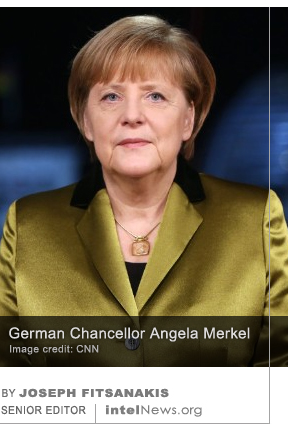
Angela MerkelA lengthy parliamentary report on American intelligence activities in Germany was presented last week in Berlin, but was condemned by opposition parties as insufficient and incomplete, prompting calls for a new investigation. The parliamentary probe was initiated in 2013, following a series of revelations by Edward Snowden, a former employee of the United States Central Intelligence Agency and National Security Agency who defected to Russia. Snowden alleged that both agencies spied on Germany, with the NSA going so far as to eavesdrop on the personal telephone communications of German Chancellor Angela Merkel. The allegations shocked German public opinion, and resulted in the unprecedented expulsion of the CIA station chief in Berlin —the most senior US intelligence official in the country. However, the parliamentary probe soon broadened its scope to include subsequent allegations that German intelligence agencies collaborated with the NSA in spying against other Western countries.

Last Wednesday, after three years of work, the parliamentary committee, known officially as the “German Parliamentary Committee Investigating the NSA Spying Scandal”, presented its findings to the Bundestag. They consist of thousands of pages of technical details concerning interception methods and capabilities. However, the final report fails to draw concrete conclusions, and its concluding section does not reflect a consensus among the committee’s members. The section begins by noting that, “unfortunately, despite an initial shared conviction by all parliamentary groups about the need for the investigation, substantial disagreements emerged between the governing and opposition groups, concerning the methodology and goals of the committee’s work”. Read more of this post
Saudi Arabia’s recently deposed crown prince reportedly under house arrest

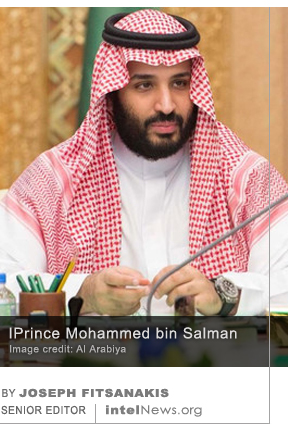
Prince Mohammed bin SalmanOne of Saudi Arabia’s most powerful men, who until last week was first in line to the throne, is reportedly under house arrest. If true, this development would reveal a deep and growing division within the ruling House of Saud. Until the early hours of June 21, Crown Prince Mohammed bin Nayef, 57, was the officially appointed successor to the Saudi ruler, King Salman. In addition to running the country’s feared security services, Prince Nayef was close to Washington, and is a trusted friend of numerous American intelligence officials. But on June 21, King Salman announced radical changes to the line of succession to the throne, stunning the Saudi establishment and international observers alike. The announcement, which came shortly after midnight, completely deposed Prince Nayef from the line of succession.
In Prince Nayef’s place, the King appointed his favorite son, Mohammed bin Salman, 31, who is now the new crown prince. Prince Salman was virtually unknown until 2015, when his father became monarch. He quickly appointed him to Secretary of Defense in the oil kingdom. Since that time, Prince Salman —the world’s youngest defense minister— has been tasked with overseeing Saudi Arabia’s oil monopoly, and finding ways to diversify the country’s economy. Additionally, he has raised eyebrows at home and abroad, by promoting an aggressive foreign policy in Yemen and Syria. He is also believed to have spearheaded Riyadh’s aggressive foreign-policy maneuvers in relation to Iran and Qatar.

Since the day of the surprise announcement, Prince Nayef has virtually disappeared from public life. It subsequently emerged that he was also fired from his post as Minister of Interior, and replaced by one of his nephews. According to The New York Times, the reason for the prince’s disappearance is that he has been virtually under house arrest. Citing “four current and former American officials” and an unspecified number of “Saudis close to the royal family”, The Times said on Wednesday that Prince Nayef has been “confined to his palace” in the coastal city of Jeddah. The paper alleged that, as soon as he went to his palace in the early hours of Wednesday, the prince found that his trusted security guards had been secretly dismissed and replaced with men who are loyal to Prince Salman.

Sources in the Saudi government, who are close to the king, have dismissed The Times’ report as “baseless and false”. However, no member of Prince Nayef’s inner circle has come forward to dismiss the allegations about his house arrest. If true, the reports would suggest that there is a deep split inside the Saudi royal family and that Prince Nayef, along with members of his immediate family, are being kept in isolation from their supporters.

Meanwhile, there have been no comments from Western governments on Prince Nayef’s surprise dismissal. Regular intelNews readers will recall a leaked German intelligence report from 2015, in which Prince Salman —who is now first in line to the throne— was described as spearheading an “impulsive policy of intervention”. The report, authored by the German Federal Intelligence Service, known as BND, warned that Prince Salman’s radical maneuvers were jeopardizing the Kingdom’s relationship with important regional allies and with Washington. Things have changed since then, however, with the ascent of Donald Trump to the White House. The new American president and his senior aides have repeatedly expressed strong support for King Salman and his son.

Author: Joseph Fitsanakis | Date: 30 June 2017 | Permalink

North Korea secretly imports Russian oil through Singapore, says defector

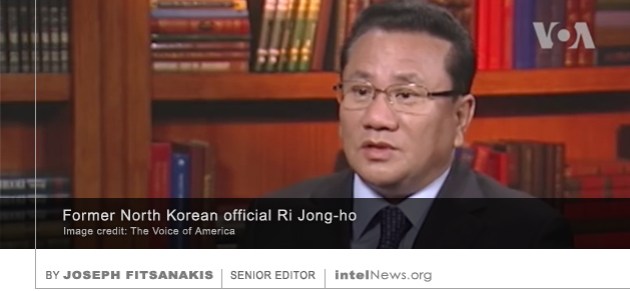
Ri Jong-hoThe government of North Korea uses intermediary firms in Singapore to import thousands of tons of Russian oil each year, according to a senior North Korean defector who has spoken publicly for the first time since his defection. Ri Jong-ho was a senior official in the Democratic People’s Republic of Korea under its previous leader, the late Kim Jong-il. He rose through the ranks of the Workers’ Party of Korea and was directly mentored by Kim, who personally appointed him to a post in Bureau 39. The powerful body is in charge of securing much-needed foreign currency for Pyongyang —often through illegal activities— and partly funds the personal accounts of the ruling Kim dynasty.

From the mid-1990s until his 2014 defection, Ri spent nearly three decades in senior positions inside the DPRK. These included the chairmanship of the board of the Korea Kumgang Group, a state-managed firm that oversees large-scale economic activity in North Korea, such as constructing energy networks and commissioning oil and natural-gas exploration. Between 1998 and 2004, Ri lived in the Chinese city of Dalian, where he headed the local branch of the Korea Daesong Trading Corporation. The Pyongyang-based company facilitates North Korea’s exports to China in exchange for Chinese goods and products.

But Ri’s mentor, Kim Jong-il, died in 2011. His son and successor, Kim Jong-un, engaged in a brutal campaign to remove his father’s advisers and replace them with his own people. During that time, said Ri, thousands of senior and mid-level officials were purged, some physically. Frightened and disillusioned, Ri defected with his family to South Korea in October 2014; fifteen months later, in March 2016, he arrived in the United States. On Tuesday, the Voice of America published Ri’s first public interview since his defection.

Among other things, the former Bureau 39 official said that the North Korean regime sustains itself with the help of oil it imports from nearby countries. One of the regime’s main sources of energy is Russia, which supplies Pyongyang with between 200,000 and 300,000 tons of oil every year. But the trade does not occur directly, said Ri. Moscow sells the oil to energy-trading companies in Singapore. These mediators then sell the oil to the DPRK through separately agreed contracts, so that Russia does not appear to be providing Pyongyang with desperately needed oil. The so-called “Singapore line” was established by North Korea in the 1990s, said Ri, and appears to still be active. In addition to Russian oil, the DPRK imports approximately 500,000 tons of oil per year from China, through pipelines, according to Ri.

Author: Joseph Fitsanakis | Date: 29 June 2017 | Permalink

Ukrainian military intelligence commander killed in Kiev car explosion

Colonel Maksim ShapovalA senior military intelligence officer, who commanded a Ukrainian special-forces unit that fought against the Russians in eastern Ukraine, was killed on Monday when his car exploded in broad daylight in Kiev. Initially, the Ukrainian government sources simply said that the dead driver of the car was a member of the Ministry of Defense’s Main Directorate of Intelligence. Later, the casualty was identified as Colonel Maksim Shapoval, a senior commander of the Main Directorate of Intelligence, who led an elite special-forces unit. Subsequent media reports said that Colonel Shapoval’s unit had fought against Russian-backed guerillas in eastern Ukraine in the past year.

A police report said that Colonel Shapoval died instantly when his car exploded at an intersection in central Kiev. The explosion took place at 8:15 a.m. local time on Monday, and was reportedly caused by a powerful bomb that had been attached to the outer floor of the vehicle, right below the driver’s seat. A video taken at the scene of the explosion showed the charred frame of a silver-colored sedan in the middle of a city street, surrounded by debris.

A Ukrainian government spokesman said on Tuesday afternoon that Kiev was treating the incident as an act of terrorism. When asked about possible suspects, the spokesman said that Colonel Shapoval’s killing appeared to be the work of professionals. He added that investigators were looking for possible evidence of Russian state involvement in the attack. Authorities in Ukraine have repeatedly accused Russia of involvement in the extrajudicial killings of Ukrainian leaders or Russian dissidents since 2014, when Moscow illegally annexed the Ukrainian province of Crimea. Since then, the Kremlin is believed to be secretly supporting pro-Russian rebels who have taken over several regions of southeastern Ukraine. Ukraine’s Chief Military Prosecutor alleged on Tuesday that the killings of Colonel Shapoval and others were perpetrated by Russian intelligence operatives. He added that his office would launch a detailed investigation into Colonel Shapoval’s killing.

Author: Joseph Fitsanakis | Date: 28 June 2017 | Permalink

American spies use US Federal Reserve to monitor foreign banks

Federal Reserve Bank of New YorkAmerican intelligence services have made use of a little-known confidentiality exception to spy on the financial activities of foreign banks who have accounts with the United States Federal Reserve, according to Reuters. Established in 1913, the Federal Reserve System is the central banking structure of the US. It oversees and regulates the nation’s financial institutions, and is tasked with —among other things— maintaining the stability of the American financial system. Additionally, however, the Federal Reserve offers a host of financial services to official (government-owned or sanctioned) foreign institutions. Thus, over 250 foreign banks (typically central banks) from dozens of countries have deposited nearly $3.3 trillion in assets at the Federal Reserve Bank of New York, one of 12 Federal Reserve Banks in the US. Depositing assets at a US Federal Reserve Bank, allows these foreign ‘depository institutions’ to use the US Federal Reserve as a ‘custodial institution’. Through it, they get direct and immediate access to American debt markets, where they can trade directly in dollars — the reserve currency of the global economy.

As one would expect, the ‘custodial services’ provided to foreign state banks by the US Federal Reserve are subject to strict confidentiality rules. However, according to a report published yesterday by Reuters, US intelligence agencies have found ways to circumvent these rules and monitor the activities of foreign banks who use the US Federal Reserve’s services. The news agency said it interviewed “more than a dozen current and former senior [Federal Reserve] and [US] Treasury [Department] officials”, including executives and division heads. It concludes that the US Intelligence Community has “leveraged the [US Federal Reserve’s] position at the center of global finance” to gain insights into the financial activities of foreign governments.

Specifically, the report alleges that American spies have made regular use of a little-known “need to know” exception clause to the US Federal Reserve’s confidentiality rules, and have been able to monitor the financial activities of selected foreign governments. These include Libya, Yemen, Iraq, China, Russia and Turkey, among others, says Reuters. In its report, the news agency says that the exception clause has been used at least seven times in the past 15 years. In some of these instances, the intelligence gathered led to “specific US responses” in relation to the financing of terrorism, or large-scale money-laundering. In other cases, the intelligence gathered helped Washington closely monitor market activity in areas of interest around the world, says Reuters.

The news agency contacted the New York Federal Reserve Bank, and was told by a spokesperson that the exception to the Federal Reserve’s confidentiality rules “has been used on rare occasions and on a limited basis”. These instances related to “issues as compliance with sanctions requirements and anti-money laundering principles”, said the spokesperson. The US government did not respond to calls for comments.

Author: Joseph Fitsanakis | Date: 27 June 2017 | Permalink

Yuri Drozdov, handler of Soviet undercover spies during Cold War, dies at 91

Yuri DrozdovGeneral Yuri Ivanovich Drozdov, who held senior positions in the Soviet KGB for 35 years, and handled a global network of Soviet undercover officers from 1979 until 1991, has died at the age of 91. Drozdov was born in Minsk, Soviet Belarus, in 1925. His father, Ivan Dmitrievich Drozdov, was an officer in the tsarist army who sided with the communists in the 1917 Bolshevik Revolution. After serving in World War II, Yuri Drozdov joined the KGB in 1956. Following his training, he was appointed liaison officer between the KGB and East Germany’s Ministry of State Security, commonly known as the Stasi.
His knowledge of East German intelligence affairs prompted his involvement in the famous 1962 spy-swap between the United States and the Soviet Union. The Soviets surrendered the American pilot Francis Gary Powers, who had been captured in May 1960, when the U-2 spy plane he was piloting was shot down over Soviet airspace. In return, they received Rudolf Abel (real name Vilyam Fisher) a Soviet undercover spy who was captured in New York in 1957, posing as an American citizen. From 1964 until 1968, Drozdov was stationed in Beijing, China, where he served as the KGB rezident, effectively the agency’s chief of station. He returned to Moscow and in 1975 was posted under diplomatic cover in the United States, where he commanded the KGB’s station in New York until 1979.

Upon his return to the USSR, Drozdov was promoted to chief of the KGB’s Directorate S, which handled the agency’s worldwide network of so-called illegals —intelligence officers serving abroad without official cover or formal connection to the Soviet Union. Shortly after his return to Moscow, Drozdov also headed Operation STORM-333, a daring attack on the presidential palace in Afghanistan, during which Soviet special forces killed Afghan President Hafizullah Amin and essentially fired the opening shots of the decade-long Soviet-Afghan war. The experience prompted Drozdov to recommend to his superiors the establishment of a new KGB special-forces unit. It was created in 1981 under the name Vympel (Pennant) and headed by Drozdov himself. He commanded several Vympel missions in and out of the USSR before resigning from the KGB in 1991.

Little is known about the specifics of Drozdov’s death. It is believed that he died on June 21, surrounded by his family. The Russian Foreign Intelligence Service (SVR), a successor agency of the KGB, issued a brief statement commemorating Drozdov’s service. It was followed by a statement issued by the office of the Russian President Vladimir Putin, which praised Drozdov as “a legendary spy, outstanding professional […], incredible person and true patriot”.

Author: Joseph Fitsanakis | Date: 26 June 2017 | Permalink

German intelligence agency spied on thousands of targets in the United States

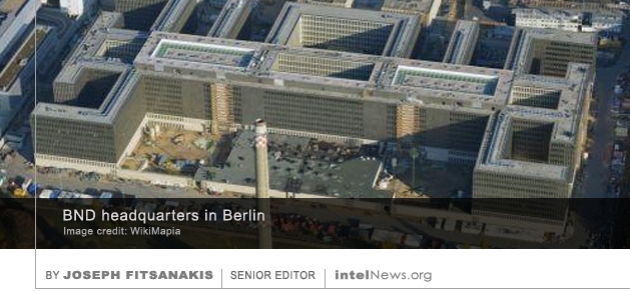
BND GermanyThe foreign intelligence service of Germany spied on at least 4,000 targets in the United States from 1998 until 2006, according to a leaked document published yesterday by leading German newsmagazine Der Spiegel. The German investigative weekly said that the surveillance was carried out by the German Federal Intelligence Service, known as BND. The Hamburg-based magazine claimed to have in its possession a list of approximately 4,000 “selector keywords”, unique distinguishing terms, addresses or numbers that identify individual targets for surveillance. The list allegedly includes names, telephone or fax numbers, and email addresses of people that the BND had identified as worthy of individual attention between 1998 and 2006.

According to Der Spiegel, the list of targets in the United States includes officials in the White House, the Department of the Treasury and the Department of State. Their work and private phone numbers, and often emails, are listed in the BND document. The latter also focuses on the American military sector, paying particular attention to the US Air Force and the Marine Coprs. Other targets include the National Aeronautics and Space Administration and the Defense Intelligence Agency, the US Pentagon’s intelligence organization. In addition to US government targets, the BND exercised surveillance on American companies with ties to the state, such as Lockheed Martin, as well as state-owned universities. The leaked list also includes targets in international organizations that have an institutional presence in the US, such as the International Monetary Fund and the Arab League, which has an office in Washington. Hundreds of foreign embassies and consulates in the US were also targeted, said Der Spiegel.

German-American relations suffered a major setback in 2013, when it was revealed that Washington had spied on the personal cell phone of German Chancellor Angela Merkel. In response to the revelations, Germany expelled the Central Intelligence Agency’s station chief in Berlin —the most senior American intelligence officer in the country. It remains to be seen whether Thursday’s revelations will affect the current relations between the two transatlantic allies. Neither the BND nor the US embassy in Berlin responded to questions about Der Spiegel‘s report.

Author: Joseph Fitsanakis | Date: 23 June 2017 | Permalink

Rare case of female lone-wolf dissident republican ends in conviction in N. Ireland

Christine ConnorA British court has convicted a lone-wolf female dissident Irish republican, who plotted attacks against police officers after using Facebook to lure two men into joining a fictitious militant organization. Her two male accomplices took their own lives in recent months. The rare case centers on Christine Connor, a 31-year-old resident of Northern Ireland and self-described dissident republican.
The term ‘dissident republican’ refers to secessionist militants who campaign for the union between Northern Ireland —which currently belongs to the United Kingdom— and the Republic of Ireland, which gained its independence from the United Kingdom in 1922. In 1998, after a decades-long armed campaign, the majority of Irish republicans surrendered their weapons and accepted the terms of the Good Friday agreement, which outlines a peaceful resolution to the problem of Northern Ireland’s status. But some republican activists rejected the agreement and vowed to continue to use violence to achieve the union of Northern Ireland with the Republic of Ireland. These are known as dissident republicans and typically support a number of paramilitary secessionist groups, such as the Continuity Irish Republican Army and the Real Irish Republican Army.

But Christine Connor did not belong to any of these groups. Instead, she used Facebook to create a fictitious dissident republican organization called ‘United Struggle’, and declared war on the Police Service of Northern Ireland. She then created another fictitious social media account using the image of Sanne Alexandra Andersson, a Swedish model and fashion personality. Connor then used her fake online persona to lure two men into joining the militant organization that she claimed to lead. One of them was Stuart Downes, an Englishman from the town of Shrewsbury, near the Welsh-English border. She convinced him to build explosive devices, which the police described as “sophisticated, fully functioning bombs”. In May of 2003, Connor used the devices in an unsuccessful attempt to kill two police officers in north Belfast.

The lone-wolf militant used her fake social media accounts to lure another man, an American called Zachary Gelvinger, into joining ‘United Struggle’. Gelvinger, who sent hundreds of dollars to Connor’s organization, had his home searched by the Federal Bureau of Investigation, and was arrested in the United Kingdom while attempting to visit Connor in prison, in July of 2013. Downes, the Englishman, was arrested by police in Shrewsbury shortly after making a phone call from a public phone box to claim responsibility on behalf of ‘United Struggle’ for Connor’s failed attempt to kill the police officers in Belfast. Tragically, Downes killed himself in June of 2016. Gelvinger, the American member of ‘United Struggle’, killed himself in May of this year.

Remarkably, neither of the two men had any connection to Northern Ireland or any previous involvement in republican politics in or out of the United Kingdom. Last month, Connor pleaded guilty to a score of offenses, including terrorism. Last Tuesday, she was sentenced to 16 years in prison.

Author: Ian Allen | Date: 22 June 2017 | Permalink

Islamic State’s cyber army still ‘largely intact’ despite America’s efforts

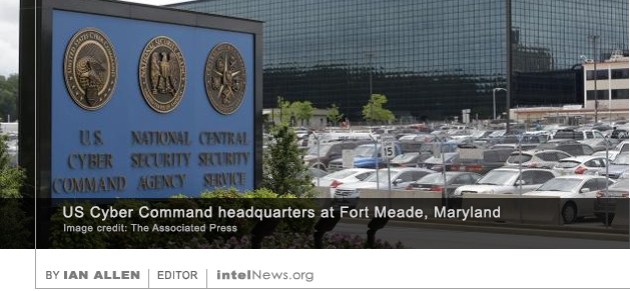
US Cyber CommandThe global reach of the Islamic State through the use of the internet remains “largely intact” despite relentless efforts by some of America’s most advanced cyber warfare experts to neutralize the group’s online presence. It is now over a year since the United States Department of Defense announced that it had launched a cyber war against the Islamic State —the militant Sunni Muslim group that today controls large parts of Syria and Iraq.
At that time, the Pentagon’s Cyber Command (USCYBERCOM), put in motion plans that included the deployment of computer viruses, denial-of-service attacks and other cyber weapons against computers, internet servers and cell phone networks belonging to the Islamic State. As intelNews wrote at the time, the idea behind the plan was that an all-out online war against the Sunni militant group would hurt its public image and prevent it from launching armed attacks against targets abroad. Additionally, the Pentagon aimed to disrupt the Islamic State’s ability to recruit new members online, to spread its propaganda and to coordinate operations through the use of encrypted communications.

However, according to The New York Times, American military commanders are disappointed with the Cyber Command’s efforts. The Pentagon is quickly discovering, says the paper, that its cyber warfare methods, which were designed for fixed targets in countries like North Korea and Iran, are ineffective against the mobile and polymorphic cyber army of the Islamic State. In many instances, US Pentagon hackers wipe out online information found on Islamic State servers, only to see it reappear elsewhere online within hours. In other cases, US Cyber Command experts uncover Islamic State information stored on the cloud, but are unable to access it because it is strongly encrypted.

According to The Times, the lack of progress in the cyber war against the Islamic State was one of the reasons why the administration of President Barack Obama sought to replace Admiral Mike Rogers, the head of the National Security Agency, who also led the US Cyber Command —and continues to do so under the Donald Trump administration.

Author: Ian Allen | Date: 20 June 2017 | Permalink

Former head of Qatar spy agency sides with Saudis in diplomatic quarrel

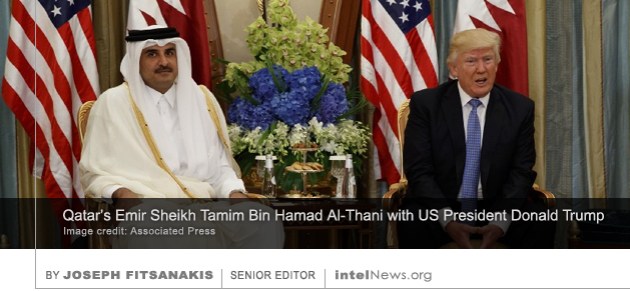
Qatar’s Emir Sheikh Tamim Bin Hamad Al-Thani with US President Donald Trump A former director of Qatar’s intelligence agency broke ranks with the government of Qatar and accused Doha of supporting terrorism. He also warned that the United States, which has a base in Qatar, would not allow the presence of foreign troops there.
Tensions between Qatar and other predominantly Muslim countries rose dangerously in recent weeks. The crisis erupted soon after Qatar’s state-controlled news agency published an interview with the country’s ruler, Emir Sheikh Tamim Bin Hamad Al-Thani, in which he appeared to praise Iran and Israel, Saudi Arabia’s primary regional adversaries. Despite protestations by the Saudi government, the Qatari emir then contacted Iran’s President Hassan Rouhani, to congratulate him on his reelection, a move that was interpreted as adversarial by Riyadh. Saudi Arabia also feels threatened by Al Jazeera, a Qatari-based television network with worldwide reach, which is often critical of the Gulf’s oil monarchies other than Qatar.

Last week, Saudi Arabia and 16 other predominantly Muslim countries, including Egypt, Bahrain and the United Arab Emirates, announced a series of diplomatic, commercial and military sanctions on Qatar. The sanctions are ostensibly designed to curtail the country’s alleged support for international terrorism. Riyadh and its allies accuse Doha of secretly supporting militant groups like the Muslim Brotherhood, Islamic Hamas and the Taliban, among others. Currently all sea, air and land connections between these 16 countries and Qatar have been suspended, while no diplomatic relations exist between them. The tense situation has prompted some analysts to describe the diplomatic crisis as the worst in the Gulf region since the 1991 Gulf War.

In response to the diplomatic boycott, the government of Qatar said last week that it would invite military personnel from three of its allies, Iran, Pakistan and Turkey, to protect its territory. But the former director of Qatar’s intelligence service said in an interview on Monday that Qatar’s threat would not materialize. Read more of this post

Emiratis, Saudis, secretly assisting Libyan rebels with air power, says UN

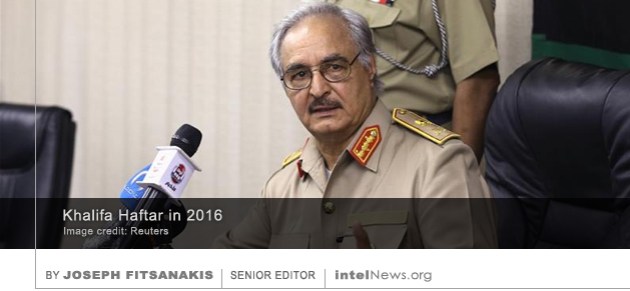
Khalifa HaftarSecret military assistance from the United Arab Emirates and Saudi Arabia, which violates United Nations sanctions, is helping Libya’s eastern-based rebels prevail in the civil war there, according to a new report. Libya has remained in a state of anarchy since 2011, when a popular uprising backed by the West and its allies led to the demise of the country’s dictator, Muammar Gaddafi. Currently the strongest faction in the post-2011 Libyan Civil War is the eastern-based Tobruk-led Government, which is affiliated with the Libyan National Army (LNA). The commander of the LNA is Field Marshal Khalifa Haftar, an old adversary of Colonel Gaddafi, who lived in the US under Washington’s protection for several decades before returning to Libya in 2011.
The Tobruk-led Government is ostensibly supported by the United States, but has also received Russian assistance. The status of the group is further-complicated by the fact that, in recent years, its military wing, led by Haftar, operates semi-autonomously. Some believe that Haftar has now stopped taking orders from Tobruk and has aspirations to lead his own armed faction in Libya.

In February of 2011, shortly after the popular uprising erupted in Libya, the UN Security Council adopted Resolution 1970, which —among other things— forbids the export of war materiel to Libya. The resolution was further-strengthened in 2014 and today remains in place. But the UN embargo did not appear to stop the military domination of Haftar’s LNA. In the past few months, the armed group has managed to extend its control over dozens of urban centers, oil installations and military bases and outposts throughout eastern and central Libya. Today, the LNA is seen as the dominant military authority in the war-torn country.

Now a new report published by the UN suggests that the main reason for the LNA’s military prowess lies in the secret support it receives from the United Arab Emirates and Saudi Arabia. The report was published on Friday by the “Security Council Committee established pursuant to resolution 1970”, a panel of experts appointed by the UN to oversee the implementation of the arms embargo. In its annual report, the panel asserts that Haftar’s forces received significant military assistance from the UAE in both ground and aerial support. Specifically, the LNA received nearly 650 armored and non-armored vehicles in April of 2016 alone, as well as helicopters and unmanned drones. The latter are now stationed the Al-Khadim air base, which was built by the LNA specifically in order to house the UAE-supplied aircraft. It is believed that the UAE operates the Al-Khadim air base, which is located approximately 60 miles east of Benghazi, Libya’s second most populous urban center.

The UN report goes on to state that much of the war materiel reaches Libya through ships that sail from Saudi Arabia, and that some Belarus-based companies are also involved in the illicit transfer of helicopters, non-armored vehicles and other items to Libya. It concludes that the materiel assistance provided by the UAE has “significantly increased the air support available to the LNA”, which in turn explains the group’s impressive military performance in the past year. The report’s authors noted that they contacted the government of the UAE in regards to the report’s findings, but received no response.

Author: Joseph Fitsanakis | Date: 12 June 2017 | Permalink

New clues emerge about targeted efforts by Russia to hack US elections

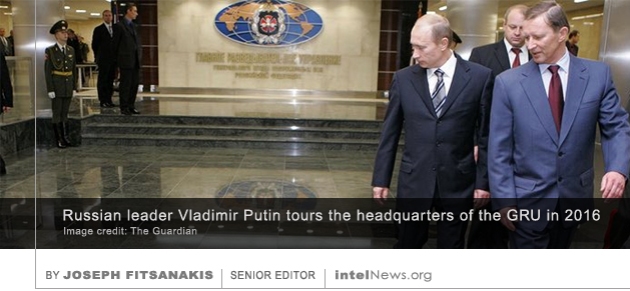
GRUNew information about carefully targeted attempts by Russian operatives to compromise the November 2016 presidential elections in the United States have emerged in a newly published intelligence document. The document, which dates from May of this year, was produced by the US National Security Agency and published on June 5 by The Intercept. The web-based outlet published the leaked document on the same day that Reality Leigh Winner, a US federal contractor with a top-security clearance, was charged with espionage for leaking classified documents to the media. This has led to speculation that Winner may be the source of the leak.
The NSA document details attempts by hackers to compromise the online accounts of over 100 election officials, as well as employees of private contractors involved in administering the election process. The attempts reportedly took place during the period leading up to November 8, 2016. To do that, hackers resorted to a technique commonly known as ‘spear-fishing’. They sent carefully crafted emails, claiming to be from Google, to specifically targeted individuals. The goal was to trick the email recipients into downloading and opening Microsoft Word attachments, which were infected with malware. The infected software would then allow the hackers to remotely access the compromised computers. The NSA document states that at least one targeted person had his or her computer compromised though the ‘spear-fishing’ technique. Importantly, the leaked document appears unequivocal in its assessment that the hackers behind the ‘spear-fishing’ attacks worked for the General Staff Main Intelligence Directorate (GRU) of the Russian armed forces. The document also states that the main goal of the attacks was to compromise the software used to manage voter registration lists, and that the attackers were operating under a “cyber espionage mandate specifically directed at US and foreign elections”.

American intelligence officials have previously said that Russian spies launched in a complex and prolonged campaign to undermine public faith in the US electoral process. It is also known that the Russian campaign targeted election officials in the months leading up to the November 2016 elections. But the NSA report is the first publicly available description of some of the specific techniques employed by the alleged Russian hackers as part of their campaign. The leaked document does not provide technical details about the ‘spear-phishing’ campaign. Nor does it discuss whether the attacks were successful, whether vote tallies were actually compromised, or whether the election process itself was sabotaged by the hackers. The Intercept said it contacted the NSA and the Office of the Director of National Intelligence, who refused to publicly comment on the content of the NSA report.

Author: Joseph Fitsanakis | Date: 09 June 2017 | Permalink

New South Korean president bans spy agency’s domestic operations

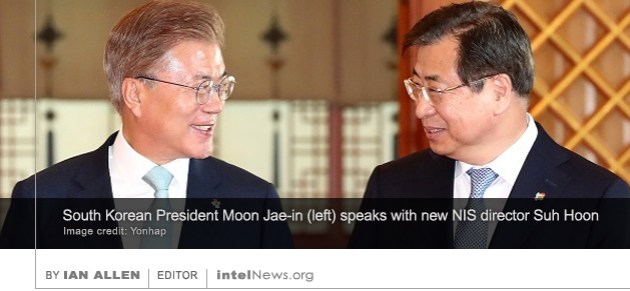
Moon Jae-in and Suh Hoon in South KoreaThe new president of South Korea has officially banned the country’s spy agency from engaging in domestic intelligence gathering, in a move that some say signals an era of sweeping security reforms in the country. South Korea’s intelligence agency, the National Intelligence Service (NIS) fell into disrepute in recent years, after many of its officers were found to have secretly sided with conservative political candidates for public office. In 2015, the NIS’ former director, Won Sei-hoon, was jailed for directing intelligence officers to post online criticisms of liberal politicians.

Won headed the NIS from 2008 to 2013, during the administration of conservative President Lee Myung-bak. During the 2012 presidential elections, Won ordered a group of NIS officers to “flood the Internet” with messages accusing liberal political candidates of being “North Korean sympathizers”. One of those candidates, Moon Jae-in, of the left-of-center Democratic Party of Korea, is now the country’s president. Moon succeeded his main right-wing rival, Park Geun-hye, who resigned in March of this year following a series of financial scandals. In the months prior to his assumption of the presidency, Moon promised his supporters that he would reform the NIS and prevent it from meddling again into South Korea’s domestic political affairs.

Last Thursday, President Moon replaced all of NIS’ deputy directors, who are tasked with focusing on North Korea and other foreign countries, espionage and terrorism, and cyber security. Later on the same day, Moon announced the appointment of Suh Hoon as director of NIS. Suh is a career intelligence officer who served as one of NIS’ deputy directors until Thursday’s appointment. Within hours of his appointment, Suh had ordered the termination of all NIS domestic intelligence-gathering operations and vowed to reform the spy agency once and for all. He also said that he would proceed to dissolve the NIS’ domestic wing, and that all such tasks would be transferred to South Korea’s National Police Agency. The new NIS director also vowed that, under his leadership, the NIS would become “a completely different entity” and that he would apply “a zero tolerance principle” in cases of contravention by NIS officers.

Also on Thursday, the NIS issued a press release stating that all domestic operations by the agency had been terminated and that no information was being gathered on government entities, media or other organizations in South Korea.

Author: Ian Allen | Date: 05 June 2017 | Permalink

Russian espionage in US increasingly sophisticated and brazen, say sources

Russian embassy in WashingtonRussian espionage in the United States has become increasingly sophisticated and brazen, and American counterintelligence professionals are finding it difficult to contain it “after years’ worth of inattention” according to sources. According to Politico, Washington ignored Russian intelligence operations in the 1990s, believing that Moscow’s numerous domestic problems kept its attention away from America. But under Vladimir Putin, Russia rebuilt its espionage network in the US, to the point that now “Moscow’s espionage ground game [on American soil] is growing stronger and more brazen than ever”.

The news outlet cited “half a dozen current and former US intelligence officials”, who said that America has been “ignoring Russia for the last 15 years”. During that time, Washington focused much of its intelligence-related attention to the Middle East and Central Asia. But Russia used that opportunity to rebuild its espionage network on American soil. Currently, the Federal Bureau of Investigation —the US agency that is in charge of counterintelligence work— is finding it difficult to keep an eye on Russian espionage operations, partly because of the size of Russian operations. One US intelligence official told Politico that the Russians “have just got so many bodies” and are able to evade FBI surveillance.

It is now commonplace, say sources, for Russian “diplomats” to be found wandering around the US without permission from American authorities. Foreign diplomats are required to notify the US Department of State in advance each time they intend to travel more than 50 miles from their consular base, and the FBI must consent before permission to do so is granted. But the Russians are now routinely breaking this requirement; what is more, “half the time they’re never confronted” by the FBI, allegedly because Washington is does not wish to antagonize Moscow in light of the fragile state of affairs in Syria. One US intelligence official told Politico that the Russian “diplomats” appear to be secretly visiting locations across America “where underground fiber-optic cables tend to run”. They appear to be mapping the US telecommunications infrastructure, “perhaps preparing for an opportunity to disrupt it”, said the source.

Author: Joseph Fitsanakis | Date: 02 June 2017 | Permalink