November 28, 2017
by Joseph Fitsanakis
 Files released on Monday by the British government reveal new evidence about one of the most prolific Soviet spy rings that operated in the West after World War II, which became known as the Portland Spy Ring. Some of the members of the Portland Spy Ring were Soviet operatives who, at the time of their arrest, posed as citizens of third countries. All were non-official-cover intelligence officers, or NOCs, as they are known in Western intelligence parlance. Their Soviet —and nowadays Russian— equivalents are known as illegals. NOCs are high-level principal agents or officers of an intelligence agency, who operate without official connection to the authorities of the country that employs them. During much of the Cold War, NOCs posed as business executives, students, academics, journalists, or non-profit agency workers. Unlike official-cover officers, who are protected by diplomatic immunity, NOCs have no such protection. If arrested by authorities of their host country, they can be tried and convicted for engaging in espionage.
The existence of the Portland Spy Ring has been known since 1961, when British authorities arrested five people throughout England. Two of them were British citizens, Harry Houghton, a clerk at the Royal Navy’s Underwater Detection Establishment facility in Dorset, England, and his mistress, Ethel Gee. Their Soviet handler was Konon Molody, a Soviet intelligence officer who was posing as a Canadian, under the name Gordon Lonsdale. Also arrested was a married couple from New Zealand, Peter and Helen Kroger. But in reality they were Americans, whose real names were Morris and Lona Cohen, and had worked for Soviet intelligence since the late 1930s. Collectively, the five were referred in media reports as members of the Portland Spy Ring.
The newly declassified files about the spy ring were released by the Security Service, known commonly as MI5, Britain’s primary counterterrorism and counterintelligence agency. They reveal how British authorities managed to bust the Portland Spy Ring. According to the files, the initial tip-off came from the Central Intelligence Agency (CIA). The American agency had managed to recruit Michael Goleniewski, codename SNIPER, a Polish military counterintelligence officer, who led the technical office of Poland’s military intelligence. In the spring of 1960, Goleniewski told the CIA that Polish intelligence were running a British agent who was recruited while serving in the office of the naval attaché at the British embassy in Warsaw. The CIA shared the information with British intelligence, who soon identified the agent as Harry Houghton in Dorset. MI5 agents followed Houghton and his girlfriend, Ethel Gee, as they met with a successful Canadian businessman in London, Gordon Lonsdale (real name Konon Molody). Molody had grown up with a family member in California in the 1930s, and spoke fluent English. He had joined Soviet intelligence during World War II and sent to Britain posing as a Canadian. When he arrived there, in 1954, he established the KGB’s first known illegal residency in the British Isles.
In turn, Molody led MI5 to Peter and Helen Kroger from New Zealand (real names Morris and Lona Cohen), who were posing as antique book dealers. The couple acted as couriers, radio operators and technical support officers for Molody. They were born in the United States and had been recruited by Soviet intelligence in the 1930s. It is now known that they had contacts with several other Soviet illegals in America, including Rudolf Abel (real name William Fisher) who was captured by the Federal Bureau of Investigation in 1957. The couple had left the United States on orders of the KGB in 1952 and reappeared in the United Kingdom using New Zealand passports and new names.
The newly declassified documents show that MI5 decided to move against the five members of the Portland Spy Ring after Goleniewski became an open defector and was exfiltrated to the United States by officers in the CIA’s Berlin station. British authorities feared that Goleniewski’s open defection would prompt the Soviets to pull out Houghton, whose identity was known to Goleniewski. Houghton and Gee were sentenced to 15 years in prison. They were released in 1970, married the following year, and died in the 1980s. Molody was sentenced to 25 years in prison but was released in 1964 and exchanged for Greville Wynne, a British spy captured in the USSR. The Cohens received 20 year sentences, but were released in 1969 and exchanged with Gerald Brooke, a British teacher who was arrested in the USSR for smuggling anti-communist literature and trying to organize dissidents inside the country.
► Author: Joseph Fitsanakis | Date: 28 November 2017 | Permalink
 RUSSIAN DEEP-COVER SPY Mikhail Vasenkov, who was caught by authorities in the United States in 2010, and was later part of a multi-person spy-swap between Washington and Moscow, has reportedly died. Vasenkov was an officer for the Soviet-era Committee for State Security (KGB), under which he constructed his non-official cover identity. In 1976, he reportedly arrived in Lima, Peru, from Madrid, Spain. He traveled on a Uruguayan passport bearing the name “Juan Jose Lazaro Fuentes”. The forged identity had been constructed by the Soviet KGB. The spy agency had used the birth certificate of a Uruguayan child, who had died of respiratory failure in 1947.
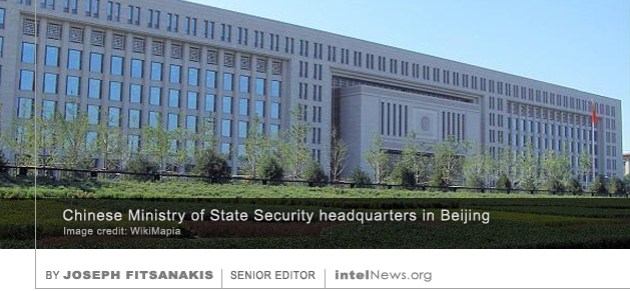 AUTHORITIES IN THE UNITED States have indicted five members of an alleged spy ring for the Chinese Ministry for State Security (MSS), who engaged in sabotage, bribing, harassment, intimidation and entrapment operations. The Federal Bureau of Investigation (FBI)
  THREE CHINESE NON-OFFICIAL cover intelligence officers, who were working in London under journalistic cover, were expelled from Britain in the past year, according to a new report. The claim was made on Thursday by The Telegraph newspaper, which
  Isaac Shoshan, an Israeli undercover operative, who was involved in some of Israel’s most daring and controversial intelligence operations for over 40 years,
 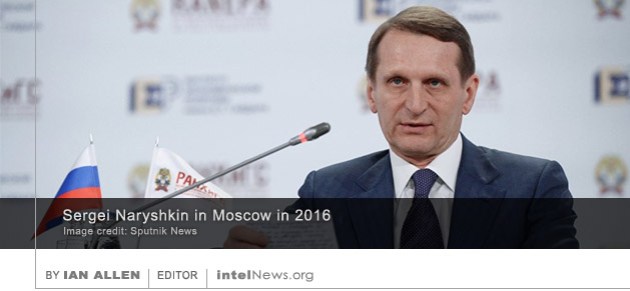 In an extremely rare move, the head of Russia’s spy agency has disclosed the identities of several undercover officers during an event marking the centenary of the KGB and its modern-day successor, the Russian Foreign Intelligence Service, or SVR.
 Russian authorities detained a Japanese journalist last month, and eventually expelled him after accusing him of espionage, according to sources. Even though it occurred last month, the incident was reported only on Monday by Russia’s RIA Novosty news agency.
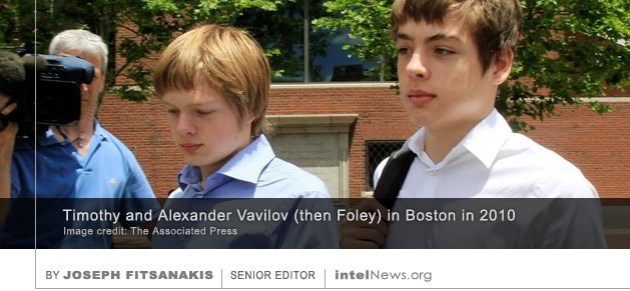 The son of a Russian couple, who fraudulently acquired Canadian citizenship before being arrested for espionage in the United States, has won the right to keep his Canadian citizenship, which was effectively annulled when his parents were found to be Russian spies.
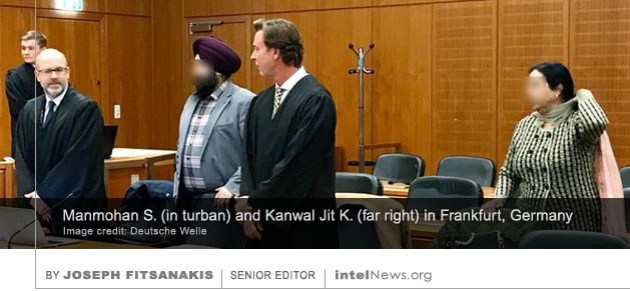 A court in Frankfurt has found a married couple guilty of spying in Germany on behalf of India’s external intelligence service. Due to Germany’s strict privacy laws, the couple have been identified only as 50-year-old Manmohan S. and his wife, Kanwal Jit K., who is 51.
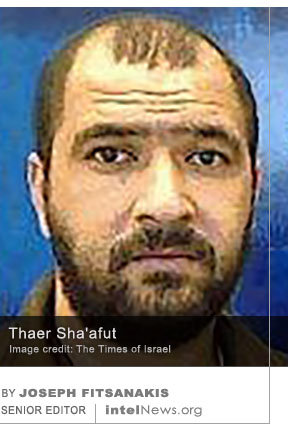 Israeli authorities announced on Thursday the arrest of a deep-cover intelligence operative who allegedly attempted to establish a base for Iranian intelligence in Israel and the West Bank, according to news reports from Israel. Shin Bet, Israel’s domestic security and counterintelligence agency,
  The United States Federal Bureau of Investigation has charged two men of Iranian descent, who were arrested in California, of operating as deep-cover spies for Iran. Documents filed in a federal court in Washington, DC, name the men as Majid Ghorbani, 59, and Ahmadreza Mohammadi Doostdar, 38. Both have American citizenship and were arrested by the FBI in August, following a year-long counterintelligence investigation. The Los Angeles Times
 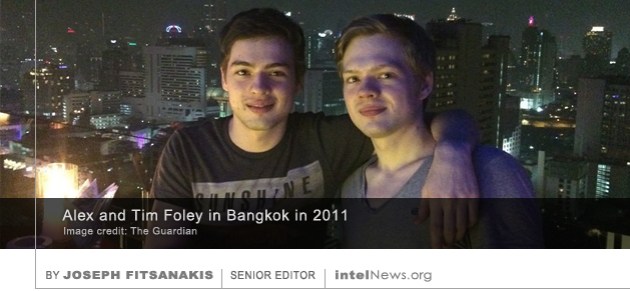 The sons of a Russian couple, who fraudulently acquired Canadian citizenship before being arrested for espionage in the United States, are seeking to reinstate their Canadian citizenship, which was annulled when their parents were found to be Russian spies. Tim and Alex Vavilov are the sons of Donald Heathfield and Tracey Foley, a married couple arrested in 2010 under Operation GHOST STORIES —a counterintelligence program run by the US Federal Bureau of Investigation (FBI). Following their arrest, their sons, who allegedly grew up thinking their parents were Canadian, were told that their parents were in fact Russian citizens and that their real names were Andrei Bezrukov and Elena Vavilova. Their English-sounding names and Canadian passports had been forged in the late 1980s by the KGB, the Soviet Union’s primary external intelligence agency.
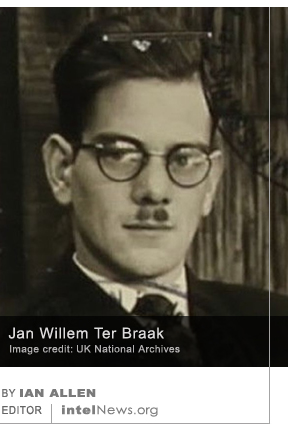 The unmarked grave of a Dutch-born Nazi spy, who killed himself after spending several months working undercover in wartime Britain, will be marked with a headstone, 76 years after his death by suicide. Born in 1914 in The Hague, Holland, Englebertus Fukken joined the National Socialist Movement in the Netherlands, the Dutch affiliate of the National Socialist German Workers’ Party led by Adolf Hitler, in 1933. In 1940, shortly after the German invasion of Holland, Fukken, who had been trained as a journalist, was recruited by the Abwehr, Nazi Germany’s military intelligence. Abwehr’s leadership decided to include Fukken in the ranks of undercover agents sent to Britain in preparation for Operation SEA LION, Germany’s plan to invade Britain.






 intelNews.org
Dutch intelligence disrupts Russian effort to infiltrate International Criminal Court
June 16, 2022 by intelNews 1 Comment
The GRU officer reportedly traveled from Brazil to Schiphol Airport in Amsterdam in April 2022, using a Brazilian cover identity, making him a so-called “illegal”. This means the intelligence operative was not formally associated with a Russian diplomatic facility. He allegedly planned to start an internship with the ICC, which would have given him access to the ICC’s building and systems. This could have enabled the GRU to collect intelligence, spot and recruit sources, and possibly influence criminal proceedings inside the ICC.
On his arrival at Schiphol, the AIVD informed the Dutch Immigration and Naturalization Service (IND), after which the officer was refused entry to the Netherlands and put on the first plane back to Brazil as persona non grata. The AIVD assessed the officer as a “potentially very serious” threat to both national security and the security of the ICC and Holland’s international allies, due to his access to the organization.
In a first-ever for the AIVD, the agency also released the contents of a partially redacted 4-page document that describes the “extensive and complex” cover identity of the officer. It was originally written in Portuguese, “probably created around mid-2010” and “likely written” by the officer himself. According to the AIVD, the information provides valuable insight into his modus operandi. The cover identity hid any and all links between him and Russia. According to the AIVD, the construction of this kind of cover identity “generally takes years to complete”.
In the note accompanying the document, the AIVD says that Russian intelligence services “spend years” on the construction of cover identities for illegals, using “information on how other countries register and store personal data”. Alternatively, they illegally procure or forge identity documents. Information in the cover identity “can therefore be traceable to one or more actual persons, living or dead” as well as to forged identities of individuals “who only exist on paper or in registries of local authorities”.
► Author: Matthijs Koot | Date: 17 June 2022 | Permalink
Filed under Expert news and commentary on intelligence, espionage, spies and spying Tagged with AIVD (Netherlands), Brazil, GRU, International Criminal Court, Netherlands, News, non-official-cover