News you may have missed #0277

  • Western officials say a CIA air strike has killed Hakimullah Mehsud. Mehsud was the leader of the largest faction of the Pakistani Taliban, and one of the handlers of Humam Khalil al-Balawi, the Jordanian who killed seven CIA officers last December in Khost, Afghanistan. Mehsud took over the leadership of the Pakistan Taliban last August, after another CIA air strike killed his predecessor, Baitullah Mehsud (no relation).
  • US citizen requests North Korea asylum. An unidentified 28-year-old American man who crossed into North Korea from China has allegedly sought asylum because he did not “want to become a cannon fodder in the capitalist military”. He apparently told North Korean officials that he “wants to serve in the North Korean military” instead.

Bookmark and Share

News you may have missed #0274

  • Japanese reporter cleared of 1974 espionage charges. A Japanese newspaper correspondent in South Korea, whose life was ruined in 1974, after he was sentenced to 20 years in prison on charges of helping fund North Korean espionage activities, has been acquitted in a retrial.
  • CIA interrogated al-Qaeda suspect in Poland, claims UN. Abd al-Rahim al-Nashiri, suspected of the 2000 al-Qaeda bombing of the USS Cole, was interrogated in a secret CIA prison in northern Poland, claims a UN report. Similar allegations have also been leveled against 12 nations, among them EU states such as Romania and Lithuania.

Bookmark and Share

News you may have missed #0270

  • S. Korean court orders damages in alleged spy case. Lee Soo-geun was a senior North Korean government apparatchik, who defected to the South and joined its intelligence service in 1967. Later, however, when he attempted to flee to a third country, he was arrested by South Korean counterintelligence agents, charged with working as a double agent, and shot. But now a court in Seoul has concluded that Lee’s confession was extracted by force, and has ordered that damages be paid to Lee’s niece, who was imprisoned for allegedly helping him.
  • Belarus reshuffles KGB leadership. Last week, Belorussian President Alexander Lukashenko carried out a major reshuffle in the country’s State Security Committee (KGB), a surprise move which affected all KGB deputy chairs and regional department heads. Retired KGB lieutenant colonel Valery Kostka explains the reasoning behind the reshuffle.

Bookmark and Share

News you may have missed #0255 (espionage edition)

  • South Korea jails alleged spy for 10 years. A 37-year-old college professor, identified only as Lee, has been handed a 10-year prison sentence for allegedly spying undercover on behalf of North Korea for 17 years. South Korean authorities said Lee, who was charged in November, was recruited by the North in 1992, while studying in New Delhi, India.
  • New details in Nozette spy case. Maryland scientist Stewart Nozette, who is accused of giving classified defense information to an FBI agent posing as an Israeli intelligence officer, may have impersonated a naval research official in order to acquire classified information, according to new court documents.
  • I didn’t kill Islamic Jihad members because I was busy spying for Israel“. Mahmoud Qassem Rafeh, a retired Lebanese Internal Security Forces official, has already confessed to having “collaborated with Israeli intelligence agents” between 1993 and 2006. But he denies having participated in the 2006 assassinations of two Islamic Jihad leaders in Lebanon, because on the night of the assassinations he was conducting a reconnaissance mission in Lebanon on behalf of Israeli spy agency Mossad.

Bookmark and Share

News you may have missed #0230

  • Ukrainians claim netting ‘spies among diplomats’. In the last 6 months of 2009, the Security Service of Ukraine (SBU) has “exposed 7 spies among diplomats”, according to its director, Valentyn Nalyvajchenko. He apparently cited “a case of a Russian spy who was charged with obtaining defense industry secrets for a Chinese special service”. If anyone out there has information on this case, please contact us.
  • France launches new spy satellite. France has launched a military spy satellite, Helios 2B, part of a boost in spending on independent surveillance. The satellite can reportedly tell whether a truck convoy is moving or halted and whether a nuclear reactor is operational or not.
  • Seized N. Korean weapons destined for Middle East: US spy chief. An illicit North Korean arms shipment seized in Thailand last week was destined for the Middle East, US director of national intelligence Dennis Blair, has claimed. Blair’s comment, which was meant to tout improved cooperation among America’s 16 intelligence agencies, was the first official confirmation of the US role in the case.

Bookmark and Share

News you may have missed #0229

  • Russians claim outing ‘100 spies’ in Novosibirsk in 2009. Siberian scientific centers in Novosibirsk, and especially in its suburb of Akademgorodok, nicknamed “science city” by the Russians, are noted for their research in the fields of oil and gas geology, nanotechnology, creation of new materials, and biochemistry, among other subjects. See here for previous intelNews reporting on this issue.
  • Obama proposes liaison exchange with North Korea. US President Barack Obama has proposed setting up a liaison office in North Korea –something like a US Interests Section– in a letter to leader Kim Jong Il. Such a move would help augment the US’ meager intelligence gathering in North Korea.
  • Estonian phone, web data tapped by Swedish intelligence? The Estonian Security Police (KaPo) has cautioned Estonian telecommunications users to avoid discussing “sensitive subjects” by phone and on the Internet, after an Estonian newspaper revealed that large chunks of Estonia’s telecommunications traffic pass through Sweden before reaching the outside world.

Bookmark and Share

News you may have missed #0203

  • N. Koreans arrested for revealing Kim Jong-Il’s whereabouts. A number of North Koreans have been arrested and could face execution for leaking to a South Korean Internet newspaper information on the movements of Kim Jong-Il’s February 24 trip to the city of Hoeryong.
  • Authority to spy on Americans unclear as PATRIOT Act expires. Controversial provisions in the Act, which grant US the government far-reaching domestic surveillance and seizure powers, are due to expire on December 31. These provisions will have to be discussed in Congress, “but only when the Senate isn’t backlogged by health care” according to insiders.

Bookmark and Share

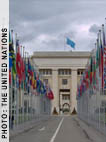
Israeli listening bugs found in UN meeting room: Swiss paper

The UN in Geneva

The UN in Geneva

By JOSEPH FITSANAKIS | intelNews.org |
Switzerland’s most esteemed newspaper has revealed that a number of listening devices, most likely of Israeli origin, were discovered in a room designated for sensitive meetings on disarmament issues, at the United Nations building in Geneva. The Neue Zürcher Zeitung (NZZ), quoted “a senior official” of the Service for Analysis and Prevention (Dienst für Analyse und Prävention), Switzerland’s domestic intelligence agency, who said the bugs were among several discovered throughout the building during regular maintenance work in 2006. The anonymous official said counterintelligence experts drew on “technical and geopolitical criteria” to create a shortlist of the possible culprits. Israel topped the list, which also included North Korea, Britain, China, Russia, France and the United States. Read more of this post

News you may have missed #0201

  • New book claims historic IRA commander was British spy. John Turi has authored England’s Greatest Spy, a new book, which claims that Éamon de Valera, who founded Irish republican party Fianna Fáil and later became the first President of the Irish Republic, secretly became a British intelligence officer in 1916. Tim Pat Coogan, one of de Valera’s most prominent biographers, reviews the book.
  • Japan launches spy satellite targetting North Korea. Japan’s H-2A No. 16 rocket, which was launched on Saturday, carries an advanced space satellite that will spy on North Korean military and other sites. The satellite is said to carry the most advanced high-resolution imaging equipment of all of Japan’s intelligence-gathering satellites.
  • US Secret Service 9/11 text messages disclosed. Hundreds of thousands of lines of transcribed pager messages exchanged between US civilian and military users on 9/11 were anonymously published on the Internet on Wednesday. They include messages exchanged between US Secret Service agents.

Bookmark and Share

News you may have missed #0198

Bookmark and Share

News you may have missed #0175

  • South Korean spy agency now regards North as ‘international affairs’. The Seoul-based National Intelligence Service (NIS) has relocated its unit that monitors North Korea under a department dealing with international affairs. The change, described as a “paradigm shift” by one South Korean official, apparently reflects President Lee Myung-bak’s view that the North Korean issue should be dealt more “from the international geopolitical perspective”.
  • Robbery of S. African intel agent was planned, say officials. The robbery by five men of a woman said to be an agent of South Africa’s National Intelligence Agency “was conducted as though it was very well planned”, according to police.
  • Interview with ex-West German spy master. Radio France Internationale has aired an interview with Hans-Georg Wieck, chief of the West German Secret Service (BND) between 1985 and 1990. Among other things, Wieck claims that BND had “well-placed” agents in East Germany, as well as in spy services of other communist, including the KGB.

Bookmark and Share

Details emerge on Israeli bombing of Syrian nuke reactor

Ibrahim Othman

Ibrahim Othman

By JOSEPH FITSANAKIS | intelNews.org |
German newsmagazine Der Spiegel has published a most detailed examination of the background to Operation ORCHARD, the 2007 Israeli air attack on what is thought to have been a Syrian nuclear reactor. The attack was carried out by Israeli fighter jets in the night of September 6, 2007, at Al-Kibar, a site deep in the Syro-Arabian Desert, twenty miles from Deir al-Zour. Neither Syria nor Israel have commented on the attack, which is widely thought to have targeted Syria’s so-called Al-Kibar nuclear reactor. Der Spiegel’s article is based on interviews with nuclear and security experts, as well as “with individuals involved in the operation, [and] have only now agreed to [speak], under conditions of anonymity”, according to the authors. The article claims that the initial tip about Al-Kibar was given to the Israelis in 2004 by the US National Security Agency, which “detected a suspiciously high number of telephone calls between Syria and North Korea”. Read more of this post

News you may have missed #0163

  • South Korean ex-spy master dies. Lee Hu-rak, who has died at age 85, headed the Korea Central Intelligence Agency, a predecessor of today’s National Intelligence Service, from 1970-1973. He was best known for brokering the signing of a historic 1972 peace document with North Korea, after an unprecedented secret trip to Pyongyang, during which he met North Korean leader Kim Il Sung.
  • Spy like us. How a mild-mannered Baltimore antique dealer became one of the FBI’s best undercover agents.
  • Bulgaria quits plans to disband State National Security Agency. Bulgaria’s government has made clear it does not plan to suspend, but just to “streamline”, the operations of the scandal-prone State National Security Agency DANS.

Bookmark and Share

News you may have missed #0162

  • South Korean 1967 spy case was “trumped up”, report finds. A national truth commission set up by South Korea’s primary intelligence organization, the National Intelligence Service, has concluded that the so-called Tongbaengnim spy ring case was “grossly trumped up”. The case culminated in a public show-trial of 194 South Korean academics, artists and students, accused of spying for North Korea.
  • CIA torture sparked rift with FBI. The Associated Press is reporting what intelNews readers have known since July 20; namely that the CIA’s use of “harsh interrogation techniques” against captured terror suspects made FBI interrogators wary of the legality of the methods. As a result, FBI agents were barred from the interrogations.
  • Analysis: Friendship is no bar to espionage. As relations between Taiwan and China improve, would it be reasonable to expect that China will temper espionage activity against Taiwan, and vice-versa?

Bookmark and Share

News you may have missed #0160

Bookmark and Share