Leaked document confirms Israel was behind Syrian official’s killing
July 16, 2015 1 Comment
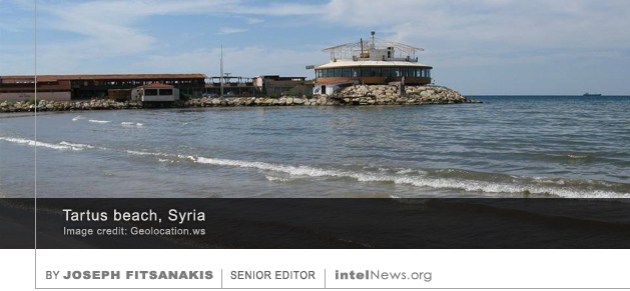 A leaked document from an American intelligence agency appears to confirm that Israeli commandos were behind the assassination of a top Syrian government official, who was shot dead outside his luxury villa on the Syrian coast in 2008. Muhammad Suleiman had been a close aide of current Syrian President Bashar al-Assad even before the latter rose to power in 2000. Once al-Assad became ruler of Syria, Suleiman was appointed special presidential advisor in the areas of arms procurement and strategic weapons. He handled intelligence affairs for the Assad regime and he was involved in weapons transfers from Iran to the Lebanese militant group Hezbollah, while also helping train Hezbollah operatives. He was also rumored to have a senior administrative role in the Syrian nuclear weapons program.
On August 1, 2008, Suleiman was shot dead with bullet wounds to the head and neck fired from a silenced rifle. He was shot as he was hosting a party on the beach behind his luxury villa at the Rimal al Zahabiya (Golden Sands) resort area, located to the north of the Mediterranean port city of Taurus. The assassins are believed to have fired the shots from a yacht, which was seen rapidly sailing away from Rimal al Zahabiya moments after the shooting. Most observers put the blame squarely on Israel. In 2009, an investigative report by German newsmagazine Der Spiegel said Israel had killed Suleiman due to his leading role in Syria’s nuclear program. However, a cable released by whistleblower website WikiLeaks in 2011 revealed that French intelligence analysts believed Suleiman had been killed as a result of a bloody power struggle within the Assad regime. These have been the two leading theories behind Suleiman’s mysterious killing.
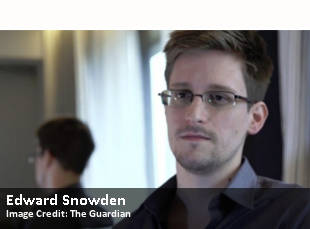
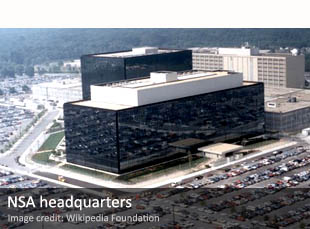
On Wednesday, however, a document authored by the United States National Security Agency (NSA) was leaked, which shows that American intelligence analysts are certain that Israeli commandos were behind Suleiman’s assassination. The document was leaded by former NSA contractor Edward Snowden, who defected to Russia in 2013. It comes from Intellipedia, the US Intelligence community’s classified version of Wikipedia, which was formally launched in 2006. It describes Suleiman’s killing as an operation carried out by “Israeli naval commandos” and calls it “the first known instance of Israel targeting a legitimate [foreign] government official”. According to The Intercept, which published the leak, the Intellipedia document is labeled “SI”, which means that the information contained in it was not voluntarily shared with the US by Israel, but was rather acquired through the interception of electronic signals.
If the leaked document is accurate, it would mark the first confirmation by a government agency that Israel was indeed behind Suleiman’s assassination. The Intercept contacted the NSA and the Office of the Prime Minister of Israel. However, neither party responded to several requests for comment.
► Author: Joseph Fitsanakis | Date: 16 July 2015 | Permalink: https://intelnews.org/2015/07/16/01-1736/
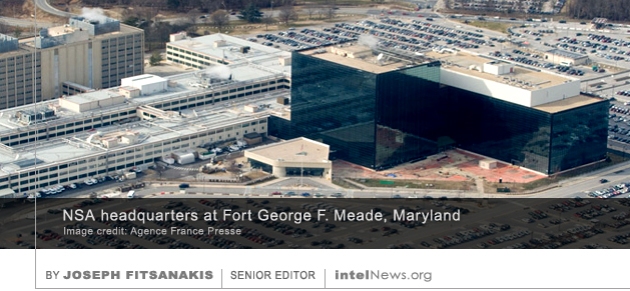 New information published by international whistleblower website WikiLeaks seems to suggest that the United States National Security Agency (NSA) collected information on export contracts by French companies and sought inside information on France’s position in international trade negotiations. According to the website, which
 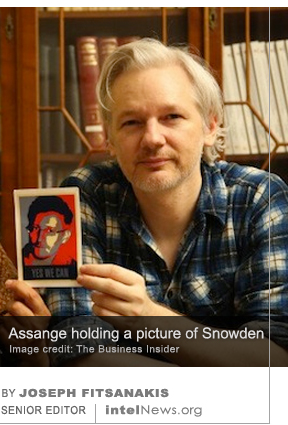 Leaders from all sides of the French political spectrum urged the French government on Thursday to offer political asylum, and even French citizenship, to the American defector Edward Snowden and to WikiLeaks founder Julian Assange. The calls were made in response to
  n in Syria and Iraq, the continuing crises in Ukraine and in Libya, as well as the financial meltdown in Greece. So there is a recognition that their intelligence agencies must continue to work together on several pressing issues.
 routine practice. However, I do believe that this regimen can easily be changed to address particular needs, through what is called a “presidential finding”, basically a direct order issued by the president of the United States to target an individual foreign leader.
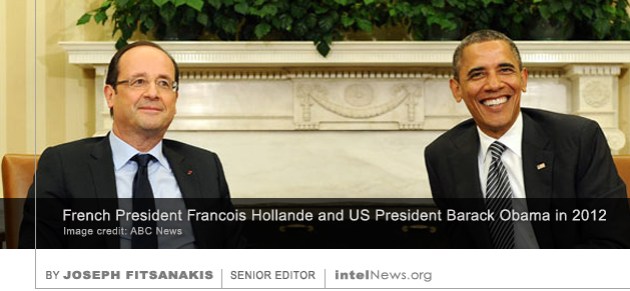 The president of France has convened an emergency meeting of the country’s highest national security forum in response to revelations that the United States spied on three French presidents. The Conseil de la Défense is to convene in Paris on Wednesday to discuss the emergence of documents that appear to implicate the US National Security Agency (NSA) in spying on Jacques Chirac and Nicolas Sarkozy, who ruled France from 1995 to 2012. The documents further indicate that the NSA may have also targeted the personal communications of Francois Hollande, France’s current head of state.
 The office of the Swiss Federal Prosecutor has launched an investigation into claims that the country’s largest telecommunications provider was spied on by a consortium of German and American intelligence agencies. The spy project was

 By IAN ALLEN | intelNews.org






 intelNews.org
Memos may relate to secret NSA deal with leading cryptography vendor
July 31, 2015 by Joseph Fitsanakis 3 Comments
My 2007 claim was based on a string of well documented allegations that surfaced in the early 1980s. While conducting research for his seminal book The Puzzle Palace, historian James Bamford came across references to Project BORIS, which involved a pact between the NSA and the Swiss company. To be precise, the deal appeared to have been struck between the Swiss inventor and Crypto AG founder Boris Hagelin and William F. Friedman, an American cryptologist who led the Armed Forces Security Agency, a forerunner of the NSA. The two men were united by a deep personal friendship, which was forged during World War II by their mutual hatred of Nazism.
Bamford’s claim was echoed in 1996 by Scott Shane and Tom Bowman, reporters for The Baltimore Sun. In a six-part investigative series about the NSA, the two journalists wrote that Friedman visited Hagelin during a trip to Switzerland in 1955 and asked for his help so that American could dominate its Cold War rivals. According to Shane and Bowman, Hagelin agreed and built a type of cryptological backdoor in Crypto AG’s devices, which allowed the NSA to read millions of messages for many decades. The company, of course, reacted furiously, saying that claims of a secret deal were “pure invention”.
On Thursday, however, BBC security correspondent Gordon Corera confirmed that a BBC investigation of 55,000 pages of documents, which were declassified by the NSA in April, claim to have found proof of the secret agreement. The declassified material, said Corera, contains two versions of the same NSA memorandum, as well as an earlier draft, which refer to a “gentleman’s agreement” between Friedman and Hagelin. Under the agreement, Crypto AG would inform the NSA about periodical changes to the technical specifications of its encoding machines. The company would also provide the American spy agency with detailed lists showing the precise models purchased by various national governments around the world. Furthermore, Crypto AG agreed not to sell the more advanced, customizable models of its equipment to countries viewed by Washington as directly adversarial. This, says the BBC, amounted to Crypto AG deceiving some of its customers, by offering them “watered-down versions” of its encoding devices.
Corera notes that there is no evidence in the memos that Crypto AG built any kind of back door in its devices for use by the NSA. Instead, by providing the American agency with detailed operational knowledge of the devices, it enabled American codebreakers to reduce the time and effort needed to break encoded messages intercepted by the NSA.
There are a couple of minor errors in Corera’s article. For instance, the “father of American code-breaking” is not Friedman, as he claims, but Herbert Yardley, who led the so-called Black Chamber (also known as the Cipher Bureau) in 1919, long before Friedman was in the picture. Additionally, he fails to mention Bowman’s contribution to Shane’s Baltimore Sun article, which was published in 1996, not 1995, as he writes. These minor errors aside, however, the BBC discovery is absolutely crucial for our understanding of cryptological history in the Cold War.
► Author: Joseph Fitsanakis | Date: 31 July 2015 | Permalink
Filed under Expert news and commentary on intelligence, espionage, spies and spying Tagged with Boris Hagelin, Cold War, Crypto AG, cryptology, declassification, Gordon Corera, history, News, NSA, Operation RUBICON, Project BORIS, Switzerland, United States, William Friedman