News you may have missed #347

  • CIA drones now target non-listed targets in Pakistan. It used to be the case that the CIA unmanned drone attacks in Pakistan were directed at confirmed Taliban senior operatives. But an American official has said that the CIA does “not always have their names”. Instead, the Agency targets them based on their “actions over time” that make it “obvious that they are a threat”.
  • Democrat Senator presses Obama for more NSA powers. Senator Barbara Mikulski (D-MD) is pressing the Obama Administration to give the National Security Agency more power to oversee privately owned portions of the Internet. Speaking on Thursday, Mikulski complained that “we don’t know who the hell is in charge” over the security of private networks.
  • Lebanese officer charged as Israel spy may get death. A Lebanese prosecutor has requested the death penalty for Gazwan Shahin, an army colonel charged with having provided Israel’s spy agency with pictures, information and coordinates of Lebanese civil and military posts during and after the 2006 Israeli invasion of Lebanon.

Bookmark and Share

Recording of candid speech by Blackwater CEO leaked

Erik Prince

Erik Prince

By IAN ALLEN | intelNews.org |
A recording of a relatively recent candid speech given by Erik Prince, the media-shy owner of Xe Services (formerly known as Blackwater), has been obtained by The Nation magazine. The extensive recording was made on January 14, during a private talk given by Prince at the University of Michigan before a sympathetic invitation-only audience consisting of military veterans, ROTC commanders and cadets, as well as business entrepreneurs. In his talk, Prince, who last December admitted having worked as a CIA asset, advocated for the employment of private contractors by the US Pentagon to combat insurgents and “Iranian influence” in countries such as Nigeria, Saudi Arabia, Yemen and Somalia. Writing for The Nation, Jeremy Scahill focuses on Princes views, as he conveyed them in his talk. Read more of this post

News you may have missed #343

  • Taliban leader H. Mehsud reportedly not dead. Last February US and Pakistani officials claimed a CIA airstrike had killed Hakimullah Mehsud, the leader of the largest faction of the Pakistani Taliban. But it now appears that Mehsud is alive and well.
  • Analysis: Operation MINCEMEAT and the ethics of spying. The New Yorker‘s Malcolm Gladwell on operation MINCEMEAT, a World War II British deception plan, which helped convince the German high command that the Allies planned to invade Greece and Sardinia in 1943, instead of Sicily.
  • US DoJ announces FISA court appointment. Judge Martin L.C. Feldman, of the Eastern District of Louisiana, has been appointed to a seven-year term on the Foreign Intelligence Surveillance (FISA) Court, which reviews (and invariably approves) government applications for counterintelligence surveillance and physical search under the Foreign Intelligence Surveillance Act.

Bookmark and Share

News you may have missed #342

Bookmark and Share

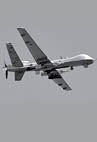
Analysis: Experts question legality of CIA drone strikes

Predator drone

Predator drone

By IAN ALLEN | intelNews.org |
A number of prominent American legal scholars have voiced concerns about the legality of the targeted killings by the CIA of suspected Taliban leaders in Afghanistan and Pakistan. Speaking last week before the National Security and Foreign Affairs subcommittee of the US House Committee on Oversight and Government Reform, some of the experts warned that the killings may constitute war crimes. Among them was Loyola Law School Professor David Glazier, who reminded subcommittee members that the CIA remotely navigated drone pilots are not legally considered combatants, and thus employing them to carry out armed attacks “fall[s] outside the scope of permissible conduct”. He also warned that “under the legal theories adopted by our government in prosecuting Guantánamo detainees, these CIA officers as well as any higher-level government officials who have authorized or directed their attacks are committing war crimes”. Read more of this post

News you may have missed #340

  • West Bank urged to drop Israeli cell phone companies. The Palestinian Authority (PA) is urging Palestinians to stop using the Israeli cellular companies Pelephone, Orange, Cellcom and Mirs. The official reasons are economic (Israeli companies don’t pay taxes to the PA), but the real reasons are probably related to communications security.
  • US police wiretaps up 26 percent in one year. The number of wiretaps authorized by US state and federal judges in criminal investigations jumped 26 percent from 2008 to 2009, according to a report released Friday by the Administrative Office of the US Courts.
  • Taliban group executes high-profile ex-ISI spy. Khalid Khawaja, one of two Pakistani former Inter-Services Intelligence directorate officers captured by a Taliban splinter group, named Asian Tigers, has been found dead. The other ex-ISI official, Sultan Amir Tarar, a.k.a. Colonel Imam, who was Taliban leader Mullah Mohammad Omar’s former handler, remains in captivity.

Bookmark and Share

News you may have missed #339 (arrest edition!)

  • US couple arrested for spying for Cuba cooperating, say authorities. Admitted spies Walter and Gwendolyn Myers have met with US federal officials “50 to 60 times” to divulge details of their three decades of spying for Cuba, Justice Department officials said Tuesday. The couple pleaded guilty in November to working for the government of Caribbean island.
  • Indian diplomat arrested for spying for Pakistan. Madhuri Gupta, a second secretary at the Indian high commission in Islamabad, Pakistan, has been arrested and accused of passing on secrets to Pakistan’s ISI spy agency. Indian officials believe she may be part of a wider spy ring.
  • Former CIA station chief arrested in Virginia. Andrew M. Warren, the CIA’s Algiers station chief, who is accused of having drugged and raped two Algerian women at his official residence, has been arrested at a Norfolk, Virginia motel, after he failed to show up for a court hearing last week. It is unclear why he skipped the hearing and why he was staying at the motel in his hometown.

Bookmark and Share

CIA scores Washington Post charm offensive

CIA HQ

CIA HQ

By IAN ALLEN | intelNews.org |
For an agency whose very future is routinely questioned by former employees, the CIA has been getting plenty of positive press in the pages of The Washington Post lately. On Monday, The Post’s Jeff Stein cited “a former top CIA official” who claimed that the Agency’s unmanned drone assassination program in the Afghan-Pakistan border has the Taliban in disarray, “thinking that we can track them anywhere”. The former official also said that the speed of the CIA and “its Pentagon partners” (presumably NSA) in intercepting targeted communications makes the process of assassinating Taliban leaders “like mowing a lawn”. Does this sound too good to be true? How about an article published on the same day, also in The Washington Post, which claims that the CIA’s Predator drone assassination program has “kept the number of civilian deaths extremely low”? Read more of this post

Abduction of former Pakistani ISI officials raises questions

Colonel Imam

Colonel Imam

By IAN ALLEN | intelNews.org |
Questions are being raised about the reported abduction of two well-known veterans of Pakistan’s Inter-Services Intelligence (ISI) directorate, who appear to have been kidnapped by an unknown group in Pakistan’s remote tribal regions. The two are Khalid Khawaja and Sultan Amir Tarar, a.k.a. Colonel Imam. Khawaja, a retired ISI officer, was a critical mediator between the CIA and Osama bin Laden in the 1980s, during the al-Qaeda’s war against the Soviets in Afghanistan. Colonel Imam, also a former intelligence officer and a diplomat, was the ISI handler of Taliban leader Mullah Mohammad Omar in the 1980s and early 1990s. Both Khawaja and Imam are considered senior members of the ISI’s ‘old guard’, who have strong ideological sympathies for both al-Qaeda and the Taliban, and frequently voice support for the latter. Read more of this post

News you may have missed #330

  • Pakistan released captured Taliban behind CIA’s back. IntelNews has not joined the chorus of commentators who have been claiming that the relationship between Pakistan’s Inter-Services Intelligence (ISI) directorate and the CIA has warmed up. It now appears that even as the ISI was collaborating with the CIA, it quietly freed at least two captured senior Afghan Taliban figures.
  • Kiwi activists accuse police of spying. New Zealand’s Peace Action Wellington has submitted an Official Information Act (OIA) request relating to domestic police surveillance, after accusing the police of “heavily spying on and running operations on protest groups”. It is not the first time that similar accusations have been directed against the country’s police force.
  • CIA suspected existence of Israeli nukes in 1974. Israel will neither confirm nor deny the rumored existence of its nuclear arsenal. But the CIA, which has kept an eye on Israel’s nuclear weapons project since at least the early 1960s, was convinced of its existence by 1974, according to a declassified report.

Bookmark and Share

News you may have missed #329

  • Iran insists US hikers had intelligence links. Iran’s intelligence minister, Heydar Moslehi, has said that Americans Shane Bauer, Joshua Fattal and Sarah Shourd, who were arrested on Iranian soil last July, “were in contact with intelligence services”. The evidence would “soon be made public”, he said.
  • Gerdes case shows difficulty of CIA jobs. The case of CIA employee Kerry Gerdes, who was recently convicted for falsifying interview reports while performing background checks on CIA employees and potential employees, reveals how difficult the job is for young CIA recruits, who expect it to be exciting or glamorous, according to seasoned investigators.
  • US still denying India access to Headley. There has been intense speculation in India and Pakistan that David Coleman Headley, a former US Drug Enforcement Administration informant, who was arrested by the FBI in October for plotting an attack on a Danish newspaper, is in fact a renegade CIA agent. Could this be why the US is denying India access to Headley?

Bookmark and Share

News you may have missed #319

  • CIA asks Gulf countries to monitor terrorist funding. The CIA has reportedly asked Arab/Persian Gulf countries “to tighten surveillance and look for any suspicious movement of funds” in regional banks.
  • Questions remain in Headley terrorism case. The New York Times has aired an update on the court case of Pakistani-American David Coleman Headley, a former US Drug Enforcement Administration informant, who was arrested by the FBI in October for plotting an attack on a Danish newspaper. The paper points out that Headley “moved effortlessly between the United States, Pakistan and India for nearly seven years, training at a militant camp in Pakistan on five occasions”. There has been intense speculation in India and Pakistan that Headley is in fact a renegade CIA agent.

Bookmark and Share

News you may have missed #318

  • US State Dept. lawyer defends CIA drone attacks. State Department legal adviser Harold Koh has told a conference that “the considered view of this administration” is that the controversial CIA-operated drone attacks inside Pakistan “comply with all applicable law, including the laws of war”.
  • How the CIA let Anwar al-Aulaqi escape to Yemen. Last year, the Yemeni government asked the CIA to help collect intelligence on US-born al-Qaeda recruiter Anwar al-Aulaqi. But the CIA refused, and so did US Special Forces officials, who had been asked by the Yemenis to help them pursue Aulaqi. Just months later, US Army Major Malik Nidal Hasan, who was in contact with al-Aulaqi, killed 13 US soldiers at Fort Hood, Texas.
  • More on alleged Israeli spy caught in Algeria. Algerian authorities insist that a man (identified only as “Alberto”), who was captured after entering Algeria using a forged Spanish passport, is a Mossad agent. There are also rumors that the US embassy in Algiers has been involved in the case, and that it was for this reason that FBI deputy director John Pistole traveled to Algeria last week.

Bookmark and Share

News you may have missed #311

Al-Qaeda technical expert believed killed. Hussein Yemeni, an al-Qaeda bomb expert and trainer, is believed to have been among more than a dozen people killed in a CIA strike last week in Miram Shah, the largest town in Pakistan’s North Waziristan. Yemeni is thought to have had a major planning role in the December 30 suicide bombing in Khost, Afghanistan that killed seven CIA officers.

Al-Qaeda on the run, claims CIA director. CIA air attacks against al-Qaeda in Pakistan’s tribal region have driven Osama bin Laden and his top deputies deeper into hiding and disrupted their ability to plan sophisticated operations, CIA Director Leon Panetta said Wednesday. Interesting; that’s not exactly what he said last week.

UK government defends use of foreign intel. The British Foreign Office has defended its use of intelligence obtained by foreign security agencies from terrorism suspects, even when it could not be sure how the informants had been treated. It’s not the first time this opinion has been expressed by a senior UK government source.

Bookmark and Share

US-Pakistan spy ties still tense, despite alleged thaw

Cantt, Lahore

Cantt, Lahore

By JOSEPH FITSANAKIS | intelNews.org |
Last December, US officials accused Pakistani security agencies of conducting a “blatant harassment campaign [against] American diplomats”, which reportedly included “frequent checking of American diplomatic vehicles in major cities across the country”. Recent articles in the Pakistani press appear to confirm these reports, indicating that they may be connected with ongoing attempts by US intelligence to increase its limited footprint in Pakistan beyond the safety of the US embassy compound in Islamabad. One such case is in Cantt, Lahore’s military zone, where it appears American intelligence officers have covertly leased “an outpost of several houses”. It is not clear when precisely the Americans began leasing the houses. But the Pakistanis, who have surrounded Cantt with security checkpoints, noticed the increased traffic by vehicles carrying US personnel, and started insisting on inspecting them, as they do with all vehicles entering and exiting Cantt. Read more of this post